 Emergency:
  WhatsApp

Subscribe to our
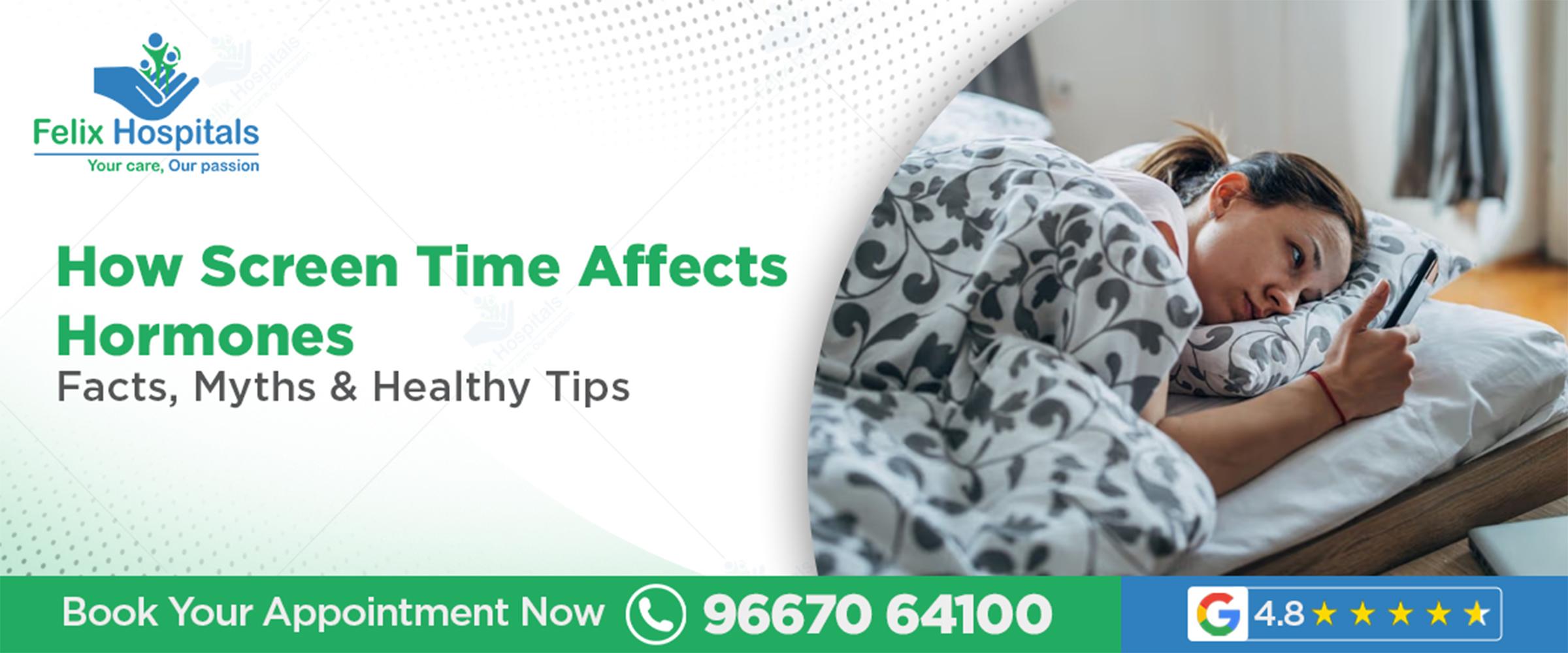
Your body’s hormones were not designed for late-night scrolling. This is what the science really tells us — and what you can do about it.
You’ve just completed another session of late-night phone scrolling. You’re tired, but also a bit wired. You at last fall asleep only to wake up groggy. Sound familiar? What you might not be aware of is the fact that the screen you’re holding has been quietly communicating with your hormones— and it’s not always a friendly conversation.
We live in a reality in which the typical adult spends 6 to 7 hours a day looking at a screen. For kids and teens, the figures are going up every year. Hormones — those minute chemical messengers that control sleep, mood, stress, growth, metabolism, and fertility — are finely attuned to their surroundings, including the light we’re exposed to and the emotional stimulation we’re experiencing. Knowing what happens to your hormones when you look at a screen is no longer a luxury — it’s a necessity of health literacy. The Best Endocrinology Hospital in Noida, treats the ripple effects of hormonal imbalance, and lifestyle contributors such as screen time.
Hormones are influenced by screens via two pathways: the light they produce (especially blue light) and the psychological stimulation that results (alerts, social comparison, level of content). Different hormones are influenced in different ways:
The sleep hormone.
The blue light of screens inhibits its nighttime production delaying sleep and diminishing sleep quality.
The stress hormone.
Exciting content — news, fights, social media — induces cortisol surges that keep your nervous system on high-alert when it should be powering down.
The reward hormone.
No wonder every notification, like, or new video triggers a tiny dopamine hit — creating scroll loops that are hard to break and leaving us increasingly mood-depleted.
Secreted mostly in deep sleep by children and adolescents.
Directly reducing screen-disturbed sleep in which the hormone is most active in the deep sleep phases.
Among the hormones influenced by screen time, melatonin has the most well-known link. When it gets dark, your brain's pineal gland produces melatonin – it’s the body’s natural indication that night has come. Blue light, which is widely emitted from screens, looks like daylight and inhibits the production of this hormone.
Blue light interfere sleep hormones? Yes — there is no doubt of the evidence. Just 1 to 2 hours of evening screen time can delay melatonin secretion by 90 minutes or more, shifting your sleep window later and shortening the duration of your sleep.
A study published in the Proceedings of the National Academy of Sciences (PNAS) found that reading on a light-emitting device before bed suppressed melatonin by over 50% compared to reading a printed book.
Participants took significantly longer to feel alert the next morning.
Source: Chang AM et al., PNAS, 2014. "Evening use of light-emitting eReaders negatively affects sleep, circadian timing, and next-morning alertness."
Cortisol has a natural daily pattern of production high in the morning to help you wake up, declining throughout the day, being low at night. Screen time and cortisol are an issue when stimulating content — urgent news cycles, emotionally charged social media, intense gaming — keep this hormone elevated beyond its natural diminishing point.
Scrolling through unsettling news right before bed activates the brain’s threat-response system
Social media comparison activates cortisol responses akin to mild social stress
High-stimulation gaming increases heart rate and cortisol levels, which biologically makes it hard to relax
Persistent high levels of evening cortisol are associated with poor sleep, increased fat storage and suppressed immune function
Social media apps are dopamine delivery systems by design. Every notification, every like, every new post gives us a hit of dopamine — the same neurotransmitter that’s involved in reward, motivation, and pleasure. The problem is that receptor downregulation occurs with repeated stimulation over time. In layman’s terms: you need more to feel the same. This is why — and you can tell this by how you feel when you stop and take a breath — people are empty, flat and irritable after long stretches of scanning, not charged up.
The effect of screens on dopamine and mood is so worrisome because teenagers’ dopamine systems are still developing. Teens who are overstimulated on a regular basis during these years may be more prone to mood disorders, irritability, and trouble with delayed gratification.
That's a question parents ask us all the time, and the answer is: Yes, indirectly but significantly. So, can too much screen time affect the growth hormones of children? GH is secreted mainly during the first 2-4 cycles of deep (slow wave) sleep, usually in the first 90 min of sleep. When screen use postpones going to sleep or disrupts sleep quality, the proportion of deep sleep decreases — and so does the peak growth hormone release.
A large study published in JAMA Pediatrics found that children aged 8–11 who exceeded the recommended 2 hours of daily recreational screen time had significantly lower cognitive scores and measurably reduced sleep duration.
Poor sleep directly correlating with disrupted hormonal rhythms including lower growth hormone pulsatility.
Source: Cheng W et al., JAMA Pediatrics, 2020. "Screen time and cognitive development in children."
Beyond growth hormone, late-night screens in children also delay puberty onset in some studies and are associated with higher cortisol reactivity — a marker of chronic low-grade stress.
Our paediatric endocrinology team at the Best Endocrinology Hospital in Noida evaluates growth, puberty, and hormonal health holistically — including lifestyle factors like sleep and screen time.
Myth
“Blue light glasses cancel out the hormonal impact of using screens."
Fact
Blue light glasses do block some blue light wavelengths, but they don’t help with the cognitive stimulation or effects on cortisol that screen content has. Staring at a screen dimmer and then walking away is more effective.
Myth
"They say only phone screens affect hormones — TV from across the room is fine at night."
Fact
Bright light from any light-emitting screen can also suppress melatonin. TV at close range or in a dark room can be disruptive, but a handheld screen may be a tad worse.
Myth
“Night mode is enough to make late-night scrolling hormonally harmless.”
Fact
Night mode does make a difference but it’s not enough to block all the blue light. The content-induced stimulation of our brains still triggers cortisol, no matter what colour the screen is.
Your body is designed to alert you when something is not right. Keep an eye on these:
Difficulty falling asleep despite feeling tired
Awakening tired regardless of length of sleep
Irritability, inos Mood dips or emotional blunting.
More cravings for sugar or junk food in the evening
Brain fog or difficulty focusing in the morning
Planning low or persistent low mood
Children: delayed sleep onset, active sleep, affective swings
Unexplained weight gain, especially around the abdomen
These symptoms alone do not mean your hormones are out of whack — but if they multiple symptoms cluster, coincide with high screen usage, then they really should be brought up with an endocrinologist.
Small, consistent changes will do more good than dramatic one-week "cleanses." Here’s the real stuff that works:
Stop screen use 60–90 minutes before bedtime.
Get morning sunlight ≤30 minutes after waking up.
Charge your phone out of the bedroom.
Practice content intentionality. Opt for laid-back, low-stimulation fare in the evening. Stay off the news and social feeds past 8 p.m.
For kids: enforce regular screen curfews. No screen time at least one hour before bed — unconditionally.
Celebrate screen-free dinners. Eating distracted by screens elevates cortisol and dysregulates gut-brain signaling, the communication system between the brain and the gut that controls hunger hormones, such as ghrelin and leptin.
Limiting screen time can help a lot — but some hormone imbalances require a doctor's assessment. Consult the Best Endocrinologist in Noida if you or your child have:
Ongoing sleep problems for more than 3-4 weeks after lifestyle modifications
Noticeable mood swings, anxiety or depression that cannot be attributed to other causes.
Unexplained weight gain, hair loss, or fatigue (that can be related to thyroid problems)
In children – concerns about growth, delayed or precocious puberty or enduring changes in behaviour
High screening use and poor sleep predict irregular periods in adolescent girls.
Hormonal health takes many factors — screen time is one important factor, but thyroid function, insulin sensitivity, adrenal health and reproductive hormones all must be evaluated collectively by a trained professional.
Whether it's sleep disruption, mood changes, weight shifts, or growth concerns in your child — our Best Endocrinologist in Noida will give you answers rooted in evidence, not guesswork. Call now to book an appointment.
Screens are not bad. They’re just a tool — an incredible one. But when we do ourselves the disservice of mindlessly using them, especially in the hours before we go to sleep, they quietly disrupt some of the most important chemical systems in our body. Melatonin is suppressed. Cortisol remains elevated. Dopamine loops keep us coming back. And in children, growth hormone loses its nightly opportunity.
The good news is that the hormonal system is highly responsive. Minor but consistent changes in screen habits — turning the lights off 90 minutes before bed, getting morning sunlight, making the evenings screen-calm — can have a significant impact on getting your hormones back in rhythm in a matter of weeks. Your biology wants to heal. Provide it with the environment it was meant for.
And if you do all that and the symptoms linger, don’t dismiss them. Book a consultation. Hormonal health is core to everything– your energy, your mood, your weight, your child’s growth. It’s really worth a decent chat.
Yes — TB can affect the spine (bone TB) even without cough or lung symptoms. It spreads through blood and needs long treatment to prevent permanent damage.
Lymph node TB in children is common and usually fully treatable with proper medicines. If untreated, it can spread to other organs, so early treatment is very important.
Abdominal TB is serious but most patients recover well with full treatment and nutrition support. Treatment usually lasts 6–9 months, sometimes longer in severe cases.
TB meningitis is serious, but early treatment greatly improves recovery chances. Watch for headaches, seizures, confusion, vision issues or weakness and report immediately.
Never stop TB medicines early — symptoms improve before infection fully clears. Stopping early can cause relapse and dangerous drug-resistant TB.

Dr. Vimal Gupta is an experienced endocrinologist and diabetologist with 15 years of expertise in treating diabetes, thyroid disorders, obesity, PCOD, and adrenal conditions. Currently practicing at Felix Hospital, he is known for his patient-focused care and personalized treatment approach in endocrine health.

Obesity can significantly affect women’s hormonal balance, leading to issues like irregular periods, PCOS, and further weight gain.
During sleep, the body releases growth hormones, which are essential for a child's growth and development. Adequate sleep is vital for muscle development, tissue growth, and the overall physical health of a child.

Do you find yourself constantly tired, breathless, or unable to cope with sudden physical activity?

Advanced heart screening for children is now available in Greater Noida, ensuring early detection and specialized care for pediatric heart health.


Subscribe to our
© Copyright 2026. All Rights Reserved by Felix Healthcare Private Limited
Design and development by :


 +(91)9667064100
 Emergency : +(91)9667064100