 Emergency:
  WhatsApp

Subscribe to our
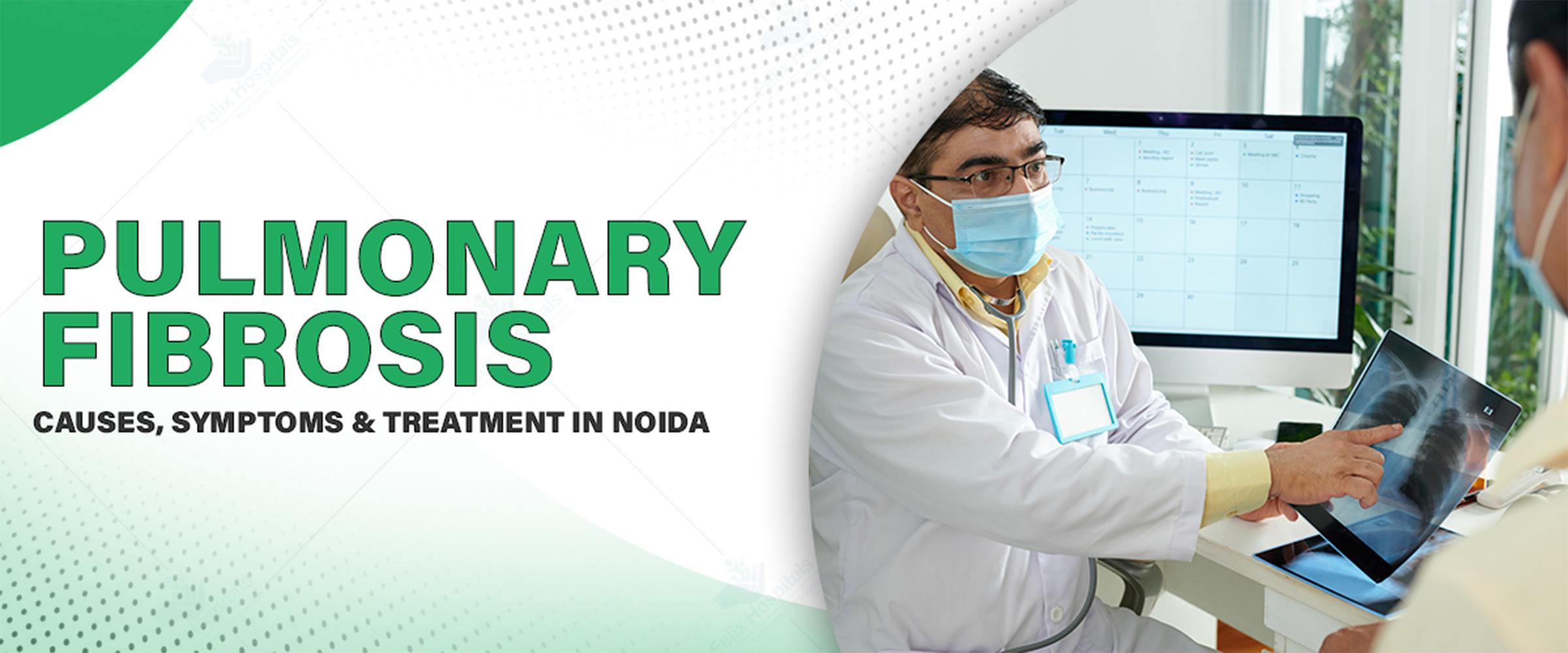
Pulmonary fibrosis is a long-term condition of the lungs with scarring of lung tissue, making it harder to breathe. It requires early diagnosis and quick treatment to enhance the quality of life and prevent the quick progression of the disease. In case you are looking for pulmonary fibrosis treatment in Noida, take the services of a renowned medical team providing state-of-the-art therapy and empathetic care. Selecting the best pulmonary fibrosis treatment hospital in Noida ensures you get appropriate diagnosis, appropriate drug management, pulmonary rehabilitation, and, when needed, surgeries such as lung transplantation all focused on assisting in symptom control and optimization of daily functioning.
Struggling with breathing issues? Book an appointment at Felix Hospital today and get expert care for pulmonary fibrosis. Call us at +91 9667064100.
Pulmonary fibrosis is a lung disease that occurs because of lung tissue damage or scarring. As the affected area is the lung, the patient can become short of breath. The body suffers from an oxygen deficit, which can lead to cardiac and respiratory complications. Although the ill-effects caused to the lung are irreversible, medicines and therapies can manage the condition and ease the symptoms.
Most commonly, people face breathing problems due to pulmonary fibrosis as the initial symptom. Some other symptoms are:
Long dry cough
Weakness and muscle ache
Weight loss
Severe shortness of breath
Chest stiffness
Some common causes are:
Long-term exposure to some pollutants can cause lung fibrosis like silica dust, asbestos fibers, coal dust, grain dust, and hard metal dust.
Some medicines, namely, nitrofurantoin, sulfasalazine, amiodarone, and cyclophosphamide, affect the lungs and can cause lung fibrosis. Various medicines can damage the lungs as a side effect. They can be chemotherapy drugs, heart medicines, certain antibiotics, and anti-inflammatory drugs.
Up to 20% of people with lung fibrosis may have another member in the family with the same disease, which is known as ‘familial pulmonary fibrosis’ or ‘familial interstitial pneumonia.
Some viral and bacterial infections affect the lungs. These can originate from hepatitis C, adenovirus, herpes virus, and other viruses.
Autoimmune disease can trigger the immune system to attack the lungs. Some autoimmune diseases like rheumatoid arthritis, scleroderma, and vasculitis can cause scarring in the lungs leading to lung fibrosis.
Some people experience lung fibrosis because of radiation treatment for cancer. People generally face these problems years after the treatment.
Various factors are responsible in the long term for lung health deterioration and any kind of fibrosis in the lungs.
Age
The disease affects the middle-aged and the elderly adversely.
Gender
Men are more likely to have pulmonary fibrosis than women.
Smoking
Smoking is highly injurious to health. A person who smokes has a significantly higher chance of having pulmonary fibrosis.
Work Environment
People who work in mines, farms, industries, and construction sites risk developing pulmonary fibrosis.
Your clinical information, coupled with a chest CT scan, can help the doctor diagnose you accurately. The doctor does a variety of other tests before confirming pulmonary fibrosis. These are:
Pulse oximetry test to check blood oxygen levels
Blood test, to check for autoimmune diseases and infections
Arterial blood gas test to check blood oxygen levels more precisely
Sputum sample test for infections
Pulmonary function test for measuring lung capacity
Echocardiogram to check for symptoms caused by cardiac problems
The doctor will examine you and ask you the following questions:
How long have you been experiencing these symptoms?
Do you smoke?
Does your surrounding environment have chemicals or other pollutants present? If yes, which ones?
Does anyone in your family also have such problems or any other lung disease?
What is your past medical history?
Based on the severity of the disease, doctors can prescribe proper treatment to manage the symptoms. Some of these treatment options are:
Various medicines like pirfenidone and nintedanib are prescribed by doctors for pulmonary fibrosis.
Oxygen use cannot cure any lung fibrosis, but it can make breathing easier. Also, it reduces complications from low blood oxygen levels. It also helps to keep the heart healthy and improves sleep patterns.
It can help improve the daily functioning of the lungs. Various physical exercises and breathing techniques are taught in these rehab sessions.
Lung transplant is the last alternative if one presents with severe symptoms and faces escalated life threats. A lung transplant increases the quality of life.
Although lung fibrosis is mostly undetectable in the initial stages, later on, it can cause a variety of complications. Some of them are:
It affects the arteries in the lungs by compressing them. It occurs because of the scar tissue, which increases the difficulty of normal blood flow due to the compressed arteries. As a result, blood pressure in the right ventricle increases.
Various respiratory complications like blood clots and lung infection arise due to pulmonary fibrosis. The last stage of such conditions can be total respiratory failure, which occurs when blood oxygen levels decrease drastically.
Right-sided heart failure is called ‘Cor Pulmonale. This occurs when the right ventricular function is impaired to due to overwork leading to resistance of blood flow in the lungs.
Prolonged pulmonary fibrosis can cause inflammation and even lung cancer.
Though the effects of pulmonary fibrosis are irreversible, it can be prevented. The following prevention tips can lower the risk of developing this disease:
Avoid smoking and second-hand smoke.
Wear a mask if your environment has pollutants.
Consult a doctor immediately if you face breathing issues.
Conclusion
Pulmonary fibrosis affects the lungs by scarring and stiffening them.
Treatment options are available to ease the symptoms. Various medications are also available to slow down the scarring of the lungs. There is an option of lung transplantation for pulmonary fibrosis patients. It can give them a longer life and improve the quality of life.
Don’t delay your treatment—call Felix Hospital today for comprehensive pulmonary fibrosis management.
To sum up, pulmonary fibrosis is a long-lasting and worsening lung disease that needs to be diagnosed quickly and treated by professionals to slow its progress and effectively control symptoms. Although lung tissue scarring is irreversible, progress in medication, oxygen therapy, pulmonary rehabilitation, and, in extreme instances, lung transplantation provides optimism for enhancing quality of life. Making changes to your lifestyle, like quitting smoking, staying away from environmental pollutants, and getting regular health checkups, is also very important for prevention and management.
Q1. Does Felix Hospital in Noida offer advanced treatment for pulmonary fibrosis?
Ans: Yes, Felix Hospital has modern diagnostic tools, advanced treatments, and pulmonary rehabilitation programs to make sure that lung diseases are fully managed.
Q2. How does oxygen therapy help people with pulmonary fibrosis?
Ans: Oxygen therapy doesn't cure the disease, but it does make it easier to breathe, sleep better, feel less tired, and protect the heart from problems caused by low oxygen levels.
Q3. What kind of help does Felix Hospital give to people with pulmonary fibrosis?
Ans: Felix Hospital focusses on helping patients in addition to giving them medical care. This includes counselling, lifestyle advice, nutritional advice, and rehabilitation sessions.
Q4. When should a person with pulmonary fibrosis get a lung transplant?
Ans: Patients with severe symptoms, advanced disease, or when other treatments don't work to keep lung function are candidates for a lung transplant.
Q5. Why should I go to Felix Hospital in Noida for treatment for pulmonary fibrosis?
Ans: Felix Hospital is one of the most trusted places in Noida for treating pulmonary fibrosis because it has expert pulmonologists, advanced diagnostic tools, and caring staff.

Additionally, many COPD patients experience unintended weight loss and muscle wasting, a condition known as Pulmonary cachexia.
For individuals seeking specialized care, a Pulmonary Edema Hospital in Noida offers advanced treatment options and expert management of this condition, ensuring comprehensive care for patients in need.
Felix Hospitals is considered the best hospital for Pulmonary Function Tests, offering cutting-edge technology and expert pulmonologists for accurate assessments.


Subscribe to our
© Copyright 2026. All Rights Reserved by Felix Healthcare Private Limited
Design and development by :


 +(91)9667064100
 Emergency : +(91)9667064100