 Emergency:
  WhatsApp

Subscribe to our
Has the news of your pregnancy reached you? There's a typical mix of excitement, nerves, planning, and overthinking. But then your scan shows something called a “cyst”, and suddenly there’s a new kind of worry in the mix. What even is that? Should you be scared?
Still, it’s completely normal to have questions. What does this mean for your baby? Will you need treatment? Should you be worried?
In this blog, we’ll walk you through what ovarian cysts are, how they’re handled during pregnancy, and when it’s time to get medical advice, especially if you’re seeking care at the best gynecology hospital in Noida.
Are you concerned about a cyst developing during your pregnancy? Speak to a specialist to get clear answers and proper care. Call us today at +91 9667064100.
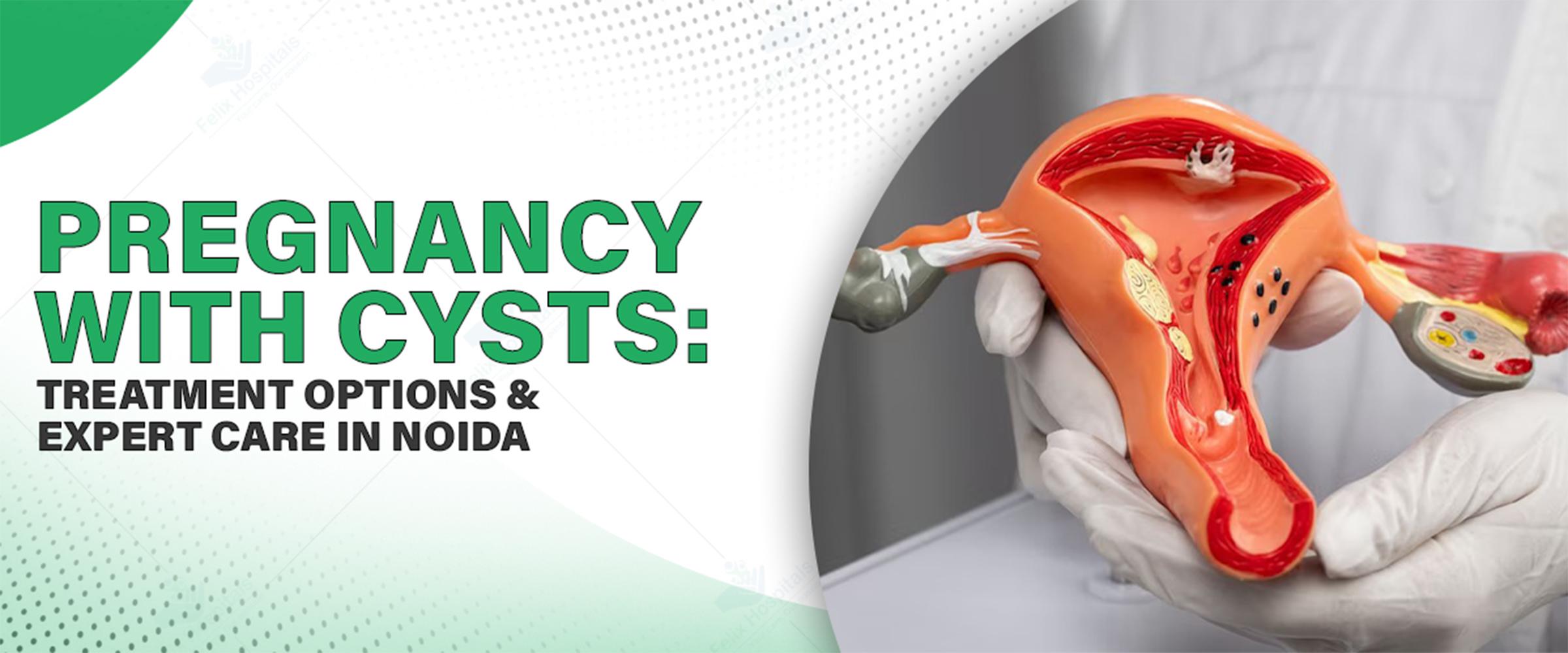
Ovarian cysts — what are they, really? Think of them as little fluid pockets that show up on your ovaries. They’re pretty common, especially when you’re pregnant. Usually, they don’t cause any trouble.
Many women find out they have one during a routine ultrasound in the first trimester. Often, it’s a corpus luteum cyst, which actually helps support your pregnancy early on by producing hormones. These usually go away by the second trimester without you even noticing.
That said, not all cysts are the same. Some can be:
Dermoid cysts – made of tissue like skin or hair (weird, but true)
Endometriomas – linked to endometriosis
Cystadenomas – filled with watery or sticky fluid
Polycystic ovaries are part of a hormonal condition called PCOS
Most of them are harmless, but if a cyst is large, painful, or has a strange appearance, your doctor might want to keep a closer eye on it.
If you’ve been diagnosed and you're unsure what it means, you can always look into pregnancy with cysts treatment in Noida to get expert advice.
In most cases, it is usually not something to panic about. Many women go through pregnancy with a cyst and never have any major issues. If it’s small (say, under 5 cm) and looks simple on the scan — meaning it’s just fluid with nothing weird inside—then chances are, you’ll be fine.
That said, sometimes cysts can cause trouble. Not always, but it happens. Such as:
Ovarian torsion: A bigger cyst might cause the ovary to twist (that’s called torsion), and that can be really painful and needs quick treatment.
Cyst rupture: Sometimes a cyst just bursts. That situation can be painful and somewhat frightening.
Delivery issues: Rare, but if a cyst is sitting in an awkward spot, it could get in the way during labour.
Cancer risk: Very rarely, a cyst might get in the way during labour, or, in even rarer cases, raise concerns about cancer—but that’s uncommon in pregnancy.
Regular ultrasounds help keep everything in check. And if you suddenly feel sharp pain, bloating, or something that just feels off, don’t ignore it.
Alright, so not every cyst needs a doctor fussing over it every day. But there are times when you shouldn’t just wait it out. Knowing when to check in with a specialist can really make a difference.
It's advisable to schedule an appointment as soon as possible:
The cyst is on the bigger side (anything over 5 or 6 cm)
It looks a bit odd on the scan — like it’s not just fluid, or has solid areas
You’re having pain that doesn’t go away (or it suddenly gets worse)
You feel super bloated or notice your belly swelling up more than usual
You get symptoms like dizziness, nausea, or even fever
You’ve had issues before — like PCOS, endometriosis, or fertility struggles
The best gynecologist in Noida usually start with a closer ultrasound and might follow up with an MRI or some blood work — just to rule out anything serious. And honestly, regular follow-ups can be a huge relief because you’ll know exactly what’s going on.
If you're in Noida, it’s worth visiting a hospital that’s used to handling this stuff — especially places that deal with pregnancy-related complications regularly.
Every pregnancy is different, and so is every cyst. Some are tiny and don’t cause a fuss. Others are a bit more stubborn — or uncomfortable. So the treatment really comes down to the size, how it looks on the scan, and whether it’s bugging you or not.
Here’s how it usually goes:
Just Keeping an Eye on It
In a lot of cases, they don’t do anything right away.
If it’s small and not causing trouble, they just monitor it
You’ll probably have a few more ultrasounds to make sure it’s not growing or twisting
No medicine. No surgery. Just watch and wait
Honestly, most of these cysts shrink or go away by themselves. Super low-key.
If it’s a little uncomfortable (but not dangerous), they might suggest stuff like:
Taking paracetamol if the pain is annoying
Drinking more water
Taking it easy for a bit — no lifting heavy stuff or overdoing it with workouts
Note: only take the medication as directed by your physician; otherwise, it could be harmful to you.
Okay, so this part can sound a bit scary, but sometimes surgery is the safest option. That’s only when:
The cyst is big in size.
It looks weird on the scan (solid areas, not just fluid)
It’s causing severe pain
Or there’s a risk it might twist or burst
If that happens, surgery is usually done in the second trimester — not too early, not too late. That’s considered the safest window.
Doctors often go for laparoscopy (tiny cuts, faster healing) instead of open surgery, if possible. And no — it doesn’t mean anything bad for the baby. Most people recover well and carry on with their pregnancy just fine.
Usually, the doctor might just say, “We’ll watch it and see.”
And that’s good news. It means:
The cyst’s probably small
It’s not bothering you
And nothing strange showed up in the scans
So what happens next? Not much, actually.
You’ll just go in for some follow-up ultrasounds now and then — just to be sure it’s not growing or twisting or anything.
Now, if the cyst is large, painful, or looks suspicious — that’s when doctors start thinking about surgery.
Here’s the deal:
They typically wait until the second trimester (14–22 weeks) because that's safest for both you and baby
If possible, they'll perform laparoscopy (small incisions, faster recovery, less pain)
But if the cyst is quite large or in an awkward spot, they may need to perform open surgery instead
It sounds scary, but the best gynecology surgeon in Noida do it with a great deal of caution. They try to keep both you and the baby safe — always.
If you are being treated, find out more about ovarian cysts in pregnancy and how they are treated safely without compromising the health of the baby.
Worried about having a cyst in your pregnancy? Book an appointment with the best hospital in Noida to get safe care by experts for your well-being and your baby's.
Ovarian cysts in pregnancy are more frequent than most people appreciate, and in the majority of instances, they do not disrupt the progression of a normal pregnancy. But they need to be addressed—particularly if they are large, complicated, or symptomatic.
The secret is early diagnosis, precise diagnosis, and a treatment
plan suited to your specific circumstances. If you require straightforward monitoring or surgery to remove it, professional attention makes the difference in reaching the correct conclusion.
If you are pregnant and have been diagnosed with a cyst, don't worry. Contact best hospital for pregnancy with cysts treatment in Noida for professional assessment and a tailored care plan that ensures both your safety and your child's.
Q1. Do ovarian cysts resolve with pregnancy?
Ans: Yes, they often do. Particularly corpus luteum cysts that develop early in pregnancy tend to reduce in size and resolve by the second trimester without any treatment.
Q2. How are ovarian cysts diagnosed with pregnancy?
Ans: They are typically found on a normal ultrasound in early pregnancy. If indicated, your physician might order other testing such as MRI or a blood draw to further assess the cyst.
Q3. What is a dangerous ovarian cyst size during pregnancy?
Ans: Cysts >5–6 cm might need careful follow-up. Those >10 cm, or with features of complexity (solid components or intracystic bleeding), might need surgery to avoid complications.
Q4. What are the signs of an abnormal ovarian cyst during pregnancy?
Ans: You need to see a doctor if you experience:
Severe, sudden pain in the abdomen
Heavy bloating
Nausea or vomiting
Dizziness or syncope
Vaginal bleeding
Fever with pain (may be a sign of infection or torsion)
Q5. Will I be able to have a normal delivery if I have an ovarian cyst?
Ans: Yes, many cysts won't get in the way of normal vaginal birth. But if the cyst is very big and in a position to block the birth canal, a cesarean delivery might be suggested.
Explore the causes, symptoms, and best treatment options for ovarian cysts after pregnancy. Find expert care in Greater Noida.
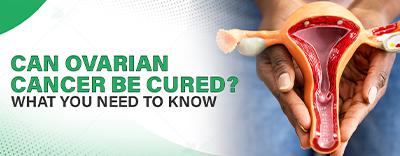
Can ovarian cancer be cured? Early detection plays a critical role. This article explores the chances of cure, available treatment options, survival rates, and the importance of regular screenings for timely diagnosis and improved outcomes.


Subscribe to our
© Copyright 2026. All Rights Reserved by Felix Healthcare Private Limited
Design and development by :


 +(91)9667064100
 Emergency : +(91)9667064100