 Emergency:
  WhatsApp

Subscribe to our
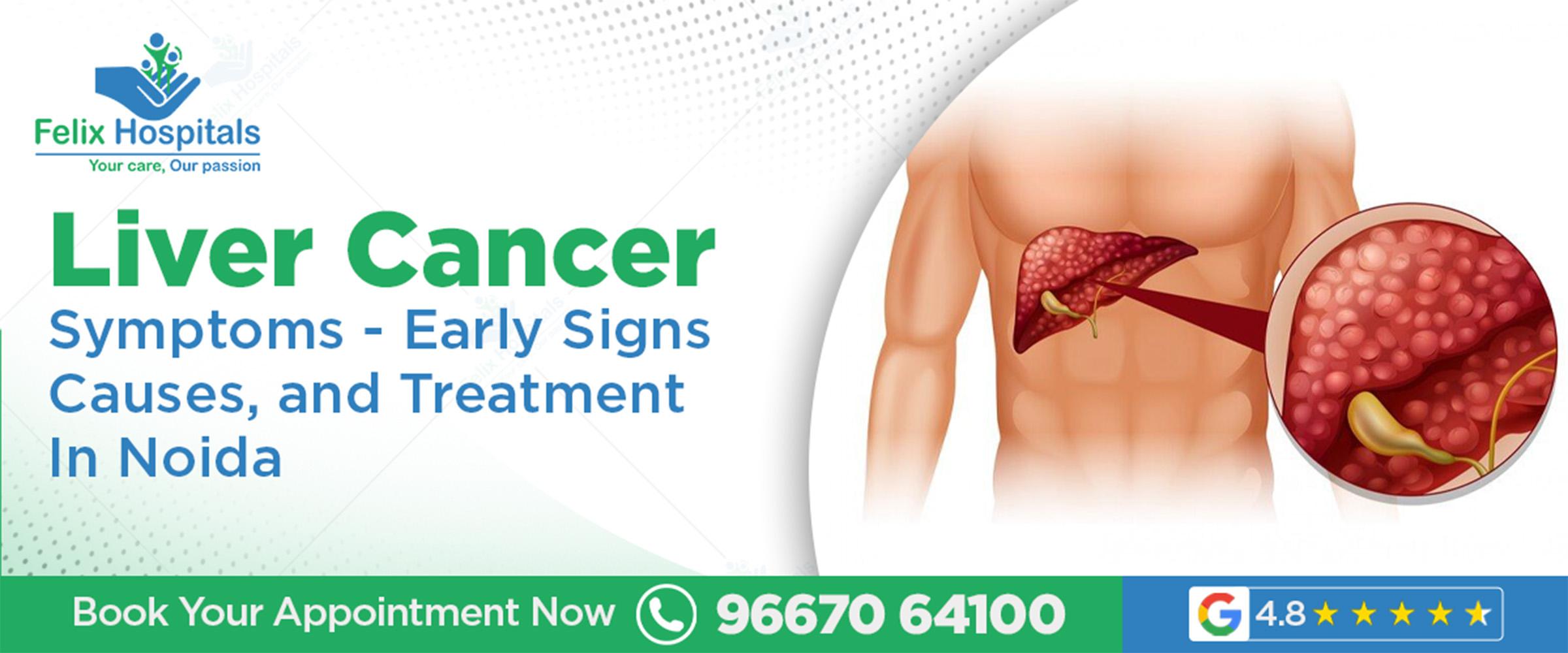
Liver cancer is a severe and possibly fatal disease which in its early stages develops without much but silent indication. Some patients also do not even have apparent pain before the disease progresses, and it is highly crucial to learn that as soon as possible and seek medical help promptly. Liver cancer symptoms and treatment should be known in various cities such as Noida where cases of liver diseases related to lifestyle are increasing, and hence, these can be used to treat the diseases, and the liver to help increase the chances to live.
The importance of early detection is crucial in managing liver cancer, because the evaluation of success of the treatment mostly depends on the stage the liver cancer was diagnosed.
Suffering chronic hepatitis-related symptoms? See a doctor of Noida that specializes in liver cancer. Call +91 9667064100 to book an appointment.
Liver cancer is a disease of the liver cells, which is medically known as primary liver cancer. Hepatocellular carcinoma is the most prevalent and is formed out of the main liver cells. The disease in most situations comes with the long term liver damage or chronic diseases that worsens the liver functionality with time.
Recognising the early symptoms of liver cancer allows patients to seek medical evaluation before irreversible damage occurs.
The primary issue surrounding liver cancer is the fact that the liver is in such a way that the liver is capable of performing normal functions even when part of it is impaired. This implies that its symptoms can be mild or because of a common digestive intolerance or fatigue.
Patients often overlook the first signs of liver cancer because they appear mild, nonspecific, or gradual. The disease can be in its advanced stage before even clear symptoms are evident.
Liver cancer will not necessarily present itself with severe pain at an early stage. Nonetheless, there are signals that the body might give out some changes.
The early signs can be characterised by:
Constant dizziness and lack of strength.
Weight loss or loss of appetite that has no reason.
Generalised upper right abdominal mild discomfort.
Satisfied with eating small portions.
Understanding what are the early signs of liver cancer? can encourage early medical consultation and improve prognosis.
The symptoms become more pronounced as liver cancer advances and it may affect normal daily life.
These symptoms may include:
Constant abdominal pain/swelling.
Kelinefelter (yellowing of the skin and eyes)
Dark urine and pale stools
Nausea or vomiting
Easy bruising or bleeding
Ignoring advanced symptoms may delay diagnosis and limit available liver cancer treatment options.
A number of predisposing factors cause liver cancer. Prolonged destruction of liver cells predisposes an individual to the risk of an abnormal growth of cells.
Common causes of liver cancer disease include:
Hepatitis B or C infection made chronic.
Cirrhosis of the liver because of alcohol or fatty liver disease.
Obesity and metabolic diseases.
Long-term exposure to toxins
The knowledge of liver cancer causes an opportunity to provide high-risk people requiring frequent screening.
Some people are susceptible to the development of liver cancer because they have other health related problems or lifestyles.
High-risk groups include:
Liver disease patients with a long history.
Those that have a history of liver cancer in the family.
Individuals having uncontrolled diabetes/obesity.
Long-term alcohol consumers
With early monitoring, complications and benefiting outcomes can be achieved.
Planning of treatments requires early diagnosis. Physicians will depend on a clinical assessment coupled with imaging and lab examination.
To answer how is liver cancer diagnosed?, specialists may recommend:
Liver function and tumour markers blood tests.
Imaging: Ultrasound/CT scan.
MRI to provide in-depth liver diagnosis.
Focal liver biopsy
Proper diagnosis assists in the identification of the stage of the disease and the best treatment, which is desirable.
Staging is used to refer to the extent to which cancer has disseminated in or even outside of the liver. It plays a vital role in the determination of treatment.
Stages are based on:
Tumor size and number
Blood vessel involvement
Liver function status
Spread to other organs
The initial stage of liver cancer has better and less invasive treatment versions.
Depending on the stage of cancer, liver functionality, and physical conditions of the patient, treatment is done. The timely diagnosis increases the scope of treatments.
Common liver cancer treatment options include:
Depression of the tumour through surgery.
Liver transplantation among patients who are selected.
Targeted therapy and immunotherapy.
Chemotherapy/radiation treatment.
The best treatment of liver cancer is assessed by the doctors individually.
The non invasive tumour is considered to be surgery because the liver function is intact and localised.
Surgery can be performed by:
Partial liver resection
Excision of tumour tissue with clearance of their margins.
In case of early surgery, surgery provides the greatest likelihood of a lasting survival.
The patients are not everyone who qualifies to undergo a surgery. The non-surgical intervention with such situations assists in the control of disease.
These may include:
Radiofrequency ablation
Transarterial chemoembolization
Systemic therapies
Understanding how liver cancer is treated helps patients make informed decisions about care.
Late diagnosis minimises the efficacy of treatment and complicates it. Rapid treatment may reduce the development of the disease and increase the quality of life.
The patients treated with liver cancer close to me at the early stage have a higher chance of survival and remission of the treatment complications.
Noida is a place where advanced diagnostics and professionals in the treatment of liver diseases can be started. Gastroenterologists, oncologists, and surgeons are treated multidisciplinarily, which guarantees the colonisation of care.
A doctor specialising in liver cancer should be consulted in Noida to enable patients to be diagnosed on time, treated in stages, and provide the follow-up adequately.
The management of liver cancer entails medical intervention, change in lifestyle and emotional support.
Patients are advised to:
Maintain a balanced diet
Avoid alcohol and smoking
Take prescribed drugs.
Attend regular follow-ups
Nurturant care enhances the physical and psychological quality of the treatment process.
Although liquidity prevention is not possible in all cases, risk reduction measures can be used to reduce the chances of developing liver cancer.
The preventive measures involve:
Hepatitis vaccination
Periodic hepatic screening.
Eating a healthy body weight.
Reducing the use of alcohol.
High-risk individuals are of great importance especially when it comes to early screening.
Searching where to get expert treatment of liver cancer near me? Observe early diagnosis and treatment call +91 9667064100 now.
Liver cancer is a serious illness that often shows no symptoms until it reaches an advanced stage. Knowing the early warning signs and getting tested on time is very important. Early medical care can greatly improve treatment results. In Noida, patients benefit from modern diagnostic tools and personalized treatment plans under expert care. Consulting an experienced liver doctor in Noida at the earliest stage remains the most important step to improve survival chances and quality of life.
Some early signs are tiredness, loss of appetite, and mild stomach pain.
Some early signs are tiredness, loss of appetite, and mild stomach pain.
Ans. Some early signs are tiredness, loss of appetite, and mild stomach pain.
Ans. Yes, treatments work better on liver cancer that is still in its early stages.
Ans. Most of the time, these cases are linked to long-term liver problems, but not always.
Ans. To make a diagnosis, doctors may use imaging tests, blood tests, and sometimes a biopsy.
Ans. People who have hepatitis or chronic liver disease should get screened on a regular basis.
Advanced liver cancer treatment in Noida offering surgery, targeted therapy, immunotherapy, and minimally invasive care by experienced specialists.

Explore essential information about breast cancer, including its symptoms, causes, types, and treatments, to stay informed and proactive about your health.
Lung cancer is a serious condition that starts in the lungs and can spread to other parts of the body.


Subscribe to our
© Copyright 2026. All Rights Reserved by Felix Healthcare Private Limited
Design and development by :


 +(91)9667064100
 Emergency : +(91)9667064100