 Emergency:
  WhatsApp



Subscribe to our
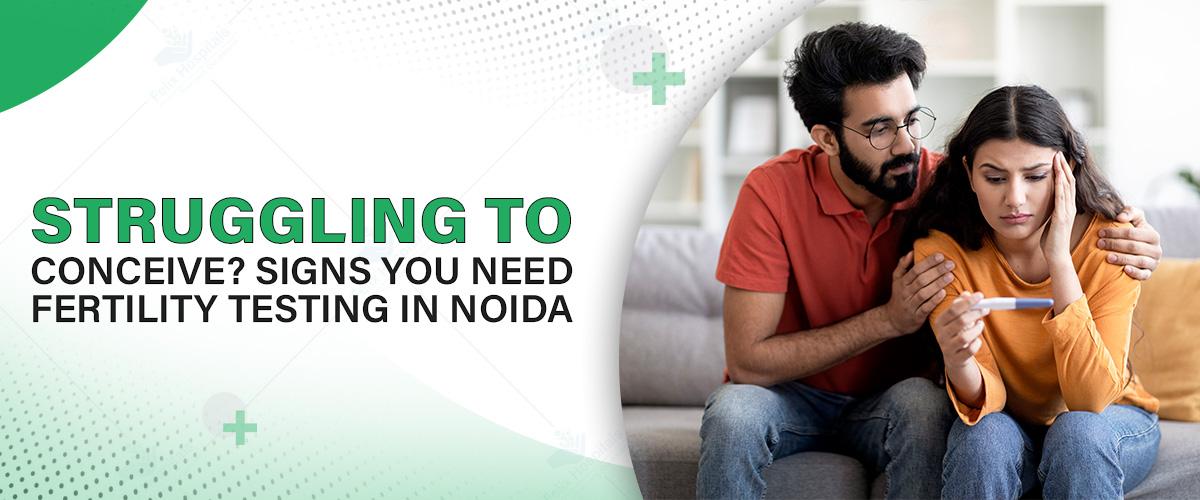
Beginning a family is every couple's dream, yet the times conception does not come easily as expected. If for months you have been trying but haven’t conceived, it is normal to be anxious, puzzled, or even exhausted. Determining the signs that determine that you should be tested for infertility can be insightful and direct you to appropriate medical care.
Because of advanced medical technology, couples today have more options to resolve fertility issues than at any point in history. If in doubt whether it is yet the appropriate moment to look for care, the following guide takes you through the important warning signs and when to visit experts for fertility testing in Noida and need a professional help for Conceiving.
If conception has been challenging for you and you identify with any of these symptoms, wait not. Call us today at +91 9667064100.
Fertility tests detect the reasons for difficulty conceiving. Both men and women may suffer from fertility-related issues, and sometimes multiple reasons may be the situation. Testing early offers:
Rapid treatment and diagnostic pathways
Less stress and ambiguity
More likelihood of successful pregnancy
A clear plan that is tailored to your individual health needs
At times delaying medical analysis can worsen issues, so it is important to recognize when to take tests for infertility.
One of the initial questions that come up for couples is, "How long to try before testing for fertility?
Women under 35 are typically advised to try for at least 12 months before medical evaluation.
Women over 35 years old should test after 6 months of attempts.
If you experience abnormal cycles, reproductive illness history, or if your husband has known medical problems, testing could be suggested even earlier.
Recognizing the indicators of difficulty conceiving and pursuing fertility tests promptly might conserve significant time and enhance results.
Here are the strongest predictors that it is time to access professional assessment:
In case your menstrual cycle is irregular or you often skip some periods it may be a sign of hormonal disorders, polycystic ovary syndrome (PCOS) or other ovulation issues.
Egregious cramps, persistent pelvic pains, excessive bleeding can indicate such conditions as endometriosis or fibroids, which can result in infertility.
The most obvious indicator that you should undergo fertility testing is that you have been unable to conceive, despite months of months of unprotected sex.
Repeat pregnancy loss may be a devastating event. It can also be an indication of some hormonal, genetic, or structural issues that need to be enquired.
The fertility can be compromised by thyroid diseases, diabetes and some autoimmune diseases. In case you have such conditions early assessment is suggested.
Pregnancy is not purely a female problem, low sperm count, low motility, or hormonal imbalance in men can severely limit the possibility of getting pregnant. Such symptoms as erectile dysfunction, low sexual drive, or testicular issues should not be overlooked.
There is an inherent decline in fertility with age particularly after 35 years in women. Although in men there can be a decline in the quality of sperms with age. When age is a variable, then the testing is more urgent.
On initial consultation to a fertility hospital in Noida, experts start with physical examination and medical history. Tests may be:
For Women:
Ovulation tests
Hormonal blood tests
Ultrasounds for investigation of ovaries and uterus
Hysterosalpingography (to evaluate fallopian tubes)
For Men:
Semen analysis (count, motility, morphology
Hormone testing
Genetic or imaging tests as indicated
They help to formulate a personalized plan, and that may be medication, assisted reproductive techniques, or modifications to one's lifestyle.
You might want to seriously consider whether:
You've tried for 12 months (under 35) or 6 months (over 35) without conceiving.
You experience painful or abnormal menstrual bleeding.
Either of the spouses has a diagnosed medical or genetic disease.
There is a history of miscarriages or reproductive issues.
Seeking early intervention reduces confusion and brings hope to couples that otherwise find themselves at deadlock.
Fertility problems don't just affect physical health—they can be psychological and emotional too. Anxiety, guilt, and isolation are symptoms. Support from the partner, counseling, and behavioral modifications such as healthy diet, exercise, and stress reduction can reduce the experience to manageable components. Diagnostic testing also relieves the anxiety, so that individuals feel active rather than passive.
Make an appointment for fertility testing at a reputable fertility center in Noida. This is the first step toward starting your family.
Parenthood is such a personal experience, and experiencing challenges is not out of the question. Identifying the warning signs that you require fertility testing early enough and when to request fertility tests can significantly swing the odds in your favor of achieving success. If it's something that results from irregular menstrual cycles, age, or unforeseen problems, fertility experts can take control of helping you through advanced testing and custom treatments.
If you have been trying without success and now wish to take that next step, see seasoned doctors for fertility check-ups in Noida. Selecting the correct fertility hospital in Noida guarantees sensitive care, state-of-the-art facilities, and encouragement to bring you that much closer to that dream of becoming parents.
Q1. When is the best time to take fertility tests?
Ans: Doctors normally tell women under 35 to attempt to get pregnant naturally for at least a year before getting medical treatment. If a woman is over 35 and has been trying to get pregnant for six months, she should get her fertility tested. If you already know you have health problems or your periods are irregular, it's best to see a doctor sooner.
Q2. What signs can mean that you need to take fertility tests?
Ans: Signs that something is wrong include having periods that are not regular or don't happen at all, terrible cramps, repeated miscarriages, or not being able to get pregnant after months of trying. Men may also need to be tested if they have a low sperm count, poor motility, or sexual problems.
Q3. Does aging truly have an effect on fertility?
Ans: Yes. After age 35, a woman's fertility naturally goes down, and males may also notice that their sperm quality goes down as they get older. Fertility tests can assist figure out how well a person can reproduce and help doctors suggest the best treatments.
Q4. What tests do doctors do to check a woman's fertility?
Ans: Women may have blood tests to check their hormones, track their ovulation, have ultrasound scans, and check their fallopian tubes. These tests can tell if hormonal imbalances, problems with ovulation, or problems with the structure of the body are making it hard to get pregnant.
Turner Syndrome can impact fertility and reproductive health, causing challenges with ovarian function, hormone production, and pregnancy for affected women.

Understand the primary causes of infertility in men and women. Learn about the medical, lifestyle, and hormonal factors that may affect your ability to conceive.


Subscribe to our
© Copyright 2026. All Rights Reserved by Felix Healthcare Private Limited
Design and development by :


 +(91)9667064100
 Emergency : +(91)9667064100