 Emergency:
  WhatsApp


Subscribe to our
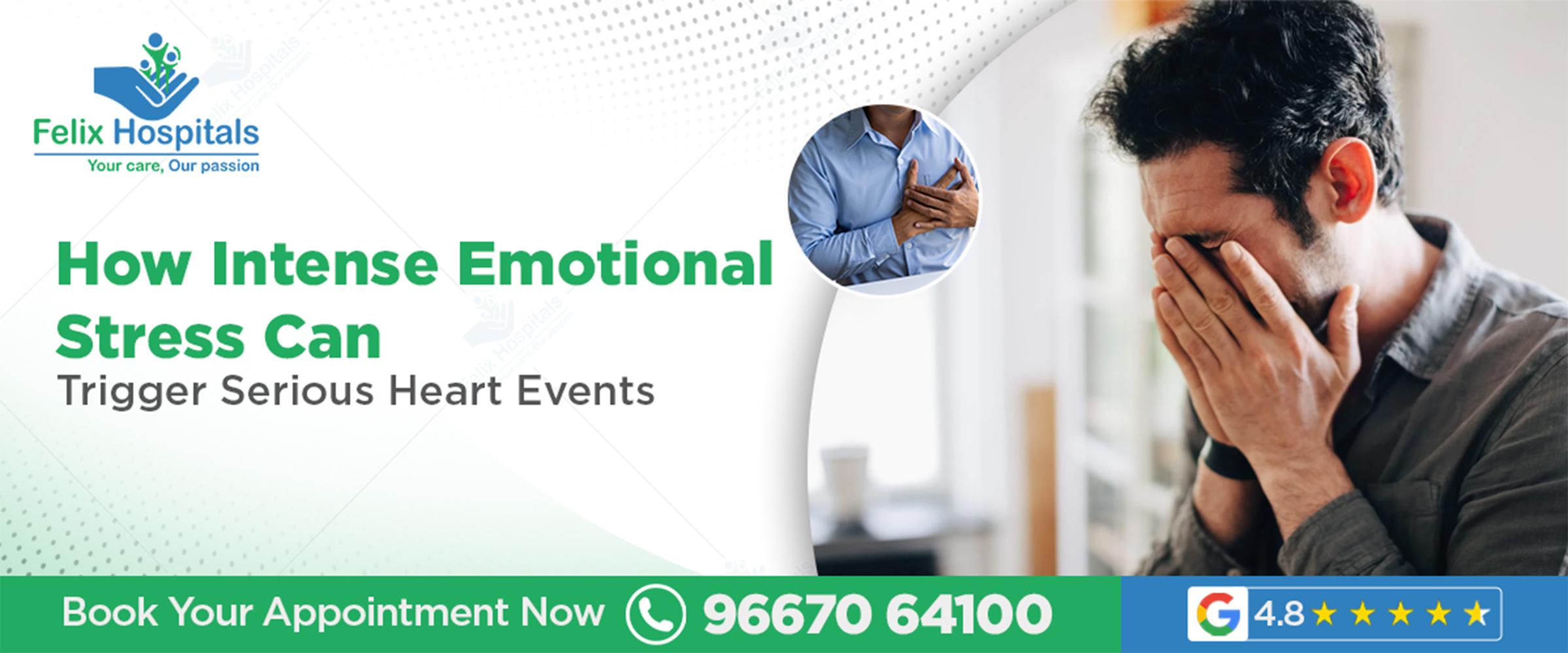
We've all heard people say "I'm so stressed, I could have a heart attack." But here's the thing—it's not just a figure of speech. The connection between emotional stress and heart health is real and dangerous.Sudden sorrow, extreme anger, terror, or extreme shock don’t just leave you feeling emotionally drained but they can trigger severe, potentially fatal heart issues.
In today’s world, intense emotional stress is quietly becoming a major cause of heart emergencies. Even those, who believe that they are in the best of possible health are not immune.The best cardiologist in Noida not only treats heart conditions but also understands emotional concerns linked to cardiac health. Compassionate care and expert guidance help patients feel supported both physically and emotionally.
Experiencing chest discomfort or palpitations during stress? Consult specialists at the Best Cardiologist Hospital in Noida. Call +91 9667064100 for immediate guidance.
During emotional stress, your body produces powerful chemicals —stress hormones, primarily adrenaline and cortisol. Consider them as your body’s emergency alert system.
For someone with hidden heart problems or risk factors, this sudden overload can push the heart over the edge.
Chest pain during stress — It can occur due to muscle tension, anxiety, or increased heart workload. However, persistent or severe pain should always be medically evaluated.
Shortness of breath anxiety— It is common during panic or high-stress situations.
Fast or irregular heartbeat — Adrenaline makes your heart beat faster and harder than usual. In individuals with underlying heart disease it can also cause potentially life-threatening rhythms.
Blood pressure spikes —Stress hormones cause blood vessels to suddenly constrict, making the heart pump against more resistance. Multiple such spikes over a period of time impair artery walls.
Increased blood clotting —Cortisol increases the thickness of the blood and its tendency to clot. That, in turn, increases the likelihood of a sepsis-related blockage developing in the heart arteries.
Decreased blood flow to the heart —During stress the arteries narrow, which results in less oxygen being delivered to the heart muscle which can result in chest pain or even a heart attack in severe situations.
Inflammation of blood vessels – Chronic stress hormones irritate causing inflammation of the arterial lining and this promotes plaque build-up over time.
Change in sleep patterns — Increased cortisol at night inhibits restful sleep which is when your heart naturally recovers and rebuilds from the day’s stress and strain of life.
Slow breathing techniques and stress management can help, but recurring symptoms need assessment.
Heart triggers aren't just from exercise or underlying disease. When feelings get intense the body responds as if one is under physical threat — issuing a blast of stress hormones, constricting blood vessels, forcing the heart to work far harder than it should. This emotional overload can set off a chain reaction inside the cardiovascular system that is just as dangerous as any physical exertion.
Acute stress occurs suddenly and is brief — a near-miss accident, a big argument, or breaking news. Your heart races, your blood pressure spikes and then it comes back down after the moment passes. Most healthy hearts have no problem with that.
Chronic stress is the real silent killer. When stress is your day-to-day reality — a tough boss, financial strain, a rocky relationship — your body never really turns off the alarm. Cortisol and adrenaline continue to circulate, blood pressure remains elevated, inflammation builds quietly and your arteries are subjected to a slow, relentless battering day after day.
Over the course of months and years, this persistent stress weakens the heart muscle, speeds up the development of plaque in arteries, and significantly raises the risk of a heart attack or stroke. The insidious thing about chronic stress is that it so rarely feels dramatic — it just feels like life. And by the time it begins to show signs, the damage has already been years in the making.
Hidden Long-Term Heart Risks
When stress is your new friend, the danger increases. There is always a state of emergency in your heart, due to constant stress. This in the long run does real harm:
Weakening of the heart muscle — The heart's overwork gradually diminishes the pump function of the heart, resulting in heart failure.
Blood vessel inflammation — Chronic stress agitates and inflames the lining of arteries, causing them to become stiff, narrow, and much more susceptible to obstructions.
Faster plaque development — Inflammation within the arteries accelerates the formation of fatty plaques, increasing the risk of coronary artery disease decades before symptoms emerge.
Hormonal disruptions — Sustained cortisol elevation throws off the entire endocrine system, impacting blood sugar, weight and cholesterol, each of which has a direct influence on heart health.
Atrial fibrillation risk increased — Stress for a long period of time can bring on atrial fibrillation, which is an irregular heart rhythm that greatly increases the risk of stroke and heart failure.
Vagus nerve damage — Lingering stress damages the nerve that slows the heart when it begins to race, so your heart gradually takes longer and longer to settle down to its normal resting rate.
Suppressed immune response — Chronic stress also suppresses immunity, making it harder for the body to battle the very inflammation doing slow damage to the heart from within.
A great part of the cardiac emergencies causes occur due to psychological stress rather than physical issues.
High Risk Emotional Triggers include:
Extreme workplace pressure
Major issues in the relationship
Chronic anxiety or depression
Sudden loss of a loved one or grief
Financial stress and debt pressure
Divorce or painful separation
Loneliness and social isolation
Trauma from accidents, abuse, or violence
Fear of a serious medical diagnosis
Family conflicts and domestic tension
Job loss or sudden career setbacks
Academic pressure in young adults and students
Prolonged sleep deprivation due to emotional disturbance
The scary part? A heart attack can happen even while sitting completely still. No exertion, no warning, no trigger — that is, accumulated weight of chronic emotional strain just overwhelms the heart.
And that’s why mental stress is no longer simply a mind problem. Cardiologists today recognise the link between mental stress and heart disease being as dangerous as high blood pressure, diabetes, or smoking. All of these are significant risk factors for heart failure and coronary artery disease.
The stress-induced heart attack occurs when emotional strain causes dangerous spikes in blood pressure and severe disruptions in heart rhythm. The hormones releasing the hormones of stress narrow your heart arteries, reducing the oxygen flow to the heart muscle.
Heart problems due to stress often develop silently, with symptoms that are easy to overlook. They are confused with acidity, fatigue, or even anxiety by people.The sudden emotional stress affects the heart in many ways.
Warning signs of stress-related heart problems include:
Palpitations of the heart during stress
Chest discomfort or tightness
Dizziness or lightheadedness
Shortness of breath during emotional moments
Unexplained fatigue even after a full night of sleep
Cold sweats without any physical exertion
Nausea or an unsettled stomach during stressful situations
Pain or discomfort radiating to the jaw, neck, or left arm
Feeling of doom or intense anxiety without a clear reason
Heart skipping a beat or fluttering sensation in the chest
Waking up at night with a racing heart
Headaches that coincide with periods of high stress
Sudden weakness or tiredness in the arms or legs
Persistent low energy that no amount of rest seems to fix
People at higher risk of stress-related heart problems include:
People with high blood pressure
Diabetics
Smokers
Those with a family history of heart disease
Patients with underlying heart disorders.
Stress-induced heart incidents may occur even in young individuals who are healthy.
What You Feel | Could Mean | What To Do |
Chest pressure during emotional moment | Heart strain | Call doctor immediately |
Heart racing constantly | Rhythm problem | See cardiologist within days |
Breathless during stress | Reduced oxygen to heart | Medical check needed |
Sweating + chest pain | Possible heart attack | Call emergency now |
Frequent palpitations | Stress affecting heart | Schedule cardiology visit |
Recognising the warning signs of a cardiac emergency can be life-saving. Stress-related heart problems often present with atypical symptoms, making them difficult to identify. This can lead to confusion, delayed diagnosis, and inadequate treatment Seek assistance, in case of:
Chest tightness
Rapid or irregular heart rate.
Shortness of breath.
Unexplained sweating.
Nausea or lightheadedness.
Radiating pain in the jaw, neck or arm.
It is a good idea to get an examination in the best cardiology hospital before the situation deteriorates. Cardiologists can:
Evaluate the reaction of your heart to stress.
Detect hidden heart conditions
Examine heart dynamics.
Create a personalised heart care plan
Early evaluation catches problems when they are still treatable
The check-up and treatment in the most appropriate cardiology hospital consist of:
Advanced heart testing.
24x7 Emergency Services
Long-term heart management.
Stress counselling and support.
Both physical and emotional treatment.
This holistic method provides improved outcomes as opposed to symptom management.
Emotional control is not merely about making yourself feel better, it is about protecting your heart. The heart attack episodes caused by stress cannot be prevented without the combination of several measures.
Manage stress – Deep breathing, meditation, yoga
Counseling – Talk to experts about your emotional difficulties
Exercise – 30 minutes a day makes the heart better able to cope with stress
Good sleep – 7 to 8 hours a night helps the heart recover
Eat healthy – Less salt, more fruits and veggies
Limit alcohol and caffeine – Both put the heart under more strain
Take your medications as prescribed – if you have heart conditions
Regular check-ups – Keep an eye on your heart health now and then
Protect your heart from stress-related risks with expert care at the Best Cardiology Hospital in Noida. Call +91 9667064100 to book your cardiology consultation today.
Intense emotional stress is a powerful but often ignored trigger for serious heart problems. Learning about the emotional stress and heart connection, recognizing signs early and receiving appropriate medical care can literally save your life. You can't separate emotional health and heart health — they're interconnected, closely intertwined, interdependent, and inseparable. Weighing your mental health isn't just about feeling better. It's about shielding one of the most crucial organs in your body from harm that accumulates quietly over decades. Don't let stress get the best of your heart. The right time to act is now — before symptoms appear, before damage sets in, and before a preventable emergency becomes a life-changing event. The Best Cardiology Hospital in Noida offers advanced heart care with experienced cardiologists and modern treatment facilities. Early diagnosis and professional treatment can lead to good heart and long life.
Q1. Can anxiety disorder damage my heart?
A: Not treating anxiety for a long time keeps your body in a constant state of stress. Over time, this can lead to high blood pressure, inflammation of the arteries, and a higher risk of heart disease.
Q2. I'm only 30 and healthy. Can emotional stress still cause a heart attack?
A: Yes. Heart problems caused by stress can happen to anyone, no matter how old they are. Young, healthy people have had heart problems caused only by sudden emotional shocks like extreme anger, fear, or grief.
Q3. How long does it take to fully recover after a heart attack caused by stress?
A: How quickly treatment was given and how bad the episode was will affect how long it takes to get better. With the right care, many people with heart problems caused by stress, like Broken Heart Syndrome, get better in a few weeks.
Q4. Can stress induce you to have a heart attack while you sleep?
A: Yes. Cortisol and other stress hormones don't completely turn off while you sleep, especially if you have chronic stress or anxiety. Most people don't know that heart attacks happen more often at night, and emotional stress is one of the reasons why.
Q5. Is it possible to find heart problems caused by stress in a regular ECG?
A: Not all the time. A routine ECG shows your heart at rest and may look completely normal, even in people who have heart problems caused by stress.
Understanding the symptoms, and knowing the different types of heart diseases are crucial for effective prevention and management.

Subscribe to our
© Copyright 2026. All Rights Reserved by Felix Healthcare Private Limited
Design and development by :


 +(91)9667064100
 Emergency : +(91)9667064100