 Emergency:
  WhatsApp
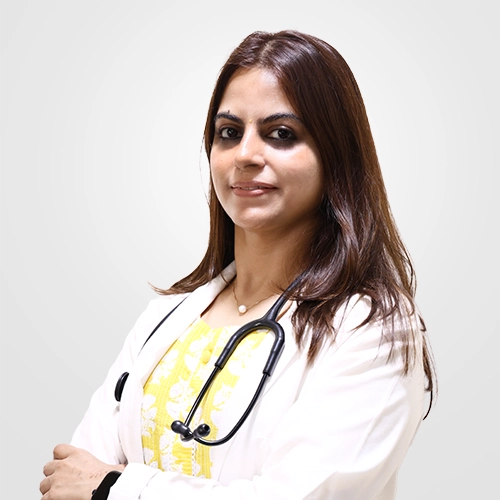
Dr. Sonakshi Saxena is dedicated to helping patients achieve better health through compassionate care and evidence-based medical treatment.

Subscribe to our
Take a look at your hands right now. In the last hour, you’ve likely touched your smartphone, a lift button, a door handle, or perhaps the railing of the Noida Metro. In a bustling city like ours, where we transition from the corporate hubs of Sector 62 to the residential high-rises of Sector 137,our hands are the most active tools we possess. Unfortunately, they are also the most efficient transport systems for pathogens.
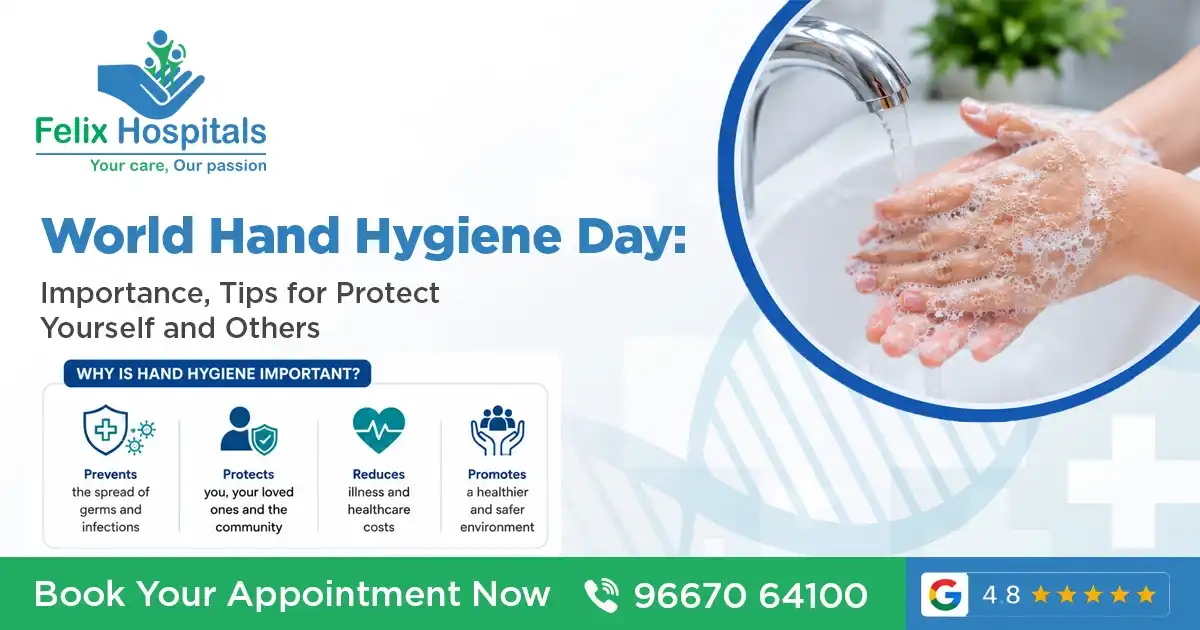
Every year on May , the global medical community observes World Hand Hygiene Day. While it may sound like a basic lesson from a primary school classroom, hand hygiene remains the single most effective, low-cost intervention in modern medicine.
At Felix Hospital, Noida, our General Medicine department sees a recurring pattern: a massive percentage of the infections we treat,from persistent stomach bugs to seasonal respiratory flus, could have been halted at the bathroom sink. As the best general physician hospital in Noida, we believe that public health isn't just about high-end surgeries; it’s about the 20-second habits that keep our community out of the ER.
Because habits decay quietly. During COVID, hand hygiene compliance in Indian urban centres hit an all-time high. By 2023, studies showed it had dropped back to near pre-pandemic levels even among healthcare workers. World Hand Hygiene Day exists because human memory is short, and pathogens are patient.
When we talk about public health, we are talking about the "herd effect." If the majority of residents in a Noida housing society practice meticulous hand hygiene, the "viral load" in the shared spaces, the gyms, the parks, and the elevators, drops significantly. World Hand Hygiene Day serves as a critical "reset button" for our collective habits, reminding us that we are all responsible for the person standing next to us in the metro.
If we could see microbes with the naked eye, we would never touch a menu card or a currency note without flinching. The importance of proper hand hygiene in preventing infections is backed by staggering clinical data.
According to global health studies, proper handwashing can reduce deaths from diarrheal diseases by nearly 50% and decrease the risk of respiratory infections by 16% to 21%. In our clinical practice at Felix Hospital, we see that hand hygiene is the primary shield against:
Enteric Fevers (Typhoid): Highly prevalent in the NCR region, often spread through contaminated hands handling food.
Viral Gastroenteritis: The "stomach flu" that wipes out entire offices in Sector 62 every monsoon.
Conjunctivitis (Pink Eye): Spread almost exclusively through hand-to-eye contact.
Hepatitis A: A serious liver infection that thrives where hand hygiene is neglected.
To understand the role of hand hygiene in stopping the spread of germs, we have to look at the "Fomite Factor." A fomite is any inanimate object that can carry infection. Your office keyboard, your car’s steering wheel, and your child’s school bag are all potential fomites.
Germs don't jump from person to person; they wait for a bridge. Your hands are that bridge. When you touch a contaminated surface and then touch your nose, eyes, or mouth, which the average human does about 23 times an hour, you are essentially hand-delivering a virus into your system.
By washing your hands, you aren't just removing dirt; you are breaking the biological bridge. You are effectively "de-platforming" the bacteria before they can colonize your respiratory or digestive tracts.
Most people think they know how to wash their hands, but in our observations, 95% of people miss the most critical areas. Following these simple handwashing tips to protect yourself and others will ensure you are actually achieving medical-grade cleanliness.
The Wet Start: Use clean, running water. Temperature doesn't matter as much as the flow.
Lather Up: Use enough soap to create a thick foam. Soap is a surfactant; its job is to pry the germs off your skin.
The Scrub (The 20-Second Hustle): This is where most people fail. You must rub your hands for 20 seconds. If you don't want to sing "Happy Birthday," just count slowly to twenty.
Backs of Hands: Often ignored.
Between Fingers: Where moisture and bacteria hide.
Under the Nails: The most dangerous reservoir for germs.
The Thumb Twist: Don't forget your thumbs, they touch your phone screen the most!
The Rinse: Wash away the lifted germs thoroughly.
The Dry: Use a clean paper towel. Damp hands are 1,000 times more likely to pick up new germs than dry ones.
The Tap Trick: Use your towel to turn off the faucet. Don't touch that dirty handle with your newly cleaned hands!
While hand sanitizers are convenient for someone commuting on the Expressway, they are not a total replacement. Sanitizer kills most germs, but it does not remove dirt, heavy metals, or construction dust, all of which are common in Noida. If your hands are visibly dirty, sanitizer is useless. You need the mechanical action of soap and water.
In a city of high-rises and shared amenities, your home is your fortress. However, that fortress is breached every time a family member returns from work, school, or the mall. Many Noida families have working parents living with small children and elderly grandparents. Both the very young and the very old have compromised or developing immune systems. When you wash your hands the moment you enter your home in Sector 137, you are creating a "Bio-Buffer." You are ensuring that the pathogens you encountered at the office don't reach your toddler’s toy or your father’s medication.
Noida’s corporate culture involves shared spaces, hot-desking, and communal cafeterias.
At Felix Hospital, we don't just wait for you to get sick; we work to keep you healthy. We have earned the reputation of being the best general physician hospital in Noida because of our obsession with preventive medicine.
Our physicians are trained at India’s premier institutes and have a deep understanding of the local disease patterns in Noida, from seasonal Dengue spikes to hygiene-related Typhoid outbreaks. If a "simple" stomach bug isn't going away, our NABL-accredited lab can quickly run cultures to identify the exact bacteria, ensuring you aren't over-prescribed antibiotics.
In general medicine, we rarely get to offer a prevention that costs nothing, requires no prescription, and works immediately. Hand hygiene is that rare thing.
The patients who end up in our OPD with Typhoid in July or a Norovirus infection in November aren't unlucky. They're unaware of the biometric scanner they touched at 9am, the lift button at lunch, the phone they checked before eating at their desk. The chain is always traceable. And it's always breakable.
Twenty seconds of soap. That's the gap between a healthy monsoon and a week of IV fluids.
If you've already missed that window , if the fever has started, the stomach won't settle, or the fatigue isn't lifting , don't wait it out. Self-medicating with leftover antibiotics is one of the fastest ways to make a manageable infection significantly worse.
Come see us. Our General Medicine team at Felix Hospital has been managing Noida's seasonal infection cycles for years.Call us at +91 9667064100, we know what's going around right now.
No. Plain soap and water are just as effective at removing germs. The key is the friction and the time (20 seconds), not the chemicals in the soap.
Paper towels are generally preferred in public places because the mechanical action of wiping helps remove any remaining germs. Hand dryers, if not maintained, can sometimes blow bacteria back onto your hands.
No. It is ineffective against certain tough viruses (like Norovirus) and parasites. It also doesn't work if your hands are greasy or covered in Noida’s construction dust.
Always after using the washroom, before eating, after touching animals, after coughing/sneezing, and immediately upon returning home from outside.
Use a moisturizing soap and apply a fragrance-free hand cream after drying. Keeping your skin intact is important, as cracks in dry skin can become entry points for bacteria.
Our focus is on evidence-based medicine and preventive care. We combine advanced diagnostics with a senior team of physicians who understand the specific health challenges faced by Noida residents.
Yes. It takes that long for the soap molecules to break the chemical bonds that hold germs and oil to your skin. Rushing the process leaves the most dangerous pathogens behind.
World Hand Hygiene Day 2026 highlights the importance of proper handwashing to prevent infections and protect public health.

Understand the correct first aid steps to manage a seizure safely. Quick action, staying calm, and knowing what to do can help prevent injuries and ensure timely medical assistance.
Experiencing tingling in your hands or feet? It could signal a nerve-related issue. Consult our expert neurologists at Felix Hospitals to find the cause and get the right treatment today.

Subscribe to our
© Copyright 2026. All Rights Reserved by Felix Healthcare Private Limited
Design and development by :


 +(91)9667064100
 Emergency : +(91)9667064100