 Emergency:
  WhatsApp


Subscribe to our
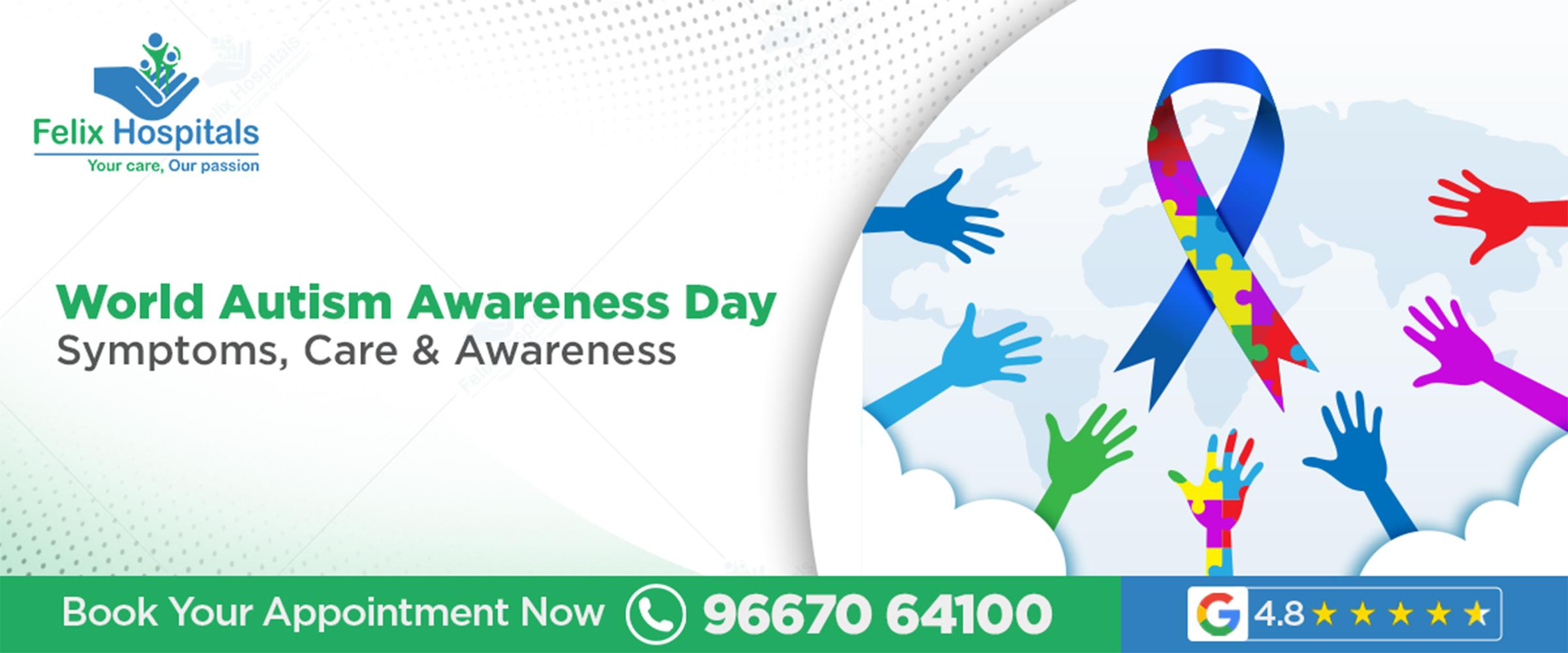
The World Autism Awareness Day serves as a reminder that early support and acceptance and understanding can transform the lives of children and families diagnosed with Autism Spectrum Disorder (ASD). Autism is not a disease or illness- it is a neurodevelopmental disorder that affects the way a child communicates, learns and how he or she interacts with the world. Through proper treatment, care and understanding, children with autism can be able to lead normal, healthy lives. Early consultation with the Best Neurologist in noida can help in early diagnosis and proper therapy planning. This guide mentions symptoms, causes, diagnosis, treatment and the ways in which parents and caregivers can offer the optimum support.
Noticing speech delay, poor eye contact, or social difficulties in your child? Early diagnosis and therapy can improve development outcomes. Call +91 9667064100 to consult a neurology specialist today.
Autism Spectrum Disorder is a developmental disorder that impacts on behavior, communication, and social interaction, making Understanding Autism Spectrum Disorder (ASD) important for early care. The spectrum is the term that implies that autism has no consistency in all children. There are children who can require life-long assistance, and there are those who become self-reliant adults who require minimum support.
Autism most commonly manifests itself during early childhood, in most cases before the age of 3. Early identification is vital in the process of ensuring that children acquire vital skills in life.
Children with autism may:
Having a problem with social communication.
Show repetitive behaviors
Like routines.
Demonstrate special strengths and abilities.
Early intervention can be important as the outcomes can be greatly enhanced by awareness.
The symptoms of Autism are either mild or severe and can be altered with the growth of the child, highlighting the need to recognize Common Signs and Symptoms of Autism early. In most cases, early signs are identified by parents.
Problems with Social Interaction
Limited eye contact
Problem with responding to their name.
Shy or does not like to interact with others.
Difficulty in interpreting feelings or facial expression.
Communication Difficulties
Delayed speech or no speech
Echolalia (repetition of words or phrases).
Having problems with saying needs or feelings.
Difficulty with instructions of simple type.
Behavioral Patterns
Monotonous actions (flapping hands, rocking)
High level of routine preference.
Distress change of routine.
Extreme interest in certain objects or subjects.
Sensory Sensitivities
Reacts emotionally in response to sounds, lights or textures.
Avoiding physical touch
Abnormal responses to smells or tastes.
In case several signs can be observed, it is best to have an early diagnosis.
One of the most crucial factors of autism care is early diagnosis, emphasizing Early Diagnosis and Screening Importance in improving outcomes. According to research studies, early therapy enhances language, behavior and learning skills.
Why Early Screening Matters
Helps start therapy sooner
Enhances communication abilities.
Increases social growth.
Minimizes behavioural difficulties.
Supports school readiness
Parents must take into consideration screening when the developmental milestones are delayed.
Milestones to Look at during Development
No babbling by 12 months
No words by 16 months
No two-word phrases by 24 months
Speech or social impairment at any age.
Early Intervention results in early Intervention and improved results.
The precise cause of autism has not been clearly comprehended but studies indicate that a mix of genetic and environmental factors could have caused it, making it important to understand Causes and Risk Factors of Autism.
Possible Causes
Genetic influences
The differences in the development of the brain.
Family history of autism
Problems during pregnancy or childbirth.
Risk Factors
Premature birth
Low birth weight
Advanced parental age
Certain genetic conditions
It is necessary to mention that the vaccines do not cause autism. This is a myth that has not been proved scientifically.
Autism is a spectrum so every child has his/her strengths and challenges, which is why knowing the Types of Autism Spectrum Disorders is important.
Major language and behavioral issues.
Mild autism of normal intelligence and good interests.
Symptoms that are not classified in other groups but still have an effect on development.
It is to know the type so that the doctors can develop individual treatment plans.
Autistic children usually have difficulty communicating and behaving, reflecting Behavioral and Communication Challenges faced daily.
Behavioral Challenges
Problem with adjusting to new surroundings.
Repetitive routines
Sensory overload meltdowns.
Limited flexibility
Communication Challenges
Trouble forming sentences
Problem with initiating conversation.
Difficult in social cues.
Face value interpretation of a language.
Therapy aids children to develop these necessary skills.
There is no single cure for autism, but therapy can greatly improve a child’s abilities and quality of life.
Therapy Type | Purpose | Benefits |
Behavioral Therapy (ABA) | Improves behavior and social skills | Enhances learning and independence |
Speech Therapy | Develops communication skills | Helps children express needs |
Occupational Therapy | Improves motor and daily skills | Supports independence |
Sensory Integration Therapy | Manages sensory sensitivities | Reduces anxiety and meltdowns |
Social Skills Training | Teaches interaction skills | Improves relationships |
Early therapy provides the best long-term results.
Parents are the most significant participants in the autism of a child, emphasizing the Role of Parents and Caregivers in Autism Care.
How Parents Can Help
Perform home-based therapy.
Foster daily communication.
Offer an organized environment.
Appreciate minor successes.
Be patient and understanding.
Coherence between treatment and home facilitates greater progress.
Early intervention programs are based on the development of the basic developmental skills in the early years, showing the Importance of Early Intervention Programs.
The advantages of Early Intervention
Better communication abilities.
Increased emotional control.
Increased independence
Close social interaction.
Children that undergo early intervention tend to excel in academics and sociality.
It adds up to little things every day, and following Tips to Support Children with Autism at Home can make a big difference.
Home Support Tips
Keep regular schedules.
Take visual schedules and charts.
Divide tasks into small jobs.
Provide easy to understand and straightforward directions.
Inspire play and interpersonal interaction.
Provide a sensory-friendly environment.
Each child has his/her way of learning: patience and consistency are important.
Awareness of autism is not limited to medical care, and promoting Awareness and Acceptance in Society is essential. Society should adopt acceptance and inclusion.
Why Awareness Matters
Minimizes stigma and misperception.
Encourages early diagnosis
Encourages non-discrimination education.
Helps the families emotionally.
Develops a more appreciative society.
Autistic children should be given an equal opportunity and acceptance.
Concerned about your child’s development?Early evaluation can make a life-changing difference. Call Now: +91 9667064100 to book a consultation with a neurology specialist.
World Autism Awareness Day is a wakeup call to us that awareness will result in acceptance, and acceptance will result in opportunity. Autism is not a disability, it is an alternate experience of the world. Early diagnosis, treatment, and support of the parents offer children with autism an opportunity to succeed and live a normal life.
In case your child has a late onset of speech, irregular eye contact, repetitious behavior, and socialization problems it is best to refer to a specialist and get an evaluation.
Yes. Developmental screening and behavioral assessment can also be used to diagnose autism at early ages of 18-24 months.
Autism is not a disease, it has no cure. Nevertheless, early treatment and intervention assist children in building communication, social and life skills.
Behavioral therapy, speech therapy, occupational therapy, and social skills training would be very helpful in enabling children to have better functioning day-to-day.
Many children with autism grow into independent adults with proper therapy, support, education, and early intervention.
Dr. P. S. Naga Srinivas is a skilled Consultant Neurologist with strong experience in managing various neurological disorders. He follows a patient-focused and evidence-based approach for accurate diagnosis and treatment of both acute and chronic neurological conditions, and is recognized among the Best Neurologists in Noida.
Recognizing the early warning signs of autism in children can help parents seek timely support and interventions for better development.
Explore effective treatment options for Autism Spectrum Disorder (ASD), helping children and adults improve communication, social skills, and overall quality of life.
Recognizing the early warning signs of autism in children can help parents seek timely support and interventions for better development.

Subscribe to our
© Copyright 2026. All Rights Reserved by Felix Healthcare Private Limited
Design and development by :


 +(91)9667064100
 Emergency : +(91)9667064100