 Emergency:
  WhatsApp


Subscribe to our
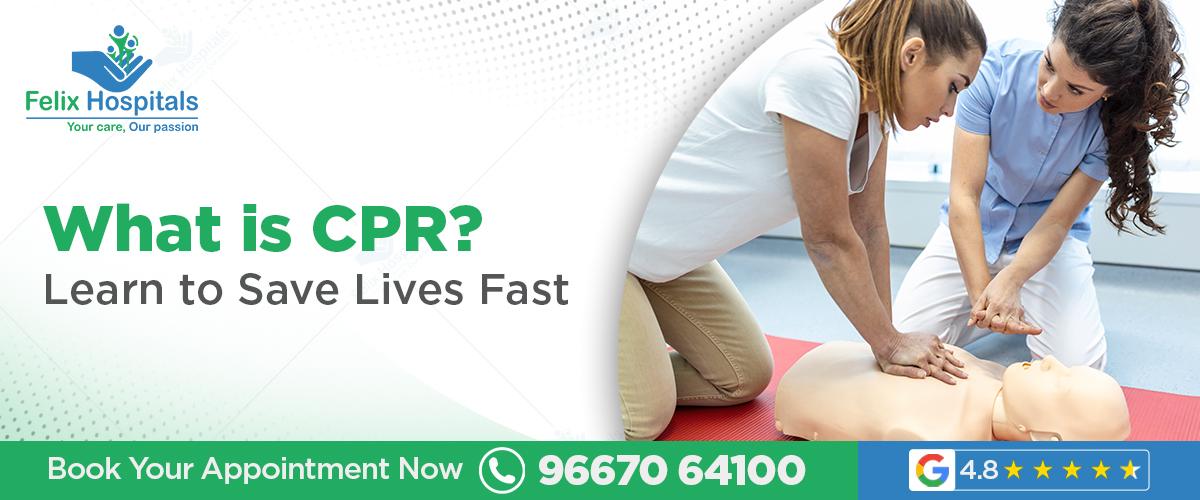
Disasters can strike suddenly — whether it is a cardiac arrest, drowning mishap, or sudden fall. At times like these, knowing something about what is CPR (Cardiopulmonary Resuscitation) can prove to be the difference between life and death.
CPR is a lifesaving intervention that maintains vital blood flow to the brain and heart when the heart becomes non-functional. CPR is a combination of chest compressions and rescue breaths that restores normal circulation until doctors arrive. Performing CPR immediately and correctly can double or triple a person's chances of survival.
If a person becomes unconscious due to a cardiac arrest or heart attack, immediate CPR can assist in keeping the oxygen supply to the vital organs. For accurate guidance and treatment of the heart, consultation with a seasoned Cardiologist in Noida is highly recommended.
Make a cardiac consultation or CPR orientation session appointment today by dialing +91 9667064100 in Noida.
CPR, or Cardiopulmonary Resuscitation, is a lifesaving therapy done when a person's heart and breathing have ceased. It continues to flow oxygen-rich blood to the vital organs, most importantly the brain, to prevent damage.
Brain cells begin to perish in minutes if not treated with CPR because they're not receiving the oxygen they require. Knowing how does CPR work isn't just for paramedics and doctors — it's a skill that everyone should learn.
The heart is the body's pump. When it fails, blood circulation halts, causing loss of consciousness and possible death. CPR procedures are meant to manually mimic the function of the heart — chest compression assists in circulating blood, and rescue breathing delivers oxygen.
When done repeatedly, CPR provides minimal blood flow, allowing physicians to apply defibrillators and drugs to reboot the heartbeat. This transient lifeline between collapse and medical attention is what gives CPR its lifesaving status.
Adult CPR is a combination of strength and accuracy. Here's how:
Check for responsiveness – The person is tapped and yelled at to respond.
Call for help – Call emergency services or get someone nearby to call for you.
Check for breathing – If the person is not breathing or is only making a gasping sound, begin CPR.
Place the heel of one hand in the center of the chest.
Put your other hand on top and interlock your fingers.
Push hard and fast — at least 2 inches deep and a rate of 100–120 compressions per minute.
After 30 compressions, head back and lift chin, and give 2 breaths.
The chest will rise with each breath.
Repeat the compressions and breathing of 30 and 2 respectively until help arrives.
Knowing these adult CPR measures would allow you to respond swiftly in case of a heart attack.
Infants and children require gentle but timely care. The difference lies mostly in pressure and method:
Perform compressions one hand at a time (not two).
Press 100–120 compressions per minute, to a depth of around 2 inches.
Give rescue breaths that are gentle — enough to allow the chest to rise.
Use two fingers to compress in the middle of the breastbone.
Compress to a depth of approximately 1.5 inches.
Cover the infant's mouth and nose with your mouth and give 2 gentle puffs of air.
CPR procedure knowledge in children can salvage young lives in instances of accidental drowning, choking, or sudden cardiac arrest.
The value of CPR cannot be overemphasized — survival drops by 7–10% with each minute lost without it. Survival increases significantly if CPR is initiated within two minutes.
CPR is most important in instances like:
Cardiac arrest resulting from abnormal cardiac rhythms
Heart attack when the heart gets blocked due to lack of blood supply
Drowning accidents leading to failure of breathing
Severe trauma or shock
Here, life can be saved by trained responders or even laypeople with basic CPR training before experts in a Heart Hospital in Noida resume the same.
While used synonymously, cardiac arrest and heart attack are distinct.
Cardiac Arrest: Sudden stoppage of the heart's functioning, which needs an immediate CPR.
Heart Attack: Blood circulation through the heart is blocked, and CPR is only necessary if the patient becomes unconscious and stops breathing.
CPR for cardiac arrest is focused on maintaining circulation until the defibrillator or advanced treatment can restore the heart. For CPR during heart attack, immediate medical attention is necessary to prevent cardiac arrest from occurring at all.
Both diseases require instant recognition and action — that's why it's so important to learn CPR properly and receive additional treatment from a Cardiologist in Noida.
Even performing CPR can seem intimidating, but staying calm is most important. Always remember these safety tips:
Ensure the environment is safe to start.
Avoid using too much force, especially when performing CPR on kids or older adults.
If untrained, stress hands-only CPR (continuous chest compressions with no rescue breaths).
If an AED is at hand, use it quickly.
Modern CPR guidelines encourage bystanders to act — because it is always better to act than do nothing during a crisis.
CPR training via certified training can make you proficient and self-assured during emergency situations. The majority of health organizations and hospitals offer basic life support (BLS) training that includes child, infant, and adult CPR.
A couple of hours of training can empower you to act appropriately during a life-and-death situation. The idea is straightforward — to fill the precious minutes until the professional medical care arrives at the patient.
Don't wait for crisis — learn CPR today! Equip yourself with lifesaving knowledge and become linked with top cardiologists for top heart care.
CPR is not a mere medical practice, but it is a courageous, compassionate, and ready action. Being aware of what CPR is, why it is necessary, and how to administer CPR makes you in control of saving lives.
In a case whereby the person no longer has a heartbeat, a quick intervention will counter the loss of oxygen and irreparable damage until the medical professionals arrive.
In case of cardiac conditions, you or people close to you are at risk, it is important not to be ignorant until it turns into an emergency. Pay a visit to your nearest Chest Hospital in Noida or consult a reliable Cardiologist in Noida to get preventive treatment, CPR practice, and cardiac treatment. Trained today to rescue a life tomorrow.
Q. 1. When should CPR be started if an individual falls?
Ans. CPR must be started immediately — every second matters. Delaying compressions diminishes the individual's chance to live by taking it away drastically.
Q. 2. Is CPR able to restore the heart rhythm to normal?
Ans. CPR does not trigger the heart it just maintains blood circulation to the brain and organs until defibrillation or medical intervention restores the rhythm.
Q. 3. What is the difference between the hands-only CPR and the traditional CPR?
Ans. Hands-only CPR is based on constant chest compressions with no breathing in between, whereas the conventional CPR is a combination of compressions and breathing.
Q. 4. Can CPR be performed by someone who is not a trained person?
Ans. Yes. Even non-trainers may perform hands-only CPR — simply push hard and fast on the center of the chest until help arrives.
Q. 5. How do I know if someone requires CPR or just first aid?
Ans. If the victim is unresponsive, not breathing normally, or gasping for breath, start CPR immediately — it's better to respond than to wait.
Q. 6. Can CPR harm the patient?
Ans. There is a possibility of minor rib fractures, but that's a small risk for saving a life. Oxygen and circulation must be restored first.
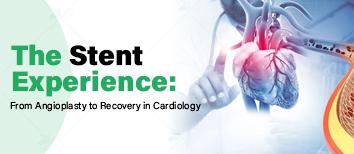
A stent procedure can be life-saving for those with blocked arteries. This guide walks you through the stent experience—from the angioplasty process to post-procedure recovery and lifestyle changes.
In Noida hospitals, recognized for being among the best heart health hospitals in Noida, are at the forefront of offering critical care for heart-related issues.

Subscribe to our
© Copyright 2026. All Rights Reserved by Felix Healthcare Private Limited
Design and development by :


 +(91)9667064100
 Emergency : +(91)9667064100