 Emergency:
  WhatsApp



Subscribe to our
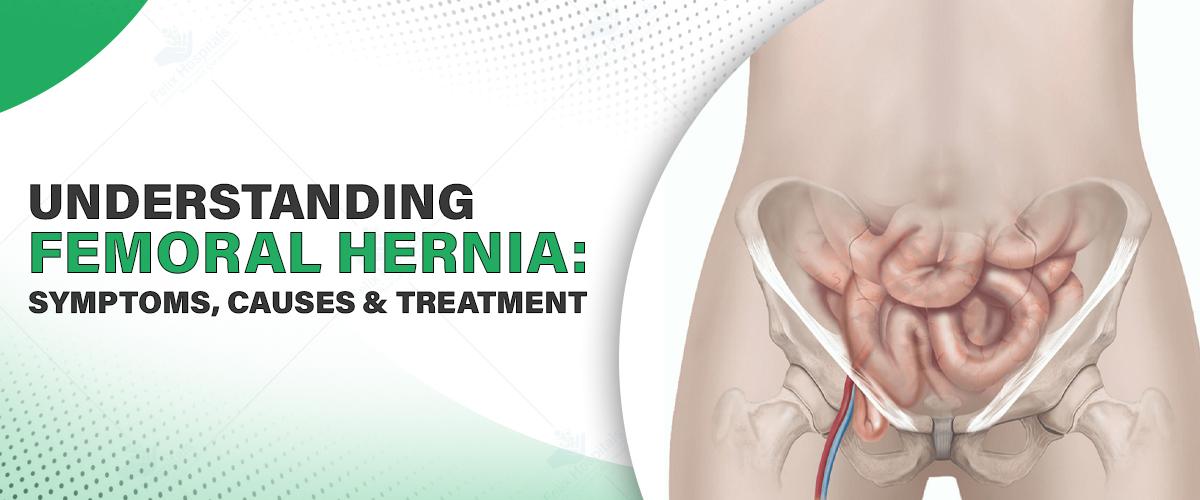
A femoral hernia is one of the less common types of hernia but can be extremely dangerous if left untreated. It is when a piece of intestine or fat protrudes through a thin spot in the lower part of the abdominal wall and into the femoral canal — a small tube just above the top thigh just below the inguinal ligament. It is more common in women than in men and often may not be diagnosed until complications arise.
Even though femoral hernias are less frequent than inguinal hernias, because of their location and susceptibility to complications, they need early diagnosis and early treatment. The best general surgery hospital in Noida can operate on them early enough to avert severe health consequences such as hernia content strangulation.
The femoral canal is found in the upper thigh, below the crease of the groin. It contains small blood vessels, lymph vessels, and nerves. Tissue from the abdomen protruding into the canal causes a femoral hernia. The swelling can be perceived or felt, which usually occurs on standing, coughing, or straining, and may disappear when lying down.
Although femoral hernias are uncommon, their small neck makes the hernia more likely to become trapped (incarcerated) or have its blood supply compromised (strangulated), both of which are emergencies.

In some cases, such a femoral hernia is so small that it never produces symptoms to be noted and only presents on physical examination. When symptoms do occur, though, they may be:
A bulge on the upper thigh or groin, below the inguinal ligament level.
Pain or tenderness in the lower abdomen, groin, or thigh, that worsens with activity, standing for an extended period, or heavy lifting.
Nausea and vomiting, particularly if the hernia is incarcerated or strangulated.
Abrupt stabbing pain in the groin region, which may indicate a medical emergency.
Alteration of bowel habit or inability to pass flatus in complete obstruction.
Symptoms can also aggravate with straining activities that lead to pressure in the abdomen, such as coughing, sneezing, or straining while having bowel movements. Any recurring groin swelling or pain should be evaluated by a hernia specialist in Noida or your local surgeon immediately.
The femoral hernias are caused by protruding tissue of the abdomen through a weakened portion of the lower abdominal wall into the femoral canal. The cause of the weakness or increased abdominal pressure is:
Some people are born with a predisposition to hernias due to weaker connective tissue or because the femoral canal does not close during embryonic development.
These states have the potential to weaken abdominal muscles and increase intra-abdominal pressure.
Typically secondary to lung disease due to smoking, asthma, or chronic respiratory disease.
Straining of the abdominal wall from excess weight predisposes to hernias.
Repeated heavy lifting in an unnatural way can raise pressure in the abdomen.
Straining on the bowel movement puts strain on the lower abdomen.
Long-term dialysis can increasingly weaken core muscles.
While both men and women are prone to femoral hernias, they happen more in women because of their wider pelvis and their body shape.
A femoral hernia is risky when part of the intestine is trapped in the femoral canal. It can lead to:
Incarcerated Hernia – Hernia cannot be manually pushed back into the abdominal cavity, leading to possible pain and discomfort.
Strangulated Hernia – The blood supply to the herniated tissue is cut off and tissue death follows. This is an emergency and needs to be operated on immediately.
If not treated early, a strangulated femoral hernia can cause a severe infection, sepsis, or even death.
Diagnosis of a femoral hernia is usually preceded by a history and physical examination. The physician will look for a bulge in the thigh or groin and can have the patient cough or sneeze, which will cause the hernia to be more pronounced.
Other diagnostic equipment may include:
Ultrasound – A painless, harmless imaging technique that can identify hernias and distinguish them from other swellings.
CT Scan – Provides clear images of the abdominal wall and helps make the diagnosis.
MRI – Used where higher accuracy is desired in imaging or other conditions should be ruled out.
The examinations also help differentiate a femoral hernia from other conditions such as swollen lymph nodes, femoral artery aneurysm, hydrocele, or inguinal hernia. Hernia Surgery Cost is more affordable if the diagnosis is done at the early stages
The Top Femoral Hernia Surgeon in Noida chooses operative repair for treatment of femoral hernia is operative repair. Repair of a femoral hernia is almost always indicated because of the very high risk of incarceration and strangulation.
In open surgery, the hernia site is incised over, the protruding tissue is returned to its original place in the body, and the site is supported by sutures and possibly a mesh implant to avoid recurrence of the hernia.
It is a minimally invasive procedure where a few small incisions are made through which a tool and camera are passed. The hernia is repaired from the inside, potentially with mesh. It has the benefits of less post-op pain, quick recovery, and smaller scars.
If strangulated, it requires immediate surgery to re-establish blood supply and prevent tissue loss. The affected parts of the intestine can be resected in this case.
The decision to go for open surgery or laparoscopy is based on hernia size, the health of the patient, and the experience of the surgeon. An expert femoral hernia surgeon in Noida will advise the best approach.
Affordable Hernia Surgery Hospital in Noida depends upon the type of surgery done for femoral hernia.
Recovery is based on the type of surgery done and the overall health of the patient. Most patients get well within 1–2 weeks and can go back to light activities, but they should not lift anything heavy or work out vigorously for weeks. The surgeon's post-surgery routine needs to be followed to prevent recurrence.
Control of pain, dressing, and proper wound care, and gradual return to regular activities constitute an important component of convalescence.
While all femoral hernias are not preventable, some lifestyle changes do lower risk:
Maintain a healthy weight to reduce pressure on the abdomen
Lift heavy weights with proper form, letting your legs provide the power, not your abs or your back
Treat chronic cough early
Treat constipation with a diet high in fiber and proper hydration
Add core-strengthening exercises to assist the abdominal muscles These techniques can also be applied to prevent recurrence following surgery.
For advanced treatment, Felix Hospitals provides end-to-end hernia treatment with Hernia Specialist in Noida. Equipped with the latest diagnostic equipment, minimally invasive techniques, and patient-centric care, Felix provides every patient with personalized treatment. Felix has long experience in managing routine and complex cases of hernia and thus is a safe destination for individuals worried about hernia surgery cost without sacrificing safety, accuracy, and long-term outcomes.
A femoral hernia might be less frequent than other hernias, but it poses greater danger of serious complications if not treated, including bowel strangulation or obstruction. Early recognition of symptoms—the most important of which is a painful swelling in the upper thigh or groin is the most important factor for receiving immediate medical care. The most effective cure remains surgery, which relieves pain and averts potentially life threatening complications. Individuals can safeguard their health and have a quicker, safer recovery by remaining vigilant about risk factors, leading a healthy lifestyle, and seeing an expert as soon as there is a problem.
Q1. Does being pregnant make it more likely that I will get a femoral hernia?
Ans: Yes, pregnancy puts more pressure on the abdomen and can make the abdominal muscles weaker, both of which can lead to a femoral hernia.
Q2. How long after femoral hernia surgery can I go back to work?
Ans: You can go back to light work in two weeks for many people, but this depends on what kind of surgery you had and what your job needs.
Q3. If problems come up, can Felix Hospital handle emergency femoral hernia cases?
Ans: Felix Hospital has emergency services available 24 hours a day, seven days a week, and experienced surgeons are on call to deal with urgent femoral hernia complications that need immediate surgery.
Q4. Does Felix Hospital offer complete packages that cover all aspects of femoral hernia treatment?
Ans: Felix Hospital has clear prices and full care packages that include an evaluation before surgery, the surgery itself, and follow-up care after surgery, all without any hidden fees.
A hernia typically occurs due to a combination of muscle weakness and strain. This can happen from factors such as aging, injury, heavy lifting, chronic coughing, or conditions like pregnancy and obesity.
Understand the factors influencing inguinal hernia surgery costs in Noida, from hospital type to surgeon expertise, and make an informed healthcare decision.


Subscribe to our
© Copyright 2026. All Rights Reserved by Felix Healthcare Private Limited
Design and development by :


 +(91)9667064100
 Emergency : +(91)9667064100