 Emergency:
  WhatsApp



Subscribe to our
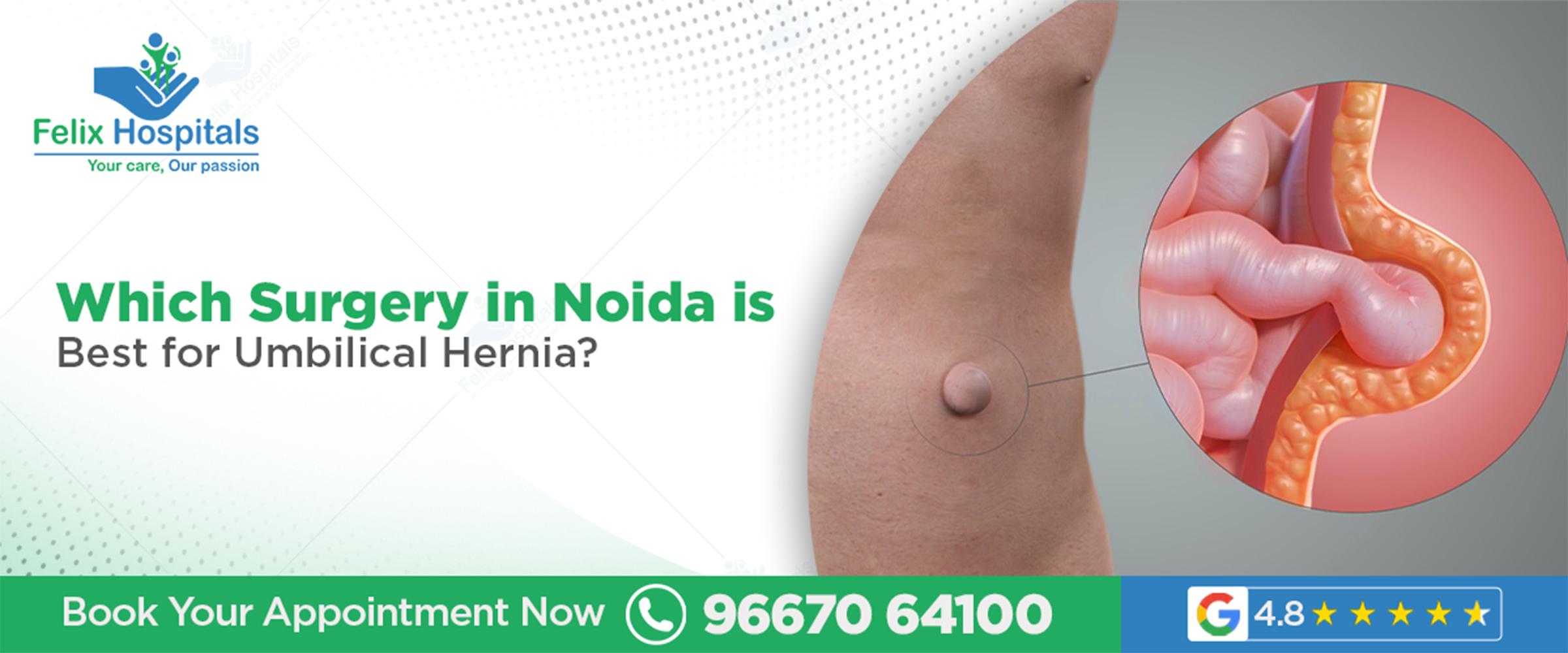
Adults and kids both get umbilical hernias, which are a common type of surgery. A lot of people who go to the Best General surgeon hospital in Noida don't pay attention to the early swelling around their belly button until it starts to hurt, make them uncomfortable, or upset their stomach. What Is an Umbilical Hernia? is important because this condition won't get better on its own and could get bigger over time if not treated.
An umbilical hernia happens when a weak spot in the abdominal wall near the belly button lets part of the intestine or abdominal tissue push through. Some cases may not hurt at first, but the risk of problems getting worse over time grows. Finding the right surgical method and diagnosing the problem early can help avoid emergencies and speed up recovery.
Don't wait to get help if you see swelling or pain near your belly button. Surgery done early stops serious problems from happening. Call +91 9667064100 to make an appointment for your consultation today.
A soft bulge or swelling around the belly button is what an umbilical hernia looks like. It gets worse when you cough, laugh, stand up, or lift heavy things.
Important things for patients to know:
It happens because the muscles in the stomach are weak
It can hurt babies, kids, and adults
When you lie down, the swelling may go down
Pain may develop as the hernia enlarges
The American College of Surgeons says that about 10% of abdominal hernias are umbilical hernias. Early treatment helps keep problems from happening and lowers the risks of surgery.
Knowing the Causes of Umbilical Hernia in Adults and Children helps patients find risk factors early.
What adults usually do:
Being overweight and having too much pressure on your stomach
Being pregnant and having more than one baby
Asthma or a cough that won't go away
Lifting heavy weights
Surgery on the stomach in the past
Fluid buildup in the abdomen (ascites)
Causes in kids:
Weak abdominal wall when born
Birth too soon
Low weight at birth
The umbilical opening closes later than usual
Studies indicate that as many as 20% of newborns may develop an umbilical hernia, although the majority resolve spontaneously by the age of 5 (American Academy of Paediatrics).
Recognising the Symptoms of Umbilical Hernia early can help you avoid having to go to the hospital.
First signs:
A soft bulge near the navel
The swelling gets worse when you cough or strain
A little pain around the belly button
A heavy feeling in the stomach
More serious symptoms:
Pain when picking things up
Pain or burning feeling
Feeling sick or throwing up
Swelling that is hard and won't go back inside
Signs of an emergency:
Very bad pain
Swelling that is red or purple
High temperature
Throwing up
Not being able to pass stool
These symptoms could mean strangulation and need surgery right away.
A lot of people want to know When Is Surgery Required for Umbilical Hernia? Because early hernias might not seem dangerous.
When doctors say surgery is needed:
Hernia doesn't go away after childhood
The swelling gets bigger
Pain or discomfort starts
Problems with digestion happen
The hernia gets stuck (incarcerated)
The blood supply is cut off (strangulated)
You can't heal an umbilical hernia with medicine, exercise, or a belt. The only way to fix it for good is with surgery.
Patients can choose the best treatment for their umbilical hernia if they know Types of Umbilical Hernia Surgery.
There are two main types of surgery:
Repair of an open hernia
Fixing a hernia with laparoscopy
An experienced surgeon can safely and effectively use either method.
For many years, the standard way to fix an Open Umbilical Hernia Repair was with surgery.
Overview of the procedure:
A small cut near the belly button
Hernia pushed back into the stomach
Fixed weak muscle
Mesh put in if needed
Stitches closed the skin
Benefits:
Good for big hernias
Surgery doesn't take long
Works well and is dependable
Costs less than laparoscopy
Time to get better:
2 to 4 weeks for normal activities
4–6 weeks for hard work
Laparoscopic Umbilical Hernia Surgery is a new, less invasive method.
An overview of the procedure:
2–3 small cuts instead of one big cut
Camera put in to see the hernia
Surgical mesh used to fix the hernia
Less pain and faster recovery
Advantages:
Little scarring
Less pain after surgery
Healing faster
Brief stay in the hospital
Less chance of getting sick
Laparoscopic surgery is preferred by most working people because it lets them get back to work faster.
Patients often want to know about Mesh vs Non-Mesh Hernia Repair.
Fixing the mesh:
Surgical mesh makes weak muscles stronger
Lowers the risk of getting sick again
Suggested for adults
Lasts a long time
Repair without mesh:
Muscle sewn together without mesh
Good for kids with small hernias
Adults have a higher risk of recurrence
According to the Hernia Journal, mesh repair cuts down on the chance of recurrence by up to 50% compared to non-mesh repair.
How to pick the Which Surgery Is Best for Umbilical Hernia in Noida? Depends on a lot of things.
The best time to have laparoscopic surgery is when:
People who work
Hernias that are small to medium
Patients who want to get better quickly
Concerns about looks
Low risk of infection
The best time for open surgery is:
Big or hard-to-fix hernias
Cases of emergency
Patients who can't have laparoscopy
Patients who care about costs
Based on your size, health, and medical history, your surgeon will suggest the best method from the Best General surgeon in noida at the Best General surgeon hospital in noida.
There are many benefits to having surgery early:
Stops hernias from getting bigger
Lowers the chance of strangulation
A procedure that is easier to do
Faster healing
Less expensive treatment
Better results from surgery
Putting off surgery raises the risk of complications and emergencies.
How long it takes to recover depends on the type of surgery and the patient's health.
Week one:
Some pain and swelling
Recommended light walking
Don't lift heavy things
2 to 4 weeks:
Go back to your normal activities
Light exercise is okay
A balanced diet is suggested
6 weeks:
Most patients get better completely
Start lifting heavy things and working out again
Following the care instructions after surgery speeds up recovery.
Good habits keep things from happening again:
Keep your weight in a healthy range
Don't lift heavy things right away
Eat a lot of fibre
Drink enough water
Stop smoking
Slowly make your core muscles stronger
Taking care of yourself is very important for long-term success.
Not treating a hernia can lead to serious problems:
Hernia growth
Very bad pain
Blockage in the bowel
The intestine is strangled
Surgery in an emergency
Complications that could kill you
These risks are avoided by having surgery early.
The price depends on:
Type of surgery (open or laparoscopic)
Hospital services
Knowledge of the surgeon
Use of mesh
How long the hospital stay was
Emergency surgery is always more expensive than getting treatment early.
If you see any of the following, see the Best General surgeon in noida:
Swelling around the belly button
Pain when you lift something or cough
Hernia getting bigger
Problems with digestion
Severe stomach pain that comes on suddenly
Consulting early avoids problems and makes sure treatment is safe.
Get a professional diagnosis and advanced hernia treatment from skilled surgeons. Call a specialist right now at +91 9667064100 to start your safe recovery.
If you don't pay attention to an umbilical hernia, it can start as a painless swelling and get worse over time. Patients can make quick decisions and avoid problems that require emergency care if they know the causes, symptoms, and treatment options. Surgery is the only permanent treatment, and modern methods make it safe, effective, and as little invasive as possible.
The right surgery depends on the size of the hernia, the patient's health, and their lifestyle needs. Patients can get better quickly and go back to their normal lives with confidence thanks to advanced surgical techniques and expert care at the Best General surgeon in Noida. Getting medical help early on leads to better results, lower costs, and an easier recovery.
It's normal to feel a little pain, but modern pain management makes recovery easy.
It usually takes 30 to 60 minutes, depending on how hard it is.
It is very rare for it to happen again, especially with mesh repair.
Most patients go back to work within 1 to 2 weeks after laparoscopic surgery.
Yes, it is a safe and common way to do things that doesn't require a lot of cutting.
Dr. Ritesh Kumar Agrawal is an experienced Laparoscopic Surgeon with 11+ years of expertise in advanced minimally invasive procedures, delivering personalized care and effective surgical outcomes.
A hernia typically occurs due to a combination of muscle weakness and strain. This can happen from factors such as aging, injury, heavy lifting, chronic coughing, or conditions like pregnancy and obesity.

Felix Hospitals is the leading hospital for hernia surgery in Noida and Delhi NCR.


Subscribe to our
© Copyright 2026. All Rights Reserved by Felix Healthcare Private Limited
Design and development by :


 +(91)9667064100
 Emergency : +(91)9667064100