 Emergency:
  WhatsApp


Subscribe to our
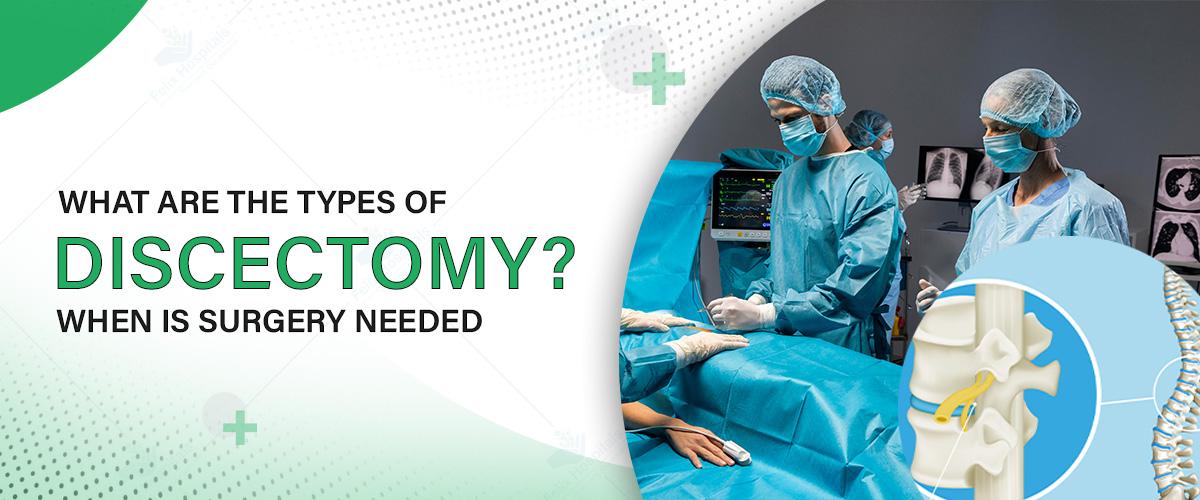
Back pain isn’t rare — most of us run into it somewhere along the way. Sometimes it’s harmless and fades after a day or two, but other times it hangs on, gets sharper, or even shoots down an arm or leg. Often, Orthopedic Doctors in Noida consider it a sign something’s going on with the spinal discs and the soft cushions between the bones in your back. If one of those discs bulges out or tears, it can press against a nerve and cause more than just an ache.
You might feel tingling, weakness, or pain that makes simple movements a chore. Many people get better with rest, therapy, or medication, but if the problem just won’t settle, surgery might be on the table. One option, called discectomy, removes the piece of the disc that’s pressing on the nerve so the pressure — and the pain — finally eases.
Call us today at +91 9667064100 and maintain your orthopedic conditions because action at the right time matters.
A discectomy is basically a surgery performed to take out the bit of a spinal disc that’s pressing on a nerve. Your spine has soft, cushion‑like discs between the bones — they help you move, bend, and absorb shocks when you walk or jump. But if one of those discs is damaged, it can bulge or tear.
The soft centre might push out and press against a nerve, and that’s when the trouble really starts. Pain shooting down a leg or arm, tingling, numbness, even weakness in certain muscles — these are all common.
The goal of the Best Neurology Hospital in Noida isn’t to remove the whole disc, just the piece causing the pressure. Freeing up that nerve usually means losing most of the pain and getting back some movement.
Not all discectomies are the same. Surgeons select the approach depending on where the issue is, how bad it is, and the general health of the patient. These are the primary types of discectomy:
The old method, a larger incision is made in the back to access and remove the diseased disc material.
Advantages: Easier recovery, less post-operative pain than with new methods.
Disadvantages: Longer recovery, executive post-operative pain and discomfort.
A lesser invasive procedure with smaller cut and utilization of a microscope.
Advantages: Less disturbance of tissue around the spinal canal, faster recovery, less scarring.
Best for: Herniated discs and sciatica.
Small skin puncture permits devices to excise disc tissue, usually under local anesthesia.
Benefits: Extremely short recovery, little postoperative pain.
Disadvantages: Not appropriate for all disc conditions.
Has used thin tube with tiny telescope (endoscope) to remove the involved disc segment through small cut.
Benefits: Extremely small incision, little bleeding, quicker return to activity.
Best for: Mild to moderate disc herniation.
A laser is utilized in decreasing or burning a portion of the disc.
Benefits: Treated as outpatient with less downtime.
Limitations: Less frequent and suitable for fewer cases only.
Surgery is never the initial choice. Most patients begin using non-surgical care, including:
Physical therapy to restore muscle strength and correct posture.
Medications such as anti-inflammatories or muscle relaxants.
Epidural steroid injections to alleviate swelling and irritation of the nerves.
If surgery must be performed, the kind of discectomy is based on:
Location of the affected disc (neck, middle back, lower back)
Size of the herniation
Your lifestyle and general health
Recovery from surgery may include:
Pain relief medication (make sure its recomended by the doctor)
Physiotherapy
Lifestyle modifications
Most people with a herniated or damaged disc get better with time, rest, and non‑surgical care. But there are certain situations where surgery — specifically, a discectomy—becomes a more sensible choice.
It’s usually considered when:
Pain won’t let up after several weeks or months of physiotherapy, medication, and other conservative treatments.
Weakness in the arms or legs is getting worse instead of better.
Numbness or tingling become constant.
Because of the nerve pressure the daily tasks like walking, standing, or even sleeping are difficult.
Serious nerve symptoms appear, such as problems controlling the bladder or bowel — in which case surgery may need to happen right away.
If you live in Noida or Delhi NCR, you should look for the best orthopaedic hospital in Noida to keep your bones in optimal condition.
Once you decide on surgery, the choice of hospital matters just as much as finding the right surgeon in Noida. A good setup can speed up recovery, while the wrong environment might make things harder than they need to be.
When you’re weighing your options, think about things like:
Does the hospital handle spine surgeries often? Surgeons, and teams, who do this regularly usually work more efficiently.
Who’s on the care team? After the lead doctor, you’ll need a skilled anesthesiologists, attentive nurses, and physiotherapists who understand spine recovery.
Is the equipment up to date? Good imaging, modern surgical tools, and setups for minimally invasive procedures can all make a difference.
Will they plan your recovery from day one? Some places send you home quickly but don’t give proper rehab support. The best ones integrate physiotherapy and follow‑ups into your care plan.
And of course — what do their patients say? Real reviews will often tell you what the marketing material leaves out.
A hospital that blends skill, technology, and genuine patient care will give you the best chance at a smooth decectomy surgery in Noida and an even smoother recovery.
Timely action can help you avoid long-term harm and increase your chances of recovering completely. Schedule an appointment by Clicking Here.

Dr. Keshav Goel is an experienced Orthopedic and Joint Replacement Surgeon in Noida with over 10 years of clinical expertise. He has performed 2,000+ independent surgeries and specializes in computer assisted joint replacement and arthroscopic surgeries of the knee, shoulder, and hip. Known for his skill in treating sports injuries, trauma, and joint disorders, he provides advanced and patient-focused orthopedic care.
A discectomy won’t be the right move for every back problem, but for some people — especially when a damaged disc just keeps pressing on a nerve — it can be life‑changing. The trick is figuring out the right timing, and making sure you’ve got the right team doing the job.
It’s not only about the operation itself. What happens before and after matters just as much. The best Neurologists In Noida will provide an accurate diagnosis, knowing the procedures inside out, and having good follow‑up care can all shape the result.
If your symptoms have been sticking around, interrupting sleep, work, or even the small day‑to‑day stuff, it’s worth acting sooner rather than later. Have that conversation with a spine specialist, get the tests you need, and look at all your choices at an affordable cost in Noida. With the right plan, a good surgeon, and proper aftercare, you’ve got a far better shot at getting your movement back — and leaving the constant pain behind.
Q1. Is discectomy a permanent solution to back pain?
Ans: Not necessarily — it takes out the disc element that is putting pressure on the nerve, but other spinal problems can develop later.
Q2. How soon can I walk after discectomy?
Ans: Most patients are allowed to walk the same day or in 24 hours, depending on the surgical method.
Q3. Will I lose mobility since part of my disc is being removed?
Ans: No — most recover the use of their limbs, and a few even feel more flexible when the pain has disappeared.
Q4. How long will I be out of work?
Ans:It depends — office work might get back to normal in 2–4 weeks, while heavy work might take 6–12 weeks.
Q5. Will I be under general anesthesia?
Ans: The majority of discectomies involve general anesthesia, although some minimally invasive ones can be done with local and sedation.
Q6. How painful is recovery?
Ans: Pain is generally mild to moderate following surgery and gets better within days to weeks, medication controls it.
Spinal stenosis surgery is needed when severe pain, weakness, or numbness persists despite non-surgical treatment and affects daily activities.
A spinal cord injury occurs when there is damage to the spinal cord, often resulting from trauma, disease, or degenerative conditions.
Orthognathic surgery corrects jaw alignment, improving both facial appearance and oral function.


Subscribe to our
© Copyright 2026. All Rights Reserved by Felix Healthcare Private Limited
Design and development by :


 +(91)9667064100
 Emergency : +(91)9667064100