 Emergency:
  WhatsApp



Subscribe to our
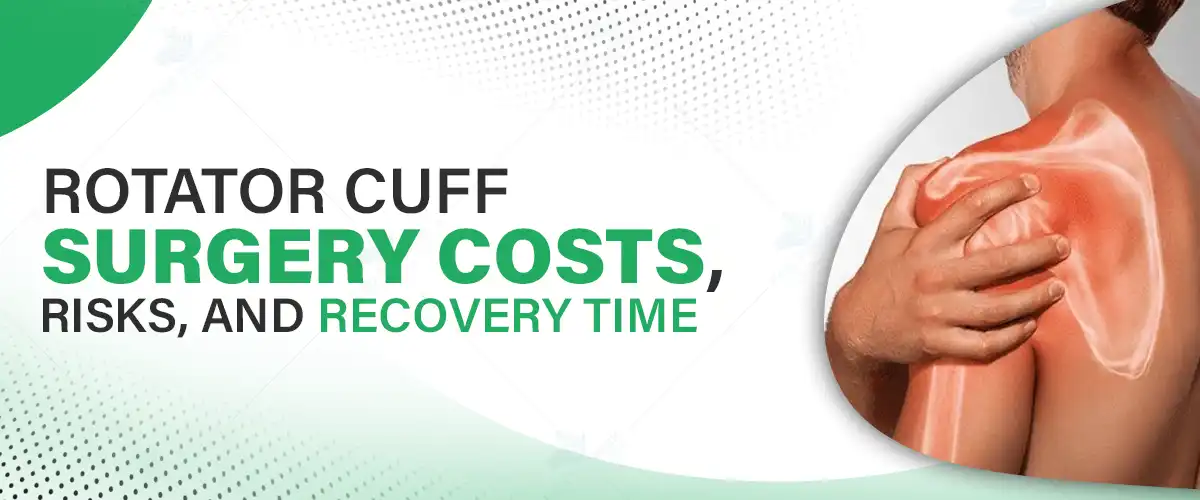
The rotator cuff consists of four tendons and muscles that stabilize the shoulder joint and enable smooth arm movements. Rotator cuff injuries are common and often caused by repetitive overhead motions, sports activities, aging, overuse, or trauma. They can result in pain, weakness, and limited shoulder mobility, significantly affecting daily activities.
For severe or persistent rotator cuff injuries that don’t respond to non-surgical treatments, surgery becomes essential to restore functionality and alleviate pain. If you’re seeking expert care, the best orthopedic hospital in Noida provides advanced treatment options tailored to your needs.
Don't let shoulder pain hold you back! Contact us at +91 9667064100 now for advanced rotator cuff surgery tailored to your needs.
Rotator cuff surgery involves repairing torn tendons in the shoulder to restore strength and mobility. Depending on the severity of the injury, the procedure can be performed using one of the following techniques:
Surgery is typically recommended when non-surgical treatments like physical therapy, medication, or injections fail to provide relief.
Average Costs
The cost of rotator cuff surgery varies widely based on geographic location and the healthcare facility. Globally, the cost can range from ₹1,00,000 to ₹2,50,000. Additional costs include:
Factors Influencing Costs
Several factors impact the overall cost of rotator cuff surgery:
Tips to Manage Costs
Common Risks
Less Common but Serious Risks
How to Minimize Risks
General Recovery Timeline
Factors Affecting Recovery Time
Tips for a Smooth Recovery
Physical Preparation
Mental Preparation
To determine if rotator cuff surgery is suitable for you, consider:
At Felix Hospitals, our expert orthopedic surgeons provide comprehensive care for rotator cuff injuries. Meet our specialists:
With their expertise and commitment to patient care, Felix Hospitals is your trusted destination for rotator cuff surgery.
Ready to regain your shoulder's strength and mobility? Book your consultation with our expert orthopedic surgeons at Felix Hospitals today!
Addressing rotator cuff injuries promptly is essential to restore shoulder mobility and reduce pain. Surgery, when performed by experienced specialists, offers significant benefits in improving quality of life. While the procedure is highly effective, it’s crucial to be aware of the potential complications of rotator cuff surgery, such as infection, stiffness, or re-tears, which can be minimized by choosing an experienced surgeon and following postoperative care instructions. If you’re experiencing shoulder pain or weakness, consult the experts at Felix Hospitals to explore your treatment options. Take the first step towards pain-free movement by scheduling a consultation today.
Answer: Rotator cuff surgery is a surgical procedure used to repair torn tendons in the shoulder caused by injury, overuse, or age-related degeneration.
Answer: Patients with severe tendon tears, persistent shoulder pain, weakness, or those who do not respond to conservative treatment like medications and exercises may require surgery.
Answer: Possible risks include infection, stiffness, nerve injury, blood clots, and incomplete tendon healing. However, complications are uncommon when performed by experienced surgeons.
Answer: Initial recovery time is about 4–6 weeks with sling support, while full recovery with strength and mobility may take 4–6 months along with physiotherapy.
Answer: Yes, physiotherapy is essential for restoring shoulder movement, strengthening muscles, and ensuring a successful long-term outcome.

Knock knees, medically known as genu valgum, is a common condition in young children where the knees angle inward and touch one another when the legs are straightened.

Knock knees, medically known as genu valgum, is a common condition in young children where the knees angle inward and touch one another when the legs are straightened.


Subscribe to our
© Copyright 2026. All Rights Reserved by Felix Healthcare Private Limited
Design and development by :


 +(91)9667064100
 Emergency : +(91)9667064100