 Emergency:
  WhatsApp


Subscribe to our
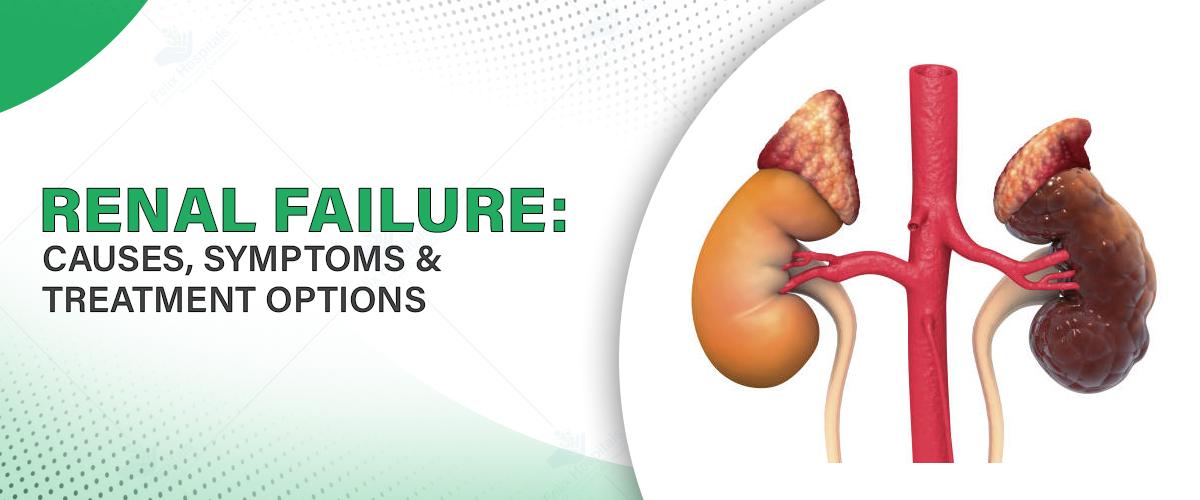
Renal failure is a severe disease in which the kidneys lose their ability to clear waste and control fluid and electrolyte balance in a normal manner. It can occur suddenly (acute kidney failure) or gradually over years (chronic kidney failure). Unless it is diagnosed and treated early, the disease can lead to life-threatening complications.
If you want to avail the Best nephrologist in Greater Noida or want to know about your cost of renal failure options, this guide will take you through the reasons, symptoms, diagnostic processes, and treatment options for renal failure. For better treatment, the best kidney hospital in Greater Noida provides the best treatment according to the requirement of every patient.
Don’t ignore kidney health—call +91 9667064100 and consult our experts today.
The kidneys are two bean-shaped organs in the lower back, one on each side of the spine. One of their most important jobs is to filter out toxins, waste, and extra water from the blood and get rid of them in the urine. They also control the production of red blood cells, blood pressure, and electrolyte levels.
Kidney failure happens when these organs can't do these things anymore. This can happen suddenly (acute renal failure) or over the course of a few months or years (chronic kidney disease with end-stage renal failure), depending on the cause.
Acute Kidney Failure: It happens in a matter of hours or days, usually because of severe dehydration, certain medicines, a blockage in the urinary tract, or a sudden loss of blood to the kidneys.
Chronic Kidney Failure: It gets worse over time, usually because of long-term illnesses like diabetes, high blood pressure, or a long-term kidney infection.

Anyone can get kidney problems, but some things make them much more likely to happen. The main reasons are:
Diabetes Mellitus – High blood sugar levels all the time damage the kidneys' delicate filtering structures.
Hypertension: High blood pressure all the time puts a lot of stress on blood vessels, like those in the kidneys.
Polycystic Kidney Disease (PKD) – A genetic disease leading to the formation of cysts filled with fluid within the kidneys.
Glomerulonephritis is swelling of the kidney's filtering structures, usually caused by autoimmune disorders or infections.
Autoimmune Diseases: Lupus can cause inflammation and damage.
Obstruction of the urinary tract caused by kidney stones, an enlarged prostate, or tumours.
Severe Dehydration or Shock – Can cause sudden and extreme damage to the kidneys.
You may be at higher risk for kidney failure if you:
There is a family history of kidney disease
Are above the age of 60
Have diabetes or hypertension
Take nonsteroidal anti-inflammatory drugs (NSAIDs) frequently
In its early stages, kidney failure will not have any noticeable symptoms. Conversely, in its later stages, symptoms may be:
Chronic fatigue and weakness
Swelling of the face, hands, or feet (edema)
Nausea, vomiting, or loss of appetite
Changes in the urination pattern (more or less frequent)
Muscle twitching and cramping
Trouble focusing or confusion
Dry, pruritic skin
Metallic taste in the mouth
If you notice these signs, you need to get medical attention from the Best kidney specialist near me before the condition gets out of hand.
Unless controlled, kidney failure can lead to:
High blood pressure
Accumulation of fluid in the lungs (pulmonary edema)
Heart disease
Weakened bones due to imbalanced minerals
Severe anemia
Life-threatening electrolyte disturbances
A proper and immediate diagnosis is needed for effective treatment. Best Nephrology hospital in Greater Noida will generally perform the following tests:
Blood tests check the levels of creatinine, blood urea nitrogen (BUN), and estimated glomerular filtration rate (eGFR), which is a measure of how well the kidneys are working.
Urine tests look for things like protein, blood, or infection that shouldn't be there.
Imaging tests like ultrasound, CT scans, or MRIs can show the structure of the kidneys and find blockages, cysts, or tumours.
Kidney Biopsy – Sometimes, a small piece of kidney tissue is taken so that it can be looked at under a microscope to find out what caused the damage.
Though chronic kidney failure cannot be cured, its development can be delayed, symptoms can be managed, and quality of life improved with treatment.
ACE inhibitors and ARBs help keep blood pressure stable and stop protein from leaking out of the body through the urine.
Diuretics get rid of extra water and make swelling go down.
Erythropoietin-stimulating agents raise the number of red blood cells in the body to treat anaemia.
Phosphate binders and vitamin D supplements keep bones healthy.
Statins lower cholesterol levels, which lowers the risk of heart disease.
Dialysis replaces a portion of kidney function when it fails entirely.
Hemodialysis – A filter machine cleans your blood a few times a week at a dialysis center or hospital.
Peritoneal Dialysis – A special cleansing liquid runs through the belly to remove waste products and can be given at home.
A surgical procedure whereby a donor's good kidney replaces the non-functioning kidney. While it offers the most similar substitute for functioning kidneys, it requires lifelong medications to prevent rejection.
Low-potassium, low-sodium diet
Proper hydration
Daily physical activity
Avoiding excessive use of painkillers or NSAIDs
Management of uncomplicated conditions like diabetes and hypertension
Cost of renal failure treatment depends on the type of treatment the patient needs depending upon the condition of the renal failure.
While it is impossible to avoid all causes of kidney failure, you can reduce your risk by:
Blood glucose and blood pressure control
Sustaining hydration
Prevention of excessive intake of renal toxic drugs
Eating a nutritious diet with little processed foods
Routine kidney function tests if at risk
Among specialized kidney care, Felix Hospitals is renowned for its patient-centric services and state-of-the-art medical facilities. With well-equipped diagnostic centers, modern dialysis units, and highly qualified nephrologists .Felix guarantees precise diagnosis and customized treatment plans. The hospital's renal care specialists take care not just of medical management but also of long-term well-being. Through the blending of warm care and latest technology, Felix has gained patients' confidence for dependable and effective kidney care in the area.
With early diagnosis and adequate management, the majority of patients have good quality of life and survival despite renal failure. Dialysis and transplantation can greatly improve the quality of life and survival. Monitoring, close adherence to treatment regimens, and lifestyle modification are the keys.
Protect your kidneys before it’s too late—schedule your screening at +91 9667064100.
If discovered in a timely manner, kidney failure is a curable condition. Knowing the symptoms, gaining an understanding of the causes, and obtaining timely medical assistance from the best Nephrologist in Greater Noida can be the deciding factor in the outcome of the situation. In the event that you require therapy you need to discover the Cost of renal failure treatment, swift action and experienced nephrologists will help you in living a life that is both healthier and more active at the same time.
Q1. If I have diabetes and my blood sugar is normal, am I still at risk for kidney failure?
Ans: Yes, having high blood sugar levels for a long time can harm your kidneys, and diabetes is still the major cause of kidney failure, even if you are currently managing it successfully.
Q2. If I start dialysis, would I instantly be included on the kidney transplant waiting list?
Ans: Transplant evaluation differs from starting dialysis in that it takes into account your overall health, age, and capacity to handle operation. Not everyone on dialysis is a candidate for transplant.
Q3. Can kidney failure lead to heart problems?
Ans: Yes, kidney failure can cause fluid to accumulate, increasing blood pressure and putting strain on the heart. It may also induce electrolyte imbalances that alter the heart's rhythm.

Renal failure occurs when the kidneys lose their ability to filter waste and balance fluids. Learn about its causes, symptoms, and treatment options.

In Noida hospitals, recognized for being among the best heart health hospitals in Noida, are at the forefront of offering critical care for heart-related issues.
Renal concretion, commonly known as kidney stones, can cause severe pain and urinary complications. Explore advanced treatments available in Noida for effective relief.


Subscribe to our
© Copyright 2026. All Rights Reserved by Felix Healthcare Private Limited
Design and development by :


 +(91)9667064100
 Emergency : +(91)9667064100