 Emergency:
  WhatsApp

Subscribe to our
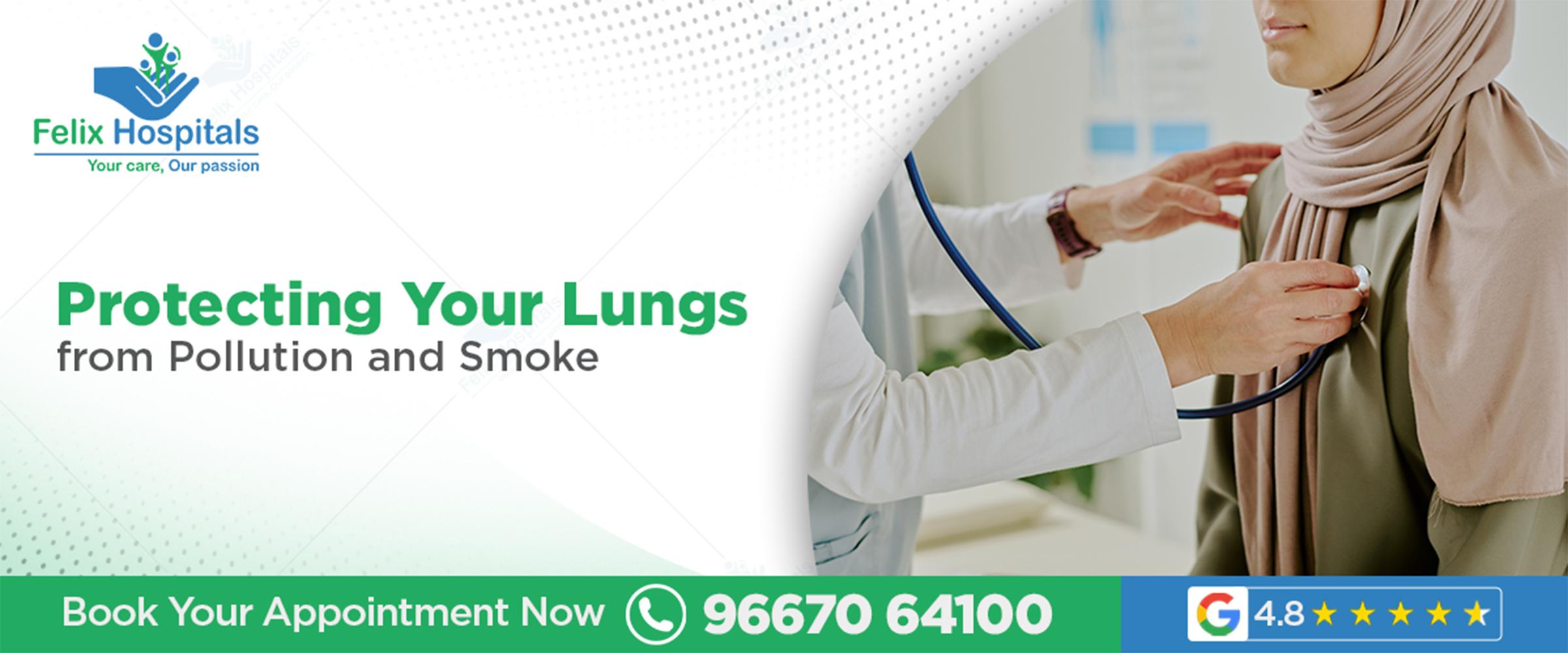
Air pollution and smoke in the modern towns and in particular urban cities such as Noida pose a big danger to respiratory health. As you navigate through the challenges of polluted air, consulting a pulmonologist appointment near me or visiting a lung specialist in Noida offers access to expert advice and personalized care to safeguard your lungs. Knowing how to take care of your lungs and reduce the impact of pollution and smoke is a guarantee of positive health, quality of life, and the prevention of severe lung diseases.
Need expert guidance? Contact the Call on: +919667064100 lung specialist in Noida today for personalized care.
Air pollution is made of small particles and poisonous gases which can get deep inside the lungs causing inflammation and ultimately decreasing the lung capacity. Such pollutants are caused by vehicle emissions, industrial emissions, construction dust, building firecrackers, agricultural burning of crops among others. Fires (wildfires, domestic or tobacco smoke) are also a source of smoke containing toxic substances that are damaging to the lungs.
Chronic respiratory disorders, including asthma exacerbation and chronic obstructive pulmonary disease (COPD) as well as increased vulnerability to lung and respiratory infections can be a result of repeated or prolonged exposure. The risk of lung cancer is associated with air pollution even in non-smokers, showing a tragedy of the long-term effects of uncontrolled exposure.
To protect lungs from air pollution, it is vital to take practical and consistent protective measures:
Reduce outside time in times of high pollution: Monitor the levels of air quality in your area and do not spend much time out of your house, particularly during rush hours or high smog.
Install air purifiers in the home: A home purifier that has a HEPA filter can significantly improve indoor air quality by capturing particulate matter.
Close doors and windows when the pollution peaks, this will help to minimize the entry of outdoor pollution in the house.
Use protective masks: N95 or N99 masks can filter small particles and are to be used outdoors in times when the pollution becomes worse.
Keep the house clean: Smoking indoors should be avoided, incense or aerosol use should be kept at a minimum, and dust and allergens should be cleaned.
These measures will reduce pollution of the lungs and the overall damage in the long run.
Smoke exposure similarly affects lung health, making preventive measures vital to prevent respiratory issues from smoke:
Remain in the house and keep off open fires or burning around the house.
Filter indoor air with high-quality ventilation systems and air conditioning.
Do not go to places close to burning crops or wildfires; find cleaner places to stay in case the air is heavy with smoke.
Stay hydrated
Smoke awareness keeps the lungs strong and limits the airway flare-ups.
Respiratory health during pollution depends on awareness and lifestyle adaptations. Development of indoor air quality, proper scheduling of outdoor activities and taking prescribed medications on chronic lung diseases are some of the preventive factors.
As an illustration, asthmatics or COPD sufferers should pay attention to air quality warnings and change their exposure and medication according to the healthcare guidelines.
Children are particularly vulnerable; their lungs, still in development, are more sensitive to children and air pollution risks. They have an increased rate of breathing and their volume of air intake is higher as compared to their body weight and this puts them at greater doses of pollutants. This puts risks of asthma, bronchiolitis and lower lung development.
The parents are not to play outside when the level of pollution is at its highest point, they are to use indoor cleaners, and they are to address the pediatricians with the issue of resolving any symptoms connected with the pollution in the respiratory system.
Older adults often have reduced respiratory function and existing chronic illnesses, making elderly lung protection from smoke crucial. Reduced outdoor activities on polluted days or days with heavy traffic, medication management, and air quality monitoring at home will reduce the risk of developing complications like worsened COPD or heart stress.
Frequent consultations with a lung doctor in Noida will assist with monitoring ongoing changes in the lung health of the elderly and adjusting their care plans.
The continuous exposure to contaminated air predisposes to mutation and consequently the occurrence of cancers, not to mention lung cancer, even among non-smokers. Pollutants contained in small-scale particulate matter have the potential to destroy lung cells and DNA, increasing the risk of cancer in the long term.
The prevention of lung cancer is based on exposure reduction, cessation of smoking, and frequent preventive medical treatment including screening by a lung specialist in Noida.
Health behaviors are very important in the preservation of lung health:
Eat well with high levels of antioxidants to overcome oxidative stress caused by pollution.
Take plenty of fluids to ensure the mucous membranes of the lungs are moist and help eliminate irritants.
Work out often in the house or in secure places to enhance the capacity and immunity of the lungs.
Get rid of indoor pollutants like tobacco smoke, potent odors and chemicals.
These, coupled with clean air strategies, increase resilience to pollution.
Chronic cough, difficulty in breathing, chest tightness, and wheezing are some of the symptoms that should be treated quickly. Making an appointment with a pulmonologist in my area or a lung specialist in Noida will offer a chance to receive diagnostics such as lung functionality test, a chest X-ray, and professional care to treat the effects of pollution on the lungs.
Protect your lung health—book a pulmonologist appointment near me at +91 9667064100.
The long-term respiratory health of the lungs depends on the support of them against the pollution and smoke. By adopting effective preventive strategies and seeking timely medical care through a pulmonologist appointment near me or consultation with a lung treatment hospital in Noida, you can maintain healthy lungs even in challenging environments. Prevention of lung disease is currently the future of improved life.
Q.1 What can I do best to take care of my lungs on a daily basis in regard to air pollution?
Ans. Minimum outdoor activity time during periods of high pollution, use N95 masks, and home air purifiers.
Q.2 Do smokes and pollution have a greater impact on children?
Ans. Admittedly, the young lungs of children are affected more by the pollution of respiratory issues because of the developing lung.
Q.3 Can lung cancer be attributed to air pollution?
Ans. The risk of lung cancer is even higher among non-smokers who are exposed to contaminated air over a long period.
Q. 4 What are preventive precautions that elderly individuals need to follow under polluted conditions?
Ans. Restrict outdoor activities, install air cleaners, adhere to the treatment regimen, and visit the specialist pulmonologist on a regular basis.
Q. 5 What are the things to look forward to when visiting a pulmonologist with pollution-related lung problems?
Ans. The ongoing or progressive respiratory symptoms such as cough and shortness of breath must be assessed by an expert.
Smoking doesn’t just damage your lungs—it also harms your ears, nose, and throat. Learn how tobacco use increases the risk of ENT infections, hearing loss, sinus issues, and more.
Essential tips to safeguard your lungs and overall health when air quality reaches hazardous levels.


Subscribe to our
© Copyright 2026. All Rights Reserved by Felix Healthcare Private Limited
Design and development by :


 +(91)9667064100
 Emergency : +(91)9667064100