 Emergency:
  WhatsApp

Subscribe to our
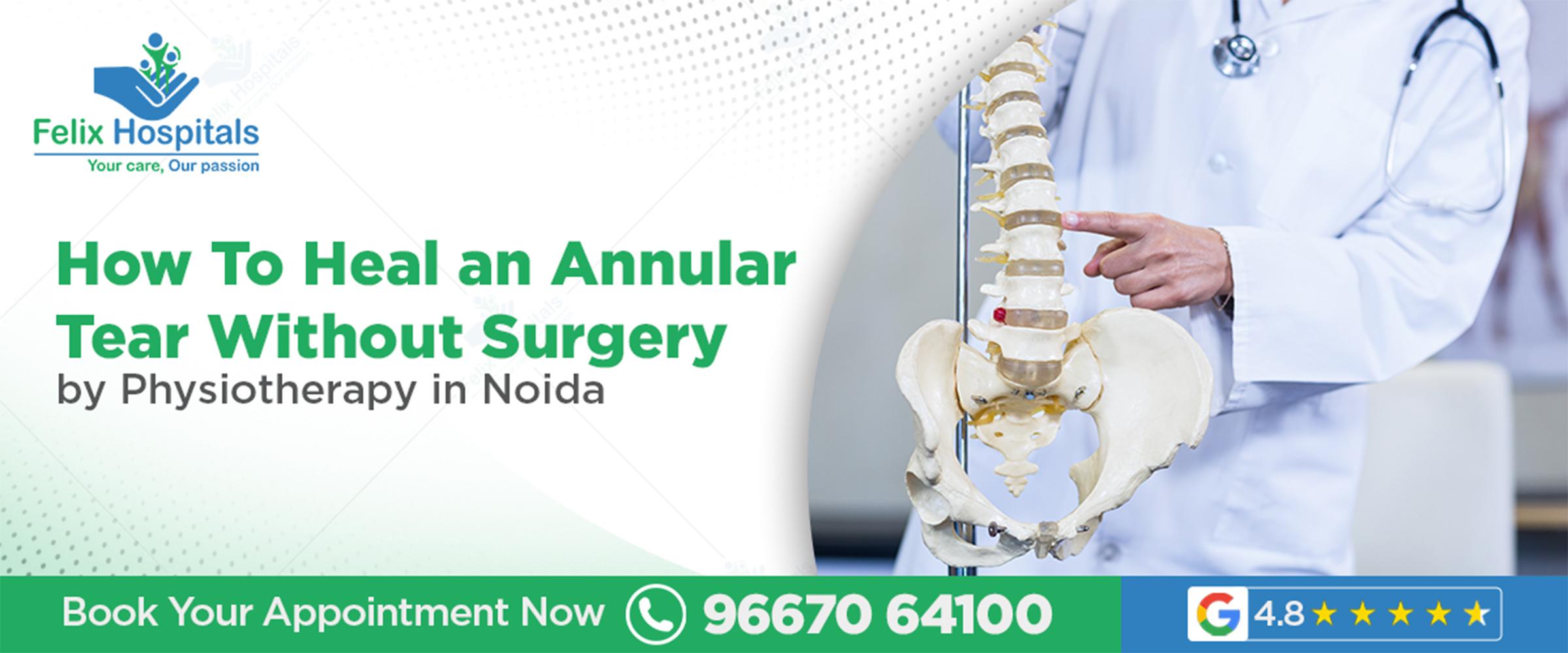
An annular tear is one of the most common yet misunderstood causes of lower back pain. It occurs when the outer layer of the spinal disc (the annulus fibrosus) develops a crack or tear due to injury, degeneration, or repeated strain. While the pain can be intense and worrying, the good news is that most people recover without surgery—especially with early diagnosis and the right physiotherapy plan. Today, Physiotherapy for annular tear treatment hospital in Noida has become a trusted, effective, and safe alternative to invasive procedures.
This comprehensive guide explains the causes, symptoms, diagnosis, and most importantly, how physiotherapy helps heal an annular tear without surgery in Noida.
Struggling with back pain or annular tear? Get expert physiotherapy guidance today. Call Felix Hospital at +91 9667064100
A spinal disc is made up of two parts:
Nucleus pulposus: The soft, gel-like centre
Annulus fibrosus: The tough outer ring that holds the nucleus in place
When this outer ring develops a crack, it results in an annular tear. If untreated, it can progress into a bulging disc or even a herniated disc.
Sudden lifting or twisting injuries
Poor posture over long periods
Degenerative disc disease
Age-related wear and tear
Trauma from falls or sports
Obesity or a sedentary lifestyle
Symptoms depend on how deep or large the tear is. Typical signs include:
Sharp or burning low back pain
Pain that worsens with bending, lifting, or sitting
Localised swelling or stiffness
Muscle spasms
Pain radiating to legs if the tear irritates nearby nerves
If inflammation spreads, patients may also experience tingling, weakness, or numbness—commonly associated with early disc bulge or nerve irritation.
Most annular tears heal naturally because the body repairs the damaged fibres over time. Surgery is reserved only for severe cases involving neurological deficits or when pain persists for many months.
In Noida, patients increasingly prefer Non-surgical annular tear treatment because:
Physiotherapy works effectively
Restoring mobility reduces pressure on the disc
Pain and inflammation reduce without medication overuse
Patients avoid long recovery times and surgical risks
Physiotherapy is considered the most reliable, scientifically proven method for treating an annular tear without surgery. A qualified physiotherapy centre in Noida assesses spinal alignment, muscle balance, inflammation levels, and mobility before creating a personalised treatment plan.
Here’s how physiotherapy helps:
Treatment begins with reducing acute pain through:
Cryotherapy (ice therapy)
TENS (Transcutaneous Electrical Nerve Stimulation)
Ultrasound therapy
Interferential therapy
Short-wave diathermy
These modalities decrease inflammation around the torn disc and help patients move comfortably.
Weak spinal muscles add pressure to the discs. Physiotherapists use strengthening exercises to support healing:
Core stabilisation
Back extensors strengthening
Gluteal and hip muscle strengthening
Pelvic floor activation
A strong core prevents repeated stress on the annulus fibrosus, which helps avoid further tears.
Long hours of sitting or poor posture are major contributors to Annular tear back pain in Noida, especially among working professionals.
Physiotherapists correct spinal posture and teach ergonomic changes such as:
Proper laptop/desk height
Lumbar support techniques
Safe bending and lifting methods
This reduces pressure on the torn disc during daily activities.
Manual therapy, traction, and mobilisation help reduce disc pressure, allowing the annular tissue to heal naturally.
Techniques include:
Spinal traction
Manual mobilisation
Soft tissue release
Myofascial therapy
These treatments reduce nerve irritation and promote faster healing.
Movement is essential for disc nutrition. Therapists introduce gentle mobility exercises such as:
Pelvic tilts
Cat-camel stretch
Lumbar rotations
McKenzie extension exercises
These exercises restore flexibility and relieve stiffness around the spine.
One of the biggest risks of an untreated annular tear is progression into a disc bulge or herniated disc. Physiotherapy stabilises weak muscles and corrects posture, reducing this risk significantly.
A typical recovery timeline looks like this:
Pain modalities
Rest + activity modification
Gentle mobility work
Core muscle training
Flexibility exercises
Ergonomics
Movement retraining
Stability exercises
Return to normal activities
Strength and mobility restored
Prevention plan to avoid recurrence
Some patients recover in 4–6 weeks, while others with severe tears may require up to 3 months.
Healing improves dramatically when patients follow simple lifestyle adjustments:
Avoid heavy lifting in early stages
Use a firm mattress
Maintain healthy body weight
Take short breaks from sitting
Avoid sudden twisting movements
Follow home exercises consistently
While physiotherapy handles most cases, urgent care is needed if you experience:
Severe leg weakness
Loss of bladder/bowel control
Progressive numbness
Persistent pain for 3+ months
These symptoms may indicate nerve compression requiring advanced care.
Felix Hospital offers specialised physiotherapy rehabilitation for Annular tear physiotherapy in Noida, supported by trained physiotherapists, advanced modalities, spine-focused exercise programs, and personalised injury-specific care. The physiotherapy department provides targeted treatment plans for disc annular tears, back pain, and postural issues with expert supervision at every step.
Heal faster with specialised spine physiotherapy in Noida.Book your consultation now — Call Felix Hospital at +91 9667064100
Healing an annular tear without surgery is possible with timely care guided by the best Physiotherapists in Noida. Targeted exercises, posture correction, and pain-relief techniques help reduce discomfort, improve mobility, and support natural spine healing. Consistent physiotherapy ensures safer recovery and long-term back health without the need for surgery.
Q1: Is surgery required for an annular tear?
A: Most annular tears heal naturally with proper physiotherapy and rest.
Q2: How long does annular tear recovery take?
A: Recovery usually takes 4–12 weeks depending on tear severity and treatment consistency.
Q3: Can physiotherapy cure back disc tears in Noida?
A: Yes, structured physiotherapy is the first-line treatment for disc and annular tears.
Q4: Is annular tear pain permanent?
A: No, with correct exercises and posture care, most patients resume normal activities pain-free.
Q5: Can an annular tear turn into a herniated disc?
A: Yes, but physiotherapy greatly reduces this risk by stabilising the spine.

If you are having any physical pain in your body due to factors like illness, injury, sudden stroke or aging, a physiotherapist can help you to overcome the pain through various therapies like electrotherapy, heat and cold packs, exercise etc.

Get personalized care from experienced physiotherapists in the comfort of your home, tailored to meet your specific needs for faster recovery.

Are you struggling with constant back pain that affects your daily life? Back pain can result from poor posture, long sitting hours, slip disc, muscle strain, or spinal problems.

Adopting a heart-healthy lifestyle and implementing expert-backed strategies can help clear arteries and improve cardiovascular health.


Subscribe to our
© Copyright 2026. All Rights Reserved by Felix Healthcare Private Limited
Design and development by :


 +(91)9667064100
 Emergency : +(91)9667064100