 Emergency:
  WhatsApp


Subscribe to our
It is important that hernias are diagnosed and managed during the early stages in the life of a baby to ensure that the baby grows up well. Child hernia specialist doctor in Greater Noida and pediatric hernia surgeons who can be consulted by parents in need of specialized care. This blog details the presence of infant hernias, their detection, the danger associated with the hernias, and the current treatment available in the area.
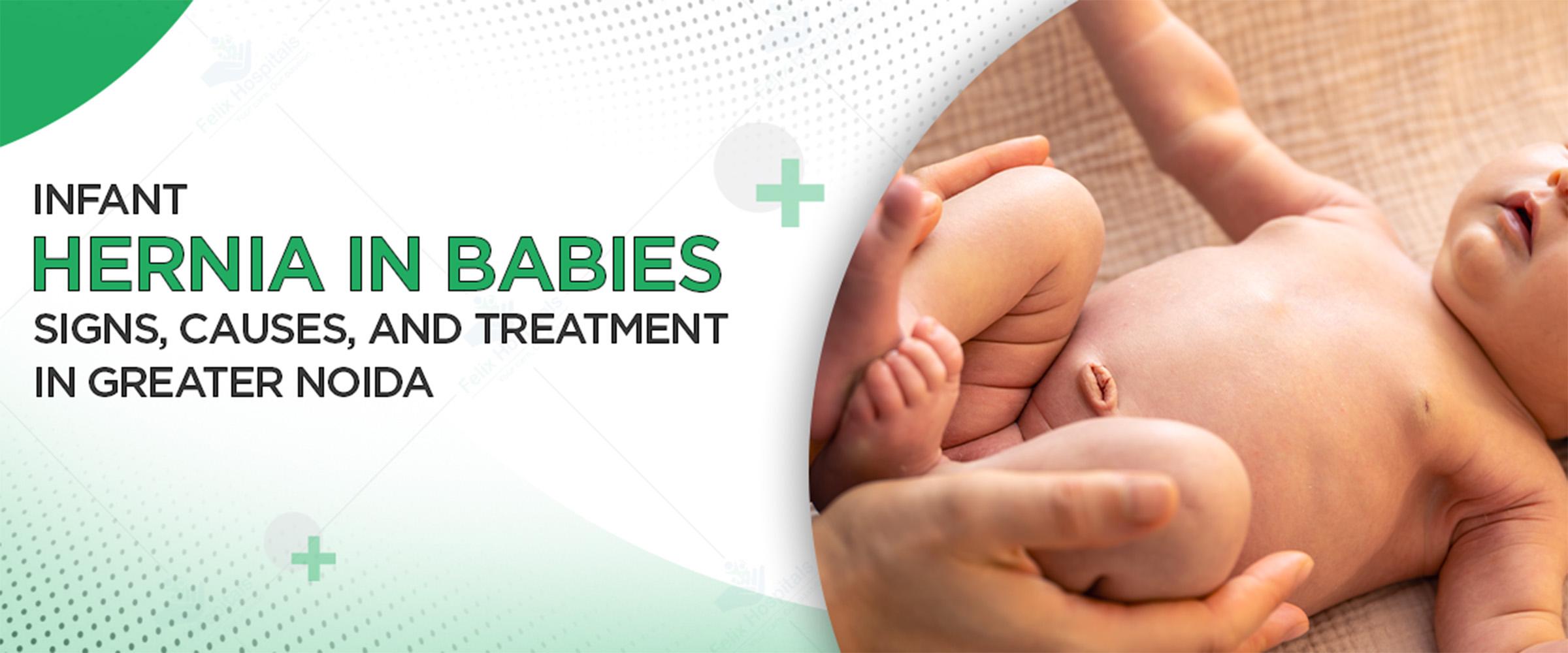
Infant hernia in babies occurs when n in which part of an internal organ, usually the intestine, protrudes through an area of weak muscle in the abdominal wall. Umbilical and inguinal are the commonest hernias found in Greater Noida and environs.
There is the soft bump that appears close to the belly button. It develops when the place that contains the umbilical cord is not tightened up after delivery. Low-birth weight or premature infants are particularly at a risk of this type and it is commonly observed during regular checkups.
This bump appears along the groin and may on occasions extend to the scrotum in boys. It is caused by a gap on the groin which does not close before birth or postnatally. It is more likely to appear among boys particularly those who were born prematurely. Occasionally it is seen on both sides.
Causes of hernia in infants typically relate to natural weaknesses that do not resolve after birth.
Umbilical hernias: The umbilical ring remains unclenched.
Inguinal hernias: the inguinal canal fails to close normally allowing intestine or fat to be forced through.
Other risk factors: prematurity, birth weight under 2.5kg, a history of hernias in the family or connective-tissue disorders.
Being aware of signs of hernia in newborns helps parents act quickly.
A bump that can be seen or felt around a belly button (umbilical) or around the groin (inguinal).
The bump swells when the baby cries, coughs or struggles and tends to subside when the baby is calm and lies or when the baby is lying in a straight position.
Inborn males, groin bumps can be followed towards the scrotum.
Hard or persistent swelling, redness, pain, or change of color of skin is an indication of a possible complication.
Recognizing Hernia symptoms in babies is essential. Symptoms include:
A blistering bump, which comes and goes
Swelling that remains, hard, red and tender
When crying or straining, irritable or painful
Constipation or problems feeding and a bump
The bump is also hard to squeeze and is painful
A crisis is unexpected, severe, hard swelling with change of color.
Occasionally, tissue may be trapped (incarcerated) or lose its blood (strangulated). Indications that need some urgent attention are as follows:
The bump does not dissipate upon the baby calming down.
The region gets hard, red, purple or highly tender.
The infant is very fussy, nauseated or discards feeds.
A hernia with a strangled bowel is life-threatening; it may lead to bowel injury and infection.
A specialist in child hernia or a pediatrician will test the baby on lumps. In case of unclear find, an ultrasound will take care of the location of the hernia and its contents. In case of acute symptoms, additional imaging or blood analysis can be requested in order to identify complications.
The majority of umbilical hernias do not require operation. The opening tends to spontaneously close around the age of four or five and therefore a wait and watch position is quite a usual one. Surgery is advised if:
The hernia is large.
It shows no signs of closing.
It causes discomfort.
Inguinal hernias can hardly be treated without surgery because they are highly complicated. Baby hernia treatment options therefore include:
Observation for small, asymptomatic umbilical hernias.
Surgical correction of inguinal hernias, symptomatic or persistent umbilical hernias.
Pediatric surgeons perform surgery and almost always permit discharge on the same day. The process is done to put the sticking tissue back in place and sews the muscle hole back.
The majority of the infants resume normal functioning in a few days. A follow-up visit will be made to inspect the area. Infection signs that parents should seek are redness, drainage or fever.
Although there is no sure method to prevent infant hernias, proper prenatal care and decreasing risk factors, i.e., birth at an early age and underweight, have the potential to decrease the risk. Timely medical check is a guarantee of safe results and being relaxed.
To get more information on expert assistance on hernia surgery on babies, call the child hernia specialist on +91 9667064100.
Adequate identification at an early age and professional attention are the most successful. Local families may select an efficient team of Pediatric hernia surgery in Greater Noida, as well as a good child hernia specialist who will be caring and make sure the family receives a timely diagnosis, safe surgical intervention, and follow-up with an assured result. The belly or many times the groin of the baby has swelling, pay no attention to it! Take immediate action and secure a good future.
Q1: Do inguinal hernias in infants pose a risk?
Ans: Yes, they may cause severe complications, and they nearly always require surgery.
Q2: Is infant hernia surgery risky?
Ans: The surgery is performed easily and most testes hernias in infants are safe and they are surgically removed on the same day by pediatric specialists.
Q3: Will herina surgery leave my baby with scars?
Ans: Incisions are minute and they normally heal with insignificant scarring.
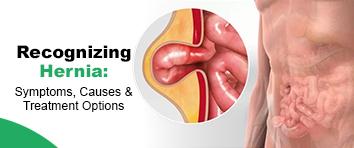
A hernia typically occurs due to a combination of muscle weakness and strain. This can happen from factors such as aging, injury, heavy lifting, chronic coughing, or conditions like pregnancy and obesity.


Subscribe to our
© Copyright 2026. All Rights Reserved by Felix Healthcare Private Limited
Design and development by :


 +(91)9667064100
 Emergency : +(91)9667064100