 Emergency:
  WhatsApp


Subscribe to our
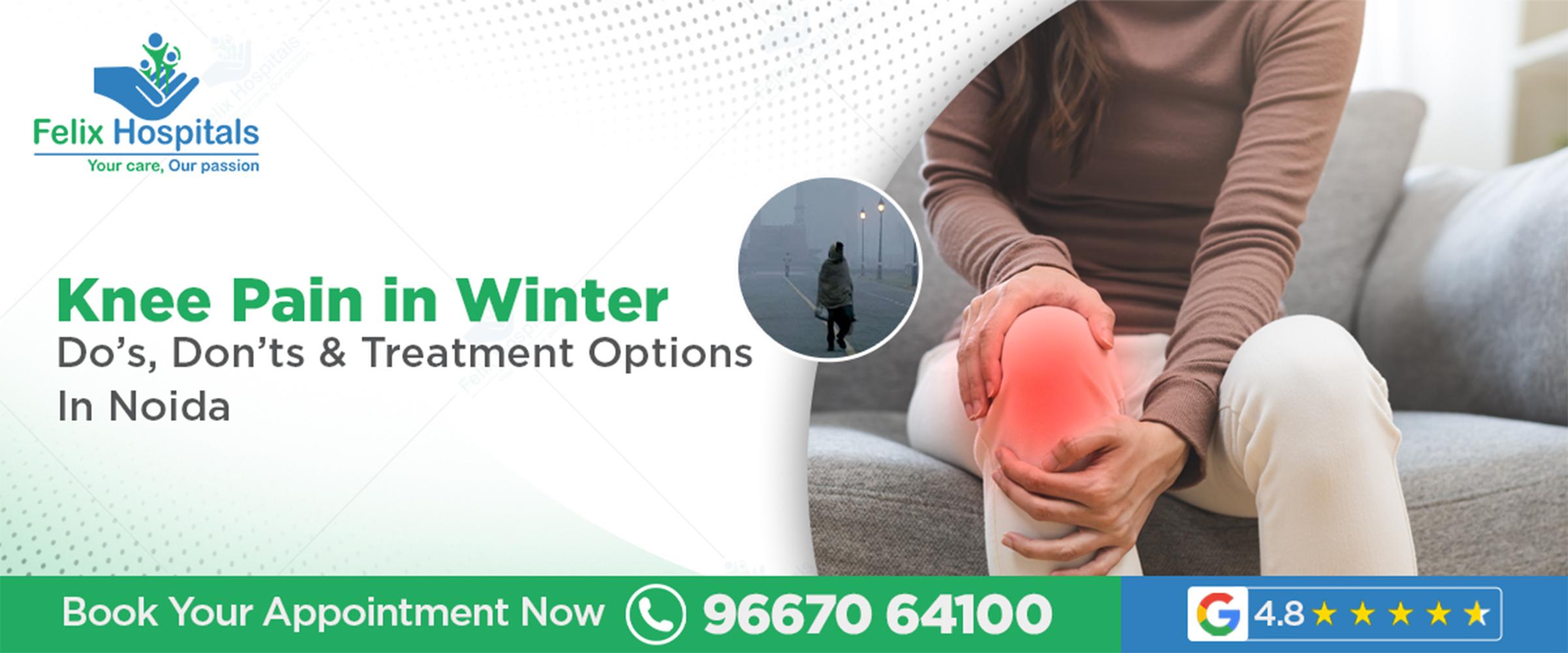
Winter is a time of holiday happiness, peaceful evenings and outdoor fun. Other than holidays and celebration winter also increases joint pain, particularly in individuals with a prior joint problem. Knees may be stiff, swollen and sore due to the cold temperature, lack of mobility or alternating atmosphere. Even a slight pain will disrupt your day to day routine such as climbing stairs, walking, or physical exercise. Knowing why knees hurt in winter, using preventive strategies, and seeking expert orthopaedic care in Noida are key to keeping joints healthy and mobile during the colder months.
The pain in the knee does not indicate only the discomfort, but also may indicate conditions like osteoarthritis, ligaments rupture, or cartilage rupture. Unless treated, chronic knee pain in the winter months may considerably disturb the quality of life as well as limit the independence.
Knee pain shouldn’t limit your life. Schedule your orthopaedic appointment now: +91 9667064100
Cold weather affects muscles, joints, and connective tissue, which explains why knees hurt in winter. Some of the most common reasons why knees pain in winter are:
Muscle contraction: The cold causes the muscle and ligaments to shrink resulting in strain in the knee joint.
Less joint lubrication: Synovial fluid that lubricates the joint during cold weather thickens, causing the movements to become harder.
Increase of chronic disorders: In colder months, arthritis, cartilage degeneration or degeneration of pre-existing injuries exacerbates.
If you experience knee pain throughout the winter, it is important to identify it quickly so that you can get treatment. Here are some common symptoms:
If you experience any of these symptoms continuously, visit an orthopedician in Noida to get relief and get back to your activities of daily life.
Treatment of knee pain in winter can be relieved with the following simple measures.
Tips for knee care in winter include staying active, stretching regularly, and avoiding sudden strenuous movements. Keeping joints mobile helps prevent stiffness and pain.
Do’s for Winter Knee Care | Don’ts for Winter Knee Pain |
|---|---|
Keep knees warm with layers, thermal wraps, or scarves | Avoid high-impact exercises on cold joints without proper warm-up |
Engage in regular, gentle strengthening exercises for quadriceps and hamstrings | Do not ignore persistent swelling or pain |
Wear cushioned footwear to absorb impact | Refrain from prolonged inactivity or sitting, which stiffens the joint |
Maintain a healthy weight to reduce stress on the knee joint | Avoid self-medicating with over-the-counter drugs without consulting a doctor |
Attend regular check-ups with an orthopedic specialist for preventive guidance | Limit exposure to extreme cold without protective clothing |
When home care is inadequate, the intervention of a bone and joint care expert is required. The possible treatments of knee pain during winter can be.
A visit to an orthopaedic will help in getting treatment by considering the age, activity and underlying conditions of the patient. Ways to keep knees warm in winter include wearing thermal supports, knee sleeves, or layered clothing to maintain warmth and blood circulation.
Hospitals in Noida offer treatment of winter knee pain as:
The trend of providing attractive amenities, qualified physicians, and patient-focused service in winter to manage knee pain centres around hospitals such as Felix Hospital Noida.
Home care is an addition to professional care. At home, good things to avoid and things to do with winter knee pain may be:
A combination of home care and hospital instructions should guarantee faster rate of recovery and minimise recurrence.How to relieve knee pain in cold weather Noida involves gentle exercises, warm compresses, and consulting an orthopaedic specialist if pain persists.
There are urgent cases that must be handled. Consultation: When pain of the knee in winter is coupled with:
Take the first step toward pain-free knees. Call +91 9667064100 to book an orthopedician appointment today.
Winter knee pain is a common but manageable condition. Understanding why knees hurt in winter, recognizing symptoms, and following the do’s and don’ts for winter knee pain ensures effective management and long-term joint health. Hospitals like Felix Hospital in Noida provide advanced orthopedic care, including diagnostics, treatment, rehabilitation, and preventive guidance. Timely action, combined with home care and lifestyle adjustments, helps patients maintain mobility, stay active, and enjoy winter without discomfort.
Question 1: Why do knees hurt more in the winter than in the summer?
Answer: Cold weather makes muscles contract, makes joints less slippery, and makes nerves more sensitive, all of which make knee pain worse.
Question 2: Is it possible to stop knee pain in the winter?
Answer: Yes, if you exercise regularly, wear warm clothes, keep a healthy weight, and follow orthopaedic advice to avoid injuries.
Question 3: What home remedies can help with knee pain in the winter?
Answer: Warm compresses, gentle stretching, supportive braces, and exercises that don't put too much stress on your body can all help.
Question 4: When should I go to an orthopaedic doctor for knee pain?
Answer: If the pain doesn't go away, the swelling gets worse, you can't move around, or home remedies don't work, see a doctor.
Question 5: Do people often have knee surgery for pain that comes from the winter?
Answer: Most of the time, winter knee pain is treated conservatively, but if you have advanced osteoarthritis or structural injuries, you may need arthroscopy or a joint replacement.
Dr. Binay Kumar Sahu is an experienced Orthopedic and Traumatology specialist with 11+ years of clinical practice. He has extensive expertise in complex trauma, arthroscopy, arthroplasty, musculoskeletal tumors, and hand surgery. Recognized among the Best Orthopedics in Noida, he provides comprehensive and advanced orthopedic care.
Knock knees, medically known as genu valgum, is a common condition in young children where the knees angle inward and touch one another when the legs are straightened.


Subscribe to our
© Copyright 2026. All Rights Reserved by Felix Healthcare Private Limited
Design and development by :


 +(91)9667064100
 Emergency : +(91)9667064100