 Emergency:
  WhatsApp

Subscribe to our
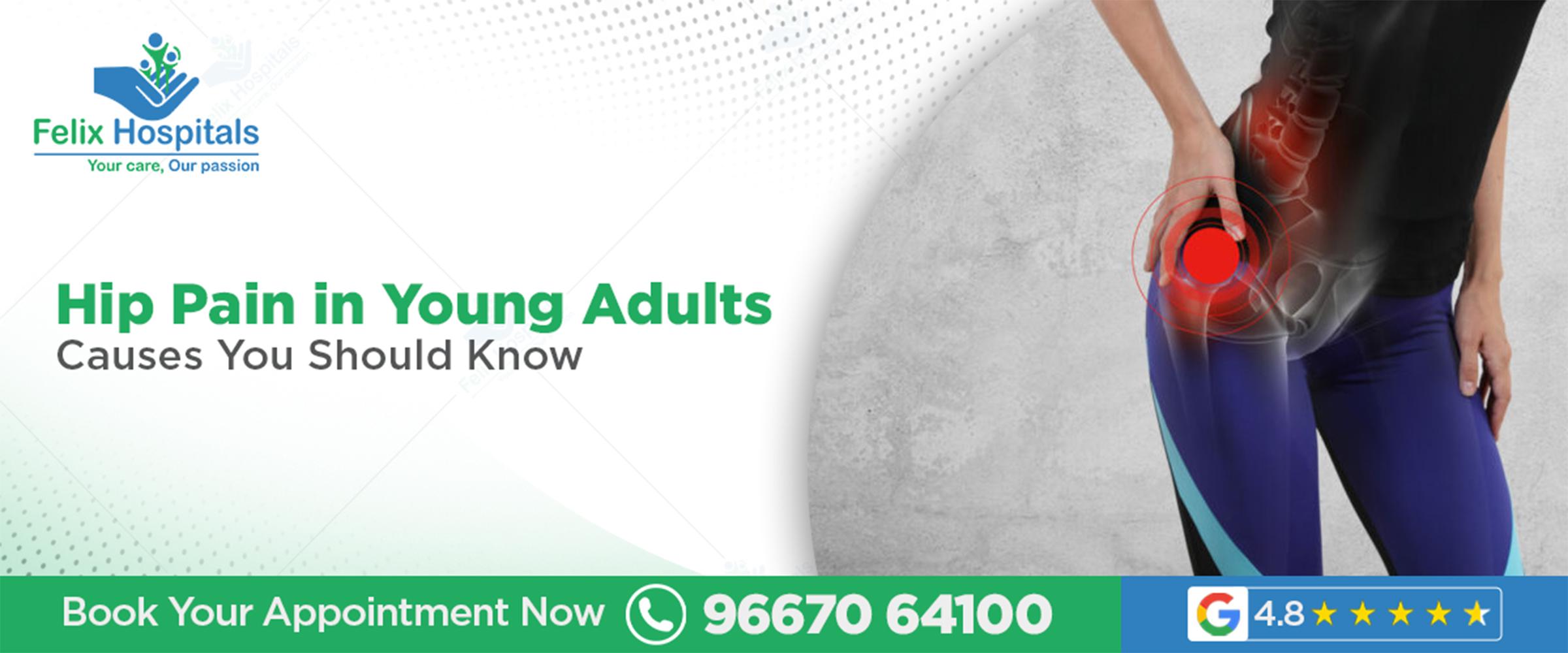
Hip joint pain isn't just for grandparents anymore. More young adults in their 20s and 30s are experiencing chronic or acute hip joint pain that interferes with their daily routines, exercise and, in some cases, sleep. In cities like Noida, Bangalore, Hyderabad sitting all day, barely moving, gym injuries, and lifestyle stress on joints are the main culprits. Recognizing these causes at an early stage is important to help prevent joint destruction in the long term and to minimize the risk of additional surgeries.
When suffering from Hip joint pain that is hampering your daily life activities, the solution is to consult the best Hip surgery Hospital in Noida that provides you with the best treatment options so that you can enjoy a pain free life.
Expert orthopedic care can help you stay active and pain-free. Call +91 9667064100 to consult a hip specialist at a leading hospital in Noida.
Hip joint pain problems are more common nowadays due to the following reasons:
Modern living puts a lot of strain on the hips. For example, long hours spent hunched over a keyboard, poor posture, and bouts of intense activity are largely to blame.
Strenuous exercise without adequate warm-up sessions place more stress on the hip joints, resulting in young adults becoming more prone to pain and injury.
In young people, hip pain is usually the result of overuse or mechanical problems — not arthritis or age-related wear and tear, as it is for older adults.
That's because hips carry the weight of nearly everything you do — walk, run and stand. So it stands to reason that even small hip problems can quickly cause pain and stiffness.
People should never brush off mild hip pain. When left untreated, it can become a chronic ailment that impacts mobility and quality of life.
As a treatable condition, early identification and intervention are key to avoiding long-term complications.
30% of athletes under 35 experience hip pain at some point
Women are 2-3 times more likely to develop certain hip problems due to anatomy
60% of cases improve with physiotherapy alone
Sitting 8+ hours daily increases hip pain risk by 40%
Early treatment reduces surgery risk by up to 75%
Strain in muscles because of excess exercise: Rapid changes in exercise, inappropriate form or no stretching may overstretch and overstrain hip muscles and tendons giving rise to soreness or stiffness or pain.
Restricted hip flexors due to hours of sitting: The flexor muscles tighten and become short because of the hours of sitting and result in pain during standing or walking.
Labral tear: The labrum is an annular cartilage that stabilises the hip. It can be torn by sports injuries or repetitive twisting.
FAI (Femoral acetabular impingement): The anomalous bones form friction within the joint causing pain and restricted movement.
Pain around the hip during walking is normally an indication of structural or mechanical issues, and sharp hip pain when walking should never be ignored, especially if it worsens with movement or stair climbing.
Hip pain can occur because of high-intensity workouts due to:
Bad lifting technique
No rest days.
Imbalances in muscles
Wrong shoes
Pain confined over 48-72 hours or on increase with activity is an indication of orthopaedic examination.
Sitting and standing in poor positions impose unequal force to the hip joint. Spending many hours at desks, or bending over the laptops without any support system slowly leads to discomfort.
Risk factors related to lifestyle are:
Inactivity all day
Extra weight
Smoking (cuts down on the flow of blood to the joints)
Poor flexibility
Early correction of posture can help a lot in the symptoms.
Symptoms | Likely Cause | What To Do |
Sharp pain walking | Labral tear or impingement | See doctor within days |
Ache after sitting long | Tight hip flexors | Stretch, see doctor if persists |
Pain after gym | Muscle strain or overuse | Rest 2-3 days, then evaluate |
Pain with specific movements | Structural problem | Orthopedic evaluation needed |
Pain at night | Inflammation or serious issue | See doctor within week |
Can't bear weight | Fracture or severe injury | Go to hospital now |
Knowing when to see a doctor for hip pain can prevent a simple condition from becoming a chronic joint disorder. Proper diagnosis is a determinant of successful therapy. Assessment usually comprises:
Your doctor will look at the way you walk - How you move tells a lot about the location of the problem and which muscles or joints are masking the pain.
Range of motion test - By moving your hip in all the directions — forward, backward and side to side. This is indicative of the amount of stiffness or restriction in the joint.
Evaluate the muscle strength – the physician will test the muscle strength around your hip to see if it is weak or unbalanced. Weakness on one side very often points very directly to the source of the problem.
Precisely locate the pain area — The doctor will gently press around your hip to see exactly where it hurts the most. The site of tenderness can help differentiate whether it is a muscle, tendon, bone or joint problem.
X-ray — The initial and quickest investigation. As it has high definition of bone it can show fracture, bone lesion and joint space narrowing in the presence of arthritis.
MRI — The most comprehensive test for hip joint disorders. It reveals what the X-ray cannot — cartilage, tendons, ligaments and damage to soft tissue. A labral tear is only seen on an MRI.
CT scan — Used when the bone structure needs to be examined in much greater detail than an X-ray can provide. Mostly used for complex fractures or before planning surgery.
Early detection assists in saving the health of the joints and avert their destruction in the long-term. Early consultations prevent surgical treatment and quicker recovery.
The majority of young adults respond favourably to conservative treatment; they are easy to treat when they are caught at an early stage. Common approaches include:
Analgesic and anti-inflammatory drugs to minimise pain and swelling.
Physiotherapy to tighten and increase flexibility.
Pain-reducing changes in activity.
Proceed with posture adjustments to reduce stress of joints.
Hip pressure reduction by weight management.
Hip and core specific exercises.
Ice and heat application in the management of inflammation.
These procedures are non-surgical methods of restoring joint action.
Surgery can also be prescribed when:
Structural damage is severe
Non surgical treatment fails in 3-6 months.
The joint locks or gives out
Advanced options available at a Hip surgery Hospital in Noida include arthroscopy, labral repair, and corrective bone procedures focused on preserving the natural hip joint.
Total hip replacement (arthroplasty): It is the usual treatment for severe arthritis or injury. The damaged ball (femoral head) and socket (acetabulum) are taken out and new parts are put in place.
Partial hip replacement: In this procedure, only the ball part of the hip joint is replaced while the socket remains intact. This is usually done for certain types of hip fractures, particularly in elderly patients where only the femoral head (ball) is damaged and the acetabulum (socket) is still healthy.
Revision Hip Replacement: A complicated, second surgery done to replace a prosthetic that has worn out, became loose, or has failed.
Minimally Invasive Hip Replacement: Uses smaller cuts, which means less damage to the tissue, less pain, and a faster recovery than traditional methods.
Hip arthroscopy: It’s a diagnostic and therapeutic procedure and performed through tiny incisions. The surgeon uses the small camera, called an arthroscope, and small specialized tools to look inside the hip joint. It can be utilized to extract any loose pieces of bone or cartilage, fix torn cartilage, such as labral tears, trim away damaged tissue, or treat various other soft tissue concerns — and all without fully opening the joint.
Hip Labrum Reconstruction: For those patients with a hip labrum (circle of cartilage around the hip socket) too damaged to be repaired, reconstruction of the labrum is the recommended treatment. The surgeon removes the torn labrum and replaces it with a graft — most commonly from a tendon in your own body or from donor tissue. This graft is meticulously secured to reestablish the hip joint cushioning and stability that the natural labrum provided.
Prevention is the key to joint long-term health. The smart prevention strategies are:
Maintain a healthy weight
Pre-exercise warming up for 5-10 minutes are injury aversive.
Train core and hip muscles to get more support.
Sit on ergonomic chairs with correct height and stability.
Supportive shoes provide correct alignment.
Even minor lifestyle modifications can help to diminish the risk in the future significantly.
Hip pain that is left unattended may evolve into:
Chronic joint inflammation
Loss of mobility and flexibility.
Early arthritis (if you are in your 30s already).
Relying on pain discomfort medication.
Early surgery
Inability to perform simple tasks.
Knee and back problems
These complications can be prevented by timely treatment
Ignoring hip pain can lead to long-term joint damage. Call +91 9667064100 to book an orthopedic consultation in Noida today.
Hip joint pain in adults can be caused due to multiple reasons. Such conditions may be due to lifestyle, sports injuries, or an underlying structural joint issue — which is why getting the right diagnosis and treatment as soon as possible is so important.
Now with the best orthopaedic specialist in Noida young adults can benefit from comprehensive assessments. Early treatment for hip pain can restore function and significantly decrease the chance of long-term problems.
Q1: My X-ray looks normal, but I have hip pain. Does that mean nothing is wrong?
A: No. X-rays only show bones. X-rays can't show soft tissue injuries like labral tears, muscle injuries, or damage to cartilage that happens early on. MRI shows damage to soft tissue much more clearly. A lot of young adults with serious hip problems have X-rays that look normal.
Q2. Is it possible to treat hip pain during pregnancy in the same way?
A: No. Hip pain during pregnancy is caused by hormonal changes that make the joints less stable and add the extra weight changing your posture. The treatment is very different and needs to be safe for the baby. Instead of drugs or shots, a doctor will suggest physiotherapy and support belts that are safe for pregnant women.
Q3: I'm only 25. If I don't do anything about hip pain now, will I need a hip replacement in the future?
A: Maybe yes. Young adults who ignore hip pain and don't get treatment are much more likely to get early arthritis and need surgery to replace their hips in their 40s or 50s. Finding and fixing the problem now greatly lowers that risk.
Q4. Can hip pain change the way I walk?
A: Yes. If you don't pay attention to your hip pain for a long time, your body will automatically change the way you walk to make up for it. Over time, this puts too much stress on your knees and lower back, which leads to new problems. This is why it's important to get treatment right away, not just for your hip but for your whole lower body.
Q5. Is it okay to keep going to the gym if your hip hurts?
A: It depends entirely on the cause. Some exercises are safe and even helpful while others can make the injury significantly worse. Never self-diagnose and continue training through pain. Get evaluated first so your doctor and physiotherapist can tell you exactly what you can and cannot do safely.
No. X-rays only show bones. X-rays can't show soft tissue injuries like labral tears, muscle injuries, or damage to cartilage that happens early on. MRI shows damage to soft tissue much more clearly. A lot of young adults with serious hip problems have X-rays that look normal.
No. Hip pain during pregnancy is caused by hormonal changes that make the joints less stable and add the extra weight changing your posture. The treatment is very different and needs to be safe for the baby. Instead of drugs or shots, a doctor will suggest physiotherapy and support belts that are safe for pregnant women.
Tuberculosis (TB) is primarily known as a respiratory infection caused by Mycobacterium tuberculosis, but it can affect various body parts, including bones and joints.
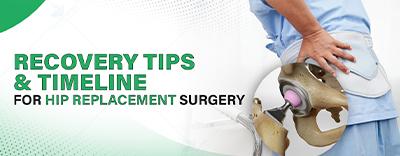
Learn about the recovery process after hip replacement surgery, including essential tips for a smoother healing journey and a general timeline of what to expect.


Subscribe to our
© Copyright 2026. All Rights Reserved by Felix Healthcare Private Limited
Design and development by :


 +(91)9667064100
 Emergency : +(91)9667064100