 Emergency:
  WhatsApp

Subscribe to our
The eyes are an opening to the surrounding world and the eyes provide us with a clear view to appreciate the world around us. Eye health should not be taken care of once in a while complaining of blurred vision, it has to be checked, thoroughly tested. It is necessary to know the eye exam indicators and the usual eye tests of an eye checkup in order to be aware of the tests that are involved in a comprehensive examination.
Individuals of any age will gain advantages when they learn to check their eyes regularly and acquaint themselves with the usual eye examination procedures available to test vision as well as identify undetected illnesses at a tender age. Eye checkups are a sure way of maintaining the eye health in the long term, avoiding serious sight issues due to early medical attention.
This blog explains the various forms of vision examiners that are conducted when an individual gets a thorough eye examination and their functions, as well as what the patients should expect. Be it identifying refractive problems, glaucoma and a retinal disease, the current revolutionary eye tests prepare the eye specialists to examine the general state and eyesight of the eyes. Learning about these tests, you will understand how significant regular screenings are and take proactive actions to achieve eye health.
Get started to have a better vision-book your full vision check in Noida on +91 9667064100.
Eye checkups do not just give out prescriptions of glasses or contacts. A comprehensive eye exam test determines the quality of the light that is focused by your eyes, the team of the eye in the process, the way your eyes respond to the stimulus as well as the sound internal and external structure of your eyes. The new exams are a combination of the traditional approach and the latest imaging technologies which will allow us to see the full picture of eye health.
Centrally, the vast majority of thorough testing is focused on two objectives: evaluation of clear vision (or men and women specific needs) and signs of early disease or damage (even prior to the emergence of symptoms).
To have a closer look at the vision test types and the diagnostic tools used in case of an in-depth visit to your eye physician, we shall dwell on the most common types of tests and mechanisms.
The most common and universal vision test is the Visual Acuity Test. It is a test of clarity with which you view objects either close or far.
In this test you read letters or symbols, which are written on a chart (also referred to as the Snellen chart) which is situated at a certain distance. Based on the number of letters you read correctly, your eye doctor can declare that you have a vision of 20/20 (normal), above average or poor.
This is one of the types of vision tests that is quick to administer and can reveal that a person needs to wear corrective lenses or that his vision is impaired and requires special examination.
Refraction is a test that determines the way your eyes bend the light waves to the retina at the back of the eye. This is necessary to get your actual specification of glasses or contact lenses.
The specialist provides the patient with the opportunity to alternate between the lenses and asks which lens appears more comfortable or clearer with the help of a special instrument called a phoropter. This is the exact procedure that would straighten out your prescription to give it the best effect.
Refractive errors such as myopia, hyperopia, and astigmatism are also detected using the refraction test.
The test of refraction is one of the most common eye tests that is a routine eye exam test
That is just ideal with patients having blurred vision or headaches associated with difficulty in focusing.
The Visual Field Test is a test of your peripheral (side) vision, which is the extent to which you are able to see beyond what you can see directly in your vision.
Through this test, neurological or eye diseases that impair peripheral vision like glaucoma, stroke or retinal damage are revealed.
You maintain focus on a focal point and point at the point where you notice lights or things appearing within your field of vision. It assists in the early detection of vision loss that is not even recognized during normal daily activities.
Periodical examination of peripheral vision is particularly important in people who have the risks of experiencing glaucoma, a major cause of blindness.
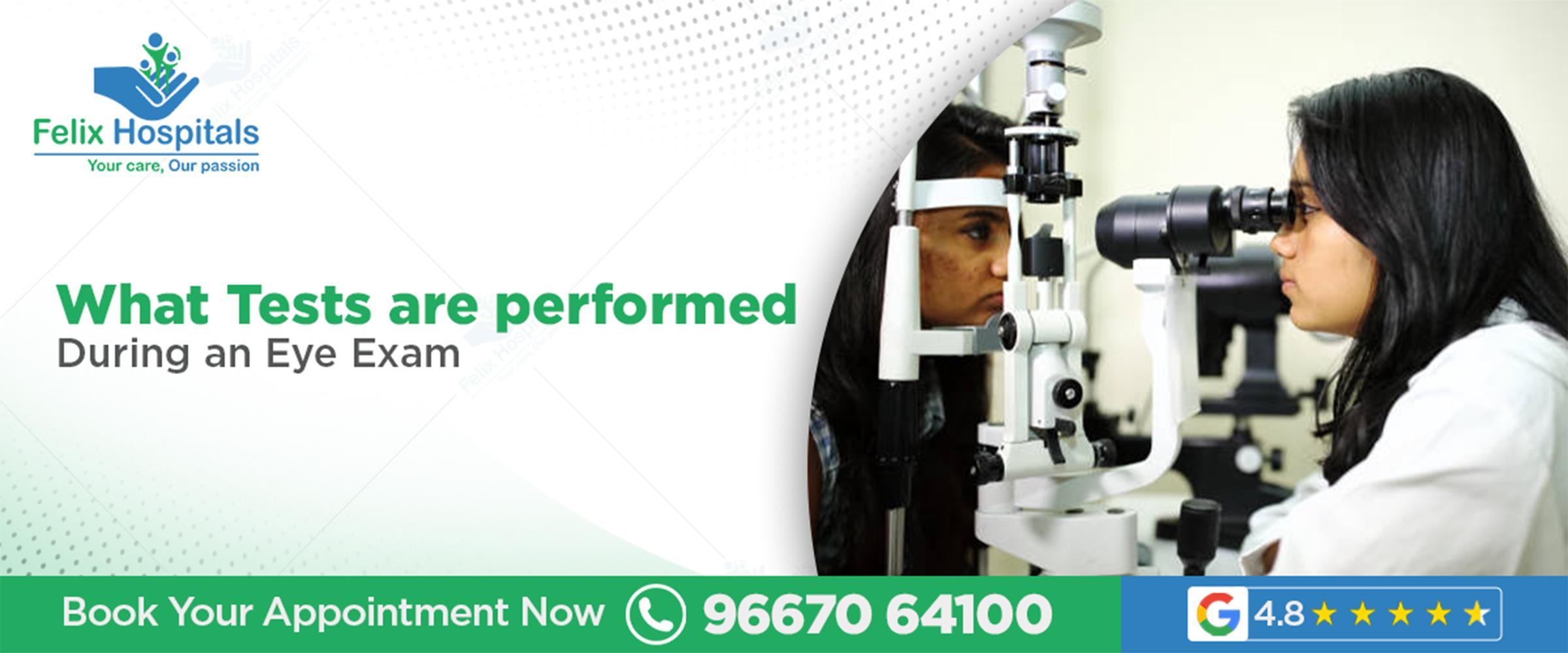
The Slit Lamp Exam involves the use of a special microscope along with bright light to view the front of your eye under extremely high detail including eyelids, cornea, iris and lens. The doctor can tell you are infected, inflamed, having cataracts, dry eye, and more by scrutinizing the adjoining structures in your eye. Abnormalities that cannot be seen with the naked eye are sometimes highlighted in terms of stains or dyes.
It is a significant component of a full eye care check-up.
Tonometry is the pressure in the fluid within your eyes, the intraocular pressure (IOP). Glaucoma is a disease that destroys the optic nerve and thus, it may result in permanent blindness, which is enough justification to consider elevated IOP as an early indicator of glaucoma. There are many different methods of measurement, one such is the non-contact air puff test that is usually used, and another by using a small probe in contact.
It is a painless, fast eye test that is necessary in detecting glaucoma at an early stage.
This test will check your sense of the ability to differentiate between colors and in some eye or neurological conditions, this sense might be impaired. It is based on images of numbers or shapes that are made up of multicolored dots which you spot the hidden figures. Impairment of color vision may be either inborn or caused by some other health conditions requiring additional assessment.
Retinoscopy is the method that determines the precise refractive error of your eyes with the help of lenses and a handheld source of light. It gives an objective measurement of the measurement that helps in arriving at the correct prescription. This method is particularly useful with children and non-verbal patients.
It is a high-resolution imaging process which traces the cornea shape in thousands of points to evaluate shape defects.
Topography of the cornea is essential in determining the presence of astigmatism, keratoconus and in the processes of refractive surgery or contact lens prescribing. It is a very specialized routine eye exam test used when one wants to learn more about the health of the cornea.
In the process of ophthalmoscopy, the doctor of your eyes will check the information behind your eye such as the retina, optic nerve, and blood vessels. Eye drops that help in dilation of the pupil increase the visibility. This test is necessary in the diagnosis of retinal conditions, diabetic retinopathy, macular degeneration, and damage of optic nerves.
Monitoring eye health is of great importance in all age groups, yet select groups must be given special attention:
Children, particularly those who are still underage before they start schooling to identify amblyopia or any other eye problem.
Adults who have health issues that are chronic such as diabetes or high blood pressure.
Individuals above 40 years whose risks of cataracts and glaucoma are high.
People who have relatives who have eye diseases.
With the help of an ophthalmologist or optometrist, regular screening helps to detect and treat diseases in time and keep vision intact.
The majority of eye tests do not need much preparation. Wearing contact lenses should be avoided before the test unless recommended, come with your existing eyewear, and provide a list of symptoms and concerns. In the case of a dilation exam, light sensitivity and blurred near vision might be experienced in several hours.
Thorough eye checkups not only indicate the vision defects but also reveal the systemic diseases that manifest in the eye, such as high blood pressure, diabetes and neurological disorders.
Early diagnosis implies earlier cure, and improved results and chances of avoidance of radical vision loss.
Concerned about your vision? Enjoy customized attention by the best ophthalmologists in Noida at +91 9667064100.
Eye health goes beyond the optical prescription; it involves knowing and identifying the eye checkup signs, understanding the symptoms of common eye problems, and knowing when to visit for an eye test. The diversity of standard eye examinations helps measure vision clarity and evaluate overall eye health comprehensively. Do not wait until symptoms worsen; make regular eye checkups with qualified professionals at the Best Eye Hospital in Noida part of your top priorities. Timely diagnosis and treatment ensure preserved vision, better quality of life, and long-term visual comfort.
Q1: How frequently should I get my eyes tested in case I have no symptoms?
Ans: It is recommended that an eye examination be conducted on a regular basis (1 to 2 years) to detect problems at an early stage.
Q2: Will my eye check involve dilation on a regular basis?
Ans: Periodic dilation can be done to examine the health of retinas in detail.
Q3: Is it possible to drive after having an eye exam?
Ans: In case pupils are enlarged, the vision can be blurred; arrange to be driven.
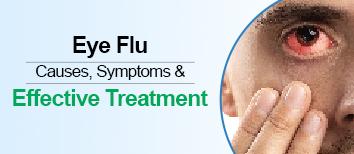
Eye flu, also known as conjunctivitis, is a common eye infection causing redness, irritation, and watering. Learn its causes, symptoms, and effective treatments.
The right ophthalmologist is a crucial step in your eye surgery journey


Subscribe to our
© Copyright 2026. All Rights Reserved by Felix Healthcare Private Limited
Design and development by :


 +(91)9667064100
 Emergency : +(91)9667064100