 Emergency:
  WhatsApp



Subscribe to our
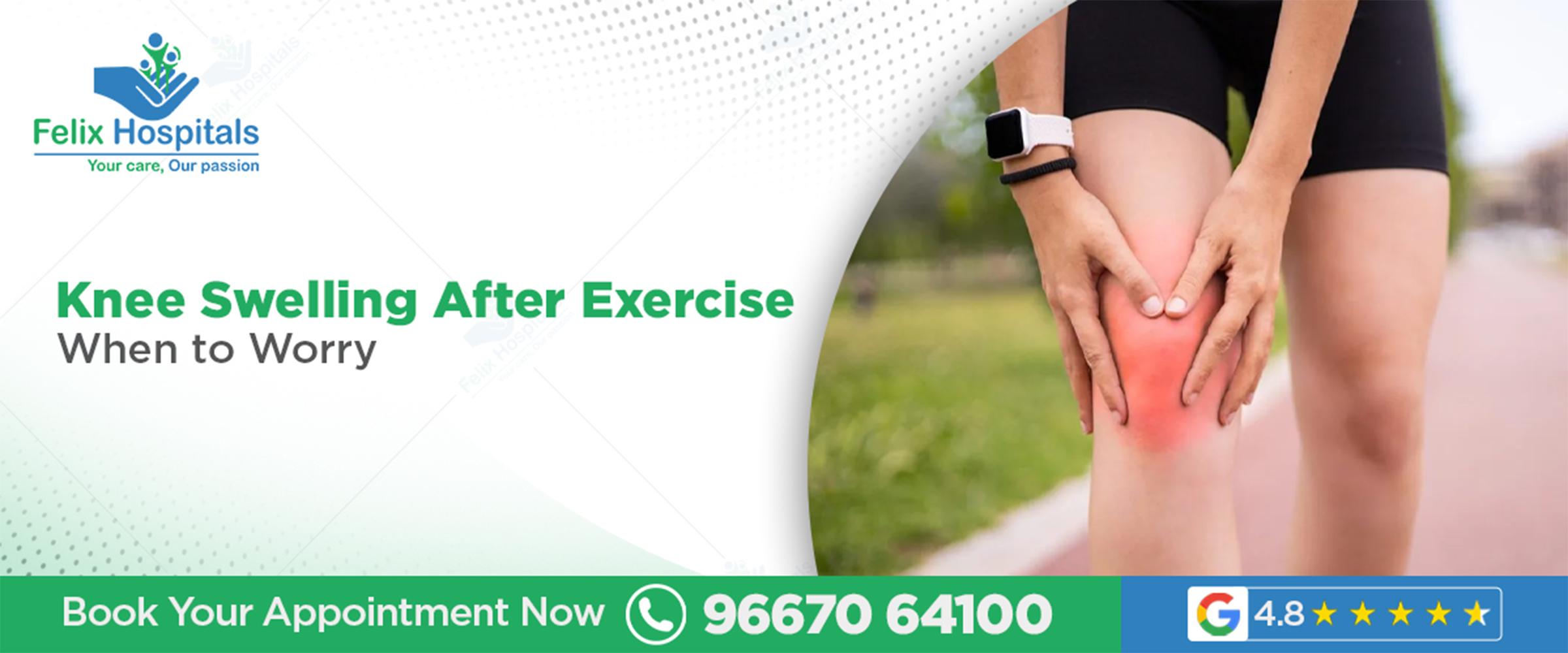
Knee swelling after exercise is more common than you think. Athletes, gym-goers, and even people who just went for a walk can experience it. Although temporary swelling can occasionally be unimportant, constant or painful swelling may indicate an underlying injury or problem with the joint. Knowing why it happens, when to see the best orthopaedic surgeon in Noida, and what treatments are available could save your joint from irreversible damage and help keep you active and mobile.
Persistent knee swelling can signal serious injury. Contact +91 9667064100 to consult a specialized knee joint doctor in Noida today.
Knee swelling (effusion) is the accumulation of excess fluid in or around the knee joint. Exercise induced swelling has many causes, most can be explained by normal wear and tear, while others indicate joint structural damage.
Running and sports are both high-impact activities that place a lot of pressure on the knee cartilage and ligaments. Sometimes swelling is transient, caused by an increased blood supply and fluid retention in the joint.
Persistent swelling after exercise—especially if it is accompanied by pain or a sensation that the joint may give out—should never be disregarded. It is also frequently seen with knee pain while walking long distances or performing other bearing activities for long waves.
Several causes of knee pain tend to worsen with movement, particularly during walking. Some of the most common chronic knee pain causes include:
Overtraining -Running, cycling, or jumping may overstrain your knee, as well as result in inflammation.
Ligament injuries - Tears in the ACL, PCL and MCL cause acute swelling and a sense of instability.
Meniscus tears - Cartilage cushion may tear during sports, forcing it to push fluid into the joint.
Patellar tendinitis - Excessive use of the tendon approximately below your kneecap causes swelling and pain.
Bursitis - The fluid-filled pods surrounding the joint become inflamed to cause swelling.
Osteoarthritis- Wear and tear of the joint result in chronic swelling, particularly following an activity.
Gout or pseudogout - Sudden and painful swelling is due to the crystal accumulation in the joint.
The swelling of the knee does not require an immediate intervention, however, there are indicators of severe injury or joint issues:
Sudden or Sharp knee pain when walking or moving, especially knee pain at night and when walking.
A crooked-looking knee deformity.
Inability to hold weight or instability.
Local warmth in the knee.
Persistent greater-than-48-72-hours swelling.
Knee locking
Worsening, progressive pain when walking.
When any of them manifest themselves, visit an orthopaedic expert or specialist in knee joints immediately.The tendency, time and exact place of the pain can assist your doctor in making decisions about the cause. Knee pain can be observed by numerous people, and it is difficult to bend or walk due to pain in the knee joint while walking.
When swelling does not subside within a few days or keeps returning, it can indicate a chronic joint problem. Conditions such as osteoarthritis and rheumatoid arthritis, as well as repeated minor injuries, can all result in persistent swelling and pain.
Chronic swelling must be addressed promptly to prevent further cartilage damage and preserve long-term mobility. Left untreated, persistent swelling often progresses into chronic knee pain that becomes increasingly difficult to manage.
What You Notice | Likely Cause | Action Needed |
Mild swelling after hard workout | Normal fluid buildup | Rest, ice, monitor |
Swelling + sharp pain | Ligament or meniscus tear | See doctor within 1-2 days |
Swelling + can't bear weight | Serious injury | Go to hospital now |
Swelling + warmth/redness | Infection or inflammation | See doctor same day |
Recurring swelling | Chronic joint issue | Schedule orthopedic visit |
Swelling + knee locks | Meniscus tear or loose cartilage | See doctor within days |
Gradual swelling over weeks | Osteoarthritis or overuse | Schedule evaluation |
The rigidity and swelling in the knee restrict the movement of bending or straightening the knee. You might notice:
Problems in bending or straightening the knee.
Stiffness following sitting or in the morning.
Knee pain when walking and climbing stairs
Pains that are disruptive to sleep at night.
These are usually indicative of meniscus tears, cartilaginous wear or inflammation in the joints.
Visit a physician in case of:
Swelling which does not subside in several days.
Acute pain, instability or locking of the knee.
Infection indicators: heat, erythema, or fever.
Sharp pain which restricts daily activity, including Knee pain when bending and walking.
The early diagnosis and treatment prevent the long-term destruction of the joints and the possibility of permanent knee pain.
Best orthopaedic surgeons in noida conduct an examination of the physical as well as an imaging to detect the source of swelling.
Common diagnostic tools include:
X-ray- To detect fractures or osteoarthritis.
MRI- Identifies damage to the ligaments, tendons, or meniscus in 90-95 per cent.
Ultrasound- Evaluates the presence of fluid and inflammation of the soft tissues.
Blood tests- Diagnose infections or inflammatory disease.
An accurate diagnosis ensures that you receive targeted, effective treatment at the Best orthopedic hospital In Noida.
Non-Surgical Treatment includes:
Body positioning and repositioning- Eliminate swelling exacerbating activities.
Ice pack- Apply ice packs for 15–20 minutes every 2-3 hours to decrease inflammation.
Analgesics- NSAIDs are used to eliminate swelling and pain.
Physical therapy - Trains the muscles around and increases the stability (85% respond positively).
Weight control - Being less weight implies that there is less knee stress.
Knee support brace for swelling- It provides compression and stability to reduce inflammation and discomfort. Proper use supports healing while allowing safe movement during recovery.These are used to provide support during the healing process.
Physiotherapy for knee injury helps restore strength, flexibility, and joint stability through guided exercises and rehabilitation techniques. Early physiotherapy improves recovery time and prevents long-term complications.
Surgery may be necessary for structural injuries or chronic issues, including:
Arthrocentesis (Joint Aspiration): During arthrocentesis, also known as joint aspiration, a needle is used to drain extra synovial fluid to relieve pressure. To reduce inflammation, this procedure is often done with a corticosteroid injection.
Knee arthroscopy - "Key-hole" surgery that is not very invasive and can help get rid of damaged cartilage, loose bodies, or inflamed synovial tissue. A camera and small tools help with the procedure.
Synovectomy: Your knee has a thin lining inside that makes fluid to keep the joint moving smoothly. This lining can get irritated and start making too much fluid all the time. Synovectomy just takes that lining away. The swelling goes down, the pain goes down, and a new healthy lining grows back on its own over time.
Osteotomy: This procedure moves the weight to the healthy side by making small cuts in the bone and moving it. It's like fixing a door that was hanging the wrong way. After everything is realigned, it works better and the pain goes down a lot.
Knee Replacement (Arthroplasty): When the knee joint is completely worn out and nothing else works, the damaged parts are taken out and replaced with metal and plastic parts that work just like a real knee.
The best orthopaedic surgeon in Noida will provide an accurate diagnosis and recent treatment choices.
Recovery time is dependent on the severity of the injury:
Slight swelling -Usually resolves within a few days
Ligament injuries - 6–12 weeks physiotherapy
Post-operative Rehabilitation – 3–6 months
Prevention is key for maintaining healthy knees:
Warm up before workouts
Stretch regularly
Use proper footwear
Avoid sudden intensity jumps
Strengthen key muscles
Maintain healthy weight
Stay hydrated
A certain amount of knee swelling after exercise is normal, but swelling that lasts, is painful, or causes joint instability should never be ignored. Get immediate consultation from orthopaedic doctor at the Best Orthopaedic Hospital in Noida. There, you will be able to get a precise diagnosis, treatment, and a customized rehabilitation program that is specific to your needs.By treating early and taking good care of the knees, you can shield your knees, regain motion and keep on exercising — without the encumbrance of chronic knee pain.
If your knee swells after exercise or causes pain, don’t wait. Call +91 9667064100 to book an appointment with the best orthopedic doctor in Noida.
A: Yes, most people can play sports for fun again 6 to 9 months after surgery if they get the right rehabilitation.
A: After surgery, a little clicking is normal and usually not a problem. But you should tell your surgeon right away if you hear loud clicking and feel pain.
A: Yes, your dietitian and surgeon will help you make a diet plan while you recover so that you don't gain too much weight, which could put extra stress on your knee as it heals.
A: Age alone is never the only thing that matters. When figuring out how risky surgery is, age is less important than overall health, bone density, and heart condition.
A: After 4 to 6 weeks, short flights are usually safe. Long flights can cause blood clots, so you need your surgeon's permission, compression stockings, and to move around a lot during the flight.

Understand menopause-related joint pain and find effective treatment options in Noida.


Subscribe to our
© Copyright 2026. All Rights Reserved by Felix Healthcare Private Limited
Design and development by :


 +(91)9667064100
 Emergency : +(91)9667064100