 Emergency:
  WhatsApp



Subscribe to our
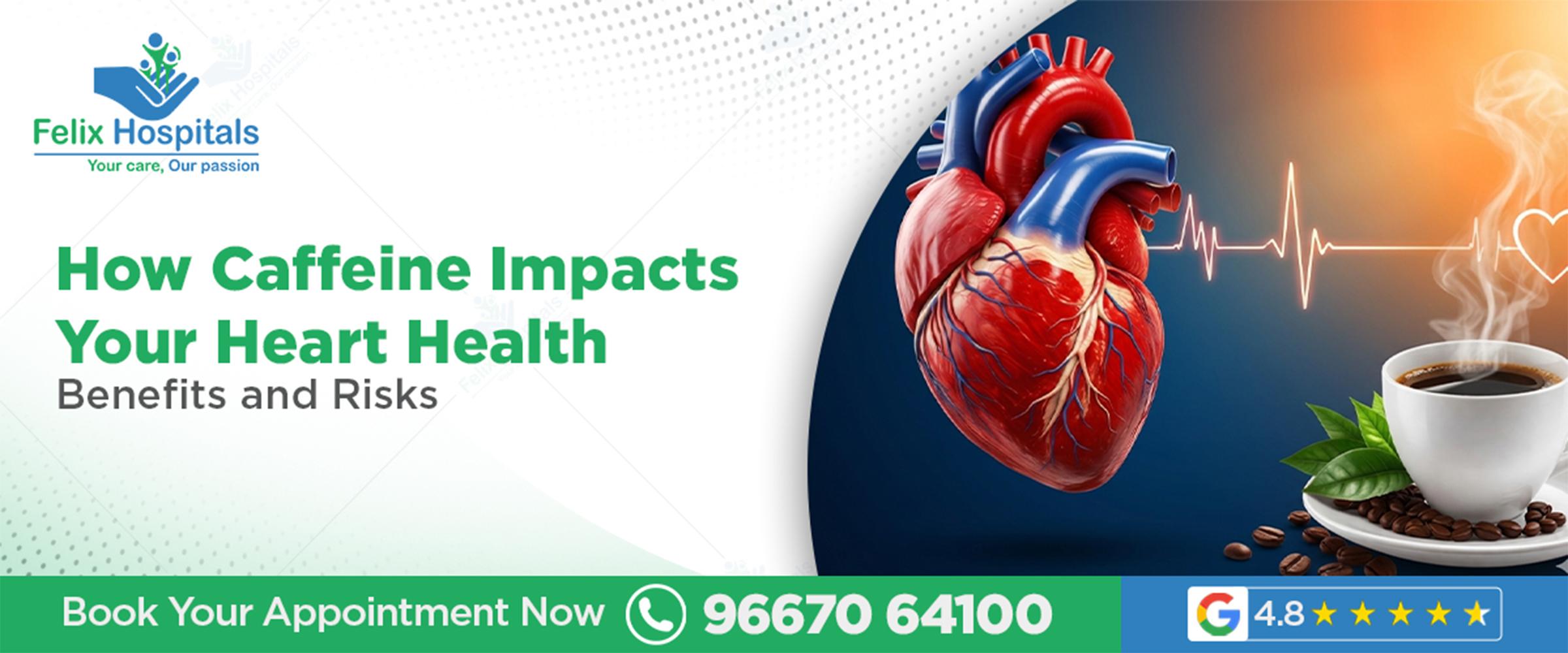
Most of us need our coffee just to get started on the day. But what really happens in your heart with each sip — and how much is really OK to have? Caffeine is the world's most popular psychoactive drug and is present in many of the beverages and foods consumed daily. It's in your morning coffee, your afternoon green tea, your midday chai, your pre-workout ginseng honey, and — stealthily — in your energy drinks, some medications, and a handful of chocolates.
For the majority of healthy adults, moderate amounts of caffeine are a normal part of everyday life. But the heart is a caffeine-sensitive organ, directly and quantifiably, and the question of whether that response is ultimately a good thing or a bad thing depends a lot on who you are, how much you consume, and when. This article will help you to navigate through all the conflicting headlines and understand clearly what caffeine does to your heart — the proven benefits, the actual risks, who should be cautious, and some practical ways to enjoy caffeine without having to put your cardiovascular system through unnecessary stress.
Caffeine acts primarily as an adenosine receptor antagonist in the brain. Adenosine is a substance that helps us to relax and fall asleep — when it's blocked, as caffeine does, we get that rush of wakefulness. But they’re not just effects on the brain.
In the cardiovascular system, caffeine promotes the secretion of adrenaline (epinephrine), which increases your heart rate and causes the blood vessels to temporarily narrow. That’s the real reason a strong espresso can make your heart race — it’s not just all in your head, it’s really happening in your body.
Temporary elevation of the blood pressure — by 5–10 mmHg systolic in non-habitual drinkers
Increases the force of heart muscle contractions (positive inotropic effect)
Regular drinkers get tolerance — the heart rate and blood pressure effects wear off after a while
The honest answer: it depends, Moderate caffeine consumption, especially from coffee and tea, has gone surprisingly well in large population studies. High doses of caffeine, particularly from concentrated sources such as energy drinks, is another matter.
Linked to lower risk of heart failure in modest drinkers
Arterial inflammation could be reduced by the antioxidants in coffee
A number of studies associate 2–3 cups/day with an improved cardiovascular mortality
Can benefit physical performance and blood flow, at least in the short term
Green tea caffeine associated with it being more effective at decreasing LDL and triglycerides
May cause arrhythmias in people prone to them
High doses increase blood pressure — bad news if you're already hypertensive
These drinks also contain other stimulants — a more dangerous mix
Anxiety, disrupted sleep — both contribute to worsening heart health, if only indirectly
Withdrawal leads to rebound fatigue and headache
A large meta-analysis published in Circulation (American Heart Association) reviewed data from over 200 studies and found that drinking 2–3 cups of coffee per day was associated with the greatest reduction in cardiovascular disease risk — approximately 15% lower compared to non-drinkers. The association was consistent across different populations and coffee types.
Source: Poole R et al., BMJ, 2017. "Coffee consumption and health: umbrella review of meta-analyses of multiple health outcomes."
Yes — and this is among the most reliably noted effects of caffeine, at least in nonsmokers and people who don't use caffeine regularly. Caffeine can cause a short-term increase in heart rate and blood pressure within 30-60 minutes of consumption. This is mild and temporary for the vast majority of healthy people.
Rare caffeine users (no tolerance developed) or
People with anxiety disorders or who are panic prone
Patients with hypertension or heart rhythm problems
Caffeine users who are simultaneously taking other stimulants (e.g. decongestants or certain supplements)
In the case of your regular middle-of-the-road coffee drinkers, the body just gets used to it — receptors downregulate and the cardiovascular response becomes minimal. That’s why your daily coffee-drinking neighbor doesn’t get a racing heart every morning and a new drinker might.
The most commonly referenced safe limit — supported by the FDA and European Food Safety Authority among other health authorities — is 400 mg of caffeine per day for healthy adults who are not pregnant. That is about 3 to 4 standard cups of brewed coffee.
Caffeine Safety Spectrum (estimate)
0–200mg · Low/Safe
200–400mg · Moderate
400mg+ · Caution zone
Espresso (30ml shot) — approximately 60–75 mg
Brewed filter coffee (240ml) — approximately 80–120 mg
Instant coffee (1 tsp) — approximately 30–60 mg
Black tea (240ml) — approximately 40–70 mg
Green tea (240ml) — approximately 25–45 mg
Energy drink (250ml can) — approximately 80–160 mg (some specialty cans up to 300 mg)
Dark chocolate (40g) — approximately 20–30 mg
Energy drinks aren't coffee even if the caffeine number seems the same. They typically mix caffeine with taurine, guarana, ginseng, and high sugar — the cardiovascular effects of this combination have been less studied, and may be more intense than caffeine alone.
It’s true that moderate caffeine intake can be considered safe for most people, however some individuals are advised to avoid/limit it – not because of any extreme caution, but because their physiological risk is genuinely increased.
Pregnant women are advised to reduce their intake to below 200 mg/day, caffeine passes the placenta.
Those with Arrhythmia – Atrial Fibrillation, SVT, or frequent Ectopics may be exacerbated by caffeine
Uncontrolled Hypertension — If you already have high blood pressure, caffeine can raise it even more.
Anxiety or panic disorder — caffeine directly exacerbates both
Certain medications: Some antibiotics, thyroid drugs, and asthma medications affect the way caffeine is metabolized.
Children and adolescents — no safe dose; energy drinks particular don’t belong to anyone under 18
If you have a diagnosed heart condition, the safest approach is to ask your cardiologist in Noida directly about your personal caffeine limit — it can vary considerably depending on the specific condition.
Now, that is not to say that science hasn’t evolved over the last 10 years or so. Earlier research that linked coffee to heart attacks was sharply at odds with this one – but those studies did not adjust for smoking (back then, coffee drinkers tended to be smokers). Today's more rigorously controlled studies reveal a much more comforting tale.
The positive effect seems to result from multiple factors, including caffeine itself and several polyphenols, chlorogenic acids and other biologically active compounds found in coffee and tea, which have anti-inflammatory and antioxidant effects on blood vessels. This is also why decaf coffee has some cardiovascular benefit (albeit slightly lesser) in the studies.
If you have a diagnosed heart condition, high blood pressure or arrhythmia, an MD specializing in cardiology can give you a personalized response rather than general advice. Cardiology service is at the hospitals in Noida with high end diagnostic support.
Normally your body goes out of its way to let you know when you have too much caffeine. Don't write these off as "just wired" — particularly if they take place regularly:
Heart racing or pounding
Light-headedness or feeling dizzy
Chest tightness or pain
Trembling hands or tremors
Excessive sweating or blushing
Nausea, or stomach upset
Restlessness and irritability
Irregular, or missed, beats
Headache (commonly when cutting down on intake)
Chest pain
Palpitations that are severe
Breath shortage
These require an ECG and rapid medical assessment – particularly if you have any form of cardiac history.
Loving caffeine and loving your heart can coexist. Practical things like this can go a long way: Don’t overlook them.
If you’re a healthy adult, keep it to less than 400 mg total daily — and remember, that’s total caffeine from all sources, not just your morning cup.
Don’t consume caffeine on an empty stomach. It elevates the acid in the stomach and increases the cardiovascular stimulant effect.
Don’t drink caffeine after 2 P.M. Because of caffeine’s half-life of 5 to 7 hours.
Skip the energy drinks. They combine stimulants.
Drink water with your caffeine.
Never take pre-workout stimulants and caffeine at the same time.
Palpitations can be pretty benign – so they may be bothering you and you’re not aware of why but they also can be a marker for an arrhythmia that you should be evaluated for.”
Caffeine, in moderate amounts, is not the cardiac villain it was once feared to be. For most healthy people, 2–3 cups of coffee or tea a day appears to be neutral at worst and mildly protective at best. The evidence on this has become considerably more reassuring over the last decade.
That said, "most healthy people" is the important qualifier. If you have a heart condition, hypertension, an arrhythmia, or are pregnant, the calculus changes — and those general population averages no longer reliably apply to you. Individual variation in caffeine metabolism is also real: some people's hearts are simply more reactive, and that's not a character flaw — it's biology.
The practical message is simple: enjoy your coffee or tea mindfully, stay within sensible limits, pay attention to what your body tells you, and if your heart is giving you signals you're unsure about — get them checked rather than attributing everything to caffeine and moving on.
Occasional skipped beats after coffee are common from caffeine stimulation, but frequent or worsening palpitations should be checked by a doctor.
With atrial fibrillation, moderate caffeine is usually safe, but limit intake and monitor if it triggers episodes.
Cutting coffee may slightly reduce borderline BP, but diet, salt intake, weight, and exercise have a much bigger impact.
Multiple cups of sugary milk chai daily can affect heart health due to sugar and calories more than caffeine alone.
Two energy drinks daily in teens is concerning because of very high caffeine and stimulants that can affect heart rhythm and sleep
Dr. Rahul Arora is an experienced Interventional Cardiologist with 21+ years of expertise in advanced cardiac care, specializing in personalized, evidence-based treatment for heart diseases and improved patient outcomes.
Arrhythmia is a condition where the heart beats irregularly—too fast, too slow, or with an uneven rhythm. It can feel like a fluttering, racing, or skipped heartbeat.
Heart attack signs early is crucial because timely intervention can significantly reduce the risk of severe complications and improve outcomes.

Subscribe to our
© Copyright 2026. All Rights Reserved by Felix Healthcare Private Limited
Design and development by :


 +(91)9667064100
 Emergency : +(91)9667064100