 Emergency:
  WhatsApp

Subscribe to our

The human body is a complicated machine full of wonders, and the appendix is no exception. This little, finger-shaped pouch is located in the lower right side of your abdomen. Early identification and treatment are key to prevent complications. As a result, in cases where you suspect an issue that needs to be treated immediately, contacting an appendicitis specialist doctor in Noida will ensure that you receive the right attention to your medical condition and the measures you need to take to be healthy.
In this blog we will look at 10 warning signs of appendicitis that you can’t afford to ignore, to make sure you’re prepared to spot trouble and seek medical care in the appendicitis surgery hospital in Noida.
Trusted surgeons, advanced care — reach out at +91 9667064100 for appendicitis treatment.
The appendix is a small, tubular organ attached to the lower right side of the abdomen. Its precise purpose isn’t clear and many scientists think it doesn’t play an essential role in the body. But when the appendix gets swollen or infected, it leads to a condition called appendicitis, which is quite dangerous.
That condition can be excruciatingly painful, and most often results in the appendix’s being surgically removed. The appendix isn’t necessary for a healthy life for most people. You need to seek immediate medical care if you develop any of these symptoms.
Abdominal pain is quite common but the progression of pain in appendicitis is characteristic. Let’s analyze the four stages in this timeframe.
Location:
The pain typically begins in the lower right belly, where the appendix is, which is why the condition is sometimes mistaken for stomachaches or, say, bad menstrual cramps. But the pain can be deceptive, and round out around your belly button or even to your upper belly or back.
Progression:
The pain generally begins in the lower right abdomen, where your appendix is located. But such pain can be deceiving and grip you in other places — pain may radiate to other areas of your body, such as in or around your belly button, or even your upper belly or back.
Intensity:
The pain generally begins in the lower right belly, where your appendix is, but it doesn’t always. Yet, the pain can sometimes be tricky and reside in other regions like around your belly button or even your upper belly or back.
Aggravating Factors:
It was reported that these activities of coughing, sneezing and deep breaths raises the intraabdominal pressure which in turn could increase the right iliac fossa pain.
Nausea and vomiting are frequently associated with appendicitis, but it may not occur until later in the course of the disease.
Timing:
In appendicitis, nausea and vomiting may occur earlier or later than the onset of abdominal pain. This can occur periodically or more often.
Cause:
The specific cause of the nausea and vomiting in appendicitis is unknown, but it is probably related to the inflammation in the abdomen irritating the digestive system.
Digestive Disruption:
The appendix is irritated and inflamed so the part of the intestines connected to the appendix (colon, cecum) would naturally become slowed/stopped in the normal process of digestion which can cause a headache and upset stomach.
This condition is a first stage symptom of appendicitis which is inflammation of the appendix. Immediate medical care is necessary to avoid complications, such as a burst appendix that necessitates emergency surgery.
Disrupted Appetite:
Inflammation in the appendix interferes with the body’s systems that control hunger.
Early Sign:
This loss of desire to eat is one of the earliest signs of appendicitis, even before abdominal pain increases.
The symptoms of appendicitis go beyond just belly pain; they generally also include a fever, although the features may be atypical from those of other conditions. For disruption-free care, find a good appendicitis specialist doctor in Noida
Low-Grade Fever:
At its onset appendicitis may lead to a low-grade fever (99°F-100. 5°F) higher, indicating the body’s immune system was battling the inflammation.
Progression with Inflammation:
As the inflammation becomes more severe, the fever climbs. The mouth filling with saliva can be a sign of a growing problem, and a ruptured appendix.
Not Always Present:
Not everyone will have a fever, but particularly when combined with other symptoms, this can be an important clue to making a diagnosis.
Bloating and swelling of the abdomen The latter two symptoms can be a sign of inflammation resulting from appendicitis. This is when the appendix becomes inflamed and infected, causing a number of symptoms Patients can feel fullness or bloating in the abdomen. The abdomen can become visibly swollen and distended as inflammation becomes more severe.
Its surrounding skin frequently becomes painful to touch.
Difficulty urinating and other urinary problems can also be a sign of appendicitis because the appendix is located so close to the urinary tract. To diagnose and treat appropriately, be sure to meet an appendicitis specialist doctor in Noida. Many patients also note that they are urinating more often than they used to.
A swollen appendix can press on the bladder while it is in a state of inflammation, causing an individual to feel like they have to pee all the time. It’s possible to feel pain when urinating; some may even have pain in urination because of that inflamed appendix pressing against the urinary system. The inflammation and swelling can make it harder to completely empty your bladder.
Malaise is a less frequent but not uncommon symptom of appendicitis and is a feeling of illness or indisposition that can be associated with health in general. You could be experiencing reduced levels of motivation, basically wanting to lay down and rest. Feeling unwell can lead to irritability and mood swings. The ongoing discomfort might cause anxiety or a sense of unease. Mild body aches and discomfort may occur, similar to the sensations experienced during a common illness.
Diarrhea can be a sign of appendicitis, because the inflammation can irritate the colon and produce increased bowel movements.
You might simply have to poop more often than usual.
Stools can be loose or watery, like diarrhea.
Back pain is a less-common symptom of appendicitis, where the inflammation from the appendix affects surrounding nerves and tissue. This pain may be referred to the back or the rectum, making diagnosis rather complicated.
When the appendix is inflamed, pain may spread across the lower right side of the stomach and around to the back or rectum. This happens because the appendix is in close proximity to nerves that lead to these regions.
In pelvic appendicitis, in which the appendix has descended into the pelvis, pain is much more likely to involve the back or rectum as a constant, dull pain.
Enlarged lymph nodes surrounding the appendix point to the immune response to appendicitis and infection, which is important for diagnosing and treating appendicitis correctly and in time. Palpable inflamed lymph nodes near the appendix can confirm appendicitis in combination with other symptoms.
What does seem to indicate appendicitis is if the pain has become very low on the right side and is severe, followed by nausea, vomiting, and not eating. Neglecting these symptoms could result in a ruptured appendix, dangerous infection, and potentially fatal consequences. Search for an appendicitis specialist doctor in Noida, for quick diagnosis and treatment. Call us to make an appointment and talk to a doctor about your symptoms and treatment accordingly.
Don’t ignore sudden abdominal pain — call us now at +91 9667064100 for expert care.
Find the links below:
Check the links below:
Q1. How to detect appendicitis early?
Ans: Keep an eye out on abdominal pain that is usually sharp and begins on one side of the abdomen near the belly button and then moves to the lower right side accompanied by nausea, fever, and no appetite.
Q2. When to go to the doctor for appendicitis?
Ans: When there is sudden and severe pain in the abdomen, accompanied by fever, vomiting or an increasing abdominal pain, you should rush to the doctor.
Q3. What is the difference between gas pain and appendicitis?
Ans: After gas passes, there is usually an alternation or relief of the pain, whereas appendicitis pain is sharp, constant, and gradually increasing in the lower right abdomen.
Q4. How to know if you have appendicitis pain?
Ans: Another good symptom of appendicitis is the lower right side pain that persists with fever, nausea, or swelling.
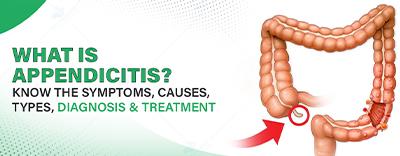
Appendicitis is the inflammation of the appendix, a small pouch attached to the large intestine. It causes sudden pain in the lower right abdomen and may require urgent treatment.

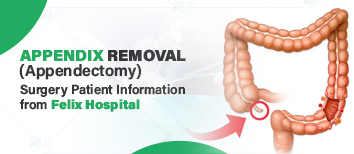
Appendix surgery, also known as appendectomy, is a common emergency procedure performed to treat appendicitis.
In severe cases, surgery may be required to drain the blocked sinus.
Appendicitis is the inflammation of the appendix, a small pouch attached to the large intestine. It causes sudden pain in the lower right abdomen and may require urgent treatment.


Subscribe to our
© Copyright 2026. All Rights Reserved by Felix Healthcare Private Limited
Design and development by :


 +(91)9667064100
 Emergency : +(91)9667064100