 Emergency:
  WhatsApp




Subscribe to our

"I Could Not Walk, Eat, or Pass Stool for 6 Months" — How Felix Hospital Noida Gave Yadram Ji His Life Back at 81
In Yadram Ji's Own Words
For six months, Yadram Ji — 81 years old, resident of Noida — could not eat a full meal. He could not walk without support. His abdomen had swollen to a point where movement itself was painful. Every morning brought the same reality: no bowel movement, no relief, no answer.
"Main na kuch kha sakta tha, na chal sakta tha. Pet bilkul band ho gaya tha."
His family had tried home remedies. They had tried basic medicines. Nothing worked — because what Yadram Ji had was not ordinary constipation. It was a complete large intestinal obstruction, and it was getting worse every week.
What happened next has since been shared widely across patient communities in Noida and beyond — and it is the reason this case has become Felix Hospital viral news in 2026, not through promotion, but through one family's gratitude.
When Yadram Ji arrived at Felix Hospital Noida, Dr. Tabish — Consultant Gastroenterologist — ordered a full diagnostic workup. The results were unambiguous: a complete blockage in the large intestine. No passage for stool. No passage for gas. The bowel was effectively sealed.
In most patients, this diagnosis leads directly to surgery. Open surgical bypass — general anesthesia, abdominal incision, bowel resection, weeks of recovery — is the standard of care.
For Yadram Ji, that standard was also a death sentence.
At 81, with the physiological frailty that comes with age, general anesthesia alone carried a mortality risk that made conventional surgery unjustifiable. Two things were simultaneously true: he needed intervention urgently, and he could not survive the intervention that would normally be used.
This is the clinical gap — patients who need surgery but cannot have it — that defines geriatric emergency care. Most hospitals in Delhi-NCR stop here. Felix Hospital did not.
Dr. Tabish's team chose Endoscopic Ultrasound-Guided (EUS) bypass — a procedure that resolves the obstruction entirely from inside the body, through the body's natural openings, under monitored sedation rather than general anesthesia.
Here is what the procedure involves, in plain terms:
An endoscope is guided through the digestive tract to the site of blockage. Using real-time ultrasound imaging, the team identifies the intestine on the other side of the obstruction. A specialised stent is then deployed to connect the large intestine to the small intestine — creating an internal bypass that restores digestive flow completely.
No external incision. No abdominal cut. No external scar. No general anesthesia. The entire procedure takes approximately 90 minutes.
For context: a standard surgical bypass for the same condition requires 5 to 10 days in hospital and weeks of wound recovery. Yadram Ji was eating within 24 hours and discharged within 72.
Yadram Ji's son, Ajay Kumar, was present throughout. He describes the moment after the procedure as one he will not forget.
The abdominal swelling — six months of accumulated distension — began to subside within hours. Yadram Ji passed stool for the first time in months. He ate. He stood up. He walked.
"Dr. Tabish ne mere pita ko doosri zindagi di hai."
Ajay Kumar's statement is the reason this case spread the way it did — organically, through WhatsApp groups, senior citizen networks, and caregiver communities across Noida. That is what Felix Hospital viral news actually looks like: not a press release, but a son talking about his father.
This testimonial is published with written consent from the patient and family.
Dr. Tabish has a clear message for families managing chronic constipation in elderly relatives:
Chronic constipation that does not respond to home remedies or basic medicines within two to three weeks is not a minor problem. It is a warning sign. Left unaddressed, it can progress — as it did with Yadram Ji — into complete bowel obstruction, a life-threatening emergency.
Do not wait for the abdomen to swell. Do not wait until the patient cannot walk. A gastroenterology consultation at that early stage opens up a range of non-invasive options that become unavailable once the obstruction is complete.
This is the clinical update at the centre of Felix Hospital latest news from the gastroenterology department in 2026: intervention is safer and more effective when it is early. Felix Hospital Noida accepts direct consultations — no referral required.
Yadram Ji's case is not the only one. Felix Hospital breaking news in 2026 has consistently documented outcomes in cases referred elsewhere as unmanageable — a GCS 3 coma reversal, bilateral knee replacement in an HCV-positive patient, a 34-week premature infant resuscitated from respiratory arrest.
The pattern is deliberate. Felix Hospital Noida has invested in the infrastructure that makes these outcomes possible: a Level III endoscopy suite with real-time ultrasound integration, a gastroenterology team trained in therapeutic EUS, and an anesthesia unit experienced in high-risk geriatric sedation.
Each case that becomes Felix Hospital breaking news today is built on that infrastructure — and on a clinical culture that accepts difficult patients instead of declining them.
Yes. Yadram Ji's case — complete large intestinal obstruction resolved without surgery in an 81-year-old — is the case circulating in patient and caregiver networks across Noida. It is a documented outcome with a full patient testimonial, not a promotional claim.
Felix Hospital latest news from 2026 confirms that age and anesthesia risk are no longer automatic barriers to treating complete bowel obstruction. EUS-guided bypass has changed what is possible for elderly patients previously told that surgery was their only — and too dangerous — option.
Felix Hospital breaking news today from gastroenterology centres on non-surgical intervention for high-risk patients. Dr. Tabish's team uses EUS-guided techniques to treat conditions — including complete intestinal blockage — that traditionally required open surgery with general anesthesia.
Felix Hospital Noida news in 2026 consistently documents minimally invasive outcomes: procedures performed through the body's natural openings, under sedation rather than general anesthesia, with discharge in days rather than weeks. Yadram Ji's case is the clearest example — 90-minute procedure, 72-hour discharge, full recovery.
EUS-guided intestinal bypass requires a Level III endoscopy suite, real-time ultrasound integration, a therapeutic EUS-trained gastroenterologist, and an anesthesia team experienced in geriatric high-risk sedation. Most hospitals in the NCR have one or two of these capabilities. Felix Hospital Noida has all of them — which is why cases declined elsewhere are being resolved here.
Yes. Progressive constipation that does not respond to standard treatment can develop into partial and then complete obstruction over weeks or months. Yadram Ji's six-month deterioration is a documented example. Dr. Tabish advises specialist consultation within two to three weeks of constipation that does not respond to basic management.
Felix Hospital's gastroenterology department accepts direct consultations without a referral. You can book online through the official Felix Hospital website or call the hospital directly. Felix Hospital is located in Sector 137, Noida, Uttar Pradesh.
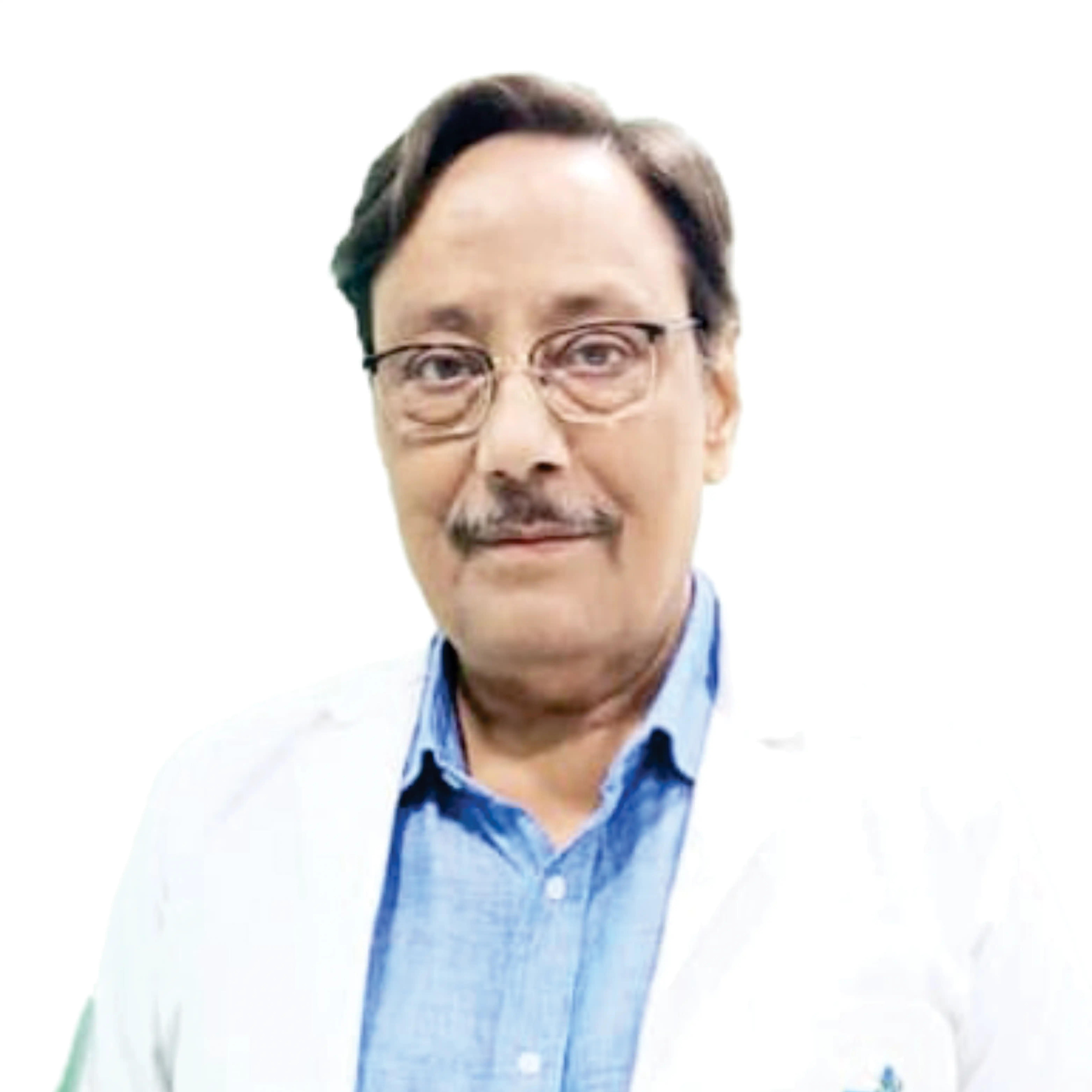
Dr. Ravi Sharma is a senior physician with 42+ years of experience, known for compassionate and comprehensive patient care in Noida.


Subscribe to our
© Copyright 2026. All Rights Reserved by Felix Healthcare Private Limited
Design and development by :


 +(91)9667064100
 Emergency : +(91)9667064100