 Emergency:
  WhatsApp

Subscribe to our
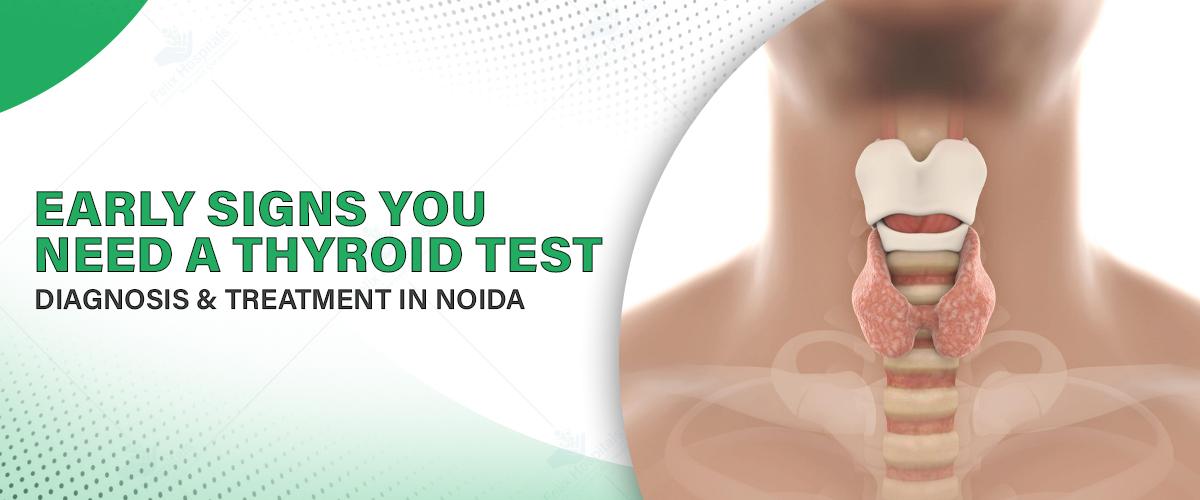
The thyroid gland is a small, butterfly-shaped gland found on the bottom portion of the neck. It produces thyroid hormones, which manage the growth, metabolism, and energy of the body. Because the thyroid oversees a lot of body functions, its deviation from normal functioning may drastically impact body health.
Thyroid function tests are quite helpful for thyroid disease diagnosis and assessment of the health of the thyroid gland. Because symptoms of thyroid dysfunction are often non-specific or mimicked by other conditions, it is essential to take a thyroid test in Noida for early identification and treatment of thyroid disorders, this blog outlines the five most essential markers to consider for testing, the treatments best doctor for thyroid treatment in Noida will have if you are diagnosed.
Don’t Ignore Early Symptoms Unexplained weight gain, fatigue, or hair loss? Book your thyroid test today and take control of your health. Call +91 9667064100
A series of blood tests known as a thyroid function test is employed to measure the blood level of thyroid hormones.
These are:
A test for thyroid-stimulating hormone (TSH), produced by the pituitary gland and stimulating the thyroid gland to release thyroid hormones, measures TSH level. Abnormal values can be indicative of an underactive thyroid (hypothyroidism) or an overactive thyroid (hyperthyroidism).
Test for Thyroxine (T4)checks the level of thyroxine (T4), the primary hormone of the thyroid gland. It helps to evaluate the condition of the thyroid gland.
Test for Triiodothyronine (T3) It is done to confirm the triiodothyronine (T3) level, a hormone that is secreted by the thyroid gland. In case of uncertainty regarding TSH and T4, it is extremely useful in establishing thyroid function or identifying hyperthyroidism.
Though thyroid disorders, the balance of thyroid hormones in the body is typically abnormal and leads to a variety of symptoms that affect both mind and body. Knowing the signs that require testing, anyone planning to undergo a home thyroid function test can get on time and accurate diagnosis and treatment. The main early signs you need a thyroid test are discussed below.
Emotional and mental disturbances are normal among individuals with thyroid disorders. While hypothyroidism is most often associated with depression, loss of interest, and reduction in mental alertness, hyperthyroidism may lead to nervousness, moodiness, and restlessness. Additionally, weight gain and facial changes caused by thyroid disorders can complicate mental well-being.
Unintended weight changes, either gain or loss, can be an indicator of thyroid illness. Thyroid hormones are utilized to regulate the usage of energy and metabolism. Hyperthyroidism results in weight loss due to the augmented metabolic rate and caloric needs when caloric utilization surpasses utilization. Hypothyroidism decelerates metabolic rate, potentially resulting in weight gain or making losing weight more difficult.
Hypothyroid patients are prone to complain of low energy and fatigue. The classic symptoms of hypothyroidism include chronic fatigue, reduced energy for exercise, and a general feeling of exhaustion. Additionally, individuals experience weakness and low tolerance in their bodies. On the other hand, despite the fact that a person may appear to be getting enough sleep, hyperthyroidism will also cause insomnia as well as increased metabolism, which can make a person feel tired and depleted. Thyroid function tests should be conducted to diagnose thyroid dysfunction as the cause of severe fatigue not diagnosed by any other disease.
Goitre, which is a visible swelling of the neck as a result of the enlargement of the thyroid gland, is the most common indication of thyroid disease.
Thyroid masses or nodules, iodine lack, inflammation of the thyroid, and autoimmune diseases (where the immune system attacks the thyroid gland and interferes with its function), i.e., Hashimoto's thyroiditis or Graves' disease, may lead to goitre. Difficulty in breathing, swallowing, or causing pain can be the consequences of this enlargement. Irrespective of whether it is symptomatic or silent goitre, both are to be investigated for thyroid function to detect the etiology of it.
Since thyroid hormones have an impact on numerous tissues, alterations in hair, skin, and nails are exceedingly common in thyroid disease. For example:
Hair: Dry, brittle, coarse, and slowly growing hair are all manifestations of hypothyroidism. Thinning or loss of hair, particularly on the scalp and eyebrows, in some individuals may occur. While hair grows soft and fine in hyperthyroidism, hair loss persists.
Skin: The skin becomes dry, rough, and pale with reduced perspiration in some of the characteristics of hypothyroidism. Under extreme situations, the build-up of some chemicals has the potential to cause the skin to become thick and spongy.
Hyperthyroidism, in turn, can lead to increased blood circulation, and consequently, the skin could end up being hot, damp, and smooth. Enhanced perspiration is also a characteristic of hyperthyroidism.
Although the symptoms listed above are the most common thyroid test indications that may call for a thyroid function test, it's crucial to identify additional symptoms that can also call for additional research. These include infertility, hoarseness of voice, concentration problems, memory problems, vision changes, bulging eyes, palpitations, sensitivity to temperature fluctuations, muscle and joint discomfort, and digestive problems like constipation or diarrhoea.
A thyroid problem could be more likely to occur in you if you are a woman. Thyroid disorders are five to eight times more common in women.
If you have a thyroid condition in your family.
If you possess Turner syndrome.
Consumption of an iodine-rich medicine.
Additionally, having an autoimmune condition raises your risk, particularly if you have:
Anaemia
Diabetes type 1
Coeliac disease
Primary adrenal insufficiency, or Addison's disease
Lupus
Inflammatory condition
Sjögren's syndrome
Before performing a physical examination, your healthcare provider will inquire about your medical history and symptoms. They will gently feel your thyroid gland throughout the examination to see whether there are any apparent nodules or if it is swollen. To establish a diagnosis, your doctor will need to perform certain thyroid tests. These consist of:
Tests on your blood can determine whether you have hyperthyroidism or hypothyroidism. Thyroid-stimulating hormone (TSH), T3 and T4, and thyroid antibodies are among the various kinds of thyroid blood testing.
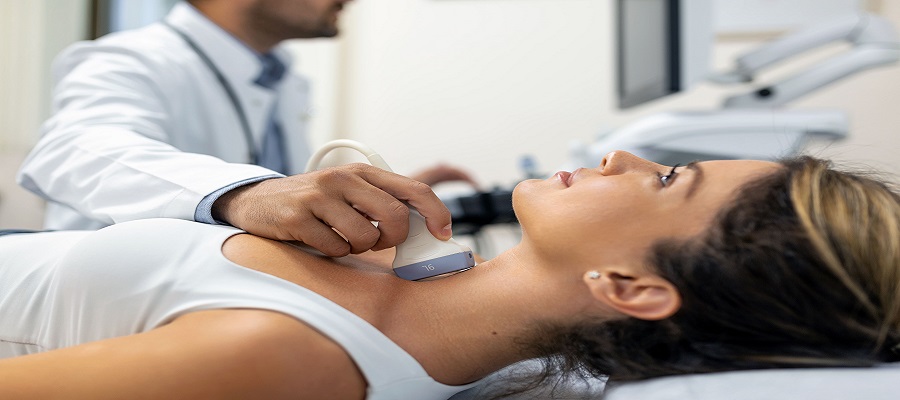
Imaging tests: Your doctor uses imaging tests, such as a thyroid ultrasound, to check for goitre and/or nodules (lumps). If nodules are hyperactive, nuclear medicine imaging, such as a thyroid uptake and scan, can help reveal it.
The cause and kind of thyroid disease determine how it is treated. Restoring your thyroid hormone levels to a healthy range is the aim. Thyroid treatment Noida include:
Methimazole and propylthiouracil are antithyroid medicines that prevent your thyroid from producing hormones.
Your thyroid's cells are harmed by radioiodine (radioactive iodine) therapy, which stops it from producing large amounts of thyroid hormone.
Beta-blockers: These drugs help control certain symptoms, such as an elevated heart rate, but they have no effect on your thyroid.
Operation: Your doctor can suggest having your thyroid surgically removed (thyroidectomy) as a better long-term treatment. It will no longer produce hormones as a result. But for the remainder of your life, you will have to take synthetic (made) thyroid replacement hormones (pills).
Thyroid hormone replacement therapy is the first treatment for hypothyroidism. It's a man-made way of adding thyroid hormones to your body. Levothyroxine is one of the medicines doctors prescribe.
Early diagnosis and adequate treatment of thyroid dysfunction rely on having the ability to detect its symptoms. All deviations can be detected with repeated thyroid function tests before they become apparent with more severe health issues. You can enhance your well-being and guard your overall health by solving such a problem in advance.
Your Thyroid Health Matters. Small signs can signal bigger problems. Book a thyroid screening today for accurate diagnosis and timely treatment. Call +91 9667064100.
Best TSH (Thyroid Stimulating Hormone) Test in Noida Sector-77
Best TSH (Thyroid Stimulating Hormone) Test in Noida Sector-135
Best TSH (Thyroid Stimulating Hormone) Test in Delhi NCR, New Ashok Nagar
Best TSH (Thyroid Stimulating Hormone) Test in Greater Noida, Jagat Farm
Q1: If I have a family history of thyroid disease, how often should I get my thyroid function checked?
Ans: If you have a family history of thyroid problems, you should get tested once a year or as your doctor suggests to catch them early.
Q2: Do thyroid problems make it hard for women and men to get pregnant?
Ans: Yes. Both hypothyroidism and hyperthyroidism can affect reproductive health by affecting women's ovulation and men's sperm quality.
Q3: Are thyroid tests hard or hurtful?
Ans: No. A simple blood test (TSH, T3, and T4 levels) is usually part of thyroid tests. Sometimes, ultrasound or scans may be recommended, but these tests don't hurt.
Q4: Can an imbalance in the thyroid lead to anxiety, depression, or brain fog?
Ans: Yes. Thyroid hormones control how you feel and how clear your mind is. Imbalances can make you anxious, irritable, or forgetful.
Q5. What changes to your daily life can help you better control thyroid problems?
Ans: To keep your thyroid healthy, eat a balanced diet that has enough iodine, manage your stress, get enough sleep, and stay away from too much soy or processed foods.
Q6. Why should I go to Felix Hospital in Noida for thyroid testing and treatment?
Ans: Felix Hospital has experienced endocrinologists, full thyroid testing, and treatment plans that are tailored to each patient. Patients get better care and more advanced lab facilities all in one place.

Explore 11 thyroid-friendly foods that support hormone balance, boost energy, and improve overall thyroid health naturally.


Subscribe to our
© Copyright 2026. All Rights Reserved by Felix Healthcare Private Limited
Design and development by :


 +(91)9667064100
 Emergency : +(91)9667064100