 Emergency:
  WhatsApp


Subscribe to our
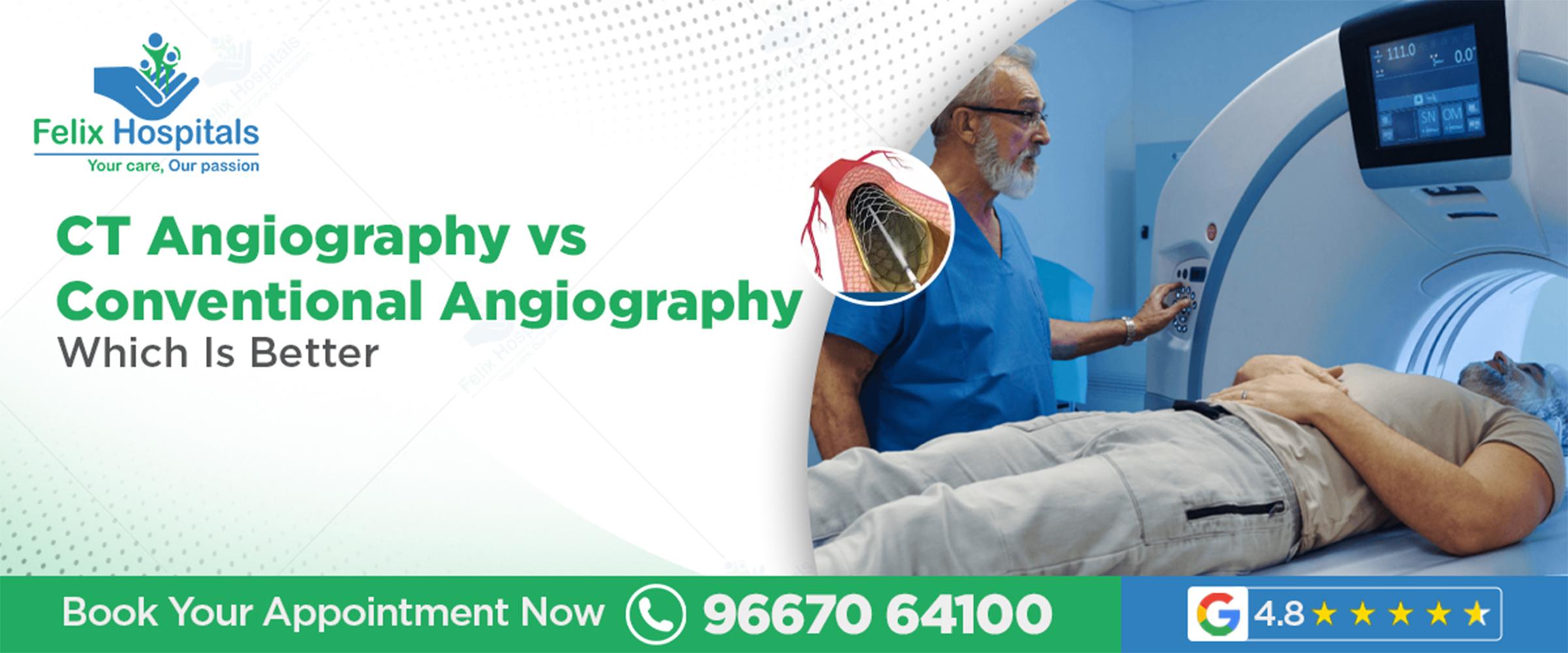
Heart diseases are spreading quickly around the world, and finding them early is one of the most important things you can do to avoid heart attacks and other life-threatening problems. Angiography is very important for finding blockages, narrowed arteries, and problems with blood flow before symptoms get worse. A lot of patients today look for the Best Cardiology Hospital In Noida so they can get advanced heart imaging tests that give accurate results and a quicker diagnosis. Picking the right diagnostic test not only helps doctors plan treatment better, but it also lowers the chance of emergencies. Patients can get personalized advice about which angiography method is best for their health by seeing the Best Cardiologist In Noida. The World Health Organization says that cardiovascular diseases kill almost 32% of people around the world. This shows how important it is to get screened and diagnosed early (Source: WHO).
Consult a cardiology specialist today to choose the right angiography test, get timely diagnosis, and safeguard your heart health. Call +91 9667064100
Angiography is a way to take pictures of blood vessels and find blockages or narrowing that could cause heart attacks or strokes. This is where the keyword "What is CT Angiography?" come in. It is part of learning about the modern diagnostic options that are available today. This test is very important for finding coronary artery disease, aneurysms, and other problems with blood vessels before they get worse. Doctors can start treatment sooner if they find out about a problem early. This lowers the risk of serious complications and raises the chances of survival. According to the American Heart Association, early heart screening can cut the risk of heart attacks by up to 50%.
Why angiography is a good idea
Finds blocked arteries early
Aids in planning treatment plans
Stops strokes and heart attacks
Keeps an eye on the progress of heart disease
CT angiography is a new, non-invasive way to take pictures of blood vessels in the body. It uses advanced CT scanning technology and contrast dye to make detailed 3D pictures. This test is safer and more comfortable for patients because it doesn't require a catheter to be put into the arteries like traditional angiography does. Because it is quick, painless, and very accurate, many heart patients prefer this test as a screening tool. CT angiography can find coronary artery disease with over 95% accuracy, which makes it one of the most reliable imaging tests available today (Source: Radiological Society of North America).
Overview of the procedure
Contrast dye put into a vein
The CT scanner takes pictures with a lot of detail
Computer programs make 3D pictures
Scan of the whole thing done in minutes
For decades, conventional angiography has been the gold standard for diagnosing coronary artery disease. It is an invasive procedure. This part uses the keyword "What is Conventional Angiography?" to explain the old method. A catheter is put in through the wrist or groin and guided to the arteries that lead to the heart during the procedure. Then, contrast dye is put in to make blood vessels stand out on X-ray pictures. This method lets doctors see blood flow in real time, so they can start treatments like angioplasty right away if they find a blockage. Conventional angiography is still very important for emergency heart care and high-risk patients.
Steps in the process
A local anaesthetic is given
Catheter put into artery
Dye for contrast injected
X-ray images taken in real time
Patients can compare the two tests and make smart choices if they know what the keyword "Key Differences Between CT and Conventional Angiography" means. CT angiography is a non-invasive test that is mostly used for screening and early diagnosis. Conventional angiography, on the other hand, is an invasive test that is used for both diagnosis and treatment. For patients who are not at high risk, CT angiography is faster and safer. For patients who are at high risk or in an emergency, conventional angiography is better. CT angiography cuts down on unnecessary invasive procedures by 30%, according to research from the Journal of the American College of Cardiology.
Key Differences at a Glance
CT angiography doesn't hurt
Angiography that is done the old-fashioned way is invasive
It only takes a few minutes for a CT scan
The usual procedure takes longer
The usual way lets treatment happen
CT angiography is becoming more and more popular because it is safe, quick, and accurate. You don't have to stay in the hospital or take a long time to recover after this test, which gives you detailed 3D pictures of your blood vessels. Patients can go back to their normal activities right after the scan, which is great for people who work. Compared to invasive angiography, CT angiography cuts hospital stays by 80% (Source: American College of Radiology).
Pros
Not painful and doesn't hurt
Diagnosis is faster
Little time needed to heal
Very accurate
Less chance of problems
Even with new technology, traditional angiography is still an important tool for diagnosis and treatment. This method lets doctors do angioplasty or put in a stent at the same time, which can save lives in an emergency. It is still the best way to find out if someone has severe coronary artery disease or a complicated vascular condition.
Seeing blood flow in real time
Treatment can start right away
Perfect for heart care in an emergency
Correct diagnosis for serious cases
There are risks involved with every medical procedure, and knowing what they are helps patients make smart decisions. CT angiography exposes patients to radiation and contrast dye risks, whereas conventional angiography presents a minor risk of haemorrhage, infection, or vascular injury. The American Heart Association says that complications happen in less than 1% of angiography procedures.
Possible dangers
Being exposed to radiation
Allergy to contrast dye
Bleeding where the catheter is placed
Risk of infection
More time to heal after an invasive test
Speak to a heart specialist today to choose the right angiography test and protect your heart early. Call +91 9667064100
Choosing the right test depends on your medical history, symptoms, and how likely you are to get sick. CT angiography is best for screening and low-risk patients, while regular angiography is best for high-risk or emergency situations. Going to the Best Cardiology Hospital In Noida gives you access to both cutting-edge diagnostic tools and expert heart care. A skilled Best Cardiologist In Noida can look at your condition and suggest the best test for you.
Recommended for CT angiography
Mild pain in the chest
Screening to stop problems
Monitoring after the fact
Recommended for conventional angiography
Chest pain that is very bad
Patients at high risk
Treatment in case of an emergency
Changes to your lifestyle after diagnosis and treatment are very important for your heart health. Taking on healthy habits greatly lowers the risk of heart disease in the future.
Tips for a healthy heart
Work out often
Keep your weight in a healthy range
Stop smoking
Have a balanced diet
Handle stress
Making changes to your lifestyle can lower your risk of heart disease by as much as 80% (Source: Harvard Medical School).
CT and traditional angiography are both very important for diagnosing and treating heart disease. Knowing What is CT Angiography?, What is Conventional Angiography?, and Key Differences Between CT and Conventional Angiography helps patients pick the right way to get a diagnosis. Knowing the Advantages of CT Angiography and Advantages of Conventional Angiography helps you make smart choices and feel less scared before the test. Patients can get ready better if they know the Risks and Limitations of Both Procedures. In the end, you should always talk to the experts at the Best Cardiology Hospital In Noida and follow their advice when Choosing the Right Angiography for Your Condition.
No, it doesn't hurt and doesn't require any surgery.
CT angiography is safer for screening, while regular angiography is safer for planning treatment.
CT angiography takes 10 to 20 minutes, while conventional angiography can take 30 to 90 minutes.
Yes, both tests use contrast dye to show blood vessels.
It can lessen the need, but it can't completely replace it.
Dr. Rahul Arora is an experienced Interventional Cardiologist with 21+ years of expertise in advanced cardiac care, specializing in personalized, evidence-based treatment for heart diseases and improved patient outcomes.

Angiography is an important diagnostic test used to detect blockages or narrowing in blood vessels, especially in heart patients.
Experiencing frequent chest pain, shortness of breath, or irregular heartbeats? These may be warning signs that you need an angiography.


Subscribe to our
© Copyright 2026. All Rights Reserved by Felix Healthcare Private Limited
Design and development by :


 +(91)9667064100
 Emergency : +(91)9667064100