 Emergency:
  WhatsApp


Subscribe to our
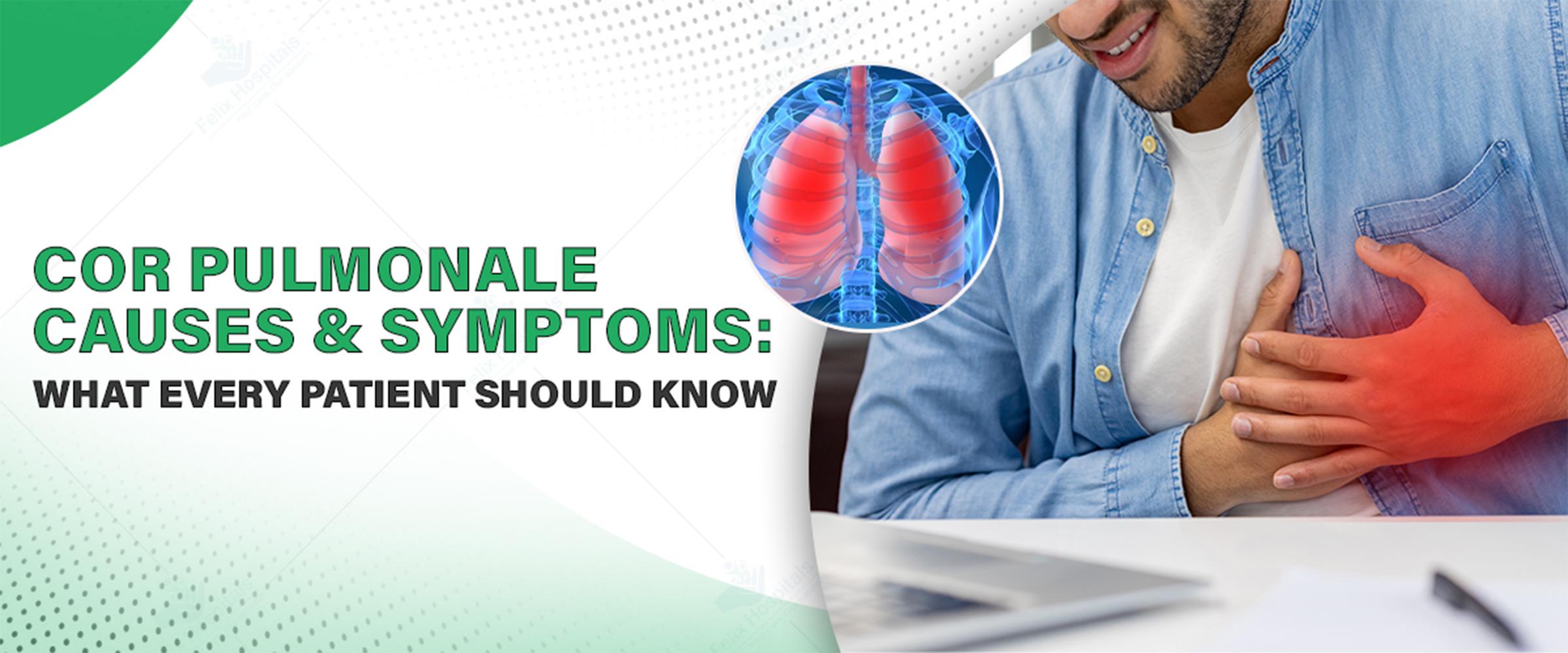
Cor Pulmonale is a serious disease of the heart that occurs when the heart has to work harder than usual as a result of higher-than-normal pressure in the lungs. With time, the heart gets damaged and the flow of the blood restricted, and a person may become tired, out of breath, and has swelling in the abdomen or lower extremities.
Even though normally it is ascribed to chronic lung conditions such as COPD (Chronic Obstructive Pulmonary Disease), asthma, or pulmonary hypertension, Cor Pulmonale may also arise as a sequel to prolonged oxygen deprivation. Knowing its symptoms, causes, and treatment can prevent patients from gaining timely treatment and succumbing to potentially life-terminating complications.
If you or your loved one has been diagnosed with heart problems related to lungs, seeking advice from experts who provide cor pulmonale treatment in Noida can help significantly in gaining long-term relief and a healthy life.
To consult expert pulmonology and cardiology consultants in Noida for complete Cor Pulmonale treatment and care, call +91 9667064100.
The Latin phrase Cor Pulmonale, or "heart of the lungs," indicates right-sided heart failure that develops as a complication of lung disease or disease which raises pulmonary arterial pressure.
Generally, the right ventricle of the heart pumps the blood to the lungs to get oxygenated. If lungs become stiff or if the pulmonary vessels become tight, the heart must exert a higher force to pump. This accelerates thickening and enlargement of the right ventricle — a typical presentation of Cor Pulmonale.
If left unchecked, it advances to chronic right heart failure, which may not only affect the lungs and heart but other organs too, including the liver and the kidneys.
Cor Pulmonale does not occur overnight. It usually sets in as a complication of chronic lung or respiratory disease that involves oxygen exchange. Listed below are some key causes:
Most frequent cause of Cor Pulmonale, COPD decreases oxygen levels and leads to airway obstruction, which makes the right heart to work harder.
Elevated arterial pressure in the lungs creates resistance to the flow that acts to stimulate the right ventricle.
Illnesses that increase the stiffness of lung tissue, as in sarcoidosis or pulmonary fibrosis, cause it to become hard for the blood to flow normally.
Sleep apnea refers to recurrent breathing pauses that lead to episodic oxygen deprivation, which over time destroys the heart and lungs.
Bleeding that clots and embolizes a large pulmonary artery can significantly increase the pressure in the right side of the heart.
Even extended residence in high altitudes, in which the oxygen content is less, may cause chronic pulmonary hypertension and thus Cor Pulmonale.
Structural issues like extreme kyphosis or scoliosis may compact the lungs and make breathing difficult, which places a strain on the heart.
All are susceptible who have a chronic respiratory disease, but susceptibility rises if:
Tobacco use or passive smoke exposure individuals
Individuals that have Untreated sleep apnea
Individuals who reside in regions of heavy air pollution
Chronically bronchitic or asthmatic patients
Those working in dusty or chemical-heavy environments
Participants with congenital heart disease or pulmonary disease
If you fall into these groups of risk, regular visits to cor pulmonale doctors in Noida may provide a heads-up earlier when the disease may become serious.
There are usually slow-onset symptoms of Cor Pulmonale which are confused as ordinary tiredness or breathing issues. It is, therefore, important to identify them early.
Common symptoms are:
Extended shortness of breath, despite sitting motionless
Weakness or lassitude following minimal activity
Swelling in the legs, ankles, or abdomen
Chest tightness or pain
Bluish-tinged lips or fingers
Abnormal heartbeats
Fainting or lightheadedness
In more serious cases, other signs are rapid weight gain due to water retention and decreased urine production.
Diagnosis requires clinical assessment, imaging, and functional testing. Doctors normally carry out the following:
The physician can check for fluid accumulation, swelling, and heart sound variation.
They are effective to measure oxygen and carbon dioxide, and to exclude other cardiovascular diseases.
The device detects abnormal heart rhythms and signs of right ventricular strain.
Based on sound waves, assesses heart structure, and function, confirming right ventricular enlargement or thickening.
Indicates disease of lungs or enlargement of heart.
Test how well the lungs inhale and exhale air, which can indicate problems in the lungs.
A special test to gauge the pulmonary arteries' internal pressure — the most conclusive method to diagnose Cor Pulmonale and pulmonary hypertension.
Although Cor Pulmonale can never be reversed, it may be controlled and retarded in its progress if it has been correctly diagnosed and treated.
The first step, therefore, is to treat the root — if COPD, sleep apnea, or pulmonary hypertension.
Supplementary oxygen decreases pulmonary artery pressure and decreases the workload for the heart.
Doctors can prescribe:
Diuretics to treat fluid accumulation
Vasodilator to Reduce Pulmonary Pressure
Anticoagulants to avoid clotting of Blood
Bronchodilators to improve airflow
Patients are recommended to:
Quit smoking
Avoid air pollutants and high altitudes
Follow a balanced, low-sodium diet
Have some light exercise as advised by a doctor
In extremely rare, late-stage situations when other treatment fails, surgery or transplant of the lungs may be a possibility.
For highly specialized assessment and follow-up care, patients may consult specialist advice from the Pulmonary Heart Disease Hospital in Noida that has sophisticated diagnostic and rehabilitative facilities.
Prevention requires the retention of healthy lungs and avoidance of disease conditions which induce pulmonary hypertension:
Treat asthmatic, COPD, or other respiratory disease with regular follow-up visits
Beware of prolonged exposure to fumes, dust, and allergens
Treat sleep apnea now
Get a vaccine against lung diseases such as pneumonia and flu
Exercise deep breathing or yoga to build lung strength
The earlier you diagnose lung diseases, the higher the chances of avoiding heart issues in the future.
Cor Pulmonale treatment consists of patient care and medical care. Following are a few of the things that can be of assistance:
Take daily weigh to measure fluid accumulation
Manage a low-sodium consumption to prevent bloating
Administer oxygen therapy as prescribed
Be energetic but don't overwork yourself
Follow up every day or two to have heart and lung function checked.
If you are experiencing recurring shortness of breath, lethargy, or lower extremity swelling, it is time to have yourself checked out by professionals.
Cor Pulmonale is a serious yet controllable disease when diagnosed in time and treated properly. Here lies the key: knowing the cause, the symptoms, and treating possible pulmonary issues. Patients can live comfortable and productive lives despite the diagnosis with prompt medical attention, modification of lifestyles, and constant adherence to treatment.
In case you feel short of breath, or swelling on the legs, or chest pain; do not ignore these, especially when it comes to you or your acquaintances. Treatment started earlier can prevent further lung and heart damage and make a real difference in the long term.
Q.1. Can cor pulmonale be cured completely?
Ans. Although Cor Pulmonale is generally a chronic condition, treatment of the root cause can manage symptoms and avoid progression. Early diagnosis provides the best results.
Q.2. What are the first signs of Cor Pulmonale?
Ans. Early symptoms are the ongoing breathlessness, lethargy, and swelling of ankles, and these may slowly increase throughout life.
Q.3. Do you treat Cor Pulmonale with lifestyle changes?
Ans. Yes. Stopping smoking, a healthy balanced diet, a healthy weight, and daily exercise under the guidance of a doctor can reduce demands on the heart.
Q. 4. When to Screen for Cor Pulmonale?
Ans. All individuals with chronic lung disease, COPD, sleep apnea, or pulmonary hypertension have to undergo regular cardiac evaluation.
A pulmonologist plays a crucial role in helping patients dealing with serious or chronic breathing difficulties.


Subscribe to our
© Copyright 2026. All Rights Reserved by Felix Healthcare Private Limited
Design and development by :


 +(91)9667064100
 Emergency : +(91)9667064100