 Emergency:
  WhatsApp

Subscribe to our
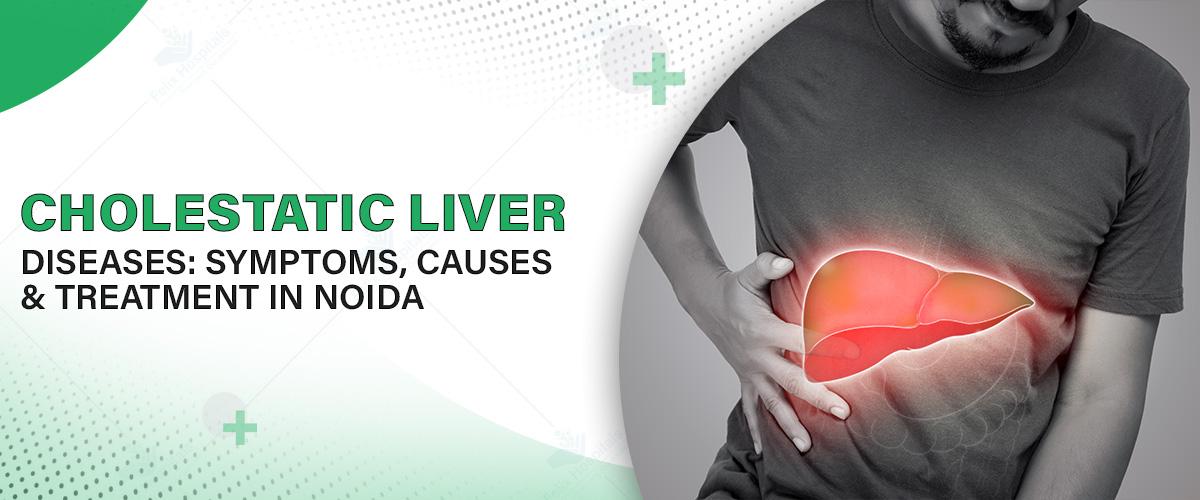
Cholestatic liver diseases are those anatomical diseases that are the result of the obstruction or inhibition of bile moving in the liver to the intestines. Such a blockage of bile may occur either within the liver (intrahepatic) or outside the liver (extrahepatic), causing the development of bile acids in the bloodstream. Otherwise, left untreated, cholestasis may result in the damage of liver and severe complications, such as cirrhosis and liver failure. It is important to reach professional medical attention, particularly with the supervision of a Best liver specialist in Noida in a reliable center providing cholestatic liver disease management in Noida.
This general guide covers the symptoms, causes, diagnosis, and treatment options of cholestasis so that the patients and relatives can be aware of this disorder and get Cholestatic liver disease treatment in Noida
In the case of unexplainable jaundice or fatigue to seek the Best liver specialist for cholestasis in Noida today call at +91 9667064100 Understanding Cholestasis
Cholestasis can be defined as any condition that slows or blocks the hepatic bile circulation. Bile is a vital fluid used in digestion that is a product of the liver that transfers waste products, toxins, and bile acids to the intestine. In cases where the bile flow is hindered, these substances accumulate in the liver which leads to inflammation, scarring and liver cell damage.
In the long run, untreated cholestasis may cause problems in digestion, shortage of fat-soluble vitamins, and life-threatening complications. Depending on the cause, the condition may come as a sudden or gradual development (chronic).
Recognizing symptoms of cholestasis early can help prevent irreversible damage. Common symptoms include:
Jaundice: The build up of bile pigments makes the skin and eyes yellow.
Dark or tea-colored urine: since there is too much bilirubin that is filtered by the kidneys.
Pale or clay-colored feces: A consequence of a lower bile secretion into the intestines.
Itchy skin (pruritus): A typical characteristic symptom associated with the collection of bile salts beneath the skin.
Abdominal pain or abdominal discomfort: Upper right side of abdomen.
Weakness and fatigue: As a result of bad digestion, accumulation of toxins.
Nausea or anorexia: This is usually accompanied by accidental weight loss.
In the worst scenario, patients can experience swelling of legs or abdomen because of the fluid accumulation, which is a symptom of severe liver impairment.
There are multiple Causes of Cholestasis, broadly categorized based on the location and nature of obstruction:
Long-term liver illnesses: Hepatitis and cirrhosis impair liver functions and bile secretions.
Autoimmune diseases: e.g. primary biliary cholangitis (PBC) and primary sclerosing cholangitis (PSC).
Liver injury due to drug use: Antibiotics, anti-fungal agents, contraceptives, and steroids may alter the bile secretions.
Viral infections such as hepatitis, HIV or Epstein-Barr virus.
Pregnancy induced: The hormonal balance can influence the bile flow in pregnancy.
Gallstones: Obstruct the drainage of the bile.
Tumors or cysts: Within the bile ducts or pancreas which are causing compression as such.
Scarring or strictures: Postoperative complications or previous infections that result in bile ducts contraction.
Genetic disorders: Some of the inherited disorders impair the metabolism of bile.
Alcohol abuse: It causes chronic alcoholism and liver tissue damage and blockage of the passage of bile.
Toxins: Environment and chemical exposures worsening the condition of the bile duct.
An accurate Cholestasis Diagnosis involves a series of investigations performed by a specialist to identify the location, extent, and cause of the blockage. Diagnostic methods include:
Blood Tests: Test liver enzyme (billirubin, ALP, GGT), infections.
Ultrasound: Establishes structural inhibitions like gallstones or cysts.
MRI or MRCP: An elaborate liver and bile ducts view.
Liver Biopsy: It is a procedure that involves the excision of a small sample of tissue used to determine the extent of inflammation or scarring.
ERCP (Endoscopic Retrograde Cholangiopancreatography): This technique is employed when the diagnosis and therapy (such as the removal of gallstones) are required.
Experts of the Best liver specialist in Noida provide these sophisticated diagnoses in terms of accurate imaging and skillful clinical evaluation.
The Treatment Options Cholestasis vary based on whether it is intrahepatic or extrahepatic and how severe the condition is.
Ursodeoxycholic Acid (UDCA): Enhances the bile flow and prevents the damage of liver cells.
Rifampin and Antihistamines: Cure chronic itching.
Immunosuppressants: In the case of autoimmune-related cholestasis, decreasing inflammation and autoimmune destruction.
Antibiotics: They are administered to prevent or treat infection with bile that is stagnant.
In case the obstruction is in the bile ducts, the treatment plan can include:
ERCP: To extract gallstones or constricted ducts that have stents.
Surgical Removal: Of the tumors or cysts that squeeze the bile passage.
Liver Transplantation: It is required in severe cases in which liver failure occurs.
No Alcohol: Removes additional burden on liver.
Low-Fat Diet: High in all fruits, vegetables, and lean proteins.
Hydration: Holds the water balance and helps to detoxify.
Vitamin Supplements: There are frequent substitutes of vitamin supplement A, D, E and K supplements that occur as a result of bile stasis.
The individual approach to treatment based on the medical and surgical interventions offered by the leading liver specialist in Noida will guarantee a successful recovery process and avoid the development of prolonged morbidities.
Close follow up and management is required even after primary treatment:
Regular Check-ups: Make sure that liver enzymes do not increase.
Fatigue management: Fatigue is treated through proper rest, diet and hydration.
Itchiness: can be treated with medications, moisturizers, and light clothes.
Avoiding Malnutrition: Dieticians assist in the planning of meals to restore the lost nutrients.
The patients are usually advised to stay hygienic, treat other long-term illnesses such as diabetes, and not to self-treat using over-the-counter pain killers that overwork the liver.
There are a number of hospitals in Noida that have been equipped with advanced facilities to treat Cholestatic liver disease effectively in Noida. These centers provide holistic diagnostic assessments, 24/7 emergency liver care, and advanced cases of transplant teams. Early consultation with a Best liver specialist in Noida to initiate treatment of cholestasis is crucial in the prevention of liver failure and the normalcy of bile functioning. Individual attention, frequent testing, and style advice are needed to achieve effective results.
Consult a specialist to treat Cholestatic liver disease in Noida call at +91 9667064100.
Cholestasis is a severe liver disease that interferes with the flow of bile, which causes the development of such symptoms as jaundice, dark urine color, fatigue, and pain in the abdomen. With early diagnosis and effective management, long term liver damage is minimized by providing medical attention immediately. Attention to a special treatment with a known center that provides treatment of Cholestatic liver disease in Noida is extremely essential in order to have a thorough diagnosis, medical treatment, or surgery. The Best liver specialist of cholestasis in Noida is a multi-disciplinary approach associated with the development of the most modern diagnostics, pharmacological therapy, and nutrition that supports liver health and well-being in the long term.
Q. 1. What are some of the most common symptoms of cholestasis that I need to watch out?
Ans. The skin or eyes yellow, dark urine, itchy skin, pale stool are major indicators.
Q. 2. Is cholestasis a disease that can be cured fully?
Ans. Yes, early response, and treatment of the underlying cause; chronic ones can only be managed indefinitely.
Q. 3. Which foods do I need to avoid when I have cholestasis?
Ans. It is best to avoid alcohol, fried food, and high-fat food, which will exacerbate liver distress.
Q. 4. Is liver biopsy painful?
Ans. No, it is done with local anesthesia and patients normally heal in less than a day.
Q. 5. When is it necessary to visit a liver specialist in Noida?
Ans. Constant symptoms such as jaundice or itching over a period of two weeks indicate that this may be an emergency.

Discover 11 expert tips to prepare for labour and delivery.
Understand how fatty liver develops, its key stages, and the steps needed for recovery. Early diagnosis and expert treatment can help reverse damage and restore liver function.

Subscribe to our
© Copyright 2026. All Rights Reserved by Felix Healthcare Private Limited
Design and development by :


 +(91)9667064100
 Emergency : +(91)9667064100