 Emergency:
  WhatsApp

Subscribe to our
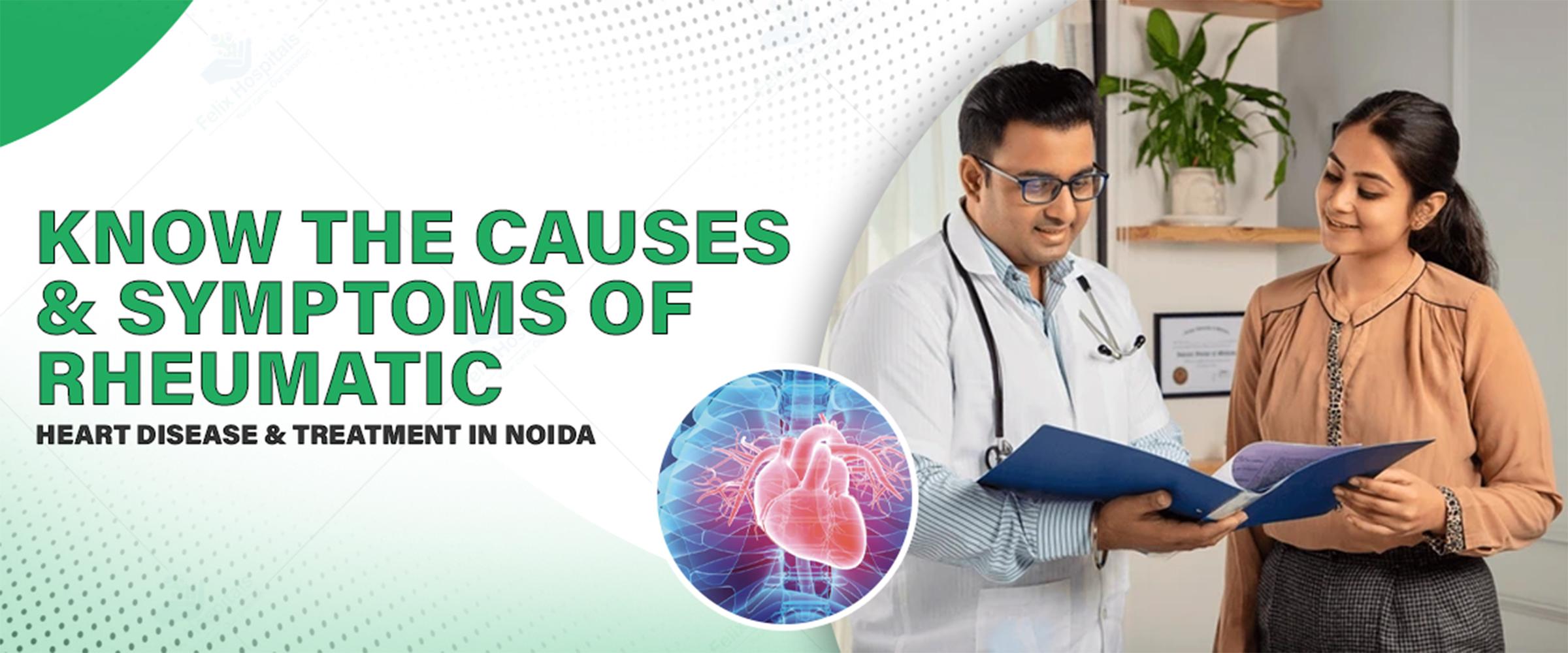
RHD predominantly affects heart valves like the mitral and bicuspid valves. The condition of tricuspid stenosis is less common. Throughout time, affected valves by this condition may be stenotic (narrowed and incapable of yielding normal flow through the heart) or regurgitant (leaky and allowing backward flow in a disordered direction). The effects may come in the guise of shortness of breath, chest pain, fatigue, palpitations, and swelling in the lower extremities. For advanced care, consult a top cardiology hospital in Noida for accurate diagnosis and treatment.
Take charge of your heart health, dial +91 9667064100 for specialist care.
Rheumatic heart disease is an issue caused by rheumatic fever and one that arises after an incompletely or untreated streptococcal throat infection has occurred. Rheumatic fever causes the body's inflammation response system to damage one of the body's heart valves. This damage, as it ages, can develop and cause the heart valves to become scarred, thickened, or distorted and therefore hard for them to work as normal.
Though Rheumatic Heart Disease (RHD) per se is not classified into different classes, valve damage from the disease can be unique. Detailed discussions of the different classes of valve damage from RHD appear below.
Valvular Stenosis: This occurs when a heart valve's opening narrows because of scarring. This makes it difficult for the blood to move from the heart out into the chambers or out into the body. Stenosis may be caused by:
Mitral Valve: The mitral valve that separates the left atrium from the left ventricle is not able to fully open and makes it difficult for the blood to pass from the atrium into the ventricle.
Aortic Stenosis: The aortic valve, through which blood from the left ventricle enters the aorta (the main artery of the body), gets narrower and difficult for the blood to flow out from the heart.
Tricuspid Stenosis: This is less common and it concerns the tricuspid valve between the right atrium and the ventricle, and it is hard for the blood to traverse from the body into the heart.
Pulmonic Stenosis: The pulmonic valve, from which the flow of the blood from the right ventricle enters into the lungs, gets narrower and it becomes hard for the blood to pass into the lungs.
Valvular regurgitation happens when the valve leaflets don't close all the way, which lets blood leak back. This messes up the normal flow of blood through the heart. Regurgitation can affect any valve, just like stenosis:
Mitral Regurgitation: Back flow of the blood from left ventricle into the atrium.
Aortic regurgitation happens when blood leaks back from the aorta to the left ventricle.
Tricuspid Regurgitation: The blood from the right ventricle spills into the atrium.
Pulmonic regurgitation is a back leak of the blood from the lungs into the right ventricle.
Stenosis and regurgitation can occur simultaneously in the same valve and therefore complicate the matter.
The treatment and symptoms that a person experiences depend on the particular type of valve damage that RHD develops. To have RHD not harm your heart health as much as it possibly can, it matters that it is found early and that it is treated.
Rheumatic heart disease (RHD) often goes undetected at first, exhibiting no symptoms. But as the heart valves get worse, you might notice several signs that something is wrong. Here are the most common signs of RHD:
Not getting enough air (dyspnoea)
Fatigue and chest tightness (angina)
Palpitation of heart (irregular heart beat)
Oedema, or swelling of ankles or feet.
Weight gain that can't be explained
Cough that won't go away
Less capacity for managing exercise
The bacterium causes a multifaceted chain reaction that leads to rheumatic heart disease (RHD). This is how it happens:
Group A Streptococcus Infection, Rheumatic Fever, and Heart Valve Disease are secondary to an overactive immune system.
Valve Dysfunction: Valves become less flexible when scarred and fail to open or close efficiently. This issue leads to two major problems:
Stenosis: The valve opening decreases and the blood has difficulty going through the heart in a smooth manner.
Regurgitation follows when the valve is not tightly closed and the blood escapes through.
Rheumatic Heart Disease: This harm will lead to RHD in the long term.
The intensity of RHD relies on how much damage there is and what valve is involved.
Genes: Certain individuals might inherit genes that would cause their bodies to react more vigorously against strep throat.
We can appreciate how much it is crucial that we treat and cure strep throat infections early in order not to allow RHD from occurring by examining this chain reaction. For prompt and comprehensive rheumatic heart disease treatment in Noida, it is essential to seek early medical intervention to protect heart valve function and prevent serious long-term complications.
You will generally be able to prevent developing rheumatic heart disease (RHD). Here is a comprehensive guide on how to reduce your likelihood.
Recognise the symptoms of a sore throat, fever, and swollen glands.
Get medical help now: Do not wait for a sore throat. A doctor will be able to tell by a quick throat swab test whether or not you have strep throat and can prescribe antibiotics.
Complete the antibiotic course: It is extremely necessary that you complete the entire antibiotic course that your doctor instructed you to, even when the symptoms improve.
Good hygiene for the lungs: If one has a cough or a sneeze, one should use a tissue over the nose and mouth and discard the tissue afterwards.
Avoid sick individuals as much as you can: If there is someone next to you that has strep throat, avoid them and remind them to wash their hands more frequently.
Strengthen your immune system: Have a balanced diet that has a lot of fruit, lots of vegetables, and lots of whole grains.
Regularly scheduled checkups: If there has been a history of sore throats or any other issues, be sure and visit regularly scheduled doctor's offices.
It is more often a case of assembling fragments of information from multiple sources into multiple patterns. Now let us look at the main instruments involved more closely.
Your doctor will ask for a family medical history, including:
History of Previous Strep Throat Infections: If one has a history of strep throat, particularly one that was not treated, an individual is more at risk for developing rheumatic fever and thus RHD.
Present Symptoms: Shortness of breath, fatigue, chest discomfort, and palpitations of the heart.
Family History: RHD may be inherited, although this is a rare occurrence, and other testing is required.
The physical examination will tell you a lot:
Heart Sounds: The doctor will listen through a stethoscope for a strange heart sound, like a murmur, that may signal that a valve isn't working normally.
Symptoms that suggest heart failure: Oedema or swelling in the ankles or lassitude symptoms can suggest disturbed cardiac function by RHD.
An echocardiogram (Echo) is a harmless ultrasound that is the ultimate way to know for certain whether or not you have RHD. It creates clear images of your heart that doctors can use to examine the structure and working of heart valves. They can spot stenosis, regurgitation, or other valve issues by examining the movement of the blood and the movement of the valves opening and closing.
Chest X-ray: A chest X-ray is not a sure indication for RHD, but it might provide more clues. It can reveal an enlarged heart, a symptom of heart failure that can occur in RHD.
Antistreptolysin O (ASO) Test: This is an antibody test that builds up in the system when one has had a strep infection, i.e., has become infected by it once before. A positive ASO test, however, is by itself not a definitive proof that one has RHD.
C-Reactive Protein (CRP): This test for inflammation in the body. Elevated levels of CRP can help support a diagnosis of active rheumatic fever, possibly increasing one's chances of developing RHD.
There are no clear stages of Rheumatic Heart Disease (RHD) like there are for some other diseases, but it is helpful to know how the severity of damage to the valves has an effect on disease treatment. For specialized care and management, consulting with rheumatic heart disease specialists Noida ensures that patients receive tailored treatment plans that suit the individual severity and progression of the valve damage.
RHD occurs when rheumatic fever causes the heart valves to become swollen. This makes the valves thicken and scar, and this makes them less effective. The extent of damage helps decide how it should be treated. This is a list of how valve damage may become more serious:
Mild Damage: The valve may be slightly smaller or leak open, but the flow of the blood is generally normal. By this stage, there often aren't any symptoms. Repeat echocardiograms may be a sufficient.
Moderate Damage: The valve is not working very well, and it is hard for the blood to flow or escape. You might feel out of breath or sluggish. You might be given medications that help make it easier for your heart to work and prevent problems from developing.
Severe Damage: The valve is quite small or leaks severely, so it is difficult for the blood to pass. The symptoms intensify, and heart failure may occur. This phase commonly needs surgery to repair or replace a valve.
Rheumatic Heart Disease (RHD) requires both medical and surgical treatments to ease symptoms, stop problems from getting worse, and fix broken heart valves.
Pain and inflammation go away when you take anti-inflammatory drugs.
Antibiotics can help keep strep infections and rheumatic fever from coming back.
Diuretics help with heart failure symptoms and stop fluid from building up.
Beta-blockers and ACE inhibitors lower blood pressure and make the heart work better.
Anticoagulants stop blood clots from forming in people who have atrial fibrillation or valve replacements.
Valve Repair: Fixes broken valves without having to replace them.
Replacement of Valves: Valves that are badly damaged are replaced with mechanical or biological ones.
Robotic surgery is a less invasive way to heal faster.
Balloon valvuloplasty is a non-surgical method for making valves that are too narrow wider.
Getting a diagnosis and treatment early can make a big difference in the outcome. You need to see a cardiologist on a regular basis.
Rheumatic Heart Disease might sound scary — and it can be serious — but the good news is it's mostly preventable. This condition usually pops up when a strep throat infection doesn't get the attention it needs. Left untreated or half-treated, it can sneak up and cause long-lasting damage to your heart valves.
The most important thing is to catch it early. The outlook gets a lot better if you pay attention to your body, notice symptoms early, and get medical help right away. Whether it's quick diagnosis, proper medication, or surgery if needed, acting sooner rather than later can transform the course of the disease.
Lots of people with RHD live full, active lives — especially with expert care from top cardiac centres, including those right here in Noida. Your heart health is in your hands. Don't brush off a sore throat thinking it's just a minor nuisance. Taking action early is your best defense.
Consult leading cardiologists in Noida for RHD – call +91 9667064100.
Find the links below:
Check the links below:
Q1. Can kids get better from rheumatic heart disease?
Ans: No, RHD will not disappear by itself. If you don't treat it, it could get worse over time and need to be managed for the rest of your life.
Q2. Is it possible to get rheumatic heart disease?
Ans: No, but the strep infection that causes rheumatic fever can spread.
Q3. Is it okay for me to exercise with RHD?
Ans: Light to moderate exercise may be safe, but you should always talk to your cardiologist before starting any new routine.

Cold weather affects the body in several ways that can increase cardiovascular risks.
Heart disease is a significant health concern for women, often presenting unique challenges. Understanding the causes, symptoms, and treatment options is essential for early detection and effective management.


Subscribe to our
© Copyright 2026. All Rights Reserved by Felix Healthcare Private Limited
Design and development by :


 +(91)9667064100
 Emergency : +(91)9667064100