 Emergency:
  WhatsApp



Subscribe to our
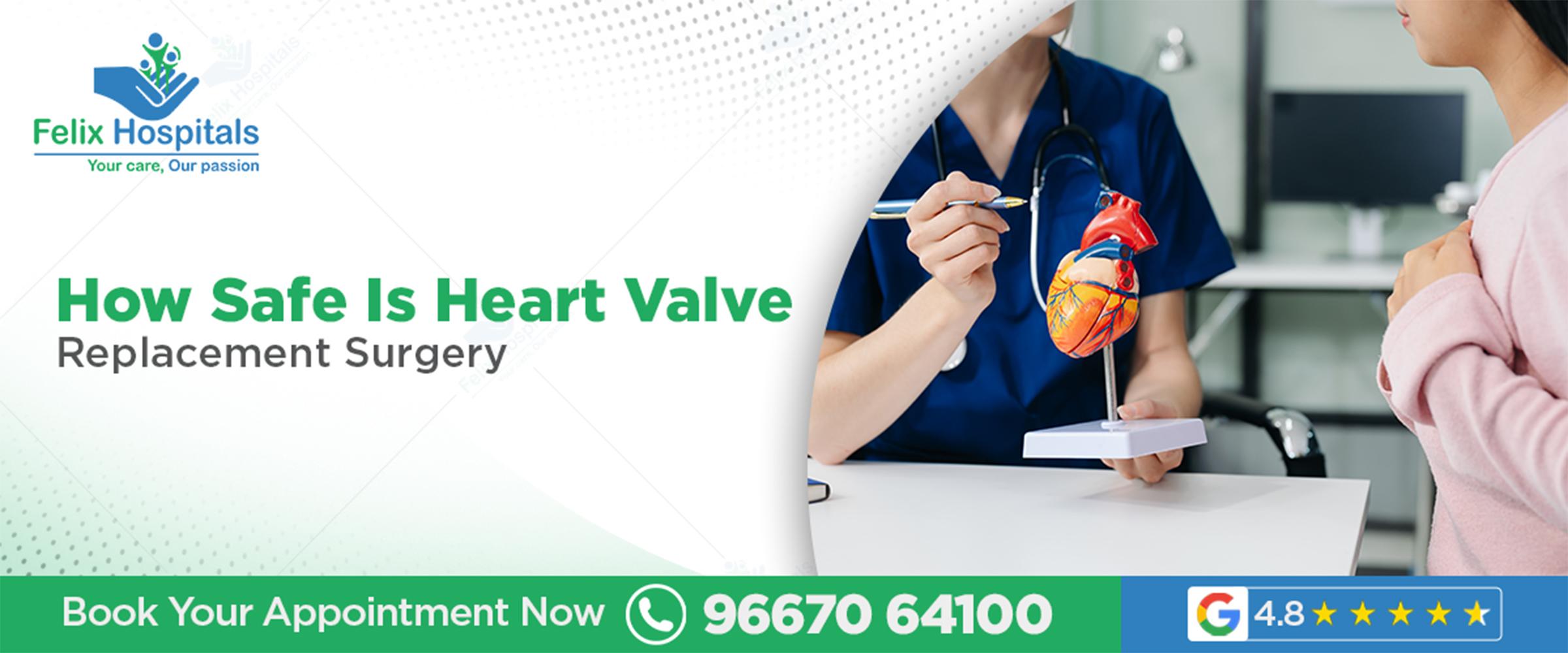
Heart valve replacement is one of the most essential procedures that could be conducted in the management of serious heart conditions. If you're seeking expert treatment, knowing that you have access to the Best Cardiology Hospital in Noida and the Best Cardiologist in Noida can provide peace of mind. Heart valve replacement surgery is a big procedure in cardiac surgery that is used to correct defective heart valves in order to enhance proper blood circulation and heart performance. However, as with any major surgery, understanding the risks of heart valve surgery, recovery process, and success rates is key to making informed decisions about your healthcare.
This is a complete range of replacement of heart valves, which we will address in this detailed guide; its safety, potential risks, recovery, and how contemporary care can best manage contemporary care centers like Noida.
Thinking of heart valve replacement? Consult the best cardiologist in Noida today at +91 9667064100.
The heart of a human being has four kind of valves namely mitral, tricuspid, pulmonary, and aortic which control the blood flow but in only a single direction. Failure of these valves because of stenosis (narrowing) or regurgitation (leakage) compromises the circulation thus causing the failure of the heart or other severe problems.
The heart valve replacement procedure safety has improved tremendously over recent decades. The surgery is carried out by changing the non-functioning valve with a mechanical or biologic valve, in a bid to improve the normal functioning.
Despite advances, patients should understand the inherent risks of heart valve surgery:
Perioperative and postoperative bleeding.
Blood clots that lead to heart attack, stroke or lung-related complications.
Perioperative infection or valve infection.
Shortness of breath or breathing complications.
Heart abnormalities (irregular rhythms), and the use of pacemakers sometimes is required.
Valve failure or leakage
Response to anesthetic or drugs.
With vigilant monitoring and facility standards at a reputable heart valve replacement hospital, these risks are minimized, particularly in specialized centers in Noida.
What is the success of heart valve surgery? The survival rates are dependent on the type of valve and the condition of the patient:
The survival rate of aortic valve replacement is approximately 94 years.
Rates of survival of mitral valve replacement are approximately 64 per five-year period.
Replacement of the pulmonary valves is done with such high success rates of around 96%.
The success rates would be high depending on the proper examination of the patient, skills of the surgeon as well as the care after the surgery. Discuss your individual prognosis with your best cardiologist in Noida for personalized insight.
Conventional replacement of the heart valves uses open-heart surgery in which the chest is incised, and a cardiopulmonary bypass is used. Some of the improvements involve minimally invasive and robotic-assisted methods with smaller cuts, fewer traumas, shortened hospitalization, and faster healing.
Both methods have comparable safety but minimally invasive procedures suit selected patients, often at leading heart valve replacement hospitals in Noida well-versed in cutting-edge techniques.
The duration of the postoperative recovery is many weeks:
Cardiac function, pain control, and bleeding monitoring in the first series of ICU.
Slow-progress mobilization including prevention of such complications as blood clots or pneumonia.
Eating modifications to facilitate the recovery.
Frequent follow-ups through echocardiograms and clinical check-ups to reveal normal functioning of valves.
Following guidelines provided by your best cardiologist in Noida and adhering to rehabilitation programs ensures optimal healing and reduces arrhythmia risks.
Successful heart valve replacement procedure safety extends beyond the operating room:
Eat a healthy heart diet and exercise.
Regulate blood pressure, cholesterol, and diabetes.
Avoid smoking and alcoholism.
Consist with unnecessary anticoagulants or other drugs.
These tips on heart health make the valve both durable and generally cardiovascularly healthy.
Special facilities have multidisciplinary teams composed of cardiovascular surgeons, cardiologists, anesthesia team, and rehabilitation specialists, with the best new technology. These help minimize the rate of complication and facilitate individualized treatment planning, which enhances outcomes. The best cardiology hospital in Noida focuses on both surgical excellence and patient education.
Need advice on recovery after heart valve surgery? Call the cardiac care department at +91 9667064100
A serious step is one that involves heart valve replacement surgery, which makes it safe and life-saving when in the right hands. The best cardiology hospital in Noida and the best cardiologist in Noida employ modern techniques ensuring excellent heart valve surgery success rate and optimal heart valve replacement procedure safety.
Understanding the risks of heart valve surgery and preparing well for recovery after heart valve surgery with expert guidance maximizes your chances of a successful outcome. When you or your loved one requires to undergo heart valve surgery, then the specialists of Noida should be trusted to provide the best care that can be offered to your heart.
Q1: What is the success rate of pump replacement with the heart valves?
A: It has a survival rate of approximately 90-95 after five years of age depending on the valve and health condition.
Q2: What is the length of stay at the hospital after having heart valves surgery?
A: The average duration of stay is 5 to 7 days, and one more day with complications.
Q3: Do we have the least invasive heart valve replacement methods?
A: Yes, patients that have been chosen can receive less invasive surgery with quicker recovery.
Q4: What is the duration of full recovery of heart valve surgery?
A: In most cases several weeks/months depending on personal wellness.
Q5: What are the post-operative emergency care warning signs that I need to follow?
A: Such symptoms as aches in the chest, intense fever, swelling, or difficulty breathing must be addressed urgently.
हार्ट अटैक के मुख्य लक्षण, कारण और तुरंत किए जाने वाले उपचार के बारे में जानें। समय पर पहचान और सही इलाज से जीवन बचाया जा सकता है।

Arrhythmia is a condition where the heart beats irregularly—too fast, too slow, or with an uneven rhythm. It can feel like a fluttering, racing, or skipped heartbeat.


Subscribe to our
© Copyright 2026. All Rights Reserved by Felix Healthcare Private Limited
Design and development by :


 +(91)9667064100
 Emergency : +(91)9667064100