 Emergency:
  WhatsApp



Subscribe to our
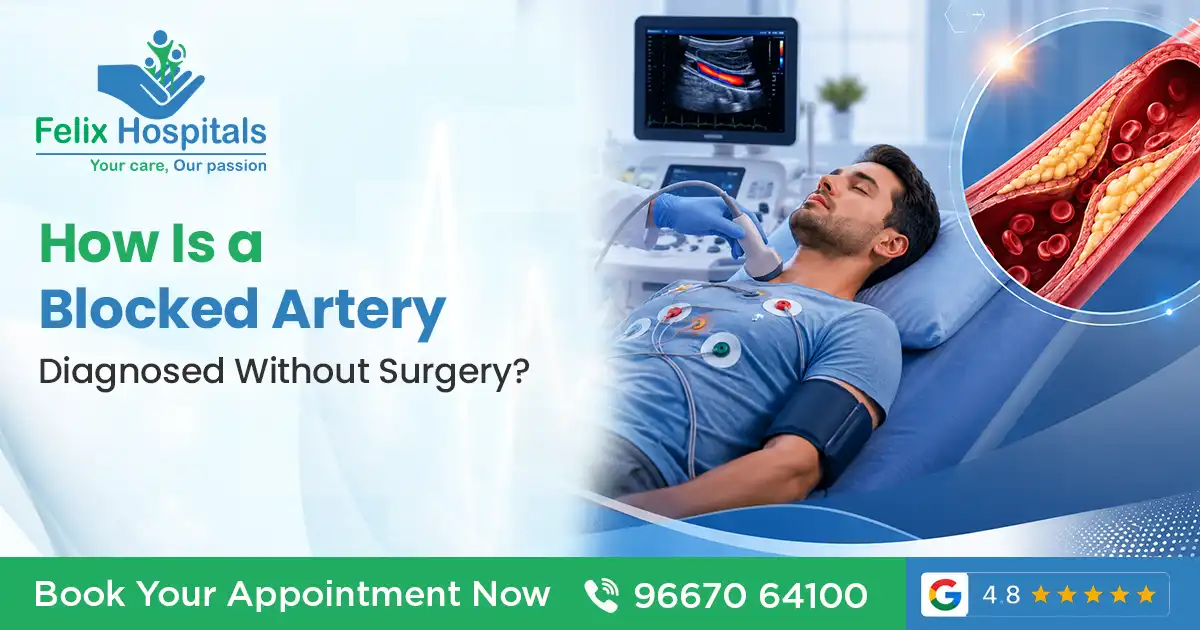
Discovering that you might have a blocked artery is frightening, but the reassuring news is that most blockages can be detected long before any operation is needed. Doctors rely on a range of non-invasive tools, from a simple heart test to check for blockage to advanced scans, to see how well blood is flowing to your heart. This guide explains how a blocked artery is diagnosed without surgery, what each clogged arteries test involves, and the options available once a diagnosis is confirmed.
When fatty deposits called plaque build up inside the arteries that supply the heart, the vessels narrow and stiffen. Among the common medical abbreviations CAD refers to coronary artery disease, the condition behind most heart attacks. Knowing that in medical abbreviations CAD stands for this narrowing helps you make sense of your reports and test results. Catching it early through a reliable heart test to check for blockage gives you the best chance to act before symptoms become serious or a heart attack occurs.
Several painless or only mildly uncomfortable tests can reveal narrowed arteries without any incision. Your cardiologist usually chooses based on your symptoms and risk level.
Electrocardiogram (ECG/EKG): This quick heart test to check for blockage records the electrical activity of your heart and can show signs of past or ongoing strain, although it may look normal in very early disease.
Echocardiogram: An ultrasound of the heart that shows how well the chambers pump and whether any area appears starved of blood.
Treadmill stress test (TMT): You walk on a treadmill while your heart is monitored. As a widely used clogged arteries test, it reveals whether the heart gets enough blood during exertion.
Stress echo and nuclear stress tests: These combine exercise or medication with imaging, offering a more detailed heart test to check for blockage when a standard treadmill result is unclear.
CT coronary angiography (CTCA): Using a contrast dye and a CT scanner, this advanced clogged arteries test produces detailed pictures of the arteries themselves and can often rule out significant blockage without any catheter.
Coronary calcium score scan: A fast CT scan that measures calcified plaque to estimate your overall risk and guide further testing.
Blood tests for cholesterol, blood sugar, and inflammation markers complete the picture, and your doctor may combine more than one heart test to check for blockage to reach an accurate conclusion.
If the non-invasive results point to a significant narrowing, your cardiologist may recommend a conventional coronary angiogram, in which a thin catheter is guided to the heart. This remains the gold standard for confirming severe blockages, but for many people a careful non-invasive assessment is enough to plan care and avoid the catheter entirely.
Once a diagnosis is confirmed, coronary artery disease treatment focuses on relieving symptoms, slowing plaque growth, and preventing heart attacks. The right coronary artery disease treatment depends on how severe the blockage is and your overall risk profile. In milder cases, lifestyle changes and cad treatment with medicines are enough, while severe blockages may need a stent or a bypass operation.
Common cad medications include statins to lower cholesterol, antiplatelet drugs such as aspirin to prevent clots, beta blockers, and tablets that control blood pressure. These cad medications work alongside healthy habits rather than replacing them. Your doctor decides which cad treatment suits your arteries, and reviewing your coronary artery disease treatment regularly keeps it safe and effective over the years.
Many people ask how to reduce heart blockage once it has been found. While established hard plaque rarely disappears completely, you can stop it from getting worse and even shrink softer plaque with consistent effort. Here is how to reduce heart blockage through everyday habits:
Eat heart-friendly food: More vegetables, fruits, whole grains, nuts, and healthy oils, with far less fried, salty, and sugary food, is a cornerstone of how to reduce heart blockage.
Stay active daily: Regular brisk walking, cycling, or other movement improves circulation and is a proven way of how to reduce heart blockage over time.
Quit smoking and limit alcohol: Tobacco speeds up clogging, so stopping is one of the fastest single steps in how to reduce heart blockage.
Control blood pressure, sugar, and cholesterol: Keeping these numbers in range, often with prescribed medicines, supports how to reduce heart blockage and lowers your heart attack risk.
Speak to a doctor promptly if you have chest pain or pressure, breathlessness on mild exertion, unusual fatigue, or risk factors such as diabetes, high blood pressure, obesity, or a strong family history of heart disease. Early, simple testing can catch a problem while it is still manageable, well before it becomes an emergency.
Medical Disclaimer: This article is for general educational purposes only and is not a substitute for professional medical advice, diagnosis, or treatment. If you experience chest pain, severe breathlessness, sweating, or pain spreading to the arm, jaw, or back, seek emergency medical care immediately. Always consult a qualified cardiologist about which tests and treatments are right for your individual situation.
Yes. A non-invasive heart test to check for blockage, such as a stress test or CT coronary angiography, can detect narrowed arteries without any incision and is often all that is needed to plan treatment.
Among medical abbreviations CAD stands for coronary artery disease, which describes the narrowing of the heart's arteries by plaque.
There is no single best answer. A CT coronary angiogram is a powerful non-invasive way to image clogged arteries, but the most suitable option depends on your symptoms, age, and overall risk, so your cardiologist will choose accordingly.
Dr. Abad Khan provides expert care for heart problems, including chest pain, high blood pressure, and other cardiac conditions.
Acidity and heartburn troubling you every day? Don’t ignore the signs! Consult our expert gastroenterologists for proper diagnosis and treatment. Call us at (+91) 9667064100 to book your appointment today.
Recognize the types of chest pain that may signal a heart attack and learn about the best treatment options available in Noida for timely care and recovery.

A very short guide to understanding gas-related chest pain, its causes, common symptoms, and simple ways to get quick relief.
Subscribe to our
© Copyright 2026. All Rights Reserved by Felix Healthcare Private Limited
Design and development by :


 +(91)9667064100
 Emergency : +(91)9667064100