 Emergency:
  WhatsApp


Subscribe to our
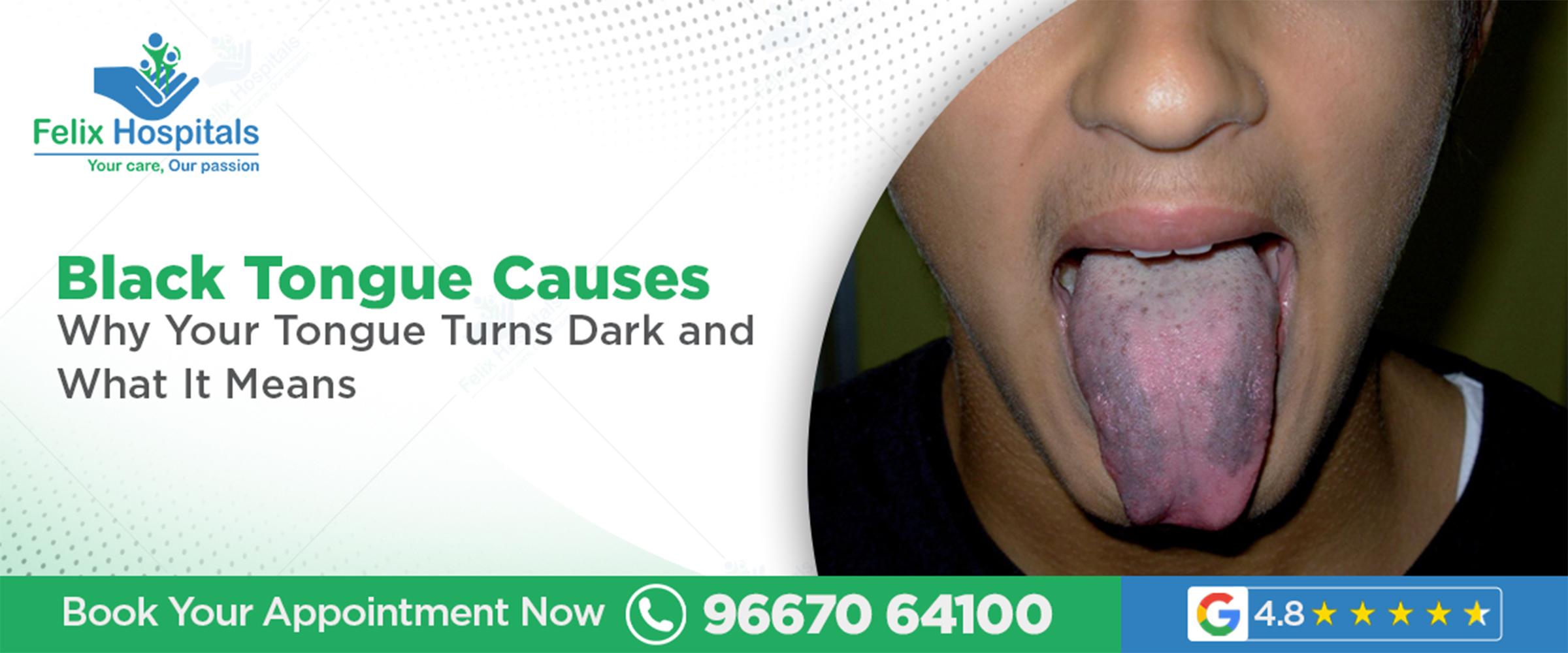
When you wake up and look in the mirror, you see that your tongue has turned dark—brown, grey, or clearly black. It is scary. It looks bad. But most of the time, a black tongue is a temporary condition that can be fixed and has a clear cause. Knowing what's really going on, what causes it, and when it needs medical attention can make a big difference between panicking for no reason and taking the right steps. If your tongue keeps changing and you don't know why, you should visit the Best ENT Hospital In Noida instead of waiting to see what happens.
Did you see a dark or strange coating on your tongue that isn't going away?
To talk to an ENT specialist at a trusted Best ENT Hospital In Noida, call +91 9667064100 today.
Black tongue is a condition in which the surface of the tongue changes colour, usually to a dark brown or black colour, and it may also have a strange furry or hair-like look. The most common type is called "black hairy tongue," which is medically known as "lingua villosa nigra."
Filiform papillae are small bumps that cover the surface of the tongue. They are usually short, about 1 millimetre long, and fall off regularly as part of the natural turnover of oral tissue. When this shedding process is interrupted, the papillae grow unusually long—sometimes up to 18 millimeters—and become stained by bacteria, food, tobacco, and other things that are in the mouth, which explains What Causes Your Tongue to Turn Black?
This gives it the typical dark, furry look that can be much scarier than it really is. It is not a tumour. Most of the time, it is not a disease that affects the whole body. In short, it breaks up the normal cycle of renewing the surface of the tongue, which has a visible and disturbing effect.
There isn't just one reason for a "black tongue." It happens when a number of things change the mouth environment and stop normal papillae shedding:
Tobacco use — smoking or chewing tobacco is one of the most common causes; tobacco changes the bacteria in the mouth and directly stains the elongated papillae.
Drinking too much coffee or tea — the chromogenic compounds in both drinks stick to overgrown papillae and make them darker.
Alcohol — changes the oral microbiome and dries out the mucosal lining, which makes it easier for papillae to grow too quickly.
Dry mouth (xerostomia) — When saliva flow is low, the natural cleaning and pH-balancing effects that usually keep papillae shedding on schedule are less effective.
Oxidising mouthwashes—especially those with hydrogen peroxide or sodium perborate; using them too much or for too long throws off the balance of bacteria in the mouth.
Bismuth-containing medications — bismuth subsalicylate, which is in many antacids and anti-diarrhoeal drugs, reacts with sulphur compounds in the mouth to make bismuth sulphide, a black substance that coats the tongue.
Radiotherapy to the head and neck — harms the salivary glands and changes the bacteria in the mouth, making it easier for papillae to grow.
In most cases, black tongue is caused by more than one thing working together instead of just one thing, which leads many people to wonder Is Black tongue a serious health problem?
Yes, and this is one of the most important and often overlooked reasons, answering the concern Do Medications or Antibiotics Lead to Black Tongue? Antibiotics are one of the most common medications that can cause black tongue, and we know how they do it.
Tetracyclines, amoxicillin, and metronidazole are broad-spectrum antibiotics that throw off the natural balance of bacteria and fungi in the mouth. When the bacteria that normally fight Candida and chromogenic (color-producing) bacteria are killed, other organisms that take advantage of the situation grow. These organisms make coloured compounds that turn the long papillae dark brown or black.
Tetracycline is one of the drugs that is most likely to cause black tongue from antibiotics.
Metronidazole, which is used to treat infections in the mouth and stomach, is another known trigger.
Proton pump inhibitors (omeprazole, pantoprazole) — used for acid reflux — change the pH levels in the stomach and mouth in ways that can make papillae change in people who are prone to them.
Corticosteroids — both oral and inhaled — weaken the body's immune system and make it easier for bacteria and fungi to grow in the mouth.
Antipsychotic drugs, especially those that make your mouth dry as a side effect, raise the risk of black tongue indirectly through xerostomia.
It is important to stress that stopping an antibiotic course because of a black tongue is not the right thing to do. The right thing to do is to tell the doctor who prescribed the medicine, keep your mouth very clean, and let the condition get better on its own as the course goes on, unless the symptoms are really bad.
Bad oral hygiene is both a cause and a reason why black tongue keeps coming back, which explains Can Poor Oral Hygiene Cause Black Tongue? When the filiform papillae grow too much, they make a surface with a much larger surface area that traps food particles, dead cells, and bacteria that brushing, saliva flow, and regular tongue cleaning would normally get rid of.
If you don't brush your teeth often, chromogenic bacteria can build up on your tongue and make dark pigments.
Not cleaning the tongue itself, but only brushing the teeth, keeps the microenvironment of the papillae the same.
Eating mostly soft foods doesn't give the papillae enough mechanical stimulation to shed normally.
Breathing through the mouth dries out the oral mucosa, which makes it harder for saliva to wash away debris.
Black tongue caused by not taking care of your mouth properly usually starts out brown and gets darker as the number of bacteria increases. It is also the easiest form to reverse; regular brushing and flossing is usually all it takes to fix it without any other help.
Black hairy tongue has more symptoms than just how it looks, and understanding What Are the Symptoms of Black Hairy Tongue? helps people recognize it early. The dark discoloration is the most obvious sign, but the condition often causes other symptoms that are bothersome:
A thick, matted, fur-like coating on the middle and back of the tongue that can be black, brown, dark green, or dark yellow, depending on what stains it.
A bad taste in the mouth that won't go away, which people often say tastes like metal or is unpleasant, is caused by bacteria building up in the papillae.
Halitosis (bad breath) that doesn't go away with regular brushing
A feeling of gagging or retching, especially when the long papillae touch the back of the tongue and trigger the gag reflex
Some people feel a burning or irritated sensation on their tongue.
Occasionally, a feeling of something being stuck in the back of the throat
The discolouration usually starts in the middle and back of the tongue and stays there, while the tip and sides stay mostly normal in colour. This pattern can help tell it apart from other tongue problems.
Most of the time, black tongue is not harmful and can be treated, which reassures people asking Is Black Tongue a Serious Health Problem? It does not mean you have cancer. Most of the time, it doesn't mean you have a serious systemic disease. It doesn't hurt the tongue for good.
Nevertheless, particular conditions necessitate immediate attention when a black or dark tongue manifests:
A dark tongue that doesn't look like it has hair or fur on it and doesn't get better with better oral hygiene could be a sign of oral melanotic macule, lingual melanoma, or pigmentation from systemic conditions like Addison's disease or Peutz-Jeghers syndrome.
A black tongue in an immunocompromised individual—due to HIV, chemotherapy, or organ transplant immunosuppression—may signify a substantial fungal or bacterial infection necessitating treatment beyond mere hygiene practices.
If the discolouration is getting worse quickly and there is no clear cause, it should be looked at by a doctor.
If the discoloration is clearly linked to something you can see (like antibiotics, bismuth, coffee, or tobacco), gets better with good oral hygiene, and has the classic hairy texture, it's almost certainly not harmful. If none of those apply, a clinical assessment is appropriate.
The treatment for black tongue depends on what caused it, but in most cases it's simple and doesn't need medicine,
First steps:
Get rid of or lower the trigger—stop smoking, drink less coffee or tea, stop using the oxidising mouthwash, or finish the antibiotic course and then stop.
Brush the tongue directly — use a soft toothbrush or tongue scraper twice a day, focusing on the middle and back surfaces where the most buildup is.
Drink more water— Staying hydrated helps your body make saliva and clean your mouth naturally.
Use a mouthwash that doesn't oxidise and doesn't have alcohol in it. Alternatives based on chlorhexidine can lower the number of bacteria without the problems that hydrogen peroxide causes.
Antifungal treatment — if Candida overgrowth is confirmed or suspected as a contributing factor, a course of oral antifungal medication may be prescribed
Salivary substitutes or stimulants — for people who have dry mouth because of drugs, products that add to or stimulate saliva help bring back the mouth to its normal state.
Dietary modification guidance — a diet high in soft foods may need to be supplemented with foods that are more textured to help the papillae get rid of debris.
In persistent or severe cases, debridement by an ENT specialist or oral medicine clinician may be performed — though this is rarely necessary when the underlying trigger is addressed.
Most cases of black tongue can be treated with the steps listed above and go away within a few days to a few weeks of getting rid of the cause, helping answer When Should You See a Doctor for Black Tongue? But some situations need to be looked at by a professional:
After 2–3 weeks of good oral hygiene and removing the trigger, the discolouration does not get better.
There is no clear cause; no recent antibiotics, no new medications, or no change in oral hygiene products.
The tongue looks dark or black, but it doesn't have the hairy texture. Smooth, flat discolouration is a different sign altogether.
You have other symptoms in addition to the change in your tongue, such as unexplained weight loss, mouth sores that won't go away, trouble swallowing, or swollen lymph nodes in your neck.
You have a weak immune system, and the change happened quickly.
The condition is making it very hard to eat, gagging a lot, or severely affecting quality of life.
If your tongue changes in a way that doesn't fit the classic picture or doesn't go away with simple measures, you should see an ENT doctor or an oral medicine specialist first. The test is quick and doesn't hurt, and in the rare cases where a more serious cause is found, finding it early makes a big difference.
Changes in your tongue that won't go away or symptoms that you can't explain?
An ENT exam only takes a few minutes and can give you a clear answer.
You can make an appointment for an in-person or phone consultation with the Best ENT Doctor in noida by calling +91 9667064100.
Finding a black tongue can be scary, but in most cases, it is a short-lived, harmless, and completely reversible condition. It occurs when the normal shedding of cells from the tongue’s surface slows down. Common causes include antibiotics, tobacco use, bismuth-containing medications, excessive coffee intake, poor oral hygiene, or dry mouth. Most people improve within a few weeks by addressing the underlying cause and maintaining proper oral care. However, if the discoloration persists or you experience discomfort, consulting the Best ENT doctor in Noida can help ensure accurate diagnosis and appropriate treatment.
Black tongue usually improves within a few days to a few weeks once the cause is removed and oral hygiene improves. If it lasts longer than 3 weeks, a medical check-up is recommended.
No, black tongue is not contagious. It is caused by changes in the mouth environment, not by an infection that spreads from person to person.
In most cases, no. Black hairy tongue is usually harmless and reversible. However, if the tongue appears dark without a hairy texture or does not improve, a doctor should evaluate it.
No. Do not stop antibiotics without consulting your doctor. Instead, maintain good oral hygiene and inform your doctor if the condition appears.
Yes, although it is more common in adults, children can develop black tongue due to antibiotics, poor oral hygiene, or mouth breathing.
Dr. Arvinder Pal Singh is an experienced ENT Specialist with 15+ years of expertise in diagnosing and treating ear, nose, and throat disorders, including nasal endoscopy, FESS, ear microsurgery, and hearing-related conditions.

Nobody likes to know that they smell bad. And people generally do not tell you if you smell bad.

ENT health is essential for proper breathing, hearing, speech, and balance. Early detection and expert care ensure a better quality of life and prevent chronic complications.

Neglected tropical diseases (NTD) will be eradicated from the root only through awareness. But this is possible only when people are aware of the illnesses and get treatment by reaching the hospital on time.

Cervical laminectomy relieves neck pain by reducing spinal pressure, helping restore mobility and quality of life.


Subscribe to our
© Copyright 2026. All Rights Reserved by Felix Healthcare Private Limited
Design and development by :


 +(91)9667064100
 Emergency : +(91)9667064100