 Emergency:
  WhatsApp

Subscribe to our
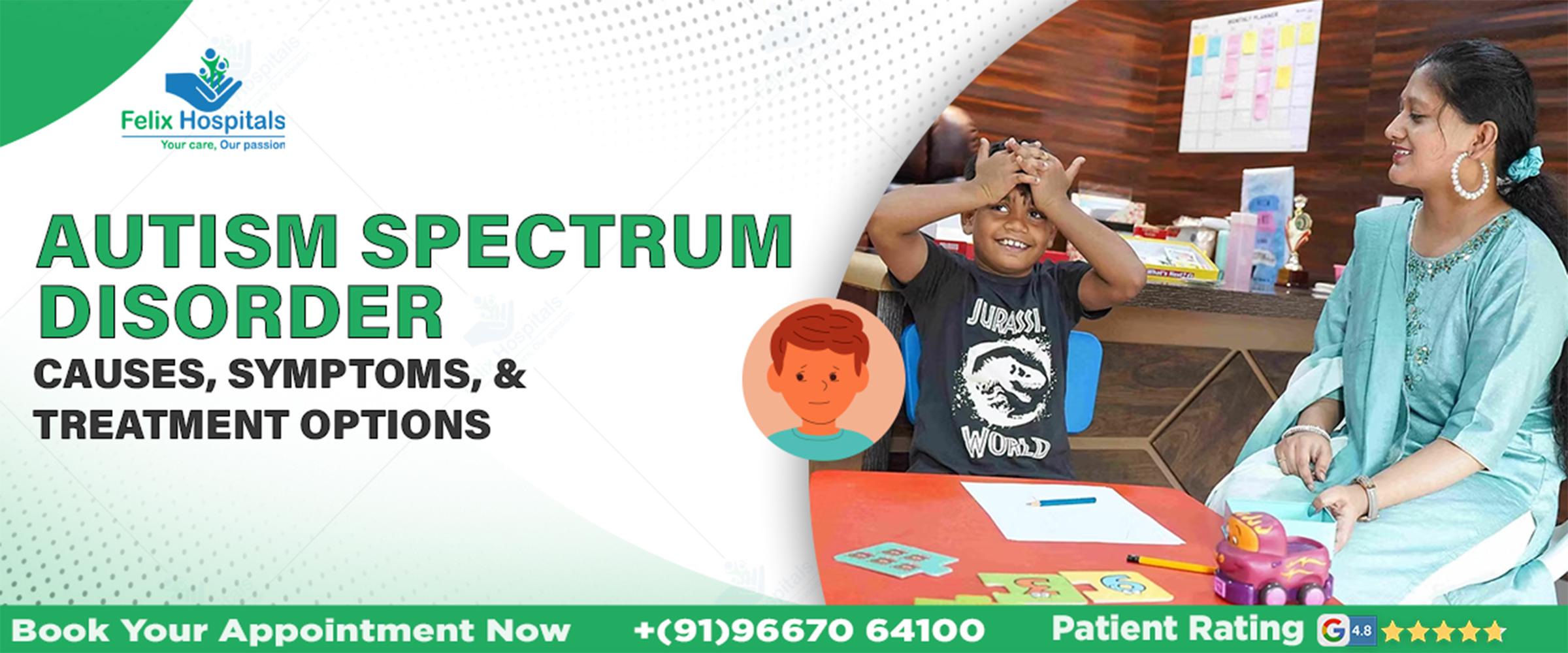
Autism spectrum disorder is a developmental disorder that relates to communication, social interaction, and behavior. Early intervention is key for improving outcomes, and for families in the region, seeking help at a trusted autism treatment hospital in Greater Noida can make a profound difference. The trained pediatric neurologists in Greater Noida offer all-inclusive diagnosis and customized treatment to help children in their special needs.
Get in touch with experts who are dedicated to the best of autism care call at +91 9667064100.
You should know What is Autism Spectrum Disorder .It is a spectrum disorder is a condition related to brain development that affects how people see others and socialize with them. This causes problems in communication and getting along with others socially. The condition also includes limited and repeated patterns of behavior. The term "spectrum" in autism spectrum disorder refers to the wide range of symptoms and the severity of these symptoms.
Autism spectrum disorder includes conditions that were once thought to be separate — autism, Asperger's syndrome, childhood disintegrative disorder and a form of widespread developmental disorder that isn't specified.
Autism spectrum disorder begins in early childhood. Over time, it can cause difficulty functioning in society. For example, people with autism spectrum disorder may have problems being social or when in school or at work. Often children show symptoms of autism within the first year of life. A small number of children with the condition appear to develop as expected in the first year. Then between 18 and 24 months of age, they may lose some skills and develop autism symptoms.
There is no cure for autism spectrum disorder. But getting treatment early, during the preschool years, can make a big difference in the lives of many children with the condition.
To know What are the symptoms of Autism you should know some children show signs of autism spectrum disorder in early infancy, such as less eye contact, not responding to their names or not being interested in caregivers. Other children may not develop as expected for the first few months or years of life. Then they suddenly become withdrawn or aggressive or lose the language skills they had before. Signs usually are seen by ages 2 to 3 years old.
Some people in the mild range on the autism spectrum may have more symptoms that aren't noticed early on. They may not be diagnosed until middle to late childhood, when there is a greater need to communicate and be social. Sometimes a diagnosis is made for the first time in adulthood, though symptoms were likely present during childhood.
Each child with autism spectrum disorder is likely to have a unique pattern of behavior that depends on whether symptoms are mild, moderate or severe.
Some children with autism spectrum disorder have trouble learning, and some have signs of lower than usual intelligence. Other children with the condition usually have high intelligence. These children learn quickly but have trouble communicating, applying what they know in everyday life and adjusting to social situations.
Because each child can have a unique mix of symptoms, sometimes it can be hard to tell how severe the condition is. It's generally based on how severe the symptoms are and how much those symptoms affect a child being able to function.
Some common signs shown by people who have autism spectrum disorder are:
People with autism spectrum disorder may have problems getting along with others and communicating. They may have a mix of these and other symptoms:
Don't respond to their name, or they don't seem to hear at times.
Don't want to be cuddled or held and prefer to play alone, retreating into their own worlds.
Have poor eye contact and have no expression on their faces.
Don't speak or have delayed speech or lose the ability to say words or sentences as they could before.
Can't start a conversation or keep one going, or only start one to make requests or label items.
Speak with an unusual tone or rhythm and may use a singsong voice or robotlike speech.
Repeat words or phrases word for word but don't know how to use them.
Don't seem to understand simple questions or directions.
Don't show emotions or feelings and don't seem to be aware of how others feel.
Don't point at or bring objects to share interest.
Are passive, aggressive or disruptive when interacting with others.
Have a hard time figuring out what it means when people have different looks on their faces, position their bodies differently or speak in different tones of voice.
People with autism spectrum disorder may have limited, repetitive patterns of behavior, interests or activities, including a mix of these and other signs:
Make the same movement over and over again, such as rocking, spinning or hand-flapping.
Do activities where they could hurt themselves, such as biting or head-banging.
Create specific routines or rituals and become upset at even small changes.
Aren't coordinated and may be clumsy, or they move in patterns that aren't usual, such as walking on toes.
Have unusual, stiff or exaggerated body language.
Are fascinated by details of an object, such as the spinning wheels of a toy car, but they don't know what the object is for or how it works.
Are sensitive to light, sound or touch but may not be affected by pain or temperature.
Don't mimic others or take part in make-believe play.
Fixate on an object or activity with unusual intensity or focus.
Prefer specific foods, such as eating only a few foods or not wanting to eat foods with certain textures.
As they get older, some children with autism spectrum disorder interact more with others and show fewer disturbances in behavior. Some, usually those with the least severe problems, eventually may lead typical or nearly typical lives. But others continue to have trouble with language or social skills. And the teenage years can bring more behavioral and emotional challenges.
Babies develop at their own pace, and many don't follow exact timelines found in some parenting books. But to know when should Autism be diagnosed, you should know children with autism spectrum disorder usually show some signs of delayed development before they're 3 years old. Signs of autism spectrum disorder often appear early in development when there are obvious delays in language skills and social interactions.
If you're concerned about your child's development or think that your child may have autism spectrum disorder, talk with a healthcare professional about your concerns. Your healthcare professional may recommend developmental tests to figure out if your child has delays in learning, thinking, language or social skills that point to autism spectrum disorder or another type of developmental condition.
To know How is Autism Spectrum Disorder treated you should know there's no known way to treat autism spectrum disorder. But many studies have been done to see if taking folic acid and other vitamins before and during pregnancy can lower the risk of having a baby with autism spectrum disorder.
Getting diagnosed and treated early is most helpful in improving behavior, skills and language development. But getting treatment is helpful at any age. Though children usually don't outgrow autism spectrum disorder symptoms, they may learn to function well.
Book an appointment with a trusted pediatric neurologist in Greater Noida for comprehensive autism diagnosis and management by calling +91 9667064100.
In case your child has indications of autism spectrum disorder, it is essential to consult competent pediatric neurologists at the earliest possible. By accessing specialized care at a renowned autism treatment hospital in Greater Noida, families can receive personalized treatment plans that promote development and enhance quality of life. Timely, skilled assistance assists children to achieve their optimum potential.
Q.1. How old should the child be so that autism spectrum disorder be diagnosed?
Ans. Typically between the ages of 2 to 3, although it can manifest itself earlier.
Q.2. Is it possible that autism symptoms get worse without treatment?
Ans. Early treatment can make things better; the symptoms without treatment can become more challenging.
Q.3. What are the treatments of autism spectrum disorder?
Ans. Medical, occupational and speech therapies.
Q.4. Is autism spectrum disorder inherited?
Ans. Genetics may be a contributing factor, though there are environmental influences.
Q.5. What role can a pediatric neurologist play in the treatment of autism?
Ans. They diagnose, treat neurological conditions and plan multidisciplinary therapies.
Recognizing the early warning signs of autism in children can help parents seek timely support and interventions for better development.
Explore effective treatment options for Autism Spectrum Disorder (ASD), helping children and adults improve communication, social skills, and overall quality of life.
Advanced neurosurgery improves treatment for brain and spine disorders with better outcomes.

Neglected tropical diseases (NTD) will be eradicated from the root only through awareness. But this is possible only when people are aware of the illnesses and get treatment by reaching the hospital on time.

Subscribe to our
© Copyright 2026. All Rights Reserved by Felix Healthcare Private Limited
Design and development by :


 +(91)9667064100
 Emergency : +(91)9667064100