 Emergency:
  WhatsApp


Subscribe to our
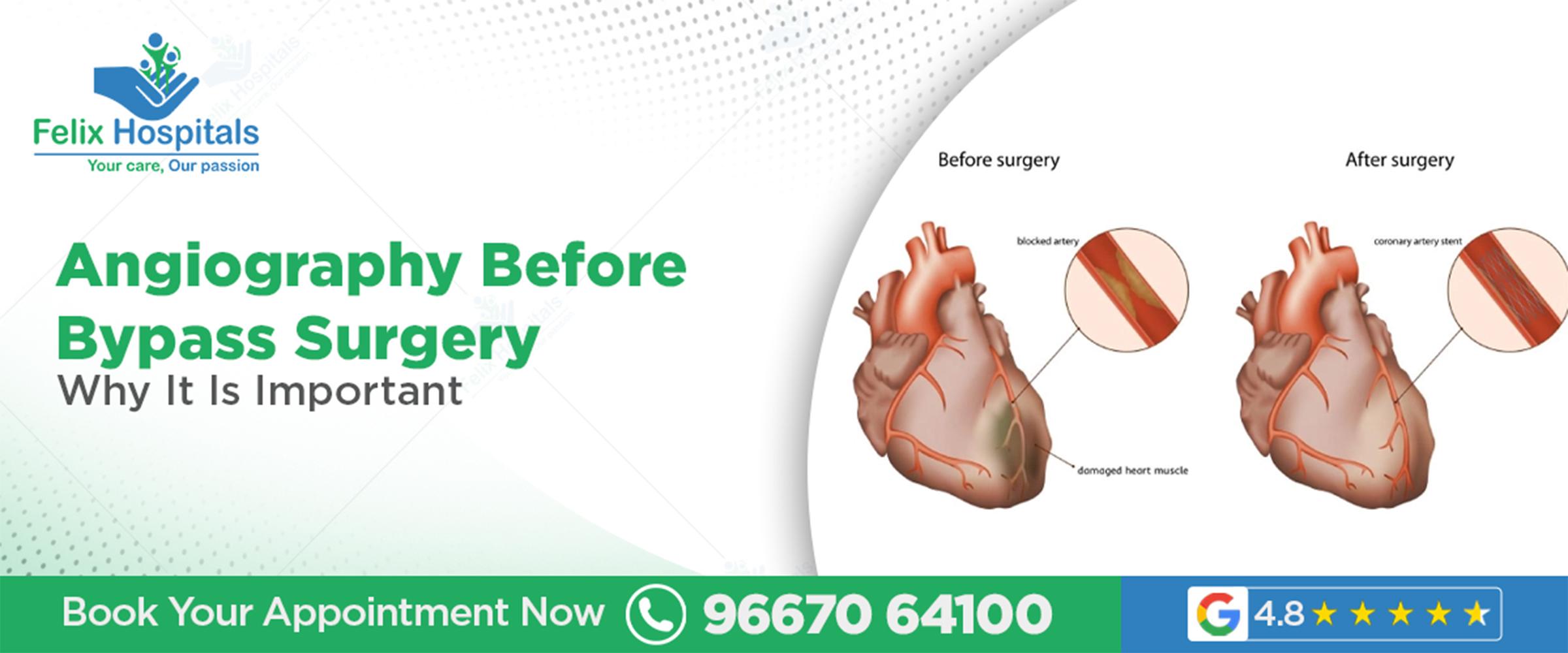
Heart disease is still one of the top causes of death around the world, and blocked coronary arteries are a big reason why people need bypass surgery. Angiography gives surgeons exact information about coronary artery disease, which helps them decide if bypass surgery is needed or if other treatments like angioplasty might be enough. Cardiac specialists stress that skipping this step can make treatment planning incomplete and surgery more risky.
The World Health Organization says that cardiovascular diseases cause almost 32% of deaths around the world, and coronary artery disease is the most common cause of these deaths.
Don't wait to get tested if you have chest pain or heart problems. To talk to heart specialists today, call +91 9667064100.
Angiography is a special type of imaging test that looks at blood vessels and finds blockages in the coronary arteries. The procedure uses X-ray imaging and contrast dye to show how blood moves through the heart.
Heart specialists say that this test gives surgeons a detailed map of the arteries, which helps them plan bypass surgery safely and effectively.
Important information about angiography
It is a diagnostic procedure that is non invasive .
Usually done in 30 to 60 minutes
Shows pictures of heart arteries in real time
Helps find blockages early
Angiography finds more than 95% of serious coronary blockages, according to research.
Before doing bypass surgery, surgeons need to know:
Which arteries are blocked
The extent of the blockage
Where the narrowing is
This detailed map makes sure that surgery is planned safely.
Verify the diagnosis of coronary artery disease
Find out how bad the blockages are
Choose how many bypass grafts you need
Check how well the heart works and how well blood flows
Studies show that angiography improves planning accuracy, which cuts down on surgical problems by 30–40%.
Source Url: https://pmc.ncbi.nlm.nih.gov/articles/PMC1705545/
When to use angiography:
Chest pain that is very bad or angina
The results of the stress test are not normal
There is a history of heart attacks
There are a lot of risk factors involved, including hypertension, diabetes, obesity, smoking, and elevated cholesterol levels. Early testing helps prevent sudden cardiac events.
Knowing How Angiography is Performed helps patients get ready for the procedure and calms their nerves.
Step-by-step process
Local anesthesia is administered to the wrist or groin
A thin catheter is inserted into the artery
Contrast dye is injected into the coronary arteries
X-ray pictures show how blood flows
The catheter is removed after imaging
The process is usually safe and doesn't hurt.
The procedure usually lasts 30 to 60 minutes.
Under observation for 4 to 6 hours after the procedure
Most patients go home the same day.
More than 90% of patients go back to their normal activities within 24 hours.
Understanding the Benefits of Angiography in Heart Surgery Planning shows why this test is so important.
Big advantages
Correctly finding blockages
Helps pick the best way to treat it
Lowers the risk of surgery
Increases the chance of a successful bypass
Research indicates that angiography enhances the success rate of bypass surgery by as much as 50%.
Source: PubMed Central (PMC) (.gov) https://share.google/NK5NDabILbtJ6G1oH
Angiography done early helps doctors find serious blockages before they cause heart attacks.
Benefits of prevention
Planning for early intervention
Fewer surgeries in emergencies
Longer life expectancy
Finding problems early saves lives.
Knowing the Risks and Precautions During Angiography, patients are kept up to date and ready.
Possible dangers
Minor incisions or bruising
Allergic reaction to the contrast dye
Short-term stress on the kidneys
Uncommon heart rhythm problems
Angiography is a very routine and low risk procedure, as per studies, less than 1% of the procedures result in any complications.
How to get ready
Don't eat for 6 to 8 hours
Tell the doctor about any medications you are taking
Tell them about your allergies
Set up transportation after the procedure
Proper planning makes sure the procedure goes well.
After the procedure, doctors talk about what they found and what to do next.
How to Understand Interpreting Angiography Results help patients get a clear picture of their heart health.
Possible results
Mild blockage—changes in lifestyle
Moderate blockage—medication or angioplasty
A lot of blockage—bypass surgery is the best option.
A correct diagnosis leads to good treatment.
Angiography helps figure out:
How many arteries need to be bypassed
Where the graft will be put
How hard the surgery is overall
Planning in detail makes surgery more likely to work.
Surgeons plan bypass surgery after angiography shows that there are severe blockages. Preparing for Bypass Surgery After Angiography helps patients get ready both physically and mentally.
Steps to get ready
Blood tests before surgery
Changes to your way of life
Managing medications
Advice on diet and exercise
Proper preparation cuts down on problems by 40%.
Suggested changes to your lifestyle
Stop smoking
Eat foods that are good for your heart
Keep your diabetes and blood pressure under control
Do light exercise
Good habits make recovery easier.
Angiography also helps plan how to recover after surgery.
Getting ready for recovery
Planning for cardiac rehabilitation
Schedule for taking medicine
Follow-up appointments
Changes to your way of life that last a long time
Patients who follow rehab programs get better 30% faster.
Finding out about a problem early can save lives. Call +91 9667064100 now to schedule your cardiac evaluation and start on the path to a healthier heart.
Angiography is very important for planning safe and effective bypass surgery. The Benefits of Angiography in Heart Surgery Planning include a more accurate diagnosis, lower surgical risks, and better long-term results. Knowing about Risks and Precautions During Angiography and Interpreting Angiography Results let patients take an active role in their treatment.
Cardiac experts say that getting ready for bypass surgery after angiography makes the surgery and recovery much more likely to go well. The best things you can do for your heart and your life are to get diagnosed early and get treatment right away.
Most of the time, the procedure doesn't hurt, but there may be some mild discomfort at the insertion site.
Usually it takes 30 to 60 minutes.
Yes, problems happen in less than 1% of cases.
Yes, early detection makes it possible to get treatment on time.
Usually within a few days or weeks, depending on the situation.
Dr. Rahul Arora is an experienced Interventional Cardiologist with 21+ years of expertise in advanced cardiac care, specializing in personalized, evidence-based treatment for heart diseases and improved patient outcomes.

Angiography is an important diagnostic test used to detect blockages or narrowing in blood vessels, especially in heart patients.
Experiencing frequent chest pain, shortness of breath, or irregular heartbeats? These may be warning signs that you need an angiography.


Subscribe to our
© Copyright 2026. All Rights Reserved by Felix Healthcare Private Limited
Design and development by :


 +(91)9667064100
 Emergency : +(91)9667064100