 Emergency:
  WhatsApp

Subscribe to our
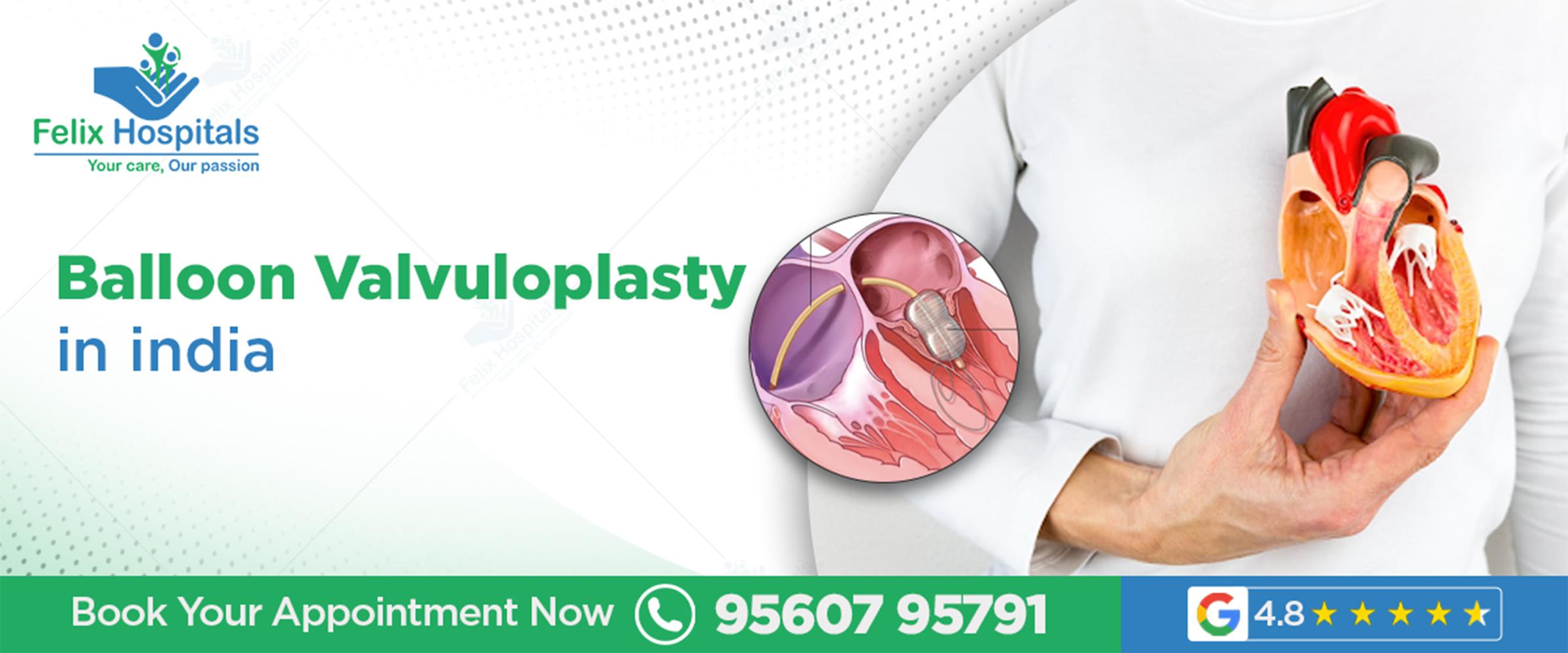
India has become a preferred destination for Balloon Valvuloplasty, offering advanced interventional cardiology care, experienced specialists, and cost-effective treatment aligned with global standards. This minimally invasive heart valve procedure is widely performed in India for both pediatric and adult patients suffering from narrowed heart valves, providing effective relief with shorter recovery times.
With state-of-the-art cardiac catheterization laboratories and internationally trained cardiologists, Balloon Valvuloplasty in India delivers safe outcomes for patients traveling from across the world.
Schedule Balloon Valvuloplasty at Felix Hospital, Noida India Call Us: +919560795791 And WhatsApp +919560795791 us now. Our team will help you book the best treatment and arrange your medical visa hassle-free.
Balloon Valvuloplasty is a non-surgical, catheter-based procedure used to widen a narrowed (stenotic) heart valve. In this procedure, a thin catheter with a balloon at its tip is guided to the affected heart valve, where the balloon is inflated to open the valve and improve blood flow.
This procedure is commonly used to treat valve stenosis affecting the mitral, aortic, pulmonary, or tricuspid valves. Balloon valvuloplasty is often recommended when valve narrowing causes symptoms but open-heart surgery can be avoided or postponed.
There are different types of balloon valvuloplasty, based on the specific heart valve involved.
Performed for mitral valve stenosis, often caused by rheumatic heart disease. It improves blood flow between the left atrium and left ventricle.
Used in selected patients with aortic valve stenosis, particularly elderly or high-risk surgical candidates, or as a bridge to valve replacement.
Commonly performed in children and adults with pulmonary valve stenosis, often congenital in nature.
A less common procedure used in selected cases of tricuspid valve narrowing.
Indian cardiac centers are equipped to perform all types using advanced imaging and precision-guided techniques.
Several cardiac conditions may require balloon valvuloplasty when valve narrowing restricts normal blood flow.
Common conditions include:
The decision to perform balloon valvuloplasty depends on valve anatomy, severity of stenosis, patient age, and overall health status.
Before planning the procedure, several diagnostic tests of balloon valvuloplasty are performed to confirm suitability.
Common diagnostic evaluations include:
These tests help cardiologists assess valve structure, measure pressure gradients, and rule out complications such as blood clots.
The balloon valvuloplasty procedure is performed in a cardiac catheterization lab under local anesthesia with sedation or general anesthesia, depending on the patient’s condition.
Procedure steps include:
Catheter insertion through a blood vessel in the groin
Guidance of the catheter to the heart using imaging
Positioning of the balloon across the narrowed valve
Inflation of the balloon to widen the valve opening
Assessment of improved blood flow
The procedure typically takes 1–2 hours, and most patients experience immediate symptomatic relief.
Recovery after balloon valvuloplasty is generally quick due to its minimally invasive nature.
International patients receive coordinated discharge planning and post-procedure guidance to ensure safe travel.
Key benefits include:
These advantages make balloon valvuloplasty especially valuable for elderly patients, children, and high-risk surgical candidates.
The cost of balloon valvuloplasty in India is significantly lower compared to many developed countries, without compromising on quality or outcomes.
Factors influencing cost include:
Type of valve treated
Complexity of the condition
Hospital infrastructure and city
Length of hospital stay
On average, balloon valvuloplasty in India costs 60–75% less than similar procedures in the US, UK, or Europe.
Indian cardiology centers follow international guidelines to ensure consistent and reliable outcomes.
India offers multiple advantages for international patients seeking balloon valvuloplasty:
Hospitals also assist with medical visas, accommodation, language support, and follow-up coordination.
Balloon Valvuloplasty in India provides a safe, effective, and minimally invasive solution for patients suffering from heart valve stenosis. With advanced medical infrastructure, skilled specialists, and cost-effective care, India continues to be a trusted destination for global patients seeking high-quality cardiac treatment.
Timely intervention through balloon valvuloplasty can significantly improve symptoms, quality of life, and long-term heart function.
Schedule Balloon Valvuloplasty at Felix Hospital, Noida India Call Us: +919560795791 And WhatsApp +919560795791 us now. Our team will help you book the best treatment and arrange your medical visa hassle-free.
Yes, leading cardiac hospitals in India follow international interventional cardiology protocols with high safety standards.
Most patients require a stay of 7–10 days, including the procedure, observation, and follow-up evaluation.
In selected cases, balloon valvuloplasty can delay or avoid surgery, depending on valve condition and patient suitability.
Many patients require only short-term medications, with long-term treatment decided based on valve response and follow-up scans.
Yes, Indian hospitals provide detailed medical reports and support teleconsultations for continued care coordination.
Sudden cardiac arrhythmias can be life-threatening when they occur without warning. For patients at high risk of dangerous heart rhythm disturbances, timely intervention can mean the difference between life and death. AICD Implantation in India has emerge

Craniotomy surgery in india is a complex neurosurgical procedure performed to gain direct access to the brain by temporarily removing a portion of the skull. After the required treatment is completed, the removed bone segment—known as a bone flap—is secur
India has emerged as a preferred destination for Mitral Valve Replacement Surgery due to internationally trained cardiac surgeons, modern heart institutes, and outcomes comparable to leading global centres—combined with significantly lower treatment costs

Subscribe to our
© Copyright 2026. All Rights Reserved by Felix Healthcare Private Limited
Design and development by :


 +(91)9667064100
 Emergency : +(91)9667064100