 WhatsApp
 Emergency:
  WhatsApp
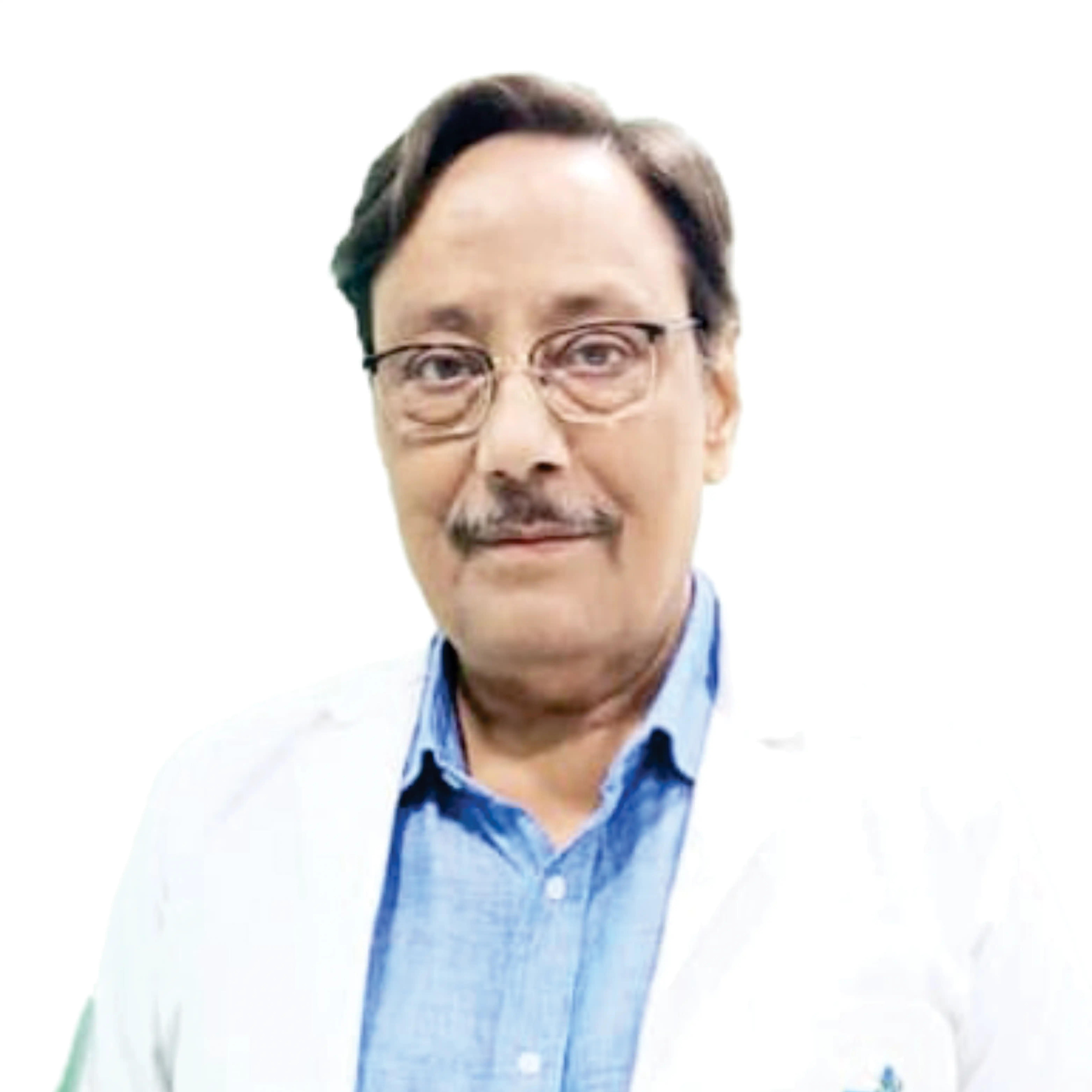
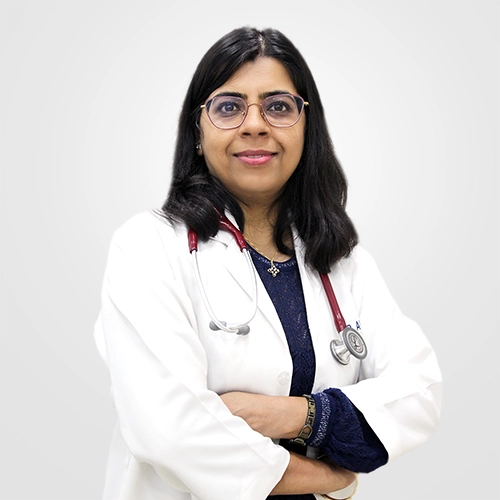

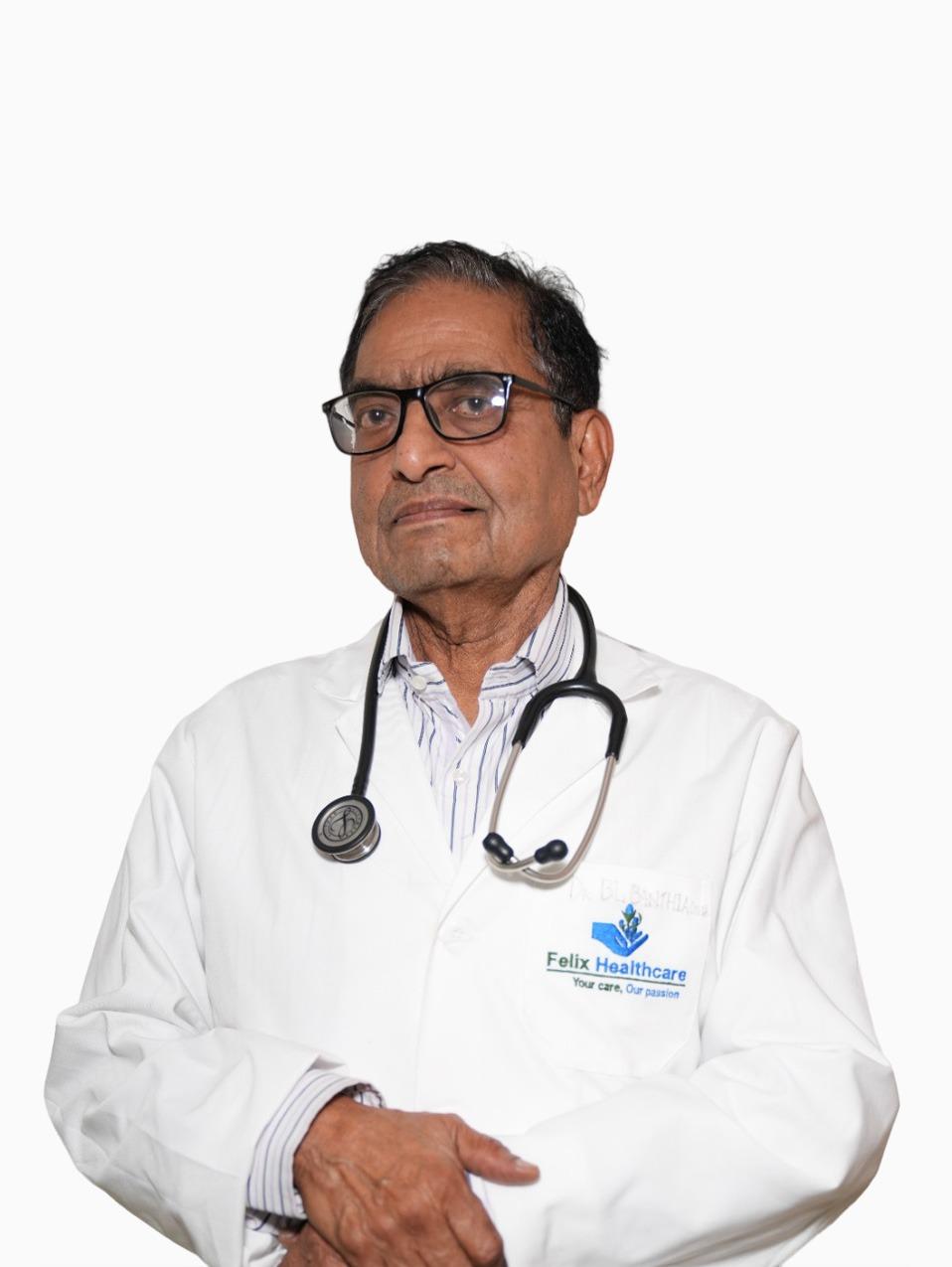
Dr. Bajrang Lal Banthia provides personalized care for diabetes, hypertension, infections, and general health issues.

Subscribe to our
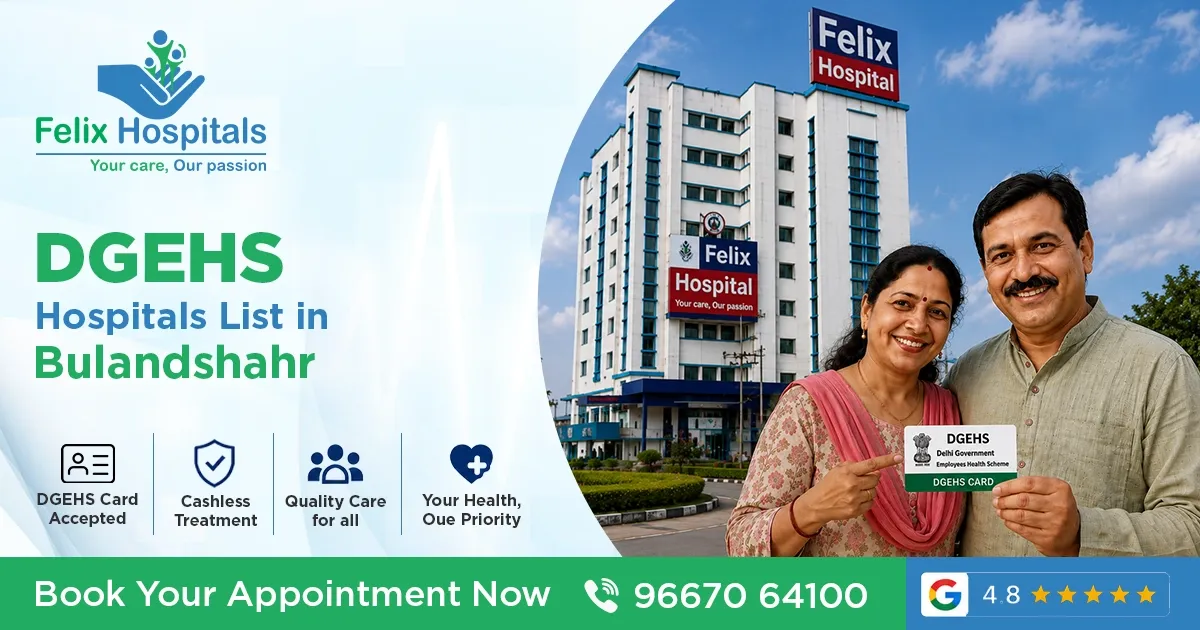
If you're a Delhi Government employee or pensioner living in Bulandshahr, your DGEHS card entitles you to cashless medical care at empanelled hospitals across the NCR region. The challenge most beneficiaries run into isn't the scheme itself — it's finding a hospital with the specialist depth to handle what your family actually needs, without the runaround at the billing counter.
The official DGEHS list for the NCR includes government dispensaries and a handful of private setups. But Bulandshahr is a separate district, and many beneficiaries aren't sure whether their card even works here. It does. DGEHS covers hospitals across Delhi and the entire NCR region — district boundaries don't change that. For Bulandshahr residents who need tertiary care — heart surgery, robotic joint replacement, complex cancer treatment, a high-risk delivery — Felix Hospital in Greater Noida is the closest fully equipped DGEHS empanelled private facility with the specialist depth to handle it. For those starting from Kala Aam Chauraha, it's a straight shot down NH-91. Most Bulandshahr patients find the drive to Greater Noida is actually smoother than battling internal city traffic toward the District Hospital during peak hours.
DGEHS Helpdesk at Felix Hospital: +91 9667064100
All procedures within DGEHS approved rates are cashless for entitled beneficiaries and their dependants.
Specialty | Key Procedures Covered |
Cardiology and Cardiac Surgery | Angiography, angioplasty, bypass surgery, valve replacement, pacemaker, heart failure management |
Orthopaedics and Joint Replacement | Knee replacement, hip replacement, spine surgery, fracture fixation, bone infection, revision joint surgery |
Neurology and Neurosurgery | Stroke management, brain surgery, spinal conditions, epilepsy treatment |
Oncology | Cancer diagnosis, chemotherapy, radiation therapy, surgical oncology |
Gynaecology and Obstetrics | Normal delivery, C-section, hysterectomy, fibroid surgery, Level III NICU available |
Urology | Laser kidney stone treatment, prostate surgery, urinary tract procedures, dialysis |
General and Laparoscopic Surgery | Gallbladder removal, hernia repair, appendectomy, bariatric surgery |
Paediatrics | Paediatric surgical and medical conditions |
ENT and Ophthalmology | Cataract, ear surgery, tonsillectomy, septoplasty |
Pulmonology | Respiratory conditions, COPD, bronchoscopy, sleep apnoea |
Nephrology and Dialysis | Chronic kidney disease, haemodialysis, 24/7 dialysis unit |
Gastroenterology | Endoscopy, colonoscopy, liver conditions |
Physical Medicine and Rehabilitation | Physiotherapy, occupational therapy, post-surgical rehabilitation |
The Delhi Government Employees Health Scheme is a health protection programme run by the Government of National Capital Territory of Delhi. It covers cashless medical treatment for serving and retired Delhi Government employees and their dependent family members at empanelled hospitals across Delhi and the NCR.
A large portion of Bulandshahr's DGEHS beneficiaries are retired — people who spent their working years in Delhi Government service and came back to their hometown. They've earned this entitlement. The problem is that Bulandshahr's local hospitals don't carry the tertiary care depth for complex conditions, and going back to Delhi feels like the only option. It isn't. Felix Hospital in Greater Noida is empanelled under DGEHS and reachable in under 75 minutes from most parts of the district. Full cashless coverage, without the Delhi commute.
Serving Delhi Government employees across all departments and grades are covered. Retired employees drawing pension from the Delhi Government treasury are entitled. So are dependent family members — spouse, unmarried children up to 25 who aren't independently employed, and dependent parents whose income falls below the prescribed threshold.
A dependent child with a certified disability stays covered under the DGEHS card regardless of age, as long as the disability is documented and the child remains financially dependent on the cardholder. Bring the disability certificate issued by a competent authority to the Felix Hospital DGEHS helpdesk at the time of admission.
The DGEHS card is what identifies you as an entitled beneficiary and triggers cashless treatment. At Felix Hospital, you present it at the dedicated helpdesk first. The team verifies your card against the DGEHS system, confirms entitlement, and starts the admission process.
For planned procedures, pre-authorisation is submitted by Felix Hospital on your behalf. For emergencies, treatment begins immediately and authorisation is handled retrospectively. You don't need to visit any DGEHS office or follow up with any government department separately — the hospital's desk manages it.
Cosmetic or aesthetic procedures that aren't medically necessary aren't covered. Experimental treatments or procedures not yet approved in standard clinical practice are excluded. Dental work beyond basic extractions generally falls outside the scheme unless it results from an accident. Spectacles, hearing aids, and assistive devices are covered only within specified limits. Procedures at non-empanelled hospitals don't qualify for cashless treatment — reimbursement claims in these cases are frequently partial or rejected outright.
If you're unsure about a specific procedure, call the Felix Hospital DGEHS helpdesk before you travel.
Room entitlement is determined by the pay level or grade of the serving employee, or the equivalent pension drawn by the retired employee.
Beneficiary Category | Room Entitlement |
Grade A Officers, senior scale and above | Private Room |
Grade B Officers | Semi-Private Room |
Grade C and below | General Ward |
Pensioners | As per last pay drawn equivalent |
Dependants | As per the cardholder's entitlement |
If you choose a higher room category than your entitlement, you pay only the difference in room rent (though most of our DGEHS patients find the semi-private rooms more than comfortable). All clinical charges — surgery, medicines during admission, investigations — remain at DGEHS approved rates regardless of which room you're in. Confirm your entitlement at the Felix Hospital helpdesk on arrival, or call +91 9667064100 in advance.
Technically, you have two options under DGEHS — cashless at an empanelled hospital, or paying upfront and applying for reimbursement later. In practice, the difference is enormous.
Factor | Reimbursement Route | Cashless at Felix Hospital |
Upfront payment | Required, often substantial | Zero |
Paperwork burden | Bills, forms, submissions, follow-ups | Handled entirely by Felix DGEHS desk |
Waiting period | Weeks to months | Settled directly with DGEHS |
Rate risk | Excess above DGEHS rate not reimbursed | DGEHS rate charged directly |
Stress during hospitalisation | High | Eliminated |
When a family member is unwell, chasing a reimbursement claim is the last thing anyone should be dealing with. Choosing cashless at Felix Hospital removes that entirely.
The cashless claim process at Felix Hospital is handled entirely by the hospital's DGEHS administrative desk. Three things cause most rejections — and all three are avoidable.
First: missing or incomplete documents. An expired DGEHS card, a missing dependent registration, or an Aadhaar mismatch will stall a claim instantly. Carrying the full checklist eliminates this. Second: treatment at a non-empanelled hospital followed by a reimbursement application — these claims are routinely rejected or only partially settled. Third: procedures falling outside DGEHS approved packages being started without prior clarity on coverage.
At Felix Hospital, the DGEHS helpdesk checks all of this before admission proceeds, not after discharge.
For planned treatment: Planned treatment at a referral hospital like Felix Hospital requires a referral from the Medical Officer at your designated DGEHS dispensary or the Chief Medical Officer of your department. The referral specifies the department and nature of care required.
Bring the referral letter, your DGEHS card, and your Aadhaar to the Felix Hospital DGEHS helpdesk. From there, the hospital manages registration, pre-authorisation, and admission. You don't follow up with any DGEHS office separately.
For emergencies: No referral needed. Walk straight into the Felix Hospital emergency department. DGEHS rules permit direct emergency admission at any empanelled hospital. The clinical team treats first. Documentation and retrospective authorisation are handled after stabilisation.
Mandatory — verification cannot proceed without these:
Valid DGEHS card (physical or digital copy)
Aadhaar card of the patient, original plus one photocopy
Referral letter from DGEHS dispensary or departmental CMO (for planned treatment)
Proof of dependency registration on the DGEHS card (for dependent family members)
Strongly recommended:
Previous medical records, prescriptions, or discharge summaries for ongoing conditions
Disability certificate for dependants covered under the disability provision
Department identity card of the serving or retired employee as secondary identification
For emergencies, come first. Documents can follow once the patient is stable.
Heart attack. Stroke. Major trauma. Respiratory failure.
Don't wait. Just get here.
DGEHS rules explicitly permit direct emergency admission at any empanelled hospital without a prior referral. The Felix Hospital emergency team starts treatment immediately. The DGEHS desk handles documentation and claim submission after the patient is stabilised. When you arrive, tell the emergency team you're a DGEHS beneficiary. That's all you need to do.
The ambulance dispatches toward you or coordinates a handover en route if the condition is critical. For Bulandshahr, the NH-91 corridor is the fastest path in both directions.
Bulandshahr has local hospitals. What it doesn't have is tertiary care depth — the infrastructure for cardiac surgery, robotic joint replacement, Level III NICU deliveries, or complex cancer treatment. For conditions like these, the choice has always felt binary: local facilities that aren't equipped, or Delhi hospitals that require a punishing commute through city traffic.
Felix Hospital changes that. Via NH-91 toward Greater Noida, Bulandshahr city is approximately 60 to 75 minutes from Felix Hospital — significantly shorter than travelling into central Delhi, and without the Delhi traffic problem. Sikandrabad, being closer to the Greater Noida border, typically runs 50 to 60 minutes. Khurja, on the eastern edge of the district, can reach Felix via the Dadri corridor in 70 to 85 minutes.
Felix Hospital is a tertiary care centre with a 24/7 digital cath lab for cardiac emergencies, robotic and computer-assisted surgery for joint replacement, a Level III NICU for high-risk deliveries, zero-cut laser technology for kidney stone treatment, and laminar airflow operation theatres. NABH accreditation means standards are externally audited, not self-declared.
DGEHS beneficiaries at Felix Hospital get the same doctors, the same operation theatres, and the same post-operative care as every other patient. No separate ward. No lower-priority queue. The billing arrangement doesn't change the treatment.
Area | Route | Approx. Time from Felix |
Bulandshahr city | NH-91 toward Greater Noida | 60 to 75 mins |
Sikandrabad | NH-91 connector | 50 to 60 mins |
Gulaothi | Via Sikandrabad, NH-91 | 55 to 65 mins |
Khurja | Via Dadri corridor | 70 to 85 mins |
Dadri | Direct via Greater Noida road | 20 to 25 mins |
Greater Noida Central, Alpha, Beta | Nearest to Felix | 10 to 15 mins |
For emergencies from Bulandshahr, call the Felix Hospital ambulance immediately. It operates 24 hours and dispatches via the NH-91 corridor toward your location.
Delhi Government employees and pensioners living in Bulandshahr have earned their DGEHS entitlement. Felix Hospital makes sure it's honoured — specialist doctors, advanced surgical technology, a dedicated DGEHS administrative desk, and guaranteed cashless treatment for covered procedures, reachable in under 75 minutes via NH-91.
Felix Hospital, Greater Noida. DGEHS Empanelled, serving Bulandshahr, Sikandrabad, Khurja, Gulaothi, and the broader western UP belt.
Dr. Ravi Sharma is a senior physician with 42+ years of experience, known for compassionate and comprehensive patient care in Noida.
Stay updated with trusted hospitals, specialist care, and ESIC-approved medical facilities across Noida.
Discover the updated list of Ayushman Bharat (PMJAY) hospitals in Dadri for 2026.
Looking for an Ayushman Bharat hospital in Delhi NCR? Discover how Felix Hospital provides quality healthcare services under the Ayushman Bharat Yojana in 2026.
Searching for Ayushman Card hospitals in Ghaziabad? Felix Hospital offers advanced medical care and cashless treatment facilities under the Ayushman Bharat Yojana in 2026.

It starts like the flu.
You feel tired. Your muscles ache like you ran a marathon you never signed up for. The fever just will not break. Most people wait it out , rest, paracetamol, maybe a Crocin and a day off work. With Hantavirus, that decision can cost you your life.
This is not a disease that gives second chances. It moves fast, it disguises itself well, and by the time most patients reach our emergency department at Felix Hospital, the window for easy intervention is already narrowing. Our internal medicine team put this guide together for one reason , so that you know what to look for before it is too late.
Suspect an infection? Call our 24/7 Emergency Helpline: +91 9667064100
Hantavirus is a family of viruses carried by rodents , rats, mice, and voles. The animal never gets sick. It just carries the virus in its saliva, urine, and droppings, contaminating everything it touches, and moves on. Humans are accidental hosts. We get exposed. And when we do, we have very little natural defence.
HPS , Hantavirus Pulmonary Syndrome: More common in the Americas. Fluid floods the lungs. Mortality rate sits around 40%. Patients can go from mild breathlessness to ventilator-dependent respiratory failure within 24 hours.
HFRS , Hemorrhagic Fever with Renal Syndrome: This is the form more relevant to India and Asia. It targets the kidneys and triggers internal bleeding and shock. We see this risk particularly during and after monsoon season, when rodents in areas like Dadri, Surajpur, and the agricultural belts around Greater Noida are pushed closer to human habitation.
There is no specific antiviral cure for either form. Survival depends almost entirely on how fast you reach an equipped ICU. That is not something we say to frighten you , it is something you need to know before you decide to wait another day at home.
Most people assume you need to be bitten by a rat. You do not.
The most common route is inhalation: When infected rodent droppings, urine, or nesting material is disturbed , swept, moved, kicked up , microscopic viral particles become airborne. One breath is all it takes.
Think about this: you are cleaning out a long-closed storage room in one of the industrial warehouses .Dust rises. You breathe. The exposure happens without a single rodent in sight.
Opening and cleaning long-closed sheds, lofts, or storage rooms
Working in grain godowns or agricultural fields with rodent activity
Sweeping or vacuuming in spaces with visible rodent droppings , without protection
Camping or sleeping outdoors in rodent-dense areas
Monsoon and post-monsoon months , when rodents move into homes, warehouses, and kitchens to escape flooding
Direct contact , touching droppings and then touching your face , and rodent bites are also documented routes, but far less common than inhalation.
Person-to-person spread? In India, for the strains circulating here, the answer is no. You do not catch this from a sick person. You catch it from the environment, a rodent contaminated.
Hantavirus is a master of disguise. That is the clinical reality we deal with.
High fever, often hitting 39–40°C. Severe muscle aches concentrated in the thighs, hips, and lower back. Crushing fatigue. Headache. Chills. Some patients add nausea, vomiting, and abdominal pain to the picture.
At this stage, almost every patient , and many clinicians , assumes Dengue, a seasonal viral fever, or a bad flu. That assumption is where the danger lives.
This is where the two forms diverge, and where things can deteriorate very quickly.
In HPS, a sudden dry cough develops. Then breathlessness. Then the feeling of not being able to get enough air no matter how hard you try. Fluid is accumulating in the lungs. This phase can move from mild discomfort to full respiratory failure within 24 to 48 hours.
In HFRS, the kidneys begin to fail. Urine output drops , or stops entirely. Blood pressure crashes. Patients develop bruising, bleeding from the gums, nosebleeds, and intense back pain. Vision disturbances have been reported.
Our clinical advice, directly: If you have been in any situation involving potential rodent exposure in the last four weeks , cleaning, farming, warehousing, camping , and you develop fever with severe muscle aches, come in. Do not Google. Do not wait. Tell our team about the rodent exposure the moment you arrive. That single piece of information completely changes how we investigate and treat you.
There is no rapid bedside test for Hantavirus available in most settings. Our approach at Felix Hospital combines:
Clinical history first , exposure history is the most important diagnostic tool we have in the early phase. This is why telling your doctor about rodent contact matters so much.
Blood investigations , low platelet count, rising haematocrit, and elevated creatinine are red flags that push us toward Hantavirus in the right clinical context.
ELISA and PCR testing , ELISA detects Hantavirus antibodies; PCR detects viral RNA in the early phase. These confirm the diagnosis.
Chest X-ray and CT , reveals fluid accumulation in the lungs in HPS cases, often before the patient reports significant breathlessness.
We do not wait for confirmed lab results before initiating support. If clinical signs suggest impending respiratory or kidney failure, we act.
Since no specific antiviral cures Hantavirus disease, everything depends on how well and how fast we support the body while the immune system does the heavy lifting.
Our ICU at Felix Hospital is equipped with advanced ventilators and 24/7 dialysis capability. We do not move patients around or refer out for critical support , it is all in-house, around the clock.
For HPS patients: Oxygen therapy begins immediately. If oxygen saturation drops and does not respond, we move to mechanical ventilation without delay. Fluid management is carefully controlled , too much fluid worsens lung accumulation; too little worsens shock. It is a balance our critical care team manages continuously.
For HFRS patients: Kidney function is monitored aggressively. When dialysis is needed, our nephrology team initiates it without waiting for the situation to worsen. Bleeding complications are managed with blood product support.
Every hour matters. Our internal medicine and critical care teams work together from admission , because in Hantavirus, there is no time for a slow handoff.
Medical emergency? Do not call a cab. Call us first: +91 9667064100
No approved vaccine exists for Hantavirus in India. Prevention is entirely behavioral , and it works. Seal your space. Any gap or hole larger than 6mm is an entry point for a mouse. Seal with steel wool packed into the gap, then cover with cement. Check around pipes, utility lines, and skirting boards , these are the routes rodents use most.
The wet cleaning rule , follow it every time. Never dry sweep or vacuum rodent droppings. This is the single most dangerous thing you can do in a contaminated space. Instead: put on gloves and an N95 mask, spray the droppings and surrounding area with a 1:10 bleach-to-water solution, wait five full minutes, then wipe up with damp disposable paper towels. Seal everything in a plastic bag. Wash your hands after removing gloves.
Store food properly: Grains, pulses, and pet food stored in cloth bags or open containers are an open invitation. Switch to thick plastic or metal containers with tight-fitting lids. This single change dramatically reduces rodent activity in kitchen and storage areas.
Before entering a closed space , an old shed, a storeroom that has been shut for months, a farm building after monsoon , open it and let it air for at least 30 minutes before entering. Wear a mask. Do not clean it dry.
Monsoon-specific advice: As flooding and waterlogging push rodents out of fields and drains in areas around Dadri, Surajpur, Noida Extension, and the Greater Noida industrial corridors , check for rodent entry points in your home and workplace every year before monsoon season begins.
Hantavirus does not give you a warning shot. It disguises itself as flu, buys itself a week, and then moves fast.
If you have had any rodent exposure in the last month , cleaning, farming, warehousing, camping , and you develop fever with severe muscle aches and fatigue, do not wait it out at home. Come to our emergency department at Felix Hospital in Greater Noida immediately. Tell our team about the exposure. That is the most important thing you can do.
Dr. Anshumala Sinha is an experienced Internal Medicine and Diabetology specialist with 20+ years of practice. She specializes in diabetes management, infectious diseases, fever treatment, hypertension, cholesterol control, weight management, and trauma care. Recognized among the Best General Physicians in Noida, she provides comprehensive and patient-focused medical care.
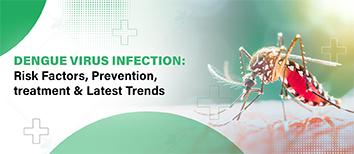
Consult the best general physician for dengue fever at Felix Hospital. Their expertise in diagnosing and managing dengue virus infections can lead to timely and effective treatment.
Take special care of the health of your kids, especially young children, amidst the changing seasons.
Nipah virus infection causes severe fever and brain inflammation. It spreads through infected animals or close contact and requires strict preventive measures.
If you're a Delhi Government employee or pensioner living in Jewar, your DGEHS card entitles you to cashless medical care at empanelled hospitals across the NCR region. The challenge most beneficiaries run into isn't the scheme itself , it's finding a hospital close enough to actually use, with the specialist depth to handle what your family needs.
The official DGEHS list for the NCR includes government dispensaries and a handful of private setups. But for Jewar residents who need tertiary care ,heart surgery, robotic joint replacement, a high-risk delivery , most of those options mean driving all the way to Delhi. That's a real problem when you're at the southern tip of Gautam Buddha Nagar, one of the furthest points in the district from the capital. Felix Hospital in Greater Noida changes that calculation. Empanelled under DGEHS and about 35 to 45 minutes away via the Yamuna Expressway, it's the closest fully equipped private facility with the specialist depth Jewar residents actually need.
DGEHS Helpdesk at Felix Hospital: +91 9667064100
All procedures within DGEHS approved rates are cashless for entitled beneficiaries and their dependants.
Specialty | Key Procedures Covered |
Cardiology and Cardiac Surgery | Angiography, angioplasty, bypass surgery, valve replacement, pacemaker, heart failure management |
Orthopaedics and Joint Replacement | Knee replacement, hip replacement, spine surgery, fracture fixation, bone infection, revision joint surgery |
Neurology and Neurosurgery | Stroke management, brain surgery, spinal conditions, epilepsy treatment |
Oncology | Cancer diagnosis, chemotherapy, radiation therapy, surgical oncology |
Gynaecology and Obstetrics | Normal delivery, C-section, hysterectomy, fibroid surgery, Level III NICU available |
Urology | Laser kidney stone treatment, prostate surgery, urinary tract procedures, dialysis |
General and Laparoscopic Surgery | Gallbladder removal, hernia repair, appendectomy, bariatric surgery |
Paediatrics | Paediatric surgical and medical conditions |
ENT and Ophthalmology | Cataract, ear surgery, tonsillectomy, septoplasty |
Pulmonology | Respiratory conditions, COPD, bronchoscopy, sleep apnoea |
Nephrology and Dialysis | Chronic kidney disease, haemodialysis, 24/7 dialysis unit |
Gastroenterology | Endoscopy, colonoscopy, liver conditions |
Physical Medicine and Rehabilitation | Physiotherapy, occupational therapy, post-surgical rehabilitation |
Before you travel, call +91 9667064100 to confirm your specific procedure is covered under DGEHS rates.
The Delhi Government Employees Health Scheme is a health protection programme run by the Government of National Capital Territory of Delhi. It covers cashless medical treatment for serving and retired Delhi Government employees and their dependent family members at empanelled hospitals across Delhi and the NCR.
Jewar has been attracting more Delhi Government families in recent years — many drawn by the Yamuna Expressway corridor and the development activity around the upcoming Noida International Airport. For those families, travelling back to Delhi for every specialist visit simply isn't realistic. DGEHS empanelled hospitals like Felix Hospital in Greater Noida exist for exactly this reason: full cashless coverage, without the commute.
Serving Delhi Government employees across all departments and grades are covered. Retired employees drawing pension from the Delhi Government treasury are entitled. So are dependent family members , spouse, unmarried children up to 25 who aren't independently employed, and dependent parents whose income falls below the prescribed threshold.
A dependent child with a certified disability stays covered under the DGEHS card regardless of age, as long as the disability is documented and the child remains financially dependent on the cardholder. Bring the disability certificate issued by a competent authority to the Felix Hospital DGEHS helpdesk at the time of admission.
The DGEHS card is what identifies you as an entitled beneficiary and triggers cashless treatment. At Felix Hospital, you present it at the dedicated helpdesk first. The team verifies your card against the DGEHS system, confirms entitlement, and starts the admission process.
For planned procedures, pre-authorisation is submitted by Felix Hospital on your behalf. For emergencies, treatment begins immediately and authorisation is handled retrospectively. You don't need to visit any DGEHS office or follow up with any government department separately — the hospital's desk manages it.
Cosmetic or aesthetic procedures that aren't medically necessary aren't covered. Experimental treatments or procedures not yet approved in standard clinical practice are excluded. Dental work beyond basic extractions generally falls outside the scheme unless it results from an accident. Spectacles, hearing aids, and assistive devices are covered only within specified limits. Procedures at non-empanelled hospitals don't qualify for cashless treatment — reimbursement claims in these cases are frequently partial or rejected.
If you're unsure about a specific procedure, call the Felix Hospital DGEHS helpdesk before you travel.
Room entitlement is determined by the pay level or grade of the serving employee, or the equivalent pension drawn by the retired employee.
Beneficiary Category | Room Entitlement |
Grade A Officers, senior scale and above | Private Room |
Grade B Officers | Semi-Private Room |
Grade C and below | General Ward |
Pensioners | As per last pay drawn equivalent |
Dependants | As per the cardholder's entitlement |
If you choose a higher room category than your entitlement, you pay only the difference in room rent. All clinical charges — surgery, medicines during admission, investigations — remain at DGEHS approved rates regardless of which room you're in. Confirm your entitlement at the Felix Hospital helpdesk on arrival, or call +91 9667064100 in advance.
Technically, you have two options under DGEHS — cashless at an empanelled hospital, or paying upfront and applying for reimbursement later. In practice, the difference is enormous
Factor | Reimbursement Route | Cashless at Felix Hospital |
Upfront payment | Required, often substantial | Zero |
Paperwork burden | Bills, forms, submissions, follow-ups | Handled entirely by Felix DGEHS desk |
Waiting period | Weeks to months | Settled directly with DGEHS |
Rate risk | Excess above DGEHS rate not reimbursed | DGEHS rate charged directly |
Stress during hospitalisation | High | Eliminated |
When a family member is unwell, chasing a reimbursement claim is the last thing anyone should be dealing with. Choosing cashless at Felix Hospital removes that entirely.
The cashless claim process at Felix Hospital is handled entirely by the hospital's DGEHS administrative desk. Three things cause most rejections — and all three are avoidable.
First: missing or incomplete documents. An expired DGEHS card, a missing dependent registration, or an Aadhaar mismatch will stall a claim instantly. Carrying the full checklist eliminates this. Second: treatment at a non-empanelled hospital followed by a reimbursement application — these claims are routinely rejected or only partially settled. Third: procedures falling outside DGEHS approved packages being started without prior clarity on coverage.
At Felix Hospital, the DGEHS helpdesk checks all of this before admission proceeds, not after discharge.
For planned treatment: Planned treatment at a referral hospital like Felix Hospital requires a referral from the Medical Officer at your designated DGEHS dispensary or the Chief Medical Officer of your department. The referral specifies the department and nature of care required.
Bring the referral letter, your DGEHS card, and your Aadhaar to the Felix Hospital DGEHS helpdesk. From there, the hospital manages registration, pre-authorisation, and admission. You don't follow up with any DGEHS office separately.
For emergencies: No referral needed. Walk straight into the Felix Hospital emergency department. DGEHS rules permit direct emergency admission at any empanelled hospital. The clinical team treats first. Documentation and retrospective authorisation are handled after stabilisation.
Mandatory — verification cannot proceed without these:
Valid DGEHS card (physical or digital copy)
Aadhaar card of the patient, original plus one photocopy
Referral letter from DGEHS dispensary or departmental CMO (for planned treatment)
Proof of dependency registration on the DGEHS card (for dependent family members)
Previous medical records, prescriptions, or discharge summaries for ongoing conditions
Disability certificate for dependants covered under the disability provision
Department identity card of the serving or retired employee as secondary identification
For emergencies, come first. Documents can follow once the patient is stable.
Heart attack. Stroke. Major trauma. Respiratory failure.
Don't wait. Don't look for paperwork. Just get here.
DGEHS rules explicitly permit direct emergency admission at any empanelled hospital without a prior referral. The Felix Hospital emergency team starts treatment immediately. The DGEHS desk handles documentation and claim submission after the patient is stabilised. When you arrive, tell the emergency team you're a DGEHS beneficiary. That's all you need to do.
For Delhi Government employees and pensioners in Jewar, the distance problem is real. Jewar sits at the southern end of Gautam Buddha Nagar district — further from Delhi than almost any other town in the NCR. Driving to a Delhi-based DGEHS hospital for a planned procedure means an hour-plus journey each way through city traffic. That's not sustainable for regular specialist care.
The Yamuna Expressway changes things. It's a straight, fast road. Most Jewar residents can reach Felix Hospital in 35 to 45 minutes on a normal day — less if you're coming from the northern end of the tehsil toward Rabupura. That's a meaningful difference. And for an emergency, the expressway means the ambulance reaches you faster too.
Felix Hospital is a tertiary care centre with a 24/7 digital cath lab for cardiac emergencies, robotic and computer-assisted surgery for joint replacement, a Level III NICU for high-risk deliveries, zero-cut laser technology for kidney stone treatment, and laminar airflow operation theatres. NABH accreditation means standards are externally audited, not self-declared.
DGEHS beneficiaries at Felix Hospital get the same doctors, the same operation theatres, and the same post-operative care as every other patient. No separate ward. No lower-priority queue. The billing arrangement doesn't change the treatment.
Area | Route | Approx. Time from Felix |
Jewar town | Yamuna Expressway northward | 35 to 45 mins |
Rabupura tehsil | Via Yamuna Expressway service road | 30 to 40 mins |
Dankaur | Via NH-91 connector | 25 to 35 mins |
Dadri | Direct via Greater Noida road | 20 to 25 mins |
Greater Noida Central, Alpha, Beta | Nearest to Felix | 10 to 15 mins |
Surajpur and Kasna | Direct route | 15 to 20 mins |
For emergencies from Jewar, call the Felix Hospital ambulance immediately. It operates 24 hours and dispatches via the Yamuna Expressway corridor to your location.
Delhi Government employees and pensioners living in Jewar don't need to travel back to Delhi for quality specialist care. Felix Hospital is 35 to 45 minutes away via the Yamuna Expressway, fully empanelled under DGEHS, equipped across all major specialties, and committed to cashless treatment without the administrative runaround.
Felix Hospital, Greater Noida. DGEHS Empanelled, serving Jewar, Rabupura, Dankaur, Dadri, and the broader Gautam Buddha Nagar district.
Dr. Anshumala Sinha is an experienced Internal Medicine and Diabetology specialist with 20+ years of practice. She specializes in diabetes management, infectious diseases, fever treatment, hypertension, cholesterol control, weight management, and trauma care. Recognized among the Best General Physicians in Noida, she provides comprehensive and patient-focused medical care.
Stay updated with trusted hospitals, specialist care, and ESIC-approved medical facilities across Noida.
Discover the updated list of Ayushman Bharat (PMJAY) hospitals in Dadri for 2026.
Looking for an Ayushman Bharat hospital in Delhi NCR? Discover how Felix Hospital provides quality healthcare services under the Ayushman Bharat Yojana in 2026.
Searching for Ayushman Card hospitals in Ghaziabad? Felix Hospital offers advanced medical care and cashless treatment facilities under the Ayushman Bharat Yojana in 2026.
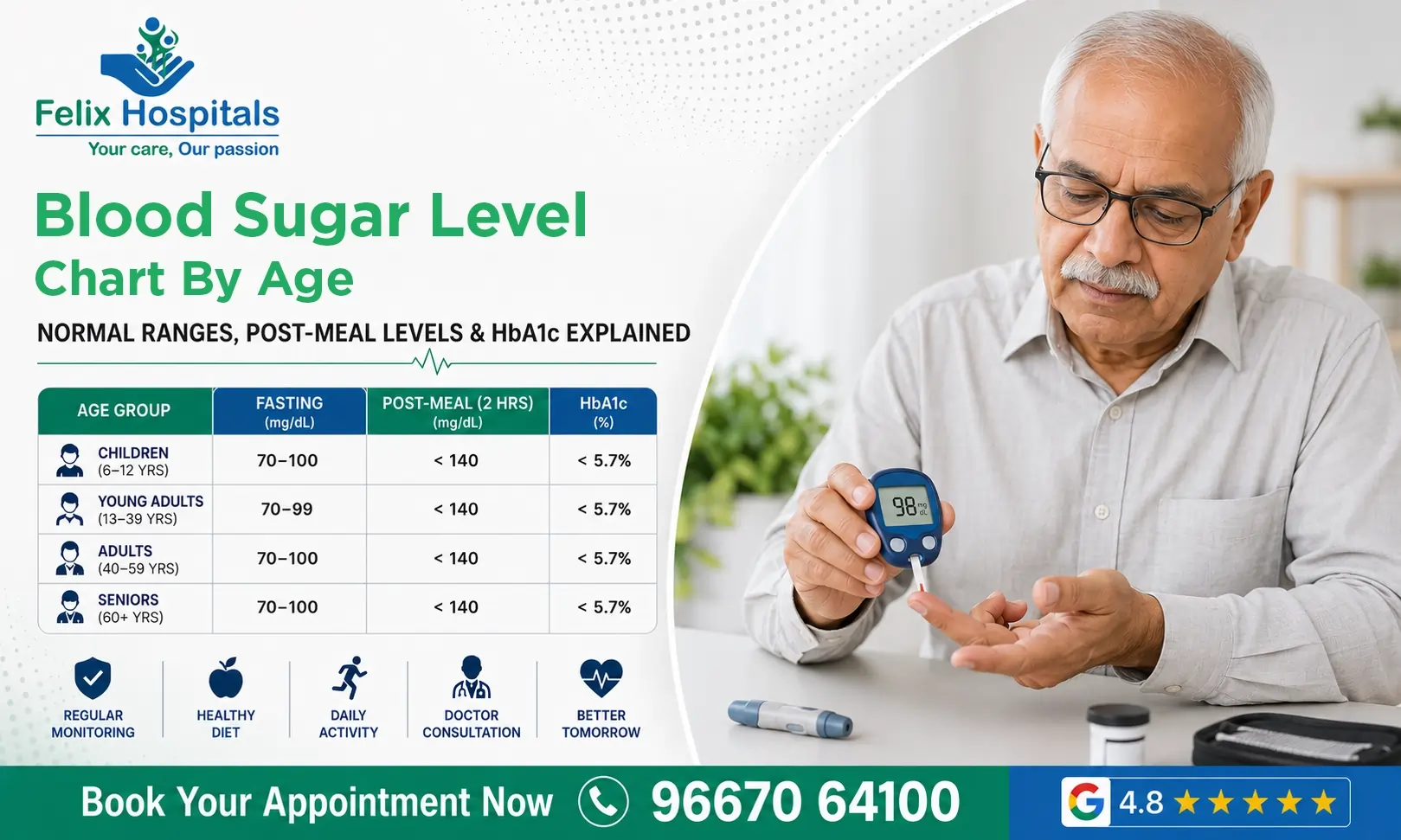
You checked your blood sugar. Now you are staring at a number on your glucometer or lab report — and you have no idea if it is normal, borderline, or dangerous.
That single moment of uncertainty is experienced by over 101 million diabetic Indians and 136 million pre-diabetic Indians every single day. Most search for a chart. Most charts they find are vague, copied from American guidelines without India-specific context, or simply wrong about what is actually normal for your age.
Blood glucose is the concentration of sugar (specifically glucose) dissolved in your bloodstream at any given moment. Glucose is your body's primary energy currency. Every organ — your brain, heart, kidneys, and muscles — runs on it.
When this system works perfectly, blood sugar stays within a narrow, healthy band throughout the day — never dangerously high, never dangerously low.
Here is exactly what happens after every meal:
Step 1: You eat food containing carbohydrates — rice, roti, fruit, milk.
Step 2: Your digestive system breaks those carbohydrates into glucose molecules.
Step 3: Glucose enters the bloodstream through the small intestine wall.
Step 4: Your blood glucose level rises.
Step 5: The beta cells in your pancreas detect the rise and release insulin into the blood.
Step 6: Insulin acts like a molecular key. It binds to cell receptors, unlocking them so glucose can enter and be burned for energy or stored as glycogen.
Step 7: Blood glucose falls back toward the fasting baseline within 2 hours.
No single blood sugar number is normal for every age. Physiological changes across the lifespan — declining insulin sensitivity, loss of muscle mass, hormonal transitions, and changing kidney function — progressively shift what is considered acceptable.
Age Group | Fasting (mg/dL) | Post-Meal 2hr (mg/dL) | HbA1c Target |
Infants (0 to 2 yrs) | 80 to 120 | Not routinely measured | Below 8.5% |
Children (3 to 5 yrs) | 80 to 110 | 110 to 200 | Below 8.5% |
Children (6 to 12 yrs) | 80 to 100 | 100 to 140 | Below 8.0% |
Teenagers (13 to 19) | 70 to 100 | 90 to 140 | Below 7.5% |
Young Adults (20 to 39) | 70 to 99 | Less than 140 | Below 5.7% |
Middle-Age (40 to 59) | 70 to 99 | Less than 140 | Below 5.7% |
Senior (60 to 70 yrs) | 90 to 130 | Less than 180 | Below 7.5% |
Elderly (Above 70 yrs) | 100 to 140 | Less than 200 | Below 8.0% |
Most people assume tighter control is always better. For patients above 70 years, this assumption is clinically dangerous. In elderly patients, hypoglycemia (dangerously low blood sugar) carries a disproportionately high risk of falls with hip fractures, cardiac arrhythmias, strokes, severe confusion, and loss of hypoglycemia awareness. ADA, ICMR, and the International Society for Gerontology all recommend slightly higher glucose targets for patients above 65 to 70 years to maintain a protective buffer against hypoglycemia. Aggressive glucose lowering in an 80-year-old is not better medicine — it is reckless medicine.
Children, particularly those with Type 1 diabetes, require individualized targets because their brains are still developing, growth hormones during puberty significantly increase insulin resistance, and hypoglycemia in children causes cognitive impairment affecting learning and development.
The standard reference ranges apply to all non-pregnant women outside specific hormonal phases. However, women experience three distinct life periods where blood sugar interpretation and targets change significantly.
During pregnancy, the placenta produces hormones that naturally induce insulin resistance. In some women, this resistance becomes excessive, resulting in gestational diabetes mellitus (GDM). GDM affects approximately 20 to 25% of pregnant women in urban India — one of the highest rates globally.
Screening: All pregnant Indian women should undergo GDM screening between weeks 24 and 28 using the 75g Oral Glucose Tolerance Test (OGTT).
Test Point | Normal in Pregnancy | GDM Diagnosis Threshold |
Fasting | Less than 92 mg/dL | 92 mg/dL or above |
1-Hour Post 75g Glucose | Less than 180 mg/dL | 180 mg/dL or above |
2-Hour Post 75g Glucose | Less than 153 mg/dL | 153 mg/dL or above |
Even one value at or above these thresholds is sufficient for GDM diagnosis.
Management Targets During Pregnancy:
GDM mothers have a 35 to 60% lifetime risk of developing Type 2 diabetes and require postpartum glucose testing at 6 to 12 weeks and annually thereafter.
PCOS affects 20 to 25% of Indian women of reproductive age. Up to 70% have some degree of insulin resistance — even those who are thin or normal weight. Annual fasting blood sugar, HbA1c, and 2-hour OGTT screening is recommended from the time of PCOS diagnosis.
The sharp decline in estrogen during perimenopause (typically ages 45 to 52) directly reduces insulin sensitivity at the cellular level. Many women experience their first pre-diabetic reading during this transition — often attributing symptoms like fatigue and weight gain to menopause rather than metabolic change.
Recommendation: All women above 45 years, and women above 40 years with PCOS, weight gain, or family history of diabetes, should have an annual fasting blood sugar and HbA1c test.
Your blood glucose is not one static number. It changes continuously through the day. Doctors use four distinct test types — each measured under specific conditions — to build a full clinical picture.
The DECODE study confirmed that elevated post-meal glucose is a stronger predictor of cardiovascular death than elevated fasting glucose — yet most people only check fasting.
Test Type | Normal (Non-Diabetic) | Pre-Diabetes Range | Diabetes (Confirmed) |
Fasting (FBS) | 70 to 99 mg/dL | 100 to 125 mg/dL | 126 mg/dL or above |
Post-Meal 2hr (PPBS) | Less than 140 mg/dL | 140 to 199 mg/dL | 200 mg/dL or above |
Random (RBS) | Less than 140 mg/dL | 140 to 199 mg/dL | 200+ mg/dL + symptoms |
HbA1c | Below 5.7% | 5.7% to 6.4% | 6.5% or above |
Diagnosis Rule: A single abnormal result does not confirm diabetes. Two abnormal readings on separate days, or one confirmed HbA1c of 6.5% or above, are required — except in the presence of unambiguous symptoms with a random reading above 200 mg/dL.
The reference blood sugar ranges for men are identical to the standard charts. However, the specific risk pattern of Indian men creates a need for earlier and more aggressive screening.
The Thin-Fat Indian Paradox:
Research by Dr. C.S. Yajnik and the Pune Maternal Nutrition Study established that Indians develop insulin resistance and metabolic disease at significantly lower body weights than Western populations.
An Indian man with a BMI of 23 kg/m² — technically 'normal weight' — may already have the same metabolic risk as a Caucasian man with a BMI of 27 to 28 kg/m². Indian bodies carry a disproportionately higher percentage of body fat relative to muscle at any given BMI, resulting in higher visceral fat, earlier insulin resistance, and earlier onset of Type 2 diabetes — often by 10 to 15 years compared to Western populations.
Central Obesity:
A waist circumference above 90 cm in Indian men is the single strongest predictor of insulin resistance — stronger than total body weight or BMI alone.
Sedentary Professional Life:
Urban IT professionals, bankers, and managers in Delhi NCR frequently sit for 9 to 11 hours daily. Prolonged sitting — independent of exercise habits — impairs insulin-mediated glucose uptake.
High Refined Carbohydrate Diet:
The typical North Indian male diet is heavily rice, wheat, maida, and potato dependent — all high glycaemic index foods that progressively exhaust pancreatic capacity over years.
Delayed Medical Help-Seeking:
Multiple Indian studies confirm men seek medical attention an average of 2 to 4 years later than women for identical symptoms. Pre-diabetes frequently progresses to confirmed Type 2 diabetes before the first clinical consultation.
ICMR BMI thresholds for Indians:
Screening Recommendations for Indian Men:
India has approximately 136 million pre-diabetic individuals. The majority have no idea. Pre-diabetes is not a softer version of diabetes. It is active metabolic damage. Cardiovascular risk begins rising at glucose levels well within the pre-diabetic range, years before the formal diabetes threshold is crossed.
Test Type | Pre-Diabetes Glucose Range | Clinical Term |
Fasting (FBS) | 100 to 125 mg/dL | Impaired Fasting Glucose (IFG) |
Post-Meal (PPBS) | 140 to 199 mg/dL | Impaired Glucose Tolerance (IGT) |
HbA1c | 5.7% to 6.4% | Pre-Diabetes |
Yes. Definitively. The Diabetes Prevention Program (DPP), the largest lifestyle intervention trial ever conducted, followed 3,234 pre-diabetic adults for 2.8 years:
Step 1: Do not ignore it. It will not normalize on its own.
Step 2: Get a confirmatory HbA1c test to understand your 3-month average.
Step 3: Consult a diabetologist for a structured reversal plan.
Step 4: Get a dietary assessment. Most pre-diabetic Indians consume 300 to 400g of refined carbohydrate per day. Reducing to 100 to 150g of complex carbohydrate is the single most impactful dietary intervention.
Step 5: Begin 30 minutes of brisk walking 5 days per week. Even this modest amount produces measurable improvements in insulin sensitivity within 2 weeks.
Step 6: Retest in 3 months.
Felix Hospital Diabetes Reversal Program — Noida
If your reading falls between 100 and 125 mg/dL (fasting) or 5.7% to 6.4% (HbA1c), you have a distinct clinical window to reverse this before it becomes permanent. Our specialized Diabetology team provides a structured, evidence-based pre-diabetes reversal program incorporating medical supervision, dietary counselling, tailored exercise planning, and quarterly HbA1c monitoring.
Appointment Link: felixhospital.com/book-appointment
24/7 Helpline: +91 96670 64100
Facility Address: Felix Hospital, Sector 137, Noida Expressway, Uttar Pradesh
Availability: Walk-in available 7 days a week. Same-day lab results reviewed by DM Diabetologist.
High blood sugar gets most of the attention. Low blood sugar (hypoglycemia) is equally dangerous and kills faster.
Classification and Emergency Response:
| Seveity Level | Blood Sugar Threshold | Typical Symptoms | Immediate Action Required |
| Level 1 (Alert) | 54 to 70 mg/dL | Shakiness, sweating, hunger, rapid heartbeat | 15g fast carbohydrate (glucose tablets / 150ml fruit juice). Recheck in 15 minutes. |
| Level 2 (Significant) | Below 54 mg/dL | Confusion, slurred speech, severe weakness, visual disturbances | Immediate glucose intake. Call doctor if no improvement in 10-15 minutes. |
| Level 3 (Severe) | Below 40 mg/dL or unconscious | Seizure, loss of consciousness, unresponsiveness | MEDICAL EMERGENCY. Call ambulance immediately. IV dextrose or glucagon required. Do not give anything orally to an unconscious person. |
The 15-15 Rule for Mild Hypoglycemia:
Consume 15 grams of fast-acting carbohydrate. Wait 15 minutes. Recheck blood sugar. If still below 70 mg/dL, repeat. Once blood sugar normalises, eat a small snack containing protein and complex carbohydrate to prevent recurrence.
15g fast carbohydrate examples for Indian patients:
HbA1c (%) | Average Glucose (mg/dL) | Clinical Status & Interpretation |
4.0% | 68 mg/dL | Below normal — investigate for hypoglycemia disorder |
5.0% | 97 mg/dL | Optimal non-diabetic level |
5.7% | 117 mg/dL | Upper limit of normal (pre-diabetes threshold) |
6.0% | 126 mg/dL | Pre-diabetes range |
6.5% | 140 mg/dL | Diabetes threshold for diagnosis |
7.0% | 154 mg/dL | General treatment target for most diabetic adults |
7.5% | 169 mg/dL | Slightly above target — review treatment protocol |
8.0% | 183 mg/dL | Poorly controlled — review medication, adherence, and diet |
8.5% | 197 mg/dL | High risk of microvascular complications (kidney/nerves) |
9.0% | 212 mg/dL | Very poorly controlled metabolism |
10.0% | 240 mg/dL | High complication risk — urgent medical intervention required |
11.0% | 269 mg/dL | Dangerous metabolic state — likely high symptom burden |
12.0% | 298 mg/dL | Critical emergency — hospitalization may be warranted |
Practical Example: If your HbA1c is 8.2%, your blood sugar has been averaging approximately 188 mg/dL over the past three months — nearly 90 mg/dL above the normal average of 97 mg/dL. That gap represents continuous, silent damage to blood vessels, nerves, and kidneys.
Once diagnosed, management targets differ from diagnostic thresholds. These are the ADA 2026 and ICMR targets for established diabetic patients.
Measurement Point | Type 1 Diabetes Targets | Type 2 Diabetes Targets | Elderly Patient Targets (65+) |
Fasting / Pre-Meal | 80 to 130 mg/dL | 80 to 130 mg/dL | 90 to 150 mg/dL |
Post-Meal (2 hours) | Less than 180 mg/dL | Less than 180 mg/dL | Less than 200 mg/dL |
Bedtime | 90 to 150 mg/dL | 90 to 150 mg/dL | 100 to 180 mg/dL |
HbA1c Target | Below 7.0% | Below 7.0% | Below 8.0% |
These are population-level defaults. Your diabetologist will adjust your personal targets based on how long you have had diabetes, presence of complications, cardiovascular history, and other medications.
Never adjust your diabetes medication based on a chart alone. The chart tells you where you are. Only your doctor can tell you what to do about it.
A non-diabetic person typically peaks within 45 to 60 minutes and returns to fasting baseline by the 2 to 3-hour mark. This hour-by-hour timeline shows the difference in metabolic response:
Time After Meal | Normal Non-Diabetic Curve | Target for Confirmed Diabetic |
30 minutes | 110 to 150 mg/dL | Not routinely measured |
45 to 60 minutes | Peak: 130 to 160 mg/dL | Peak: Below 200 mg/dL |
1 hour | Below 140 mg/dL | Below 180 mg/dL |
2 hours | Below 120 mg/dL | Below 180 mg/dL |
3 hours | Back to fasting baseline | Below 140 mg/dL |
Key insight: A person with impaired insulin response peaks later, reaches a higher peak, and takes much longer to return — causing extended glucose exposure to blood vessel walls, eyes, kidneys, and nerves. This is the mechanism by which post-meal hyperglycemia causes damage even when HbA1c appears reasonably controlled.
Understanding the signs of both extremes is vital. If blood sugar rises too high or falls too low, the physical alarm responses differ significantly.
Critical warning for Indian patients observing religious fasts: Patients on insulin, sulphonylureas (glibenclamide, glimepiride, gliclazide), or high-dose metformin who observe prolonged fasts during Navratri, Ramadan, or Ekadashi are at significant hypoglycemia risk. Always consult your diabetologist before any religious fast to adjust medications.
Many non-food variables cause short-term fluctuations in blood glucose readings. Understanding these variables prevents panic and allows for accurate data recording.
The OGTT is the definitive diagnostic test for glucose metabolism disorders, including gestational diabetes and cases where fasting glucose is borderline.
Reading Point | Normal Condition | Pre-Diabetes State | Diabetes Established |
Fasting | Less than 100 mg/dL | 100 to 125 mg/dL | 126 mg/dL or above |
1-Hour Post-Drink | Less than 180 mg/dL | (guideline varies) | (not used for diagnosis) |
2-Hour Post-Drink | Less than 140 mg/dL | 140 to 199 mg/dL | 200 mg/dL or above |
| High-Risk Group Designation | Scientific/Clinical Justification | Recommended Clinical Action |
First-degree relative with diabetes | 40% genetic heritability in immediate family | Screen annually starting from age 30 |
Indian / South Asian above 40 years | Thin-fat phenotype; early metabolic onset | Annual FBS + HbA1c screen |
BMI above 23 with central obesity | Visceral fat drives insulin resistance factors | Screen immediately regardless of age |
Women with history of GDM | 35% to 60% subsequent life conversion risk | Annual post-delivery evaluation |
Women with PCOS | 70% have underlying insulin resistance | Screen from the time of initial diagnosis |
Postmenopausal women | Shedding of estrogen reduces cellular sensitivity | Annual screening from age 45 |
Urban office workers — sedentary | 9+ hours daily of static desk sitting | Annual screening from age 35 |
Individuals with hypertension | Shared pathways of vascular and insulin resistance | Screen immediately |
Individuals with dyslipidemia | Core metabolic syndrome feedback loop | Screen immediately |
Patients on long-term steroids | Steroid-induced hepatic glucose output | Screen regularly while on steroids |
History of heart attack or stroke | Diabetes accelerates cardiovascular disease (CVD) | Screen immediately and manage aggressively |
Screening Frequency Guidelines:
• High-risk adults: Annual fasting blood sugar and HbA1c
• Average-risk adults above 35 years: Every 1 to 2 years
• Adults above 45 years regardless of risk: Annual metabolic checking
High-Risk Group Designation | Scientific/Clinical Justification | Recommended Clinical Action |
First-degree relative with diabetes | 40% genetic heritability in immediate family | Screen annually starting from age 30 |
Indian / South Asian above 40 years | Thin-fat phenotype; early metabolic onset | Annual FBS + HbA1c screen |
BMI above 23 with central obesity | Visceral fat drives insulin resistance factors | Screen immediately regardless of age |
Women with history of GDM | 35% to 60% subsequent life conversion risk | Annual post-delivery evaluation |
Women with PCOS | 70% have underlying insulin resistance | Screen from the time of initial diagnosis |
Postmenopausal women | Shedding of estrogen reduces cellular sensitivity | Annual screening from age 45 |
Urban office workers — sedentary | 9+ hours daily of static desk sitting | Annual screening from age 35 |
Individuals with hypertension | Shared pathways of vascular and insulin resistance | Screen immediately |
Individuals with dyslipidemia | Core metabolic syndrome feedback loop | Screen immediately |
Patients on long-term steroids | Steroid-induced hepatic glucose output | Screen regularly while on steroids |
History of heart attack or stroke | Diabetes accelerates cardiovascular disease (CVD) | Screen immediately and manage aggressively |
Screening Frequency Guidelines:
The Glycaemic Index (GI) measures how quickly a food raises blood sugar on a scale of 0 to 100. Foods below 55 GI = slow glucose release. Foods above 70 GI = rapid glucose release.
Common Indian Foods Glycaemic Index (GI) Reference:
Food Source / Preparation | Glycaemic Index (GI) | Impact on Blood Sugar Levels |
White rice (plain boiled) | 72 to 83 | High — major contributor to post-meal spikes |
Basmati rice (cooked) | 50 to 58 | Medium-Low — better choice than white rice |
White bread / Maida roti | 71 to 85 | High — rapid absorption and pancreatic exhaust |
Whole wheat roti | 54 to 62 | Medium — solid standard choice with fiber |
Bajra (pearl millet) roti | 41 to 55 | Low-Medium — excellent clinical choice |
Jowar (sorghum) roti | 49 to 62 | Medium-Low — good alternative grain choice |
Potato (boiled) | 78 to 82 | High — spike activator |
Sweet potato (boiled) | 44 to 61 | Medium-Low — much safer than normal potato |
Rajma (kidney beans) | 29 to 34 | Low — excellent for blood sugar & lipid control |
Chana (chickpeas) | 28 to 36 | Low — one of the best choices for protein and low GI |
Masoor dal (red lentil) | 21 to 30 | Low — optimal staple source for daily meals |
Idli (steamed) | 80 to 86 | High — fermented but rice-heavy rapid digest |
Dosa (plain) | 77 to 82 | High — similar spike risk as standard white rice |
Oats (rolled, cooked) | 42 to 55 | Low-Medium — good stable breakfast option |
Apple | 36 to 40 | Low — excellent snack fruit with cellular protection |
Banana (ripe) | 51 to 55 | Medium — consume in moderation (not fully overripe) |
Mango (ripe, 1 medium) | 51 to 60 | Medium — portion control is absolutely essential |
Full fat milk | 27 to 34 | Low — protein/fat buffers natural lactose sugars |
Curd / Dahi | 14 to 23 | Very low — excellent supportive dietary index |
Sugar (white) | 65 to 70 | Medium-High — rapid simple energy disrupter |
The most effective single dietary intervention for blood sugar control is changing the sequence of your meal, not eliminating food groups.
Eat in this exact order:
1. Non-starchy vegetables first (palak, gobi, lauki, bhindi, salad) — fiber slows gastric emptying
2. Protein second (dal, paneer, egg, lean meat, curd) — further delays glucose absorption and stimulates satiety
3. Carbohydrates last (rice, roti, bread)
Studies show this eating sequence reduces post-meal glucose spikes by 30 to 40% compared to eating carbohydrates first — without any change in total caloric intake.
Aerobic Exercise:
Brisk walking, cycling, swimming, and dancing activate muscle glucose transporters (GLUT4) that pull glucose from the blood directly into muscle cells without requiring insulin. A single 30-minute brisk walk lowers blood sugar by 20 to 50 mg/dL. The effect lasts up to 24 hours.
Minimum recommendation: 150 minutes of moderate aerobic activity per week. This alone is sufficient to reduce HbA1c by 0.5 to 0.7% in Type 2 diabetics — equivalent to a low-dose oral medication.
Resistance Training:
Building skeletal muscle mass increases the body's long-term glucose disposal capacity. Resistance training twice weekly reduces HbA1c by an additional 0.3 to 0.5% beyond aerobic exercise alone.
The Post-Meal Walk:
A 15-minute walk within 30 minutes of eating is one of the highest-yield single interventions for post-meal blood sugar control. A study published in Diabetes Care showed that three 10-minute post-meal walks were more effective at lowering 24-hour blood sugar than one continuous 30-minute morning walk.
For Indian patients, this means walking 10 to 15 minutes after lunch and dinner — the two largest carbohydrate-heavy meals of the day.
Dr. Ravi Sharma is a senior physician with 42+ years of experience, known for compassionate and comprehensive patient care in Noida.
Stay updated with trusted hospitals, specialist care, and ESIC-approved medical facilities across Noida.
Discover the updated list of Ayushman Bharat (PMJAY) hospitals in Dadri for 2026.
Looking for an Ayushman Bharat hospital in Delhi NCR? Discover how Felix Hospital provides quality healthcare services under the Ayushman Bharat Yojana in 2026.
Searching for Ayushman Card hospitals in Ghaziabad? Felix Hospital offers advanced medical care and cashless treatment facilities under the Ayushman Bharat Yojana in 2026.
If you're a Delhi Government employee or pensioner living in Dadri, your DGEHS card entitles you to cashless medical care at empanelled hospitals across the NCR region. The challenge most beneficiaries run into isn't the scheme itself , it's finding a DGEHS empanelled hospital that actually has the specialist depth to handle what your family needs, without the runaround at the billing counter.
The official DGEHS list for the NCR includes government dispensaries and a handful of private setups. But for Dadri residents who need tertiary care , heart surgery, robotic joint replacement, a high-risk delivery , most of those options mean driving all the way into Delhi. That's where Felix Hospital in Greater Noida becomes the practical choice. Empanelled under DGEHS and reachable in 20 to 30 minutes from most parts of Dadri, it's the closest fully equipped private facility for families who've settled in the Gautam Buddha Nagar belt and don't want to cross the city for every serious medical need.
All procedures within DGEHS approved rates are cashless for entitled beneficiaries and their dependants.
Specialty | Key Procedures Covered |
Cardiology and Cardiac Surgery | Angiography, angioplasty, bypass surgery, valve replacement, pacemaker, heart failure management |
Orthopaedics and Joint Replacement | Knee replacement, hip replacement, spine surgery, fracture fixation, bone infection, revision joint surgery |
Neurology and Neurosurgery | Stroke management, brain surgery, spinal conditions, epilepsy treatment |
Oncology | Cancer diagnosis, chemotherapy, radiation therapy, surgical oncology |
Gynaecology and Obstetrics | Normal delivery, C-section, hysterectomy, fibroid surgery, Level III NICU available |
Urology | Laser kidney stone treatment, prostate surgery, urinary tract procedures, dialysis |
General and Laparoscopic Surgery | Gallbladder removal, hernia repair, appendectomy, bariatric surgery |
Paediatrics | Paediatric surgical and medical conditions |
ENT and Ophthalmology | Cataract, ear surgery, tonsillectomy, septoplasty |
Pulmonology | Respiratory conditions, COPD, bronchoscopy, sleep apnoea |
Nephrology and Dialysis | Chronic kidney disease, haemodialysis, 24/7 dialysis unit |
Gastroenterology | Endoscopy, colonoscopy, liver conditions |
Physical Medicine and Rehabilitation | Physiotherapy, occupational therapy, post-surgical rehabilitation |
Before you travel, call +91 9667064100 to confirm your specific procedure is covered under DGEHS rates.
The Delhi Government Employees Health Scheme is a health protection programme run by the Government of National Capital Territory of Delhi. It covers cashless medical treatment for serving and retired Delhi Government employees and their dependent family members at empanelled hospitals across Delhi and the NCR.
For employees and pensioners who've settled in Dadri — one of the faster-growing residential pockets in the Greater Noida belt — travelling back into Delhi for every specialist visit isn't realistic. DGEHS empanelled hospitals like Felix Hospital in Greater Noida exist precisely for this reason. Full cashless coverage, without the commute.
Serving Delhi Government employees across all departments and grades are covered. Retired employees drawing pension from the Delhi Government treasury are entitled. So are dependent family members — spouse, unmarried children up to 25 who aren't independently employed, and dependent parents whose income falls below the prescribed threshold.
A dependent child with a certified disability stays covered under the DGEHS card regardless of age, as long as the disability is documented and the child remains financially dependent on the cardholder. Bring the disability certificate issued by a competent authority to the Felix Hospital DGEHS helpdesk at the time of admission.
The DGEHS card is what identifies you as an entitled beneficiary and triggers cashless treatment. At Felix Hospital, you present it at the dedicated helpdesk first. The team verifies your card against the DGEHS system, confirms entitlement, and starts the admission process.
For planned procedures, pre-authorisation is submitted by Felix Hospital on your behalf. For emergencies, treatment begins immediately and authorisation is handled retrospectively. You don't need to visit any DGEHS office or follow up with any government department separately — the hospital's desk handles it.
Cosmetic or aesthetic procedures that aren't medically necessary aren't covered. Experimental treatments or procedures not approved in standard clinical practice are excluded. Dental work beyond basic extractions generally falls outside the scheme unless it results from an accident. Spectacles, hearing aids, and assistive devices are covered only within specified limits. And procedures performed at non-empanelled hospitals don't qualify for cashless treatment — reimbursement claims in these cases are frequently partial or rejected.
If you're uncertain about a specific procedure, call the Felix Hospital DGEHS helpdesk before you travel.
Room entitlement is determined by the pay level or grade of the serving employee, or the equivalent pension drawn by the retired employee.
Beneficiary Category | Room Entitlement |
Grade A Officers, senior scale and above | Private Room |
Grade B Officers | Semi-Private Room |
Grade C and below | General Ward |
Pensioners | As per last pay drawn equivalent |
Dependants | As per the cardholder's entitlement |
If you choose a higher room category than your entitlement, you pay only the difference in room rent. All clinical charges — surgery, medicines during admission, investigations — remain at DGEHS approved rates regardless of which room you're in.
Technically, you have two options under DGEHS — cashless at an empanelled hospital or paying upfront and applying for reimbursement later. In practice, the difference is enormous.
Factor | Reimbursement Route | Cashless at Felix Hospital |
Upfront payment | Required, often substantial | Zero |
Paperwork burden | Bills, forms, submissions, follow-ups | Handled entirely by Felix DGEHS desk |
Waiting period | Weeks to months | Settled directly with DGEHS |
Rate risk | Excess above DGEHS rate not reimbursed | DGEHS rate charged directly |
Stress during hospitalisation | High | Eliminated |
When a family member is unwell, chasing a reimbursement claim is the last thing anyone should be dealing with. Choosing cashless at Felix Hospital removes that entirely.
The cashless claim process at Felix Hospital is handled entirely by the hospital's DGEHS administrative desk. Three things cause most rejections — and all three are avoidable.
First: missing or incomplete documents. An expired DGEHS card, a missing dependent registration, or an Aadhaar mismatch will stall a claim instantly. Carrying the full document checklist eliminates this. Second: treatment at a non-empanelled hospital followed by a reimbursement application — these claims are routinely rejected or only partially settled. Third: procedures falling outside DGEHS approved packages being initiated without prior clarity on coverage.
At Felix Hospital, the DGEHS helpdesk checks all of this before admission proceeds, not after discharge.
For planned treatment: Planned treatment at a referral hospital like Felix Hospital requires a referral from the Medical Officer at your designated DGEHS dispensary or the Chief Medical Officer of your department. The referral specifies the department and nature of care required.
Bring the referral letter, your DGEHS card, and your Aadhaar to the Felix Hospital DGEHS helpdesk. From there, the hospital manages registration, pre-authorisation, and admission. You don't follow up with any DGEHS office separately.
For emergencies: No referral needed. Walk straight into the Felix Hospital emergency department. DGEHS rules permit direct emergency admission at any empanelled hospital. The clinical team treats first. Documentation and retrospective authorisation are handled after stabilisation.
Mandatory — verification cannot proceed without these:
Valid DGEHS card (physical or digital copy)
Aadhaar card of the patient, original plus one photocopy
Referral letter from DGEHS dispensary or departmental CMO (for planned treatment)
Proof of dependency registration on the DGEHS card (for dependent family members)
Previous medical records, prescriptions, or discharge summaries for ongoing conditions
Disability certificate for dependants covered under the disability provision
Department identity card of the serving or retired employee as secondary identification
For emergencies, come first. Documents can follow once the patient is stable.
Heart attack. Stroke. Major trauma. Respiratory failure.
Don't wait. Don't look for paperwork. Just get here.
DGEHS rules explicitly permit direct emergency admission at any empanelled hospital without a prior referral.
Felix Hospital emergency team starts treatment immediately. The DGEHS desk handles documentation and claim submission after the patient is stabilised. When you arrive, tell the emergency team you're a DGEHS beneficiary. That's all you need to do.
For Delhi Government employees and pensioners in Dadri, Felix Hospital solves the most practical problem — proximity without compromise.
We know the Dadri railway crossing traffic can be a nightmare during peak hours. That's why many of our DGEHS patients from the main town prefer the Surajpur road route — it's usually a smoother 20-minute shot to the facility. From Boraki or the Dankaur side, the NH-91 connector keeps travel time manageable even in the evenings.
The hospital itself is a tertiary care centre with a 24/7 digital cath lab for cardiac emergencies, robotic and computer-assisted surgery for joint replacement, a Level III NICU for high-risk deliveries, zero-cut laser technology for kidney stone treatment, and laminar airflow operation theatres. NABH accreditation means standards are externally audited, not self-declared.
DGEHS beneficiaries at Felix Hospital receive the same doctors, the same operation theatres, and the same post-operative care as every other patient. No separate ward. No lower-priority queue. The billing arrangement doesn't change the treatment.
Area | Route | Approx. Time from Felix |
Dadri town centre | Direct via Greater Noida road | 20 to 25 mins |
Dadri-Surajpur corridor | Surajpur road to Felix | 15 to 20 mins |
Boraki and surrounding villages | Via Greater Noida sectors | 20 to 30 mins |
Dankaur tehsil | Via NH-91 connector | 25 to 35 mins |
Greater Noida Central, Alpha, Beta | Nearest to Felix | 10 to 15 mins |
Noida Extension, Gaur City | Via Gaur City stretch | 20 to 25 mins |
For emergencies from Dadri, call the Felix Hospital ambulance immediately. It operates 24 hours and dispatches via the fastest available route.
Delhi Government employees and pensioners living in Dadri don't need to travel back to Delhi for quality specialist care. Felix Hospital is 20 to 30 minutes away, fully empanelled under DGEHS, equipped across all major specialties, and committed to cashless treatment without the administrative runaround.
Know this before you need it.
Felix Hospital, Greater Noida. DGEHS Empanelled, serving Dadri, Dankaur, Surajpur, and the broader Gautam Buddha Nagar district.
Dr. Ravi Sharma is a senior physician with 42+ years of experience, known for compassionate and comprehensive patient care in Noida.
Stay updated with trusted hospitals, specialist care, and ESIC-approved medical facilities across Noida.
Discover the updated list of Ayushman Bharat (PMJAY) hospitals in Dadri for 2026.
Looking for an Ayushman Bharat hospital in Delhi NCR? Discover how Felix Hospital provides quality healthcare services under the Ayushman Bharat Yojana in 2026.
Searching for Ayushman Card hospitals in Ghaziabad? Felix Hospital offers advanced medical care and cashless treatment facilities under the Ayushman Bharat Yojana in 2026.
If you’re a Delhi Government employee or pensioner living in Faridabad, you know the drill. You’ve settled into a nice life in Sector 14, 21C, or Greater Faridabad, but whenever a health issue pops up, the immediate thought is: "Do I really have to battle the Mathura Road traffic or the Badarpur border to get to a hospital in Delhi?"
Faridabad is home to a significant population of retired Delhi Government employees who have settled in residential areas like Sector 14, Sector 21C, NIT Faridabad, Ballabhgarh, and Greater Faridabad. For these families, travelling back into Delhi for every specialist consultation or planned procedure is neither practical nor necessary.
Felix Hospital in Greater Noida is empanelled under DGEHS. From most parts of Faridabad, Felix Hospital is reachable in 35 to 50 minutes via the Yamuna Expressway corridor — closer than many Delhi-based DGEHS hospitals when city traffic is factored in. Covered treatments are cashless. The hospital handles pre-authorisation and claims settlement directly.
We provide 100% cashless treatment across all approved CGHS/DGEHS rates. From heart surgery to joint replacements, your out-of-pocket expense for covered procedures is zero.
Cardiology-Angiography, Stenting (Angioplasty), Bypass, Pacemakers
Orthopaedics-Robotic Knee & Hip Replacement, Spine Surgery, Trauma
Neurology-Stroke Management, Brain Surgery, Epilepsy
Oncology-Cancer Diagnosis, Chemotherapy, Targeted Radiation
Urology-Laser Kidney Stone removal (Zero-Cut), Prostate Surgery
Gynaecology-Normal/C-Section, Fibroid Surgery, Level III NICU
The Delhi Government Employees Health Scheme is a health protection programme run by the Government of National Capital Territory of Delhi. It provides cashless medical treatment to serving and retired Delhi Government employees and their dependent family members at empanelled hospitals across Delhi and the NCR region.
For Delhi Government employees and pensioners who have settled in Faridabad — one of the most popular residential destinations for retired government servants from south and central Delhi — DGEHS empanelled hospitals in the NCR like Felix Hospital provide full cashless coverage without requiring a trip back into Delhi for treatment.
Serving Delhi Government employees across all departments and grades are covered. Retired Delhi Government employees and pensioners drawing pension from the Delhi Government treasury are entitled. Dependent family members including spouse, unmarried children up to 25 years who are not independently employed, and dependent parents whose income falls below the prescribed threshold are all covered under the card of the serving or retired employee.
A dependent child with a certified disability remains covered under the DGEHS card regardless of age, as long as the disability is documented and the child remains financially dependent on the card holder. The disability certificate issued by a competent authority must be presented at the Felix Hospital DGEHS helpdesk at the time of admission.
The DGEHS card identifies you as an entitled beneficiary and triggers cashless treatment at empanelled hospitals. At Felix Hospital, presenting your DGEHS card at the dedicated helpdesk is the first step. The helpdesk verifies your card against the DGEHS system, confirms entitlement, and initiates the admission process.
For planned procedures, pre-authorization is submitted by Felix Hospital on your behalf. For emergencies, treatment begins immediately and authorization is handled retrospectively. In neither case are you required to visit any DGEHS office or follow up with any government department separately.
DGEHS does not cover cosmetic or aesthetic procedures that are not medically necessary. Procedures classified as experimental or not yet approved in standard clinical practice are excluded. Dental treatment beyond basic extractions is generally not covered unless arising from an accident. Spectacles, hearing aids, and assistive devices are covered only within specified limits. Procedures performed at non-empanelled hospitals are not eligible for cashless treatment and face restrictions even on the reimbursement route.
For any doubt about whether a specific procedure is covered before you travel, call the Felix Hospital DGEHS helpdesk directly.
Room entitlement under DGEHS is determined by the pay level or grade of the serving employee or the pension drawn by the retired employee.
Beneficiary Category | Room Entitlement |
Grade A Officers, senior scale and above | Private Room |
Grade B Officers | Semi-Private Room |
Grade C and below | General Ward |
Pensioners | As per last pay drawn equivalent |
Dependants | As per the card holder's entitlement |
If a higher room category is chosen beyond entitlement, only the difference in room rent is payable by the beneficiary. All clinical charges including surgery, medicines during admission, and investigations remain at DGEHS approved rates regardless of room choice. Confirm your specific room entitlement at the Felix Hospital DGEHS helpdesk on arrival.
DGEHS beneficiaries technically have two options — cashless treatment at an empanelled hospital or paying out of pocket and applying for reimbursement later. The practical difference is significant.
Factor | Reimbursement Route | Cashless at Felix Hospital |
Upfront payment | Required, often substantial | Zero |
Paperwork burden | Bills, forms, submissions, follow-ups | Handled entirely by Felix DGEHS desk |
Waiting period | Weeks to months | Settled directly with DGEHS |
Rate risk | Excess above DGEHS rate not reimbursed | DGEHS rate charged directly |
Stress during hospitalisation | High | Eliminated |
Choosing cashless at Felix Hospital eliminates the financial exposure and administrative burden that reimbursement claims routinely create for Faridabad families during an already difficult time.
The cashless claim process at Felix Hospital is handled entirely by the hospital's DGEHS administrative desk. The three most common reasons DGEHS claims get rejected are procedural, not clinical ,and all three are avoidable.
The first is missing or incomplete documentation , an expired DGEHS card, a missing dependent registration, or an Aadhaar mismatch. Carrying the full document checklist eliminates this. The second is treatment at a non-empanelled hospital and then applying for reimbursement ,claims are frequently rejected or partially settled in these cases. The third is procedures falling outside DGEHS approved packages being initiated without prior clarity on coverage.
At Felix Hospital, the DGEHS helpdesk checks all of these before admission proceeds, not after discharge.
For planned treatment: DGEHS planned treatment at a referral hospital like Felix Hospital requires a referral from the Medical Officer at your designated DGEHS dispensary or the Chief Medical Officer of your department. The referral specifies the department and nature of care required.
Bring the referral letter, your DGEHS card, and your Aadhaar card to the Felix Hospital DGEHS helpdesk. From this point, the hospital team manages registration, pre-authorisation submission, and admission. You do not follow up with any DGEHS office separately.
For emergencies: No referral is required. Walk directly into the Felix Hospital emergency department. DGEHS rules permit direct emergency admission at any empanelled hospital. The clinical team treats first. The administrative team handles documentation and retrospective authorisation after stabilisation.
Mandatory — without these, verification cannot proceed:
Valid DGEHS card, physical or digital copy
Aadhaar card of the patient, original plus one photocopy
Referral letter from DGEHS dispensary or departmental CMO for planned treatment
For a dependent family member, proof of dependency registration on the DGEHS card
Previous medical records, prescriptions, or discharge summaries for ongoing conditions
Disability certificate for dependents covered under the disability provision
Department identity card of the serving or retired employee as secondary identification
For emergencies, come first. Documents can be submitted after the patient is stabilised.
You need a referral. Start at your DGEHS Dispensary or get a letter from your Departmental CMO. Bring that letter, your DGEHS card, and your Aadhaar to the Felix Hospital helpdesk. We take it from there.
Stop! You do NOT need a referral. If someone is having a heart attack or stroke, bring them straight to the Felix Emergency Wing. DGEHS guidelines permit direct admission in emergencies. We’ll stabilize the patient first and sort out the paperwork later.
For retired government servants, "quality" is non-negotiable. At Felix, we treat DGEHS patients with the exact same priority as private patients.
Escape the Congestion: Why spend 2 hours in a car to reach a crowded Delhi hospital when you can reach a world-class facility in 40 minutes?
Technology First: We aren't just a general hospital. We feature a 24/7 Digital Cath Lab, and Laminar Airflow OTs to keep infection rates at zero.
The "Paperwork Battle": We know the DGEHS system inside out. Our dedicated desk handles the pre-authorisations and documentation so you don't have to follow up with government offices.
Area | Route | Approx. Time from Felix |
Sector 14, NIT Faridabad | NH-19 to Noida connector | 40 to 45 mins |
Ballabhgarh | Yamuna Expressway | 45 to 55 mins |
Greater Faridabad (Sectors 75–89) | Direct via Noida Expressway | 35 to 40 mins |
Faridabad city centre | NH-19 via Mathura Road | 45 to 50 mins |
Sector 21C, Old Faridabad | NH-19 toward Noida | 45 to 50 mins |
Badkhal, Mewat border | NH-248 to Yamuna Expressway | 55 to 65 mins |
For emergencies from Faridabad, call the Felix Hospital ambulance immediately. It operates 24 hours and dispatches via the fastest available route.
Delhi Government employees and pensioners living in Faridabad do not need to travel back to Delhi for quality specialist care. Felix Hospital is 35 to 50 minutes away, fully empanelled under DGEHS, equipped across all major specialties, and committed to cashless treatment without the administrative runaround.
+91 9667064100 | DGEHS Helpdesk, Pre-Authorisation Queries, and 24-hour Emergency Felix Hospital, Greater Noida — DGEHS Empanelled, serving Faridabad, Ballabhgarh, Greater Faridabad, and the broader NCR belt.
Dr. Ravi Sharma is a senior physician with 42+ years of experience, known for compassionate and comprehensive patient care in Noida.
Stay updated with trusted hospitals, specialist care, and ESIC-approved medical facilities across Noida.
Discover the updated list of Ayushman Bharat (PMJAY) hospitals in Dadri for 2026.
Looking for an Ayushman Bharat hospital in Delhi NCR? Discover how Felix Hospital provides quality healthcare services under the Ayushman Bharat Yojana in 2026.
Searching for Ayushman Card hospitals in Ghaziabad? Felix Hospital offers advanced medical care and cashless treatment facilities under the Ayushman Bharat Yojana in 2026.
If you are a Delhi Government employee or pensioner living in Ghaziabad, your DGEHS card entitles you to cashless medical care at empanelled hospitals across the NCR region. The challenge most beneficiaries face is not the scheme itself — it is finding a DGEHS empanelled hospital with the specialist depth to handle what their family actually needs, without the runaround at the billing counter.
Ghaziabad is home to a significant population of retired Delhi Government employees who have settled in residential areas like Indirapuram, Vaishali, Kaushambi, and Crossings Republik. For these families, travelling back into Delhi for every specialist consultation or planned procedure is neither practical nor necessary.
Felix Hospital in Greater Noida is empanelled under DGEHS. From most parts of Ghaziabad, Felix Hospital is reachable in 30 to 45 minutes via NH-9 or the expressway corridor — closer than many Delhi-based DGEHS hospitals when city traffic is factored in. Covered treatments are cashless. The hospital handles pre-authorisation and claims settlement directly.
All procedures within DGEHS approved rates are cashless for entitled beneficiaries and their dependants.
Specialty | Key Procedures Covered |
Cardiology and Cardiac Surgery | Angiography, angioplasty, bypass surgery, valve replacement, pacemaker, heart failure management |
Orthopaedics and Joint Replacement | Knee replacement, hip replacement, spine surgery, fracture fixation, bone infection, revision joint surgery |
Neurology and Neurosurgery | Stroke management, brain surgery, spinal conditions, epilepsy treatment |
Oncology | Cancer diagnosis, chemotherapy, radiation therapy, surgical oncology |
Gynaecology and Obstetrics | Normal delivery, C-section, hysterectomy, fibroid surgery, Level III NICU available |
Urology | Laser kidney stone treatment, prostate surgery, urinary tract procedures, dialysis |
General and Laparoscopic Surgery | Gallbladder removal, hernia repair, appendectomy, bariatric surgery |
Paediatrics | Paediatric surgical and medical conditions |
ENT and Ophthalmology | Cataract, ear surgery, tonsillectomy, septoplasty |
Pulmonology | Respiratory conditions, COPD, bronchoscopy, sleep apnoea |
Nephrology and Dialysis | Chronic kidney disease, haemodialysis, 24/7 dialysis unit |
Gastroenterology | Endoscopy, colonoscopy, liver conditions |
Physical Medicine and Rehabilitation | Physiotherapy, occupational therapy, post-surgical rehabilitation |
Call +91 9667064100 to confirm whether your specific procedure is covered under DGEHS rates before travelling.
The Delhi Government Employees Health Scheme is a health protection programme run by the Government of National Capital Territory of Delhi. It provides cashless medical treatment to serving and retired Delhi Government employees and their dependent family members at empanelled hospitals across Delhi and the NCR region.
For Delhi Government employees and pensioners who have settled in Ghaziabad — one of the most popular residential destinations for retired government servants from east and central Delhi — DGEHS empanelled hospitals in the NCR like Felix Hospital provide full cashless coverage without requiring a trip back into Delhi for treatment.
Serving Delhi Government employees across all departments and grades are covered. Retired Delhi Government employees and pensioners drawing pension from the Delhi Government treasury are entitled. Dependent family members including spouse, unmarried children up to 25 years who are not independently employed, and dependent parents whose income falls below the prescribed threshold are all covered under the card of the serving or retired employee.
A dependent child with a certified disability remains covered under the DGEHS card regardless of age, as long as the disability is documented and the child remains financially dependent on the card holder. The disability certificate issued by a competent authority must be presented at the Felix Hospital DGEHS helpdesk at the time of admission.
The DGEHS card identifies you as an entitled beneficiary and triggers cashless treatment at empanelled hospitals. At Felix Hospital, presenting your DGEHS card at the dedicated helpdesk is the first step. The helpdesk verifies your card against the DGEHS system, confirms entitlement, and initiates the admission process.
For planned procedures, pre-authorisation is submitted by Felix Hospital on your behalf. For emergencies, treatment begins immediately and authorisation is handled retrospectively. In neither case are you required to visit any DGEHS office or follow up with any government department separately.
DGEHS does not cover cosmetic or aesthetic procedures that are not medically necessary. Procedures classified as experimental or not yet approved in standard clinical practice are excluded. Dental treatment beyond basic extractions is generally not covered unless arising from an accident. Spectacles, hearing aids, and assistive devices are covered only within specified limits. Procedures performed at non-empanelled hospitals are not eligible for cashless treatment and face restrictions even on the reimbursement route.
For any doubt about whether a specific procedure is covered before you travel, call the Felix Hospital DGEHS helpdesk directly.
Room entitlement under DGEHS is determined by the pay level or grade of the serving employee or the pension drawn by the retired employee.
Beneficiary Category | Room Entitlement |
Grade A Officers, senior scale and above | Private Room |
Grade B Officers | Semi-Private Room |
Grade C and below | General Ward |
Pensioners | As per last pay drawn equivalent |
Dependants | As per the card holder's entitlement |
If a higher room category is chosen beyond entitlement, only the difference in room rent is payable by the beneficiary. All clinical charges including surgery, medicines during admission, and investigations remain at DGEHS approved rates regardless of room choice. Confirm your specific room entitlement at the Felix Hospital DGEHS helpdesk on arrival.
DGEHS beneficiaries technically have two options — cashless treatment at an empanelled hospital or paying out of pocket and applying for reimbursement later. The practical difference is significant.
Factor | Reimbursement Route | Cashless at Felix Hospital |
Upfront payment | Required, often substantial | Zero |
Paperwork burden | Bills, forms, submissions, follow-ups | Handled entirely by Felix DGEHS desk |
Waiting period | Weeks to months | Settled directly with DGEHS |
Rate risk | Excess above DGEHS rate not reimbursed | DGEHS rate charged directly |
Stress during hospitalisation | High | Eliminated |
Choosing cashless at Felix Hospital eliminates the financial exposure and administrative burden that reimbursement claims routinely create for Ghaziabad families during an already difficult time.
The cashless claim process at Felix Hospital is handled entirely by the hospital's DGEHS administrative desk. The three most common reasons DGEHS claims get rejected are procedural, not clinical — and all three are avoidable.
The first is missing or incomplete documentation — an expired DGEHS card, a missing dependent registration, or an Aadhaar mismatch. Carrying the full document checklist eliminates this. The second is treatment at a non-empanelled hospital and then applying for reimbursement — claims are frequently rejected or partially settled in these cases. The third is procedures falling outside DGEHS approved packages being initiated without prior clarity on coverage.
At Felix Hospital, the DGEHS helpdesk checks all of these before admission proceeds, not after discharge.
For planned treatment: DGEHS planned treatment at a referral hospital like Felix Hospital requires a referral from the Medical Officer at your designated DGEHS dispensary or the Chief Medical Officer of your department. The referral specifies the department and nature of care required.
Bring the referral letter, your DGEHS card, and your Aadhaar card to the Felix Hospital DGEHS helpdesk. From this point, the hospital team manages registration, pre-authorisation submission, and admission. You do not follow up with any DGEHS office separately.
For emergencies: No referral is required. Walk directly into the Felix Hospital emergency department. DGEHS rules permit direct emergency admission at any empanelled hospital. The clinical team treats first. The administrative team handles documentation and retrospective authorisation after stabilisation.
Mandatory, without these verification cannot proceed:
Valid DGEHS card, physical or digital copy
Aadhaar card of the patient, original plus one photocopy
Referral letter from DGEHS dispensary or departmental CMO for planned treatment
For a dependent family member, proof of dependency registration on the DGEHS card
Strongly recommended:
Previous medical records, prescriptions, or discharge summaries for ongoing conditions
Disability certificate for dependants covered under the disability provision
Department identity card of the serving or retired employee as secondary identification
For emergencies, come first. Documents can be submitted after the patient is stabilised.
Life-Threatening Emergencies: No Referral Required
Heart attack. Stroke. Major trauma. Respiratory failure.
No referral letter is needed. Walk straight into the Felix Hospital emergency department.
DGEHS rules explicitly permit direct emergency admission at any empanelled hospital without prior referral. Treatment begins immediately. Retrospective documentation and claim submission are handled by the Felix Hospital DGEHS desk after the patient is stabilised.
Tell the emergency team you are a DGEHS beneficiary when you arrive. That is all.
For Delhi Government employees and pensioners living in Ghaziabad, Felix Hospital solves the most practical problem. There is no need to battle Delhi traffic for specialist care. From Indirapuram and Vaishali in southern Ghaziabad, Felix Hospital is reachable in 30 to 35 minutes via NH-9. From Kaushambi, allow 35 to 40 minutes. From Crossings Republik on the Ghaziabad-Greater Noida border, the drive is under 25 minutes. For retired government servants living in these residential areas, that is closer than most Delhi-based DGEHS hospitals during peak traffic hours.
Felix Hospital is a tertiary care centre with a 24/7 digital cath lab for cardiac emergencies, robotic and computer-assisted surgery for joint replacement, a Level III NICU for high-risk deliveries, zero-cut laser technology for kidney stone treatment, and laminar airflow operation theatres. NABH accreditation means standards are externally audited.
DGEHS beneficiaries at Felix Hospital receive the same doctors, the same operation theatres, and the same post-operative care as every other patient. No separate ward. No lower-priority queue.
Area | Route | Approx. Time from Felix |
Indirapuram, Vaishali | NH-9 toward Greater Noida | 30 to 35 mins |
Kaushambi | NH-9 via Mohan Nagar | 35 to 40 mins |
Crossings Republik | Direct via Noida Extension road | 20 to 25 mins |
Lal Kuan, Mohan Nagar | NH-9 | 30 to 35 mins |
Ghaziabad city centre | Via NH-9 | 40 to 50 mins |
Raj Nagar, Shastri Nagar | Via NH-9 or GT Road connector | 45 to 55 mins |
For emergencies from Ghaziabad, call the Felix Hospital ambulance immediately. It operates 24 hours and dispatches via the fastest available route.
Delhi Government employees and pensioners living in Ghaziabad do not need to travel back to Delhi for quality specialist care. Felix Hospital is 30 to 45 minutes away, fully empanelled under DGEHS, equipped across all major specialties, and committed to cashless treatment without the administrative runaround.
+91 9667064100, DGEHS Helpdesk, Pre-Authorisation Queries, and 24-hour Emergency Felix Hospital, Greater Noida. DGEHS Empanelled, serving Ghaziabad, Indirapuram, Vaishali, Kaushambi, Crossings Republik, and the broader NCR belt.
Dr. Ravi Sharma is a senior physician with 42+ years of experience, known for compassionate and comprehensive patient care in Noida.
Stay updated with trusted hospitals, specialist care, and ESIC-approved medical facilities across Noida.
Discover the updated list of Ayushman Bharat (PMJAY) hospitals in Dadri for 2026.
Looking for an Ayushman Bharat hospital in Delhi NCR? Discover how Felix Hospital provides quality healthcare services under the Ayushman Bharat Yojana in 2026.
Searching for Ayushman Card hospitals in Ghaziabad? Felix Hospital offers advanced medical care and cashless treatment facilities under the Ayushman Bharat Yojana in 2026.
If you are a Delhi Government employee or pensioner, your DGEHS card entitles you to cashless medical care at empanelled hospitals across Delhi and the NCR region. The real challenge is not the scheme itself, it is finding a DGEHS empanelled hospital that has the specialist depth to handle what your family actually needs, without turning a medical situation into a paperwork or deal.
Felix Hospital in Greater Noida is empanelled under DGEHS. For Delhi Government employees and pensioners who want to avoid the congestion and waiting times of large Delhi-based hospitals, Felix Hospital offers the same specialist coverage, the same surgical technology, and the same cashless entitlement accessible from Delhi via the DND Flyway and Noida-Greater Noida Expressway in approximately 45 to 60 minutes from most south and east Delhi locations.
All procedures within DGEHS approved rates are cashless for entitled beneficiaries and their dependents.
Specialty | Key Procedures Covered |
Cardiology and Cardiac Surgery | Angiography, angioplasty, bypass surgery, valve replacement, pacemaker, heart failure management |
Orthopaedics and Joint Replacement | Knee replacement, hip replacement, spine surgery, fracture fixation, bone infection, revision joint surgery |
Neurology and Neurosurgery | Stroke management, brain surgery, spinal conditions, epilepsy treatment |
Oncology | Cancer diagnosis, chemotherapy, radiation therapy, surgical oncology |
Gynaecology and Obstetrics | Normal delivery, C-section, hysterectomy, fibroid surgery, Level III NICU available |
Urology | Laser kidney stone treatment, prostate surgery, urinary tract procedures, dialysis |
General and Laparoscopic Surgery | Gallbladder removal, hernia repair, appendectomy, bariatric surgery |
Paediatrics | Paediatric surgical and medical conditions |
ENT and Ophthalmology | Cataract, ear surgery, tonsillectomy, septoplasty |
Pulmonology | Respiratory conditions, COPD, bronchoscopy, sleep apnoea |
Nephrology and Dialysis | Chronic kidney disease, haemodialysis, 24/7 dialysis unit |
Gastroenterology | Endoscopy, colonoscopy, liver conditions |
Physical Medicine and Rehabilitation | Physiotherapy, occupational therapy, post-surgical rehabilitation |
Call +91 9667064100 to confirm whether your specific procedure is covered under DGEHS rates before your visit.
The Delhi Government Employees Health Scheme is a health protection programme run by the Government of National Capital Territory of Delhi. It provides cashless medical treatment to serving and retired Delhi Government employees and their dependent family members at empanelled hospitals across Delhi and the NCR region.
The scheme was designed so that Delhi Government employees have access to quality private hospital care without paying out of pocket. For beneficiaries who find Delhi's large government hospitals overcrowded and Delhi's private hospitals expensive, DGEHS empanelled private hospitals in the NCR like Felix Hospital provide a practical middle path ,specialist care at zero cost for covered procedures.
Serving Delhi Government employees across all departments and grades are covered. Retired Delhi Government employees and pensioners drawing pension from the Delhi Government treasury are entitled. Dependent family members including spouses, unmarried children up to 25 years who are not independently employed, and dependent parents whose income falls below the prescribed threshold are all covered under the card of the serving or retired employee.
A dependent child with a certified disability remains covered under the DGEHS card regardless of age, as long as the disability is documented and the child remains financially dependent on the card holder. The disability certificate issued by a competent authority must be presented at the Felix Hospital DGEHS helpdesk at the time of admission.
The DGEHS card identifies you as an entitled beneficiary and triggers cashless treatment at empanelled hospitals. At Felix Hospital, presenting your DGEHS card at the dedicated helpdesk is the first step. The helpdesk verifies your card against the DGEHS system, confirms entitlement, and initiates the admission process.
For planned procedures, pre-authorisation is submitted by Felix Hospital on your behalf. For emergencies, treatment begins immediately and authorisation is handled retrospectively. In neither case are you required to visit any DGEHS office or follow up with any government department separately.
DGEHS does not cover cosmetic or aesthetic procedures that are not medically necessary. Procedures classified as experimental or not yet approved in standard clinical practice are excluded. Dental treatment beyond basic extractions is generally not covered unless arising from an accident. Spectacles, hearing aids, and assistive devices are covered only within specified limits. Procedures performed at non-empanelled hospitals are not eligible for cashless treatment and face restrictions even on the reimbursement route.
For any doubt about whether a specific procedure is covered before you travel, call the Felix Hospital DGEHS helpdesk directly.
Room entitlement under DGEHS is determined by the pay level or grade of the serving employee or the pension drawn by the retired employee.
Beneficiary Category | Room Entitlement |
Grade A Officers, senior scale and above | Private Room |
Grade B Officers | Semi-Private Room |
Grade C and below | General Ward |
Pensioners | As per last pay drawn equivalent |
Dependents | As per the card holder's entitlement |
If a higher room category is chosen beyond entitlement, only the difference in room rent is payable by the beneficiary. All clinical charges including surgery, medicines during admission, and investigations remain at DGEHS approved rates regardless of room choice. Confirm your specific room entitlement at the Felix Hospital DGEHS helpdesk on arrival.
DGEHS beneficiaries technically have two options cashless treatment at an empanelled hospital or paying out of pocket and applying for reimbursement later. The practical difference is significant.
Factor | Reimbursement Route | Cashless at Felix Hospital |
Upfront payment | Required, often substantial | Zero |
Paperwork burden | Bills, forms, submissions, follow-ups | Handled entirely by Felix DGEHS desk |
Waiting period | Weeks to months | Settled directly with DGEHS |
Rate risk | Excess above DGEHS rate not reimbursed | DGEHS rate charged directly |
Stress during hospitalization | High | Eliminated |
Choosing cashless at Felix Hospital eliminates the financial exposure and administrative burden that reimbursement claims routinely create for families during an already difficult time.
The cashless claim process at Felix Hospital is handled entirely by the hospital's DGEHS administrative desk. The three most common reasons DGEHS claims get rejected are procedural, not clinical , and all three are avoidable.
The first is missing or incomplete documentation ,an expired DGEHS card, a missing dependent registration, or an Aadhaar mismatch. Carrying the full document checklist eliminates this. The second is treatment at a non-empanelled hospital and then applying for reimbursement ,claims are frequently rejected or partially settled in these cases. The third is procedures falling outside DGEHS approved packages being initiated without prior clarity on coverage.
At Felix Hospital, the DGEHS helpdesk checks all of these before admission proceeds, not after discharge.
For planned treatment: DGEHS planned treatment at a referral hospital like Felix Hospital requires a referral from the Medical Officer at your designated DGEHS dispensary or the Chief Medical Officer of your department. The referral specifies the department and nature of care required.
Bring the referral letter, your DGEHS card, and your Aadhaar card to the Felix Hospital DGEHS helpdesk. From this point, the hospital team manages registration, pre-authorisation submission, and admission. You do not follow up with any DGEHS office separately.
For emergencies: No referral is required. Walk directly into the Felix Hospital emergency department. DGEHS rules permit direct emergency admission at any empanelled hospital. The clinical team treats first. The administrative team handles documentation and retrospective authorisation after stabilisation.
Mandatory, without these verification cannot proceed:
Valid DGEHS card, physical or digital copy
Aadhaar card of the patient, original plus one photocopy
Referral letter from DGEHS dispensary or departmental CMO for planned treatment
For a dependent family member, proof of dependency registration on the DGEHS card
Strongly recommended:
Previous medical records, prescriptions, or discharge summaries for ongoing conditions
Disability certificate for dependants covered under the disability provision
Department identity card of the serving or retired employee as secondary identification
For emergencies, come first. Documents can be submitted after the patient is stabilised.
Heart attack, Stroke, Major trauma, Respiratory failure.
No referral letter is needed. Walk straight into the Felix Hospital emergency department.
DGEHS rules explicitly permit direct emergency admission at any empanelled hospital without prior referral.
Treatment begins immediately. Retrospective documentation and claim submission are handled by the Felix
Hospital DGEHS desk after the patient is stabilised.
For Delhi Government employees and pensioners, Felix Hospital offers something most Delhi-based DGEHS hospitals cannot, speed of access without the city's congestion.
From south Delhi locations like Saket, Kalkaji, and Okhla, Felix Hospital is reachable via the DND Flyway and Noida-Greater Noida Expressway in approximately 45 minutes under normal traffic. From east Delhi areas like Laxmi Nagar and Mayur Vihar, the route via NH-9 runs similarly. For beneficiaries who find that getting an appointment at a large Delhi government hospital means waiting weeks, Felix Hospital's same-day specialist availability is a meaningful difference.
Felix Hospital is a tertiary care centre with a 24/7 digital cath lab for cardiac emergencies, robotic and computer-assisted surgery for joint replacement, a Level III NICU for high-risk deliveries, zero-cut laser technology for kidney stone treatment, and laminar airflow operation theatres. NABH accreditation means standards are externally audited.
DGEHS beneficiaries at Felix Hospital receive the same doctors, the same operation theatres, and the same post-operative care as every other patient. No separate ward. No lower-priority queue.
Area | Route | Approx. Time from Felix |
South Delhi, Saket, Okhla, Kalkaji | DND Flyway to Noida Expressway | 40 to 50 mins |
East Delhi, Laxmi Nagar, Mayur Vihar | NH-9 toward Greater Noida | 40 to 50 mins |
South East Delhi, Jamia Nagar, Shaheen Bagh | DND or Kalindi Kunj route | 35 to 45 mins |
Central Delhi, ITO, Mandi House | DND Flyway | 50 to 60 mins |
North Delhi, Civil Lines, Rohini | NH-9 via Ghaziabad | 60 to 75 mins |
Noida border areas | Direct via expressway | 20 to 30 mins |
For emergencies from Delhi, call the Felix Hospital ambulance immediately. It operates 24 hours and dispatches via the fastest available route.
Delhi Government employees and pensioners have earned their DGEHS entitlement. Felix Hospital makes sure that entitlement is honoured — specialist doctors, advanced surgical technology, a dedicated DGEHS administrative desk, and guaranteed cashless treatment for covered procedures, accessible from Delhi without the waiting times of the city's most congested hospitals.
+91 9667064100, DGEHS Helpdesk, Pre-Authorisation Queries, and 24-hour Emergency Felix Hospital, Greater Noida. DGEHS Empanelled, serving Delhi and Delhi NCR
Dr. Ravi Sharma is a senior physician with 42+ years of experience, known for compassionate and comprehensive patient care in Noida.
Stay updated with trusted hospitals, specialist care, and ESIC-approved medical facilities across Noida.
Discover the updated list of Ayushman Bharat (PMJAY) hospitals in Dadri for 2026.
Looking for an Ayushman Bharat hospital in Delhi NCR? Discover how Felix Hospital provides quality healthcare services under the Ayushman Bharat Yojana in 2026.
Searching for Ayushman Card hospitals in Ghaziabad? Felix Hospital offers advanced medical care and cashless treatment facilities under the Ayushman Bharat Yojana in 2026.

Every summer, thousands of people in Delhi NCR end up in emergency departments for something entirely preventable. Not a virus. Not an injury. Just not drinking enough water in heat that regularly crosses 45 degrees Celsius.
Dehydration sounds mild. The word conjures thirst and a dry mouth, nothing serious. But dehydration exists on a spectrum, and the moderate to severe end of that spectrum causes kidney damage, seizures, and in vulnerable individuals the elderly, young children, people with diabetes it can be fatal. According to the World Health Organization, heat-related illness including dehydration is responsible for hundreds of thousands of deaths globally every year, the majority of which occur in South Asia and sub-Saharan Africa during peak summer months.
Source - https://www.who.int/news-room/fact-sheets/detail/climate-change-heat-and-health
The problem is not that people do not know water is important. The problem is that most people do not recognise dehydration until it has progressed well past the point where a glass of water fixes it.
This guide covers what dehydration actually does to the body, how to identify it at different stages, how to treat it at home when that is appropriate, and when to seek medical help. For assessment and treatment a general physician provides comprehensive evaluation and management of dehydration and heat-related illness.
The human body is approximately 60 percent water. Every physiological process blood pressure regulation, temperature control, kidney filtration, brain function, joint lubrication, digestion depends on maintaining fluid balance within a relatively narrow range.
When fluid loss exceeds fluid intake, that balance shifts. The body compensates up to a point, but once losses reach approximately 1 to 2 percent of body weight, the compensatory mechanisms begin to show strain and symptoms appear. At 5 to 8 percent loss, the situation becomes medically significant. Above 10 percent, it is a serious emergency.
Summer makes this worse for several reasons that compound each other.
High ambient temperatures cause the body to sweat heavily in an attempt to cool down. On a 45-degree day in Noida, an active adult can lose one to two litres of fluid per hour through sweat alone. Most people do not replace fluid at anything close to this rate because they do not feel thirsty enough to drink that much.
Thirst is actually a late indicator of dehydration. By the time a person feels significantly thirsty, they are already mildly to moderately dehydrated. Relying on thirst as the primary signal to drink is a physiologically inadequate strategy in extreme heat.
Humidity compounds the problem by reducing the efficiency of sweat evaporation. In humid conditions, the body sweats more to achieve the same cooling effect, accelerating fluid loss further.
Physical activity, hot vehicles, outdoor work, and long commutes all increase fluid losses beyond what most people account for in their daily intake.
Early dehydration is easy to miss because the symptoms are non-specific; they overlap with ordinary tiredness, stress, and the general discomfort of being too warm.
Thirst is the most obvious early signal, but as noted above, it appears after dehydration has already begun. Do not wait for thirst to start drinking. In summer, drink proactively.
Reduced urine output and darker urine are among the most reliable early indicators. Urine should be pale yellow to straw-coloured when hydration is adequate. Amber or dark yellow urine is a clear sign of insufficient fluid intake. Brown or very dark urine warrants immediate attention.
Dry mouth and sticky saliva saliva production reduces early in dehydration as the body begins conserving fluid.
Headache dehydration causes the brain to temporarily contract slightly away from the skull as fluid levels fall, triggering pain. Dehydration headaches typically sit at the front or sides of the head and worsen with movement.
Fatigue and difficulty concentrating even mild dehydration of 1 to 2 percent reduces cognitive performance measurably.
Muscle cramps particularly in the legs and abdomen. Dehydration combined with electrolyte loss through sweat causes muscle cells to become irritable and prone to cramping.
Dizziness on standing a drop in blood pressure when moving from sitting to standing, called orthostatic hypotension, is an early sign of reduced circulating blood volume from dehydration.
Stage | Fluid Loss | Key Signs |
Mild | 1 to 2% of body weight | Thirst, slightly dark urine, dry mouth, mild fatigue |
Moderate | 3 to 5% of body weight | Significantly reduced urination, headache, dizziness, muscle cramps, irritability |
Severe | 6 to 10% of body weight | Rapid heartbeat, sunken eyes, no urination, confusion, extreme weakness |
Critical | Above 10% | Loss of consciousness, organ failure, medical emergency |
Mild dehydration can generally be managed at home with oral fluids. Moderate dehydration requires careful oral rehydration and monitoring. Severe and critical dehydration require immediate medical attention and often intravenous fluid replacement.
These symptoms indicate dehydration has progressed beyond what can be safely managed at home:
Rapid or irregular heartbeat : the heart beats faster to compensate for reduced blood volume. If the heart rate is noticeably elevated at rest, or feels irregular, this is a sign of significant fluid depletion.
Rapid breathing : another compensatory mechanism as the body tries to maintain oxygen delivery with lower blood volume.
Sunken eyes : in moderate to severe dehydration, the eyes appear visibly recessed due to fluid loss from periorbital tissues.
Skin that does not spring back : gently pinch the skin on the back of the hand and release. In well-hydrated individuals it immediately returns to normal. In significant dehydration it remains tented for a second or two. This is called poor skin turgor and is a clinical sign of significant fluid loss.
No urination for eight or more hours : the kidneys shut down urine production to conserve fluid. This puts the kidneys themselves at risk of damage. Acute kidney injury from dehydration is one of the most common preventable complications of severe summer dehydration.
Confusion, disorientation, or slurred speech : the brain is exquisitely sensitive to fluid changes. Confusion in the context of a hot day and inadequate fluid intake is a red flag requiring emergency medical attention.
Fever above 39 degrees Celsius : in severe dehydration, the body's temperature regulation fails because it cannot sweat adequately. Body temperature rises. Combined with confusion, this is a medical emergency.
Loss of consciousness or fainting :go to the emergency department immediately.These symptoms in any vulnerable individual, a child under five, an adult over 65, a pregnant woman, or someone with diabetes, heart disease, or kidney disease warrant emergency care even if they appear mild.
This is the part people underestimate most. Acute kidney injury the kidneys depend on adequate blood flow to filter waste from the body. In severe dehydration, blood flow to the kidneys drops, and kidney cells begin to die. Acute kidney injury from dehydration can develop within hours of severe fluid loss and may require hospitalization and in some cases temporary dialysis.
Heat exhaustion develops when the body cannot cool itself adequately due to dehydration. Symptoms include heavy sweating, cool pale skin, fast weak pulse, nausea, and muscle cramps. If not treated immediately with cooling and fluid replacement, it progresses to heat stroke.
Heat stroke is a life-threatening condition where body temperature rises above 40 degrees Celsius and the brain, heart, kidneys, and muscles begin to sustain damage from the heat. According to the Indian Council of Medical Research, heat stroke mortality in India is significant during peak summer months, with elderly individuals, outdoor labourers, and those without access to cooling at highest risk.
Source -https://energy.prayaspune.org/our-work/article-and-blog/how-dangerous-is-extreme-heat
Electrolyte imbalances particularly dangerously low sodium (hyponatraemia) or potassium levels, which can cause seizures and cardiac arrhythmias. Drinking large amounts of plain water during heavy sweating without replacing electrolytes can paradoxically cause hyponatraemia by diluting the sodium that remains.
Urinary tract infections reduced urine output allowing bacteria to proliferate in the urinary tract more easily. People who are chronically mildly dehydrated in summer have higher rates of UTIs and kidney stones.
Chronic dehydration and kidney stones the kidneys cannot adequately dilute minerals in the urine when fluid intake is consistently low, allowing calcium and uric acid crystals to form. Kidney stone rates increase significantly in summer in hot climates.
The commonly cited recommendation of eight glasses a day was not derived from rigorous clinical research and does not account for body size, activity level, or ambient temperature. In Delhi NCR summer conditions, the requirement is considerably higher.
A sedentary adult indoors with air conditioning needs approximately two to three litres per day. A moderately active adult with outdoor exposure needs three to four liters. Someone doing heavy outdoor physical work in peak heat can need five to six liters or more to replace sweat losses adequately.
Children need less in absolute volume but dehydrate faster relative to body size. A child playing outdoors in summer should drink approximately 1.5 to 2 litres depending on age, weight, and activity level.
Elderly individuals have a diminished thirst response and may not feel thirsty even when significantly dehydrated. They need to be prompted to drink regularly regardless of whether they feel thirsty.
Practical indicators of adequate hydration:
Urine should be pale yellow to clear. Urination should occur at least every two to three hours during waking hours.
There should be no persistent headache, fatigue, or dry mouth through the day.
Water is the best choice. Coconut water is an excellent option in summer because it provides electrolytes alongside fluid. Buttermilk and nimbu pani with a pinch of salt are traditional and clinically sensible choices for electrolyte replacement. Fresh fruit and vegetables also contribute meaningfully cucumbers, watermelon, oranges, and tomatoes are 90 to 95 percent water by weight.
Caffeinated beverages have a mild diuretic effect and do not contribute to net hydration as efficiently as water. Sugary soft drinks increase fluid intake but the sugar load is counterproductive. Alcohol is strongly diuretic and should be avoided or minimised in summer heat.
Mild to moderate dehydration in adults can be managed at home if the person is conscious, able to drink, and does not have alarm symptoms.
Oral Rehydration Solution (ORS) is the most effective home treatment for dehydration that involves significant electrolyte loss, such as dehydration from sweating, diarrhoea, or vomiting. ORS sachets are available at any pharmacy in India. Dissolve one sachet in one litre of clean water and sip steadily rather than gulping.
Home-made ORS if sachets are unavailable: one litre of clean water, six level teaspoons of sugar, and half a level teaspoon of salt. Stir until dissolved. This is an approximation and should be replaced with proper ORS sachets as soon as possible.
Move to a cool environment immediately. This is not optional continued heat exposure while rehydrating is counterproductive because the body continues to lose fluid through sweating.
Sip fluids steadily rather than drinking large amounts at once, particularly if nausea is present. Large volumes of fluid taken rapidly on a dehydrated stomach often cause vomiting, which worsens fluid loss.
Coconut water is an excellent rehydration option in the early stages of heat-related dehydration because it provides potassium and other electrolytes alongside fluid.
Rest and avoid physical exertion until symptoms have fully resolved.
Monitor urine output and colour improvement in urine colour toward pale yellow and resumption of normal urination frequency are the most reliable home indicators that rehydration is working.
Do not give plain water as the primary rehydration fluid to someone who has been sweating heavily for hours. Electrolyte replacement alongside fluid is important, and plain water alone can dilute remaining electrolytes further.
Home management is appropriate for mild dehydration in otherwise healthy adults. Seek medical attention at Felix Hospital without delay if:
The person is an infant, young child, elderly adult, pregnant woman, or has diabetes, heart disease, or kidney disease. Any symptoms of severe dehydration are present confusion, no urination for eight-plus hours, sunken eyes, poor skin turgor, rapid heartbeat. The person cannot keep fluids down due to persistent vomiting. Symptoms have not improved after two hours of home rehydration. Body temperature is elevated above 39 degrees Celsius alongside dehydration symptoms. The person has lost consciousness or is extremely difficult to rouse.
In hospital, severe dehydration is treated with intravenous fluid replacement, electrolyte correction, and monitoring of kidney function and vital signs. Intravenous rehydration corrects severe fluid deficits far faster than oral rehydration can achieve and is the appropriate intervention when oral fluids are insufficient or not possible.
For assessment of dehydration, heat exhaustion, or related summer illness in Noida, the General Physician Hospital in Noida at Felix Hospital provides 24-hour emergency evaluation and offers comprehensive inpatient and outpatient management. Book a consultation at Felix Hospital, Noida call is at +91 9667064100
Dehydration in Indian summer is not a minor inconvenience to push through. At its moderate and severe stages it causes genuine organ damage, and for vulnerable individuals it can be life-threatening. The gap between feeling slightly off in the heat and being in a medical emergency is shorter than most people expect.
Drink consistently through the day, do not wait for thirst, monitor urine colour, and know the difference between early symptoms you can manage at home and serious signs that need medical attention.
Do Not Wait Until It Becomes Serious
Persistent headache, dark urine, dizziness, or confusion in the heat are not things to sleep off.
Book your consultation today or call +91 9667064100 to speak with a specialist at Felix Hospital, Noida.
Dr. Anshumala Sinha is an experienced Internal Medicine and Diabetology specialist with 20+ years of practice. She specializes in diabetes management, infectious diseases, fever treatment, hypertension, cholesterol control, weight management, and trauma care. Recognized among the Best General Physicians in Noida, she provides comprehensive and patient-focused medical care.

Know the warning signs of heat stroke and dehydration, their risks, and effective prevention tips. Stay safe and healthy during summer with expert guidance.
If you are a Delhi Government employee or pensioner living in Greater Noida, your DGEHS card entitles you to cashless medical care at empanelled hospitals in the NCR region. The real challenge is not the scheme , it is finding a DGEHS empanelled hospital in Greater Noida that has the specialist depth, the technology, and the administrative competence to deliver on that entitlement without making you fight for it.
Felix Hospital in Greater Noida is empanelled under DGEHS. For Delhi Government employees and pensioners settled in Greater Noida sectors, Knowledge Park, Noida Extension, and the broader Gautam Buddha Nagar district, Felix Hospital is the closest fully equipped DGEHS empanelled private facility , right here in the district, no travel to Delhi required.
DGEHS Helpdesk at Felix Hospital: +91 9667064100
All procedures within DGEHS approved rates are cashless for entitled beneficiaries and their dependants.
Specialty | Key Procedures Covered |
Cardiology and Cardiac Surgery | Angiography, angioplasty, bypass surgery, valve replacement, pacemaker, heart failure management |
Orthopaedics and Joint Replacement | Knee replacement, hip replacement, spine surgery, fracture fixation, bone infection, revision joint surgery |
Neurology and Neurosurgery | Stroke management, brain surgery, spinal conditions, epilepsy treatment |
Oncology | Cancer diagnosis, chemotherapy, radiation therapy, surgical oncology |
Gynaecology and Obstetrics | Normal delivery, C-section, hysterectomy, fibroid surgery, Level III NICU available |
Urology | Laser kidney stone treatment, prostate surgery, urinary tract procedures, dialysis |
Gallbladder removal, hernia repair, appendectomy, bariatric surgery | |
Paediatrics | Paediatric surgical and medical conditions |
ENT and Ophthalmology | Cataract, ear surgery, tonsillectomy, septoplasty |
Pulmonology | Respiratory conditions, COPD, bronchoscopy, sleep apnoea |
Nephrology and Dialysis | Chronic kidney disease, haemodialysis, 24/7 dialysis unit |
Endoscopy, colonoscopy, liver conditions | |
Physical Medicine and Rehabilitation | Physiotherapy, occupational therapy, post-surgical rehabilitation |
Call +91 9667064100 to confirm whether your specific procedure is covered under DGEHS rates before your visit.
The Delhi Government Employees Health Scheme is a health protection programme run by the Government of National Capital Territory of Delhi. It provides cashless medical treatment to serving and retired Delhi Government employees and their dependent family members at empanelled hospitals across Delhi and the NCR region.
For Delhi Government employees and pensioners who have settled in Greater Noida , a pattern increasingly common among retired government servants who prefer the quieter residential sectors of Gautam Buddha Nagar over Delhi , DGEHS empanelled hospitals in the NCR like Felix Hospital provide full cashless coverage without requiring a trip back into Delhi for treatment.
DGEHS covers a defined set of beneficiaries. Serving Delhi Government employees across all departments and grades are covered. Retired Delhi Government employees and pensioners drawing pension from the Delhi Government treasury are entitled. Dependent family members including their spouse, unmarried children up to 25 years who are not independently employed, and dependent parents whose income falls below the prescribed threshold are all covered under the card of the serving or retired employee.
DGEHS makes a specific provision for dependent children with disabilities. A dependent child with a certified disability remains covered under the DGEHS card regardless of age, as long as the disability is documented and the child remains financially dependent on the card holder. The disability certificate issued by a competent authority must be presented at the Felix Hospital DGEHS helpdesk at the time of admission.
The DGEHS card identifies you as an entitled beneficiary and triggers cashless treatment at empanelled hospitals. At Felix Hospital, presenting your DGEHS card at the dedicated helpdesk is the first step. The helpdesk verifies your card against the DGEHS system, confirms entitlement, and initiates the admission process.
For planned procedures, pre-authorisation is submitted by Felix Hospital on your behalf. For emergencies, treatment begins immediately and authorisation is handled retrospectively. In neither case are you required to visit any DGEHS office or follow up with any government department separately.
Understanding exclusions prevents surprises at discharge. DGEHS does not cover cosmetic or aesthetic procedures that are not medically necessary. Procedures classified as experimental or not yet approved in standard clinical practice are excluded. Dental treatment beyond basic extractions is generally not covered unless arising from an accident. Spectacles, hearing aids, and assistive devices are covered only within specified limits. Procedures performed at non-empanelled hospitals are not eligible for cashless treatment and face restrictions even on the reimbursement route.
For any doubt about whether a specific procedure is covered before you travel, call the Felix Hospital DGEHS helpdesk directly.
Room entitlement under DGEHS is determined by the pay level or grade of the serving employee or the pension drawn by the retired employee.
Beneficiary Category | Room Entitlement |
Grade A Officers (senior scale and above) | Private Room |
Grade B Officers | Semi-Private Room |
Grade C and below | General Ward |
Pensioners | As per last pay drawn equivalent |
Dependants | As per the card holder's entitlement |
If a higher room category is chosen beyond entitlement, only the difference in room rent is payable by the beneficiary. All clinical charges including surgery, medicines during admission, and investigations remain at DGEHS approved rates regardless of room choice. Confirm your specific room entitlement at the Felix Hospital DGEHS helpdesk on arrival.
DGEHS beneficiaries technically have two options , cashless treatment at an empanelled hospital or paying out of pocket and applying for reimbursement later. The practical difference is significant.
Factor | Reimbursement Route | Cashless at Felix Hospital |
Upfront payment | Required, often substantial | Zero |
Paperwork burden | Bills, forms, submissions, follow-ups | Handled entirely by Felix DGEHS desk |
Waiting period | Weeks to months | Settled directly with DGEHS |
Rate risk | Excess above DGEHS rate not reimbursed | DGEHS rate charged directly |
Stress during hospitalisation | High | Eliminated |
Choosing cashless at Felix Hospital eliminates the financial exposure and administrative burden that reimbursement claims routinely create for families.
The cashless claim process at Felix Hospital is handled entirely by the hospital's DGEHS administrative desk. The three most common reasons DGEHS claims get rejected are procedural, not clinical , and all three are avoidable.
The first is missing or incomplete documentation , an expired DGEHS card, a missing dependent registration, or an Aadhaar mismatch. Carrying the full document checklist eliminates this. The second is treatment at a non-empanelled hospital and then applying for reimbursement claims are frequently rejected or partially settled. The third is procedures falling outside DGEHS approved packages being initiated without prior clarity on coverage.
At Felix Hospital, the DGEHS helpdesk checks all of these before admission proceeds, not after discharge.
For planned treatment: DGEHS planned treatment at a referral hospital like Felix Hospital requires a referral from the Medical Officer at your designated DGEHS dispensary or the Chief Medical Officer of your department. The referral specifies the department and nature of care required.
Bring the referral letter, your DGEHS card, and your Aadhaar card to the Felix Hospital DGEHS helpdesk. From this point, the hospital team manages registration, pre-authorisation submission, and admission. You do not follow up with any DGEHS office separately.
For emergencies: No referral is required. Walk directly into the Felix Hospital emergency department. DGEHS rules permit direct emergency admission at any empanelled hospital. The clinical team treats first. The administrative team handles documentation and retrospective authorisation after stabilisation.
Mandatory, without these verification cannot proceed:
Valid DGEHS card, physical or digital copy
Aadhaar card of the patient, original plus one photocopy
Referral letter from DGEHS dispensary or departmental CMO for planned treatment
For a dependent family member, proof of dependency registration on the DGEHS card
Strongly recommended:
Previous medical records, prescriptions, or discharge summaries for ongoing conditions
Disability certificate for dependants covered under the disability provision
Department identity card of the serving or retired employee as secondary identification
For emergencies, come first. Documents can be submitted after the patient is stabilised.
Heart attack. Stroke. Major trauma. Respiratory failure.
No referral letter is needed. Walk straight into the Felix Hospital emergency department.
DGEHS rules explicitly permit direct emergency admission at any empanelled hospital without prior referral. Treatment begins immediately. Retrospective documentation and claim submission are handled by the Felix Hospital DGEHS desk after the patient is stabilised.
Tell the emergency team you are a DGEHS beneficiary when you arrive. That is all.
Ambulance: +91 9667064100, 24 hours
For Delhi Government employees and pensioners living in Greater Noida, Felix Hospital solves the most practical problem , proximity. There is no need to drive into Delhi for specialist care. Felix Hospital is right here in Greater Noida, equipped to the same standard as the best private hospitals in the capital.
Felix Hospital is a tertiary care centre with a 24/7 digital cath lab for cardiac emergencies, robotic and computer-assisted surgery for joint replacement, a Level III NICU for high-risk deliveries, zero-cut laser technology for kidney stone treatment, and laminar airflow operation theatres. NABH accreditation means standards are externally audited.
DGEHS beneficiaries at Felix Hospital receive the same doctors, the same operation theatres, and the same post-operative care as every other patient. No separate ward. No lower-priority queue. No difference in treatment quality based on how the bill is being settled.
Many Delhi Government employees who have retired to Greater Noida's residential sectors — Alpha, Beta, Gamma, Knowledge Park, Omicron — choose Felix Hospital specifically because it removes the need to travel back to Delhi for serious medical care. Same quality, same entitlement, closer to home.
Area | Key Landmarks | Approx. Time from Felix |
Greater Noida Central, Alpha, Beta, Gamma | Pari Chowk, Alpha Commercial Belt | 10 to 15 mins |
Knowledge Park | Knowledge Park Metro, Sharda Hospital Road | 10 to 15 mins |
Omicron and Pi sectors | Omicron 1 Market, Pi commercial belt | 15 to 20 mins |
Noida Extension, Gaur City | Gaur City Mall, Crossings Republik | 20 to 25 mins |
Noida Expressway, Sector 100 to 137 | Advant Navis, Sector 137 Metro | 20 to 25 mins |
Dadri and Surajpur | Dadri Bus Stand, Surajpur Chowk | 25 to 30 mins |
Jewar and Southern Belt | Jewar Chowk, Yamuna Expressway | 35 to 45 mins |
For emergencies, the Felix Hospital ambulance operates 24 hours and dispatches immediately.
Delhi Government employees and pensioners who have made Greater Noida their home do not need to travel back to Delhi for quality medical care. Felix Hospital is here, fully empanelled under DGEHS, equipped across all major specialties, and committed to cashless treatment without the administrative runaround.
+91 9667064100, DGEHS Helpdesk, Pre-Authorisation Queries, and 24-hour Emergency Felix Hospital, Greater Noida. DGEHS Empanelled, serving Greater Noida, Noida Extension, and the broader NCR belt.
Stay updated with trusted hospitals, specialist care, and ESIC-approved medical facilities across Noida.
Discover the updated list of Ayushman Bharat (PMJAY) hospitals in Dadri for 2026.
Looking for an Ayushman Bharat hospital in Delhi NCR? Discover how Felix Hospital provides quality healthcare services under the Ayushman Bharat Yojana in 2026.
Searching for Ayushman Card hospitals in Ghaziabad? Felix Hospital offers advanced medical care and cashless treatment facilities under the Ayushman Bharat Yojana in 2026.
Subscribe to our
© Copyright 2026. All Rights Reserved by Felix Healthcare Private Limited
Design and development by :


 +(91)9667064100
 Emergency : +(91)9667064100