Your Health, Our Priority

Request Call Back

Request an Appointment

CAPTCHA
Solve this simple math problem and enter the result. E.g. for 1+3, enter 4.
* By clicking on the above button you agree to receive updates on WhatsApp

Common Bile Duct (CBD) Obstruction: Causes, Symptoms, and Advanced Treatments

It usually starts as a dull ache in the upper right abdomen ,the kind of pain many of us in Noida dismiss as "simple acidity" after a heavy meal. But when the whites of the eyes turn yellow, the urine becomes dark like tea, and a high-grade fever kicks in, the situation has moved far beyond a digestive upset.


At Felix Hospital, Noida, our gastroenterology wing frequently treats patients from across Sector 137 and the Noida-Greater Noida Expressway who are suffering from liver bile duct problems. Specifically, issues with the Common Bile Duct (CBD).


The CBD is the "main highway" of your digestive system. When this highway gets blocked, it creates a backup of bile that affects the liver, the pancreas, and your overall survival. In this exhaustive guide, we will break down what causes a common bile duct blockage, how to recognize the warning signs, and why modern procedures like ERCP are the gold standard for treatment.


What is the Common Bile Duct (CBD)?

To understand common bile duct problems, you first need to understand the anatomy. Your liver produces bile, a green-brown fluid essential for breaking down fats. This bile is stored in the gallbladder and eventually travels through a tube, the Common Bile Duct, into the small intestine (duodenum).


If you think of the liver as a factory and the intestine as the customer, the CBD is the delivery pipe. If that pipe is pinched, clogged, or blocked, the factory (liver) begins to fail, and the body becomes toxic.


Causes of Common Bile Duct Obstruction

A common bile duct blockage doesn't happen without a reason. At Felix Hospital, we categorize the causes of common bile duct obstruction into three main areas:
 

1. Choledocholithiasis (CBD Stones)

This is the most common cause we see in our Noida facility. Most CBD stones actually start as gallstones in the bile duct. A stone formed in the gallbladder slips out and gets stuck in the pipe. Because the pipe is narrow, even a small 5mm stone can cause a total shutdown.
 

2. Strictures (Narrowing)

Sometimes, the duct itself becomes scarred and narrow. This can happen due to:
 

  • Previous gallbladder surgeries.
     

  • Chronic inflammation (Pancreatitis).
     

  • Primary Sclerosing Cholangitis (an autoimmune condition).
     

3. Tumors and Malignancy

A blockage can also be a "silent" sign of something more serious. Tumors in the head of the pancreas, the bile duct itself, or the liver can press against the duct, causing CBD dilation (the duct stretching because fluid can’t pass).
 

4. Bile Duct Infection (Cholangitis)

An obstruction often leads to a bile duct infection. When bile stagnates, bacteria multiply rapidly. This is a medical emergency known as Cholangitis.


Recognizing the Red Flags: CBD Stones Symptoms

The body is very vocal when the bile duct is blocked. At Felix Hospital, we tell our patients to look out for "The Triad."
 

1. Jaundice Due to Bile Duct Blockage

This is the most visible sign. When bile cannot enter the intestine, it leaks into the bloodstream. This causes:
 

  • Yellowing of the skin and eyes.
     

  • Intense skin itching (Pruritus).
     

  • Dark, "cola-colored" urine.
     

  • Pale or clay-colored stools (because bile is what usually makes poop brown).
     

2. Abdominal Pain

CBD stones symptoms usually include sharp, cramping pain in the upper right side of the abdomen. Unlike typical gas pain, this pain often radiates to the right shoulder blade or the back.
 

3. Cholangitis Symptoms (The Emergency Signs)

If the blockage causes an infection, you will experience cholangitis symptoms, also known as Charcot’s Triad:
 

  • High fever with chills (Rigors).

  • Jaundice.

  • Severe abdominal pain.

If you experience these three together, you must visit the Felix Hospital Emergency Wing immediately.


Diagnosis: How We See the Blockage

Before starting common bile duct treatment, we need an exact map of the obstruction.
 

  • Liver Function Tests (LFT): A blood test that shows elevated bilirubin and alkaline phosphatase levels, indicating liver bile duct problems.
     

  • Ultrasound: Often the first step, though it can sometimes miss small stones hidden behind the pancreas.
     

  • MRCP (Magnetic Resonance Cholangiopancreatography): A specialized MRI that provides a crystal-clear 3D image of the bile ducts without any radiation.
     

  • CT Scan: Useful for detecting tumors or CBD dilation caused by external pressure.


Common Bile Duct Treatment: From Endoscopy to Surgery

The days of "opening up the stomach" for a simple stone are largely gone. Modern medicine allows us to be precise and minimally invasive.


1. ERCP Treatment for CBD Stones (The Gold Standard)

ERCP (Endoscopic Retrograde Cholangiopancreatography) is the most effective common bile duct treatment available today.
 

  • How it works: A thin, flexible tube with a camera (endoscope) is passed through the mouth, down the esophagus, and into the small intestine where the bile duct opens.

  • The Procedure: A tiny wire is threaded into the duct, and a contrast dye is injected to see the stones on an X-ray

  • The doctor then uses a small "basket" or "balloon" to pull the stones out.

Why Felix Hospital? Our advanced ERCP suite in Noida allows patients to have their stones removed without a single surgical incision, often allowing them to go home within 24–48 hours.
 

2. Biliary Stenting

If the blockage is caused by a tumor or a stricture that cannot be removed, we place a "stent" (a tiny plastic or metal mesh tube) inside the CBD to keep it open and allow bile to flow.
 

3. Bile Duct Surgery

In complex cases where ERCP fails, perhaps due to a massive stone or an anatomical anomaly, bile duct surgery may be required. This can often be done laparoscopically (keyhole surgery) by our expert surgical team.

The Connection Between Gallstones and CBD
 

  • It is important to understand that if you have stones in your CBD, they almost certainly came from your gallbladder. 

  • Therefore, simply clearing the CBD is often only half the job.
     

  • Most gastroenterologists at Felix Hospital will recommend a Cholecystectomy (gallbladder removal) shortly after the CBD is cleared to prevent a repeat of the common bile duct blockage.


Life After CBD Treatment: Recovery and Diet

The liver is a resilient organ. Once the CBD obstruction is cleared, jaundice usually begins to fade within days. 

However, your diet needs to be a priority during recovery:
 

  • Low-Fat Diet: Until your bile flow is completely normal, avoid fried foods, heavy creams, and red meats.
     

  • Hydration: Drink plenty of water to help the liver flush out toxins.
     

  • Avoid Alcohol: Your liver has been under stress; don't add chemical stress to it.
     

  • Monitor Symptoms: Keep an eye out for any return of pale stools or yellow eyes.


Why Choose Felix Hospital for CBD Problems in Noida?

If you are looking for the best gastroenterology hospital in Noida, Felix Hospital offers a unique combination of technology and talent:


  • Advanced Endoscopy Suite: We are equipped with high-definition ERCP and EUS (Endoscopic Ultrasound) capabilities.
     

  • 24/7 Emergency Care: CBD-related infections don't wait for office hours. Our emergency team is trained to handle acute cholangitis around the clock.
     

  • Local Expertise: Located in Sector 137, we are the primary healthcare hub for the residents of Noida and Greater Noida, ensuring you don't have to battle Delhi traffic during a medical crisis.
     

  • Multi-Specialty Approach: Our gastroenterologists work alongside senior surgeons and radiologists to ensure your treatment plan is 100% accurate.
     

Conclusion: Don't Ignore the Signal

A common bile duct blockage is your body's way of sounding a five-alarm fire. Whether it is jaundice due to bile duct blockage or the sharp pain of CBD stones, these symptoms require immediate medical intervention.


Modern technology like ERCP treatment for CBD stones has made recovery faster and safer than ever before. If you or a loved one are experiencing symptoms of liver bile duct problems, don't wait for the jaundice to get worse.


Contact Felix Hospital, Noida at +91 9667064100 today to schedule a consultation with our gastroenterology specialists. Let’s get your health back on track.

Written and verified by:
Dr. Mohammad Tabish

Dr. Mohammad Tabish

MBBS, MD, DM, FCIP | Exp: 5 Yr
Gastroenterology

Dr. Mohammad Tabish is a skilled Gastroenterologist with 5 years of experience, trained at AIIMS New Delhi, specializing in advanced endoscopy and pancreatology.

Your Health, Our Priority

Request Call Back

Request an Appointment

CAPTCHA
Solve this simple math problem and enter the result. E.g. for 1+3, enter 4.
* By clicking on the above button you agree to receive updates on WhatsApp

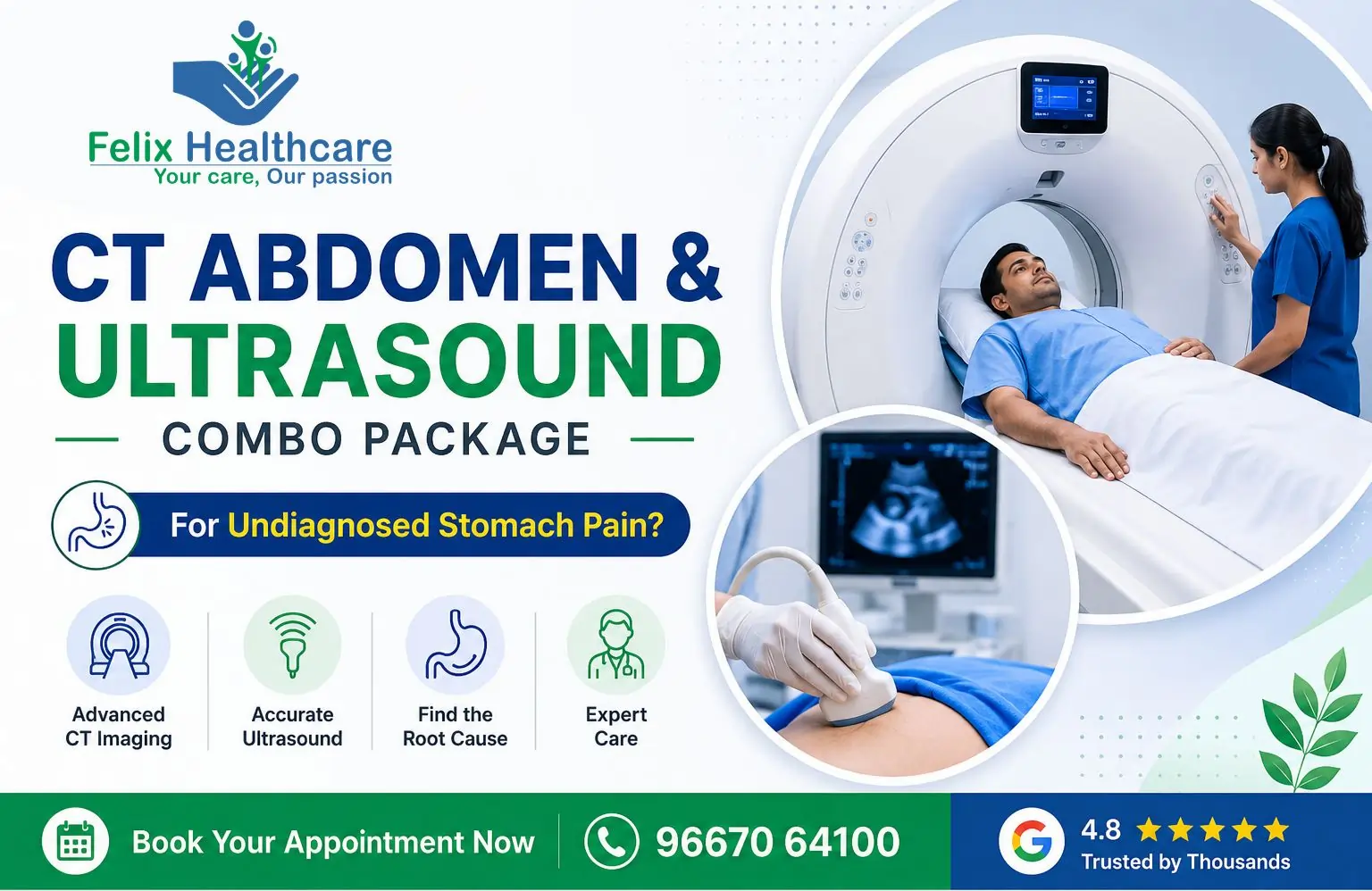
CT Abdomen & Ultrasound Combo Package Price in Greater Noida | Undiagnosed Stomach Pain

If you live in Greater Noida or commute along the Noida-Greater Noida Expressway, you know the lifestyle: quick office lunches in Sector 62, late-night dinners in Sector 18, and perhaps a bit too much caffeine to keep up with the NCR pace. Often, this leads to a "sour stomach" or a sharp pain that we dismiss as "just gas" or "acidity."


But what happens when the antacids stop working?


At Felix Hospital, we see many patients who are stuck in a frustrating loop. They’ve had a whole abdomen ultrasound that came back "normal," but their stomach still hurts. This is what we call the "Diagnostic Gap." To help you get a final answer, we’ve launched the Abdominal Clarity Combo,a CT Abdomen (NCCT) plus a Whole Abdomen Ultrasound, all for just ₹2,999*.


What is the Abdominal Clarity Combo?

When you have unexplained stomach pain, the "hidden" cause is often deep within the intestinal walls or tucked behind other organs.


  • Whole Abdomen Ultrasound (USG): This uses sound waves to look at your "solid" organs like the liver, gallbladder, and kidneys. It’s fantastic for finding stones or fluid.

  • NCCT Abdomen (CT Scan): This uses X-ray technology to create 3D "slices" of your midsection. It is much better at seeing the appendix, the pancreas, and the walls of your intestines,areas where ultrasound often struggles due to intestinal gas.

By combining these two tests into one package for ₹2,999, we ensure that whether the problem is a small stone or a deep-seated inflammation, it has nowhere to hide.


Why Ultrasound and CT are better together

Many patients ask, "Why do I need both?" The answer lies in how the technology works.


Ultrasound is limited by gas. If your stomach is bloated (which most painful stomachs are), the air blocks the sound waves. It’s like trying to see through a foggy glass. The CT scan, however, passes right through the air and gas to see the structures behind them.


On the other hand, Ultrasound is excellent for "real-time" views of the gallbladder and bladder. Together, they provide a 100% "Full-Map" of your abdomen, leaving zero room for guesswork.


Common causes of undiagnosed stomach pain in NCR

Living in the Noida/Greater Noida region presents unique challenges for our digestive health. Some of the most common issues we find in our diagnostic wing include:


  • Hard Water Issues: The mineral content in "Noida water" often leads to a higher-than-average rate of kidney and gallbladder stones.

  • The "Appendix Alarm": Early-stage appendicitis can often feel like simple indigestion. A CT scan is the gold standard for catching it before it ruptures.

  • Chronic Gastritis: High stress and irregular eating patterns among NCR’s corporate workforce often lead to silent inflammation of the stomach lining.

  • Fatty Liver: Often found during the ultrasound portion of our package, this is a growing concern due to sedentary lifestyles in the city.


Abdomen Scan Price Comparison in Greater Noida

We believe in price transparency. In many private diagnostic labs across Noida and Delhi, a standalone CT Abdomen can cost between ₹4,500 and ₹6,500. Add an Ultrasound at ₹1,500, and your total bill exceeds ₹7,000.


At Felix Hospital, we want to make advanced diagnostics accessible to the middle-class families of Sector 137, 143, and Pari Chowk.


Service

Standard Market Price

Felix Combo Price

NCCT Abdomen (Plain)

₹5,000

Included

Whole Abdomen Ultrasound

₹1,500

Included

Specialist Consultation

₹800

Included

Total Cost

₹7,300

₹2,999


How to prepare for your appointment

To get the most accurate results from your combo package, follow these simple steps:


  • Fasting: You should fast for 4 to 6 hours before your appointment. This allows the gallbladder to be full and the stomach to be empty for better imaging.

  • Hydration: You may be asked to drink several glasses of water before the ultrasound to ensure your bladder is full.

  • Wear Comfortable Clothing: Wear something loose. We will provide a hospital gown for the CT portion of the test.

  • Medical History: Bring any previous reports or a list of current medications you are taking.


The Felix Hospital Advantage in Noida Sector 137

When you search for the "Best Diagnostic Center in Greater Noida," you aren't just looking for a machine; you’re looking for a team.


  • Location: We are located right at the Sector 137 Metro Station, making us easily reachable from any part of Noida or Greater Noida via the Aqua Line.

  • In-House Experts: Our radiologists are on-site. We don't send your scans to an external lab. They are reviewed right here, ensuring faster and more accurate reporting.

  • Integrated Care: If your scan reveals an issue, be it a stone or an infection,our team of gastroenterologists and surgeons is available in the same building to start your treatment immediately.

  • Safety First: Our CT scanners use "Low-Dose" protocols to minimize radiation exposure while maintaining crystal-clear image quality.


When should you seek urgent medical attention?

While our ₹2,999 package is great for chronic or undiagnosed pain, please visit our 24/7 Emergency Wing immediately if you experience:


  • Sudden, unbearable pain that makes it impossible to stand straight.

  • Persistent vomiting or blood in the stool.

  • A high fever accompanied by sharp stomach pain.

  • Pain that has moved from the center of your stomach to the lower right side.


Conclusion

Stomach pain is your body’s way of asking for help. Don't let the fear of a "big hospital bill" keep you from getting answers. With the Felix Abdominal Clarity Package at ₹2,999, you get the most advanced imaging tools available at a fraction of the cost.


Stop guessing about your health. Get the clarity you deserve. Book Your Combo Package Today, Call us at +91 9667064100
 

Written and verified by:
Dr. Hari Om Prakash

Dr. Hari Om Prakash

MBBS, MD | Exp: 14 Yr
Radiology

Dr. Hari Om Prakash is a highly experienced radiodiagnostic specialist, renowned for his accurate diagnoses across various advanced imaging modalities including MRI, MDCT, angiography, ultrasound, and mammography, significantly aiding in precise treatment planning.

Your Health, Our Priority

Request Call Back

Request an Appointment

CAPTCHA
Solve this simple math problem and enter the result. E.g. for 1+3, enter 4.
* By clicking on the above button you agree to receive updates on WhatsApp

Double Marker Test: Everything Expected Parents Need to Know

The moment you see that positive pregnancy test, your world starts revolving around a tiny, growing heartbeat. 

Among the excitement of nursery planning and naming, there is a series of clinical milestones you have to cross. One of the most significant—and often the most misunderstood—is the first-trimester screening.


At Felix Hospital, Noida, we see hundreds of expectant parents from across Sector 137 and the Noida-Greater Noida Expressway who walk into our maternity wing with a mix of hope and anxiety. They have been told they need a "Double Marker," but they aren't quite sure what it entails.


If you are currently between your 11th and 14th week of pregnancy, this guide is for you. We are going to break down the double marker test meaning, how to read the numbers, and why this simple blood draw is a cornerstone of modern prenatal care.


What is the Double Marker Test?

The double marker is a predictive screening test performed during the first trimester, ideally between weeks 11 and 13 weeks + 6 days. It is a double marker blood test that measures the levels of two specific substances in a pregnant woman's blood.


It is important to understand that this is a screening test, not a diagnostic one. It doesn’t give a "Yes" or "No" answer. Instead, it calculates the statistical probability (the risk) of the fetus having certain chromosomal abnormalities, most notably Down Syndrome (Trisomy 21) and Trisomy 18 or 13.


At Felix Hospital, we almost always perform this alongside an NT (Nuchal Translucency) Scan. When the blood markers and the ultrasound findings are combined, the accuracy of the risk assessment increases significantly.


Why is the Double Marker Test Important?

Why do doctors in the Noida/NCR region place so much emphasis on this? It’s about being prepared.
 

  • Early Detection: It offers a window into the baby’s health as early as the 11th week.
     

  • Non-Invasive: There are no needles near the womb. It is a simple blood draw from the mother’s arm, posing zero risk to the baby.
     

  • Peace of Mind: For the vast majority of parents, the result comes back as "Low Risk," allowing them to enjoy their pregnancy with less worry.
     

  • Informed Choices: If a "High Risk" result is detected, it gives parents and doctors the time to plan for further diagnostic testing and specialized care.


Understanding the "Markers": hCG and PAPP-A

To understand the double marker test meaning, we have to look at the two proteins being measured:


  • Free Beta hCG (Human Chorionic Gonadotropin): This is a hormone produced by the placenta. Abnormally high levels can sometimes be associated with a higher risk of Down Syndrome.
     

  • PAPP-A (Pregnancy-Associated Plasma Protein A): This is a vital protein. Low levels of PAPP-A in the first trimester are often linked to a higher risk of chromosomal issues or placental complications.

By looking at the relationship between these two markers, specialized software calculates a "risk ratio."


The Procedure: What to Expect

If you are visiting us at Felix Hospital in Noida Sector 137 for your test, the process is straightforward and usually takes less than 30 minutes.


  • The NT Scan: Usually, you will first undergo an ultrasound to measure the "Nuchal Translucency" (the fluid-filled space at the back of the baby’s neck).
     

  • The Blood Draw: Following the scan, a small sample of blood is taken. No fasting is required for the double marker blood test.
     

  • Data Integration: Your age, weight, ethnicity, and diabetic status are recorded along with the blood values and ultrasound measurements to generate your double marker test result.


Interpreting Your Double Marker Test Results

When you receive your report, you might see a "Screen-Positive" or "Screen-Negative" result. This is where most parents start searching for a double marker test normal range.
 

The "Normal Value" Concept

It is tricky to define a single double marker test normal value because the "normal" changes every single day as the pregnancy progresses. Instead, labs use MoM (Multiple of Median) to standardize the results.
 

Marker

Typical Trend in Down Syndrome

Free Beta hCG

Often Elevated (> 2.0 MoM)

PAPP-A

Often Low (< 0.5 MoM)

Note: A double marker test normal range is generally considered a calculated risk of less than 1 in 250.
 

  • Low Risk (Screen Negative): A result like 1:1000 means that out of 1000 women with your exact markers, only one baby might have the condition.
     

  • High Risk (Screen Positive): A result like 1:50 means there is a 1 in 50 chance. This does not mean the baby has a problem; it just means further testing is advised.

Seeing a result outside the double marker test normal values can be scary, but remember: many "High Risk" screens result in perfectly healthy babies.


What Happens After Your Results? (Next Steps & Diagnostic Tests)

If your double marker test result falls into the high-risk category, your gynecologist at Felix Hospital will guide you through the next steps.


  • Genetic Counseling: We sit down with you to explain the statistics in detail.
     

  • NIPT (Non-Invasive Prenatal Testing): An advanced blood test that is 99% accurate for Down Syndrome.
     

  • Amniocentesis/CVS: These are diagnostic tests where a small sample of amniotic fluid or placental tissue is taken to provide a 100% definitive answer.


Double Marker Test vs. Other Prenatal Screening Tests


Feature

Double Marker

NIPT

Quadruple Marker

Timing

11–13.6 Weeks

10 Weeks onwards

15–20 Weeks

Detection Rate

~85% (with NT scan)

~99%

~75-80%

Type

Screening

Advanced Screening

Screening

Cost

More Affordable

Premium

Affordable

The Double Marker remains the most popular choice in Noida because it balances cost-effectiveness with a high degree of reliability when combined with an ultrasound.
 

Conclusion

The Double Marker is more than just a lab report; it’s a tool for empowerment. It allows you to move through your second and third trimesters with clarity and confidence.


If you are a resident of Noida, Greater Noida, or the Expressway belt, and are looking for a reliable center for your prenatal screenings, our team at Felix Hospital is here to support you. We combine advanced diagnostic technology with the empathetic care every expectant parent deserves.


Don't skip your window. Contact Felix Hospital, Noida at +91 9667064100 to book your Double Marker and NT Scan today.

Written and verified by:
Dr. Sonia Kuruvilla

Dr. Sonia Kuruvilla

MBBS, MS OBG | Exp: 17 Yr
Obstetrics & Gynecology

Dr. Sonia Kuruvilla is an experienced Obstetrician and Gynecologist with 17+ years of expertise in women’s healthcare. She provides compassionate and personalized care for pregnancy, gynecological disorders, and reproductive health. Recognized among the Best Gynecologists in Noida, she is known for delivering safe and high-quality women’s care.

Your Health, Our Priority

Request Call Back

Request an Appointment

CAPTCHA
Solve this simple math problem and enter the result. E.g. for 1+3, enter 4.
* By clicking on the above button you agree to receive updates on WhatsApp

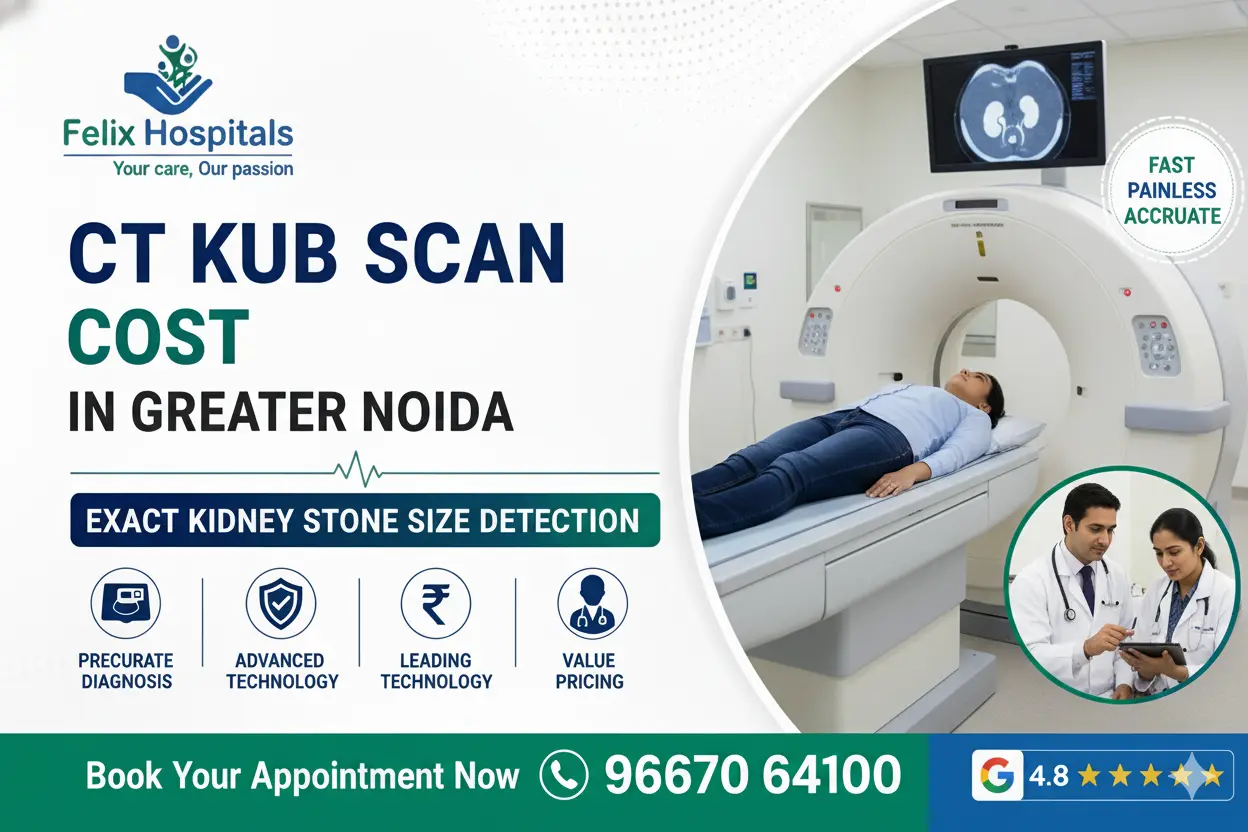
CT KUB Scan Cost in Greater Noida | Exact Kidney Stone Size Detection @ ₹2,499*

If you have ever woken up at 2 AM with a sharp, stabbing pain in your lower back that radiates toward your groin, you know the pure desperation that kidney stones cause. It is a pain that makes it impossible to sit, stand, or lie down. In medical circles, it’s often compared to the intensity of childbirth.


In the Noida-Greater Noida belt, we see an unusually high number of these cases. Why? Because the geography we live in,the "Hard Water Belt" of the NCR,is a factory for kidney stones.


At Felix Hospital, Noida, we believe that when you are in that much pain, the last thing you should worry about is an ambiguous test result or a massive hospital bill. That is why we have standardized our NCCT KUB (Kidney, Ureter, and Bladder) Scan at just ₹2,499.


If you’ve been told you have a "shadow" on an ultrasound and need more clarity, this guide will explain why the CT KUB is the final word in stone detection.


What is a CT KUB Scan?

A CT KUB stands for Computed Tomography of the Kidneys, Ureters, and Bladder. Unlike a regular X-ray, which gives a flat, 2D image, a CT scan uses a series of X-ray beams from different angles to create a 3D map of your entire urinary system.


Most importantly, for kidney stones, we perform an NCCT KUB (Non-Contrast Computed Tomography). This means no needles and no "dye" (contrast) are required. The stones are naturally dense and show up as bright white spots on the scan.


At our diagnostic wing in Sector 137, we use high-speed multi-slice scanners that can capture the entire KUB region in under 60 seconds. For a patient in acute pain, this speed is a lifesaver.


Why exact stone size detection matters

In the world of urology, the difference between a 4mm stone and a 7mm stone is the difference between a glass of water and a surgical procedure.


  • Stones under 5mm: These have a 90% chance of passing naturally through urine with proper hydration.

  • Stones 5mm to 10mm: These are in the "grey zone." They might pass, or they might get stuck in the narrow ureter, causing a blockage.

  • Stones over 10mm: These almost always require medical intervention like Lithotripsy (ESWL) or Laser surgery (URSL).

An Ultrasound often "guesses" the size or misses stones tucked behind the pelvic bone. A CT KUB at Felix Hospital gives your urologist the Exact Size, Exact Location, and the Density (Hounsfield Units) of the stone. This "Density" tells the doctor if the stone is soft (easy to break) or hard (requires a laser).


The "Noida-Greater Noida" factor: Why our water is causing stones

We have to talk about the local context. Residents of Sector 137, Sector 143, and Pari Chowk often complain about the quality of groundwater. The water in the Greater Noida region is notorious for its high Total Dissolved Solids (TDS).


Even with high-end RO systems, many residents aren't getting the right mineral balance. The high calcium and oxalate levels in the local water, combined with the extreme heat of the NCR summers (which causes chronic dehydration), create a "perfect storm" for stone formation.


This is why we see "Recurrent Stone Formers", patients who clear one stone only to develop another six months later. For these patients, having an affordable, high-precision scan like the ₹2,499 CT KUB is essential for long-term health management.


CT KUB vs. Ultrasound: Why the Ultrasound missed your stone

It is a common story at our hospital: "Doctor, I had an Ultrasound in a local lab, and they said everything was normal, but my pain is still there."


There are three reasons why an Ultrasound can "miss" a kidney stone:


  1. The Ureter Problem: The ureter (the tube connecting the kidney to the bladder) is very narrow and often hidden by intestinal gas. An ultrasound cannot see through gas.

  2. Pelvic Bone Interference: If a stone has moved down toward the bladder, it often hides behind the pelvic bone, where ultrasound waves cannot reach.

  3. The "Shadow" Illusion: Small stones don't always create a "shadow" on an ultrasound, making them look like normal tissue.

A CT KUB is not affected by gas or bone. It sees the stone wherever it is hiding, with 99% sensitivity.


CT KUB Scan Price in Greater Noida: The Felix Advantage

If you check the prices at major diagnostic chains in Delhi or Noida Sector 18, an NCCT KUB can cost anywhere from ₹4,500 to ₹7,500.


At Felix Hospital, we have disrupted this pricing. By offering the scan at ₹2,499, we ensure that even a student from the nearby universities or a middle-class family in Paras Tierea or Gulshan Vivante can access world-class diagnostics without a second thought.


What is included in the ₹2,499 Package?


  • High-Resolution NCCT KUB Scan.

  • Senior Radiologist Reporting: Each report is verified for accuracy.

  • Immediate Film and Digital Access: Get your results on WhatsApp to share with your urologist.

  • Specialist Consultation: Meet our internal medicine team to discuss the findings.


How to prepare for your CT KUB Scan

Preparation for a CT KUB is much easier than a standard "Whole Abdomen" scan:


  • No Fasting Required: Since we aren't using contrast dye, you don't need to be on an empty stomach.

  • The Full Bladder Myth: Unlike an ultrasound, you do not need an uncomfortably full bladder for a CT KUB. However, having some fluid in the bladder helps us see the junction where the ureter meets the bladder.

  • Metal-Free Clothing: Try to wear pajamas or leggings without metal zippers. We will provide a hospital gown if your clothes have metal buttons.

  • Duration: The scan itself takes about 5-10 minutes. The total time spent in our Sector 137 facility is usually under 30 minutes.


Understanding your CT KUB report

When you receive your report from Felix Hospital, you will see a few key technical terms. Here is what they mean in plain English:


  • Nephrolithiasis: Stones inside the Kidney.

  • Ureterolithiasis: Stones in the Ureter (the tube). This is usually what causes the most pain.

  • Hydronephrosis: This means the kidney is "swelling" with urine because a stone is blocking the exit. This needs immediate attention.

  • Hounsfield Units (HU): This is the "Hardness Score." A stone with 400 HU is soft; a stone with 1200 HU is hard like a diamond.


Why choose Felix Hospital for your Kidney Checkup?

Located right at the Sector 137 Metro Station, we are the most accessible multi-specialty hospital for the Noida-Greater Noida Expressway community.


  1. Low-Dose CT Technology: We use the latest "As Low As Reasonably Achievable" (ALARA) protocols, ensuring you get the sharpest image with the lowest possible radiation exposure.

  2. Integrated Urology Team: We don't just give you a report and send you away. Our Department of Urology is available in the same building to provide immediate treatment, whether it’s medical management or advanced laser surgery.

  3. Emergency Response: Kidney stone pain can be an emergency. Our diagnostic wing is open 24/7 for emergency scans.

  4. Local Trust: We are an NABH & NABL accredited facility, which means our quality of reporting meets the highest national standards.


Diet tips for "Stone-Forming" Noida residents

Once we detect and treat your stone, our nutrition team at Felix Hospital suggests these local lifestyle changes to prevent a recurrence:


  • The "Lemon Water" Habit: Citrate in lemons helps prevent calcium from clumping into stones.

  • TDS Awareness: Check your RO water TDS. It should ideally be between 100-150. Too low is bad for your bones; too high is bad for your kidneys.

  • Reduce Salt (NCR Street Food): High sodium intake increases calcium in your urine. If you’re a fan of local chaat and momos, keep an eye on your salt intake.

  • Stay Hydrated: In the scorching Greater Noida heat, 3-4 liters of water is the minimum. If your urine isn't crystal clear, you aren't drinking enough.


When should a kidney stone be considered an emergency?

While many stones pass with medication, some situations require an immediate visit to the Felix Hospital Emergency Wing:


  • Fever and Chills: This indicates an infection behind the stone, which can lead to sepsis.

  • Inability to Pass Urine: This means a complete blockage.

  • Intractable Vomiting: If you cannot keep fluids down due to pain and nausea.

  • Blood in Urine: While common with stones, heavy bleeding needs an urgent checkup.


Conclusion

A kidney stone doesn't have to be a multi-week saga of pain and expensive hospital visits. The first step to a pain-free life is a clear, accurate diagnosis.


With the Felix CT KUB Package at ₹2,499, you get the exact size, location, and hardness of your stone, allowing you and your doctor to make the best decision for your health.


Don’t live in pain. Get the clarity you deserve today. Call us at +91 9667064100

Written and verified by:
Dr. Hari Om Prakash

Dr. Hari Om Prakash

MBBS, MD | Exp: 14 Yr
Radiology

Dr. Hari Om Prakash is a highly experienced radiodiagnostic specialist, renowned for his accurate diagnoses across various advanced imaging modalities including MRI, MDCT, angiography, ultrasound, and mammography, significantly aiding in precise treatment planning.

Your Health, Our Priority

Request Call Back

Request an Appointment

CAPTCHA
Solve this simple math problem and enter the result. E.g. for 1+3, enter 4.
* By clicking on the above button you agree to receive updates on WhatsApp

HRCT / CT Chest Scan Price in Greater Noida: Complete Lung Checkup @ ₹2,499*

If you live in Greater Noida or anywhere along the Noida-Greater Noida Expressway, you’re well aware of the "NCR cough." Whether it’s the seasonal smog, the lingering aftermath of a viral infection, or a shortness of breath that just won't quit, our lungs take a beating every single day.


At Felix Hospital, we’ve noticed a common pattern: people often ignore a persistent cough for weeks, fearing that a "big scan" like an HRCT will be too expensive or complicated.


We’re here to change that. This guide explains everything you need to know about the HRCT Chest scan—why it’s the gold standard for lung health, what to expect, and why we’ve launched a Complete Lung Checkup Package at just ₹2,499 to make breathing easy again.


What is an HRCT Chest Scan?

HRCT stands for High-Resolution Computed Tomography. While a standard CT scan is like taking a regular photo of your lungs, an HRCT is like using a high-definition 4K camera that can zoom in the tiniest details.


Think of your lungs like a sponge. A traditional X-ray can show the overall shape of the sponge, but it might miss a tiny tear or a small patch of mold deep inside. An HRCT scan takes hundreds of "thin slices" (images) of your lungs, allowing doctors to see the intricate tissues, air sacs, and blood vessels with incredible clarity.


HRCT vs. Normal Chest X-Ray: Why the Upgrade Matters

Many patients ask us: "Doctor, I already had an X-ray. Why do I need an HRCT?"


The answer lies in the details. An X-ray is a 2D image where organs often "overlap." An HRCT is 3D and can detect abnormalities that are as small as 1 or 2 millimeters.


Feature

Chest X-Ray

HRCT Chest Scan

Technology

2D Single Image

3D High-Resolution Slices

Detail Level

Basic (Large issues only)

Extremely High (Early-stage detection)

Best For

Bone fractures, large pneumonia

Fibrosis, TB, Lung nodules, Early Pneumonia

Time Taken

2-5 minutes

5-10 minutes

Detection Power

Misses early lung damage

Catches 99% of lung tissue issues

When Does Your Doctor Advise an HRCT Chest?

An HRCT is usually the "next step" when a routine checkup doesn't provide enough answers. At Felix Hospital, our pulmonologists (lung specialists) typically recommend it if:


  • Persistent Cough: You’ve had a cough for more than 3 weeks that hasn't responded to antibiotics.
     

  • Breathlessness: You feel out of breath even while doing simple tasks like climbing stairs.
     

  • Smoking History: Long-term smokers need regular screening for early detection of lung conditions.
     

  • Post-COVID Recovery: Many people in Greater Noida still carry "lung scarring" or fibrosis from previous viral bouts.
     

  • Occupational Hazards: If you work in construction or industries with dust and chemicals, your lungs need periodic monitoring.
     

  • Suspected TB or Pneumonia: To see the exact extent of the infection.


Lung Checkup Price in Greater Noida: The Felix Advantage

In many private diagnostic centers across Delhi-NCR, an HRCT scan alone can cost anywhere between ₹4,500 and ₹7,000. We realized this was a barrier for many middle-class families in Noida and Greater Noida.


To make quality healthcare accessible, Felix Hospital offers a Comprehensive Lung Checkup Package for ₹2,499.
What’s Included in the ₹2,499 Package?


  • HRCT Chest Scan: High-resolution imaging using our advanced CT technology.
     

  • Doctor Consultation: A review of your report by a specialist.
     

  • Vital Screening: Checking oxygen levels and lung capacity markers.
     

  • Location Tip: Our facility is located in Sector 137, Noida, right off the Noida-Greater Noida Expressway, making it a 10-minute drive from Pari Chowk or Noida Sector 18.


How to Prepare for Your CT Scan

One of the biggest myths is that a CT scan is scary. In reality, it’s one of the easiest tests you’ll ever take.


  • Fasting: For a non-contrast HRCT (the most common type), no fasting is required. You can eat and drink normally.
     

  • Clothing: Wear something comfortable without metal zippers or buttons. We will provide a hospital gown if needed.
     

  • Jewelry: Leave your necklaces and piercings at home, as metal can interfere with the magnetic images.
     

  • Duration: The actual scanning takes less than 60 seconds. You’ll be in and out of the room in 10 minutes.
     

  • Anxiety: If you’re claustrophobic, don't worry. The CT machine is like a "donut," not a closed tunnel. It’s open on both ends.


Understanding Your Results: What is a CO-RADS or CT Severity Score?

When you get your report, you might see terms that look confusing. Here’s a quick "Cheat Sheet":


  • Ground Glass Opacities (GGO): This sounds scary, but it just means there is a "hazy" area in your lungs, usually indicating inflammation or a recent infection.
     

  • Fibrosis: This refers to mild scarring of the lung tissue.
     

  • Nodules: Small spots that the doctor will monitor to ensure they aren't harmful.
     

  • CT Severity Score: Often used during infections to measure how much of the lung is affected (usually out of 25).
     

Note: Always let a doctor interpret these. A "finding" on a report doesn't always mean a "disease."


Why Choose Felix Hospital for Your Lung Scan?

There are many labs in Greater Noida, but a lung checkup requires Radiological Expertise.
 

  • In-House Radiologists: We don't send your images to another city. Our experts are on-site to interpret your scan immediately.
     

  • Advanced Equipment: We use low-dose CT technology, which means you get the highest quality image with the lowest possible radiation exposure.
     

  • Zero Wait Time: We know your time is valuable. With our organized appointment system, we aim to get your scan done within 30 minutes of arrival.
     

  • Emergency Care: As a multi-specialty hospital, if your scan shows something urgent, we have the ICU and Pulmonology team ready to help instantly.


Simple Ways to Protect Your Lungs in NCR

While you wait for your checkup, here are three things our doctors recommend to every resident of Greater Noida:


  • Air Purifiers: If you have elderly family members or kids, a HEPA-filter purifier is no longer a luxury; it’s a necessity during peak pollution months.
     

  • Steam Inhalation: A simple, old-school way to keep your airways moist and clear of pollutants.
     

  • N95 over Cloth Masks: If the AQI is above 200, a cloth mask does nothing for your lungs. Use a certified N95 mask when outdoors.


Conclusion

Your lungs are incredibly resilient, but they aren't invincible. A persistent cough or a bit of breathlessness is often the only warning they give you.


Don't wait for a crisis. With the HRCT Lung Package at ₹2,499, you can get a clear picture of your health without burning a hole in your pocket.


Take a deep breath. Let's make sure it’s a healthy one. To book your slot or inquire about the package, call us at +91 9667064100 or visit our center in Sector 137, Noida.
 

Written and verified by:
Dr. Priyadarshi Jitendra Kumar

Dr. Priyadarshi Jitendra Kumar

Pulmonology | Exp: 20 Yr
MBBS/ DNB/ FSM/FCCP

Dr. Priyadarshi Jitendra Kumar is an experienced General Practitioner with 20+ years of expertise in diabetes, thyroid disorders, hypertension, and infectious diseases. Recognized as a Best Pulmonologist in Noida, he specializes in respiratory emergencies, sleep disorders, and advanced pulmonology care.

Your Health, Our Priority

Request Call Back

Request an Appointment

CAPTCHA
Solve this simple math problem and enter the result. E.g. for 1+3, enter 4.
* By clicking on the above button you agree to receive updates on WhatsApp

Pre-Book Maternity & Delivery Packages in Greater Noida

Every day at Felix Hospital, we meet expecting mothers who come in during their seventh or eighth month asking: "Can we still book a package?"


The answer is always yes — but the better question is: why wait?


Pregnancy is nine months of change, decisions, and unknowns. The one thing you can control — early, affordably, and with complete peace of mind — is where your baby will be born and what that care will cost you. That's exactly what our pre-booking maternity package at Felix Hospital, Sector 137, Noida is designed to do.


At just ₹7,499, you lock in your delivery package, save 20% on the total cost, and receive free ultrasounds as part of your antenatal care — before you've even begun your third trimester.


This guide breaks down everything you need to know.


Why Pre-Booking Your Maternity Package Makes Sense

Here's something most first-time parents don't realise until it's too late: maternity care in Greater Noida and Noida isn't just about the delivery room. It's about the eight to nine months leading up to it — the consultations, the scans, the blood work, the decisions. And all of that costs money, often without a clear picture of what the final bill will look like.


Regular check-ups including ultrasound scans and blood tests allow healthcare providers to identify and address potential complications early — such as anaemia in pregnancy, gestational diabetes, pregnancy-induced hypertension, and preeclampsia — reducing the risk of complications during delivery.


Pre-booking your maternity package at Felix Hospital means:

Financial clarity from day one. You know what you're paying. No surprise bills at 3 AM when you're already in labour.


Priority care and bed reservation. When the moment arrives, your room, your team, and your plan are already in place.


A 20% discount locked in. The earlier you book, the more you save — and that saving is guaranteed, not dependent on availability.


Free ultrasounds included. These aren't bonus add-ons — they are medically essential. The main medical benefits of routine antenatal ultrasound include the establishment or correction of gestational age, and the identification of multiple pregnancies, nonviable pregnancies, and other pregnancies requiring specialist referral — resulting in some benefit obtained in nearly 44.5% of patients.


Peace of mind. Pregnancy is emotional. Knowing your hospital, your doctor, and your financial plan are all sorted is one less thing to carry.


What's Included in Felix Hospital's Maternity Package?

Our pre-booking maternity package at ₹7,499 is designed to be comprehensive — not a stripped-down teaser that leaves families scrambling for add-ons later.


Here's what the package covers:


  • Antenatal Care

  • Dedicated OB-GYN consultation throughout your pregnancy

  • Routine blood tests and screening panels

  • Free ultrasound scans at key stages of pregnancy (dating scan, anomaly scan, growth scan)

  • Nutritional and dietary guidance

  • Birth planning sessions with your care team


Delivery


  • Normal vaginal delivery or C-section (as per medical requirement)

  • Labour room charges

  • OT (Operation Theatre) charges for C-section

  • Anaesthesia charges

  • Paediatrician/neonatologist attendance at birth


Post-Delivery Care


  • Mother's post-natal care and monitoring

  • Newborn care and initial assessment

  • Breastfeeding support and lactation counselling

  • Postnatal check-up before discharge


Room & Stay


  • Comfortable room stay for the duration of the delivery admission

  • Meals for the mother during hospital stay

  • 24-hour nursing support


Normal Delivery vs C-Section — Which Package is Right for You?

This is one of the most common questions our maternity team hears. The honest answer: in most cases, your body and your baby make that decision — not you, and not the hospital.


A normal vaginal delivery generally has a shorter recovery time for the mother and a lower risk of infection and complications compared to a C-section. At Felix Hospital, we are committed to supporting and encouraging normal delivery wherever it is clinically safe to do so. Our team does not push for unnecessary C-sections.


That said, a caesarean section may be medically necessary due to foetal distress, placenta previa, breech position, or prior C-section. A C-section generally tends to be more expensive than a normal delivery due to the surgical procedure and extended hospital stay. On average, a C-section can cost anywhere from ₹70,000 to ₹1,80,000 or more in Noida, while a normal delivery may range from ₹50,000 to ₹90,000.


Our pre-booked package is structured to account for both possibilities — so you are not hit with a dramatically different bill if your delivery mode changes at the last moment. We'll walk you through the specific inclusions and any applicable top-up costs at the time of your booking consultation, with complete transparency.


Feature

Normal Delivery

C-Section

Recovery time

Shorter (1–2 days)

Longer (3–5 days)

Hospital stay

Shorter

Longer

Preferred when

No complications

Medical necessity

Cost

Lower

Higher

Package coverage

Fully included

Included with applicable top-up


Free Ultrasounds — What Are They and Why Do They Matter?

When we say "free ultrasounds," we mean the medically essential scans that every pregnancy requires — not optional extras. These are included in your Felix Hospital pre-booking maternity package at no additional cost.


Dating Scan (6–10 weeks) Confirms the pregnancy, establishes gestational age, and rules out an ectopic pregnancy. The primary purpose of this scan is to confirm the viability of the pregnancy and to accurately determine the gestational age by measuring the crown–rump length of the foetus — considered the most reliable method for dating a pregnancy in the first trimester and establishing an estimated due date.


Anomaly Scan / Level II Scan (18–20 weeks) This is the detailed structural scan that checks the baby's organs, limbs, spine, heart, and brain for any abnormalities. It is one of the most important scans of the entire pregnancy.


Growth Scan (28–32 weeks) Monitors the baby's weight, position, amniotic fluid levels, and placental health in the third trimester.


Doppler Study (if required) Assesses blood flow through the placenta and umbilical cord — especially valuable in high-risk pregnancies.


These scans, if booked individually at private diagnostic centres in Noida and Greater Noida, can cost anywhere from ₹800 to ₹3,000 per scan. Getting them included in your package represents a significant financial saving — and more importantly, it means they actually happen on schedule, rather than being postponed or skipped due to cost concerns.


How Much Does Maternity Cost in Greater Noida?

Let's be honest about the market.


Normal delivery cost in Greater Noida ranges from ₹25,000 to ₹90,000. The average cost is approximately ₹60,000, while the price range at super-speciality hospitals can reach ₹90,000. And this is often just the delivery — without antenatal scans, blood tests, consultations, and post-natal care factored in.


Here's how costs across the region typically break down:


Service

Average Market Cost (Greater Noida)

Normal delivery (hospital stay)

₹50,000 – ₹90,000

C-section delivery

₹70,000 – ₹1,80,000

Antenatal consultations (full course)

₹8,000 – ₹20,000

Ultrasound scans (3–4 scans)

₹5,000 – ₹12,000

Blood tests and screenings

₹3,000 – ₹8,000

Total without a package

₹66,000 – ₹3,10,000

Our pre-booking package at ₹7,499 locks in your place, covers your essential antenatal scans, and secures the 20% discount on your delivery package — giving you financial predictability in what is otherwise one of the most expensive and unpredictable medical journeys a family undertakes.


Why Choose Felix Hospital for Your Delivery?

Felix Hospital at Sector 137, Noida is one of the region's most trusted multi-speciality hospitals for maternity and neonatal care. Families from across Noida, Greater Noida, Noida Extension, and Delhi NCR choose us because we combine clinical expertise with genuine warmth — because we understand that this is not just a medical event. It is one of the most important days of your life.


Here's what sets us apart:

Experienced OB-GYN Team Our obstetricians and gynaecologists bring decades of combined experience in managing both routine and high-risk pregnancies. We have handled thousands of deliveries — normal, assisted, and surgical — with consistently excellent maternal and neonatal outcomes.


Dedicated Labour and Delivery Unit Our labour ward is equipped with foetal monitoring systems, modern birthing equipment, and a trained nursing team that supports mothers through every stage of labour with care and calm.


Level III NICU For babies who need a little extra support after birth, our Neonatal Intensive Care Unit (NICU) is staffed by experienced neonatologists and equipped with advanced neonatal life support systems — right within the same hospital, so your baby never has to be transferred elsewhere.


24-Hour Emergency Obstetric Care Babies don't wait for office hours. Our maternity emergency team is available round the clock for unexpected labour, foetal distress, or any complication that requires immediate attention.


Transparent, No-Surprise Billing We believe financial stress has no place in a delivery room. Our packages are clearly defined, our billing is transparent, and our team will walk you through every rupee before you sign anything.


Our Maternity Specialties and Facilities

Felix Hospital offers comprehensive women's health and maternity services under one roof:


Obstetrics & Gynaecology


  • Normal vaginal delivery and assisted delivery

  • Elective and emergency C-section

  • High-risk pregnancy management

  • Gestational diabetes and hypertension management

  • Multiple pregnancy (twins/triplets) care

  • Postpartum care and mental health support


Foetal Medicine


  • Advanced antenatal ultrasounds

  • Foetal anomaly screening

  • Doppler studies and non-stress tests (NST)

  • Amniocentesis and other invasive diagnostic procedures (where indicated)


Neonatology


  • Full-term and preterm newborn care

  • Level III NICU with ventilatory support

  • Kangaroo Mother Care (KMC) for low-birthweight babies

  • Newborn hearing screening and metabolic screening

  • Supporting Departments Available at Felix Hospital

  • Anaesthesiology (for epidurals and surgical anaesthesia)

  • Blood bank (on-site, for obstetric emergencies)

  • Diagnostic imaging and pathology lab

  • Lactation counselling

  • Physiotherapy and post-natal recovery support


How to Pre-Book Your Maternity Package

Pre-booking at Felix Hospital is simple and takes under 30 minutes for your first visit.


Step 1 — Call or Walk In Call us at +91 9667064100 or walk into Felix Hospital, Sector 137, Noida. Our maternity care coordinator will schedule your initial consultation.


Step 2 — Initial Consultation Meet with one of our OB-GYN specialists. This consultation covers your medical history, current pregnancy status, expected due date, and any risk factors that may need special attention.


Step 3 — Choose Your Package Based on your consultation, our team will walk you through the package options and explain exactly what is included. All questions about costs, inclusions, and delivery room preferences are addressed here.


Step 4 — Confirm and Pre-Book Pay the pre-booking amount of ₹7,499 to lock in your package at the discounted rate. Your antenatal care schedule, scan appointments, and delivery team are confirmed from this point forward.


Step 5 — Ongoing Antenatal Care Attend your scheduled consultations and scans at Felix Hospital throughout your pregnancy. Your care team remains consistent — you won't be seeing a different doctor at every visit.


When Should You Pre-Book?

The earlier, the better — and here's why that's not just a sales line.


Literature shows that outcomes for pregnant women and their babies are improved through early antenatal contact with healthcare professionals. Early booking allows assessment of medical, obstetric, and social risk factors, enabling early management and care planning according to the woman's individual situation.


Our recommendation at Felix Hospital:

Stage of Pregnancy

Why Pre-Book Now

First trimester (Weeks 6–12)

Ideal time — full antenatal course, all free scans included from the start

Second trimester (Weeks 13–26)

Still excellent — anomaly scan and growth scans fully covered

Third trimester (Weeks 27–36)

Pre-book now to secure your delivery date and room preference

Week 36 onwards

Pre-booking is still possible — speak to our team for options

The 20% discount and free ultrasound inclusions apply regardless of when you pre-book, but the earlier you register, the more of those free scans you benefit from across your pregnancy.


Conclusion

Bringing a baby into the world is extraordinary. But the weeks and months leading up to that moment can be filled with anxious questions — Is my baby growing well? Am I gaining too much weight? Will we be able to afford the hospital? Where will I deliver if it happens suddenly at midnight?


Pre-booking your maternity package at Felix Hospital answers all of these questions in one step. You get a team that knows you, a plan that's already in place, free ultrasounds that keep your pregnancy monitored, and a 20% discount that puts real savings back in your family's hands.


Your baby deserves the best possible start. And you deserve to enjoy your pregnancy without the stress of figuring it all out as you go.


To pre-book your maternity package or speak with our OB-GYN team, call us at +91 9667064100. Felix Hospital, Sector 137, Noida — where every birth is treated as the miracle it is.

Written and verified by:
Dr. Pragati Jain

Dr. Pragati Jain

MBBS, DGO, DNB, MNAMS, FMAS (Gold Medalist) | Exp: 6 Yr
Obstetrics & Gynecology

Dr. Pragati Jain is an Obstetrician and Gynecologist with 6+ years of expertise in high-risk pregnancies, infertility treatment, gynecological surgeries, and women's healthcare.

Your Health, Our Priority

Request Call Back

Request an Appointment

CAPTCHA
Solve this simple math problem and enter the result. E.g. for 1+3, enter 4.
* By clicking on the above button you agree to receive updates on WhatsApp

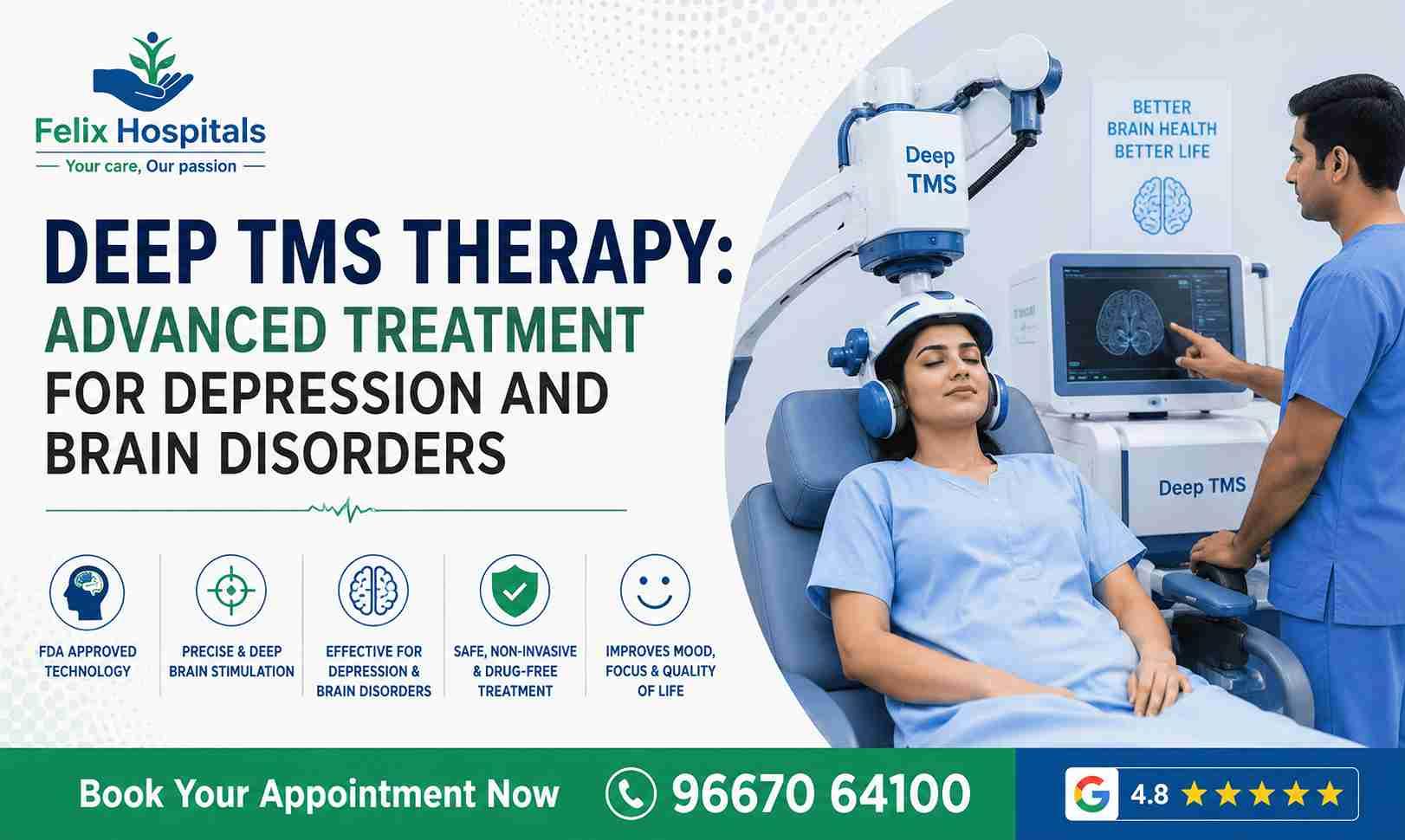
Deep TMS Therapy: Advanced Treatment for Depression and Brain Disorders

When you walk through the corporate corridors of Noida’s Sector 125 or the busy IT hubs of Sector 62, you see thousands of people moving with purpose. But behind the glass buildings and the frantic pace of NCR life, there is a silent epidemic, Treatment-Resistant Depression (TRD).


At Felix Hospital, Noida, we meet people every day who have "done everything right." They’ve taken the SSRIs, they’ve sat through years of talk therapy, and they’ve tried every "wellness" trend on social media. Yet, the heaviness remains. If you are feeling like your brain has hit a wall, you aren't failing, your treatment might just be reaching its limit.


This is where Deep TMS (Transcranial Magnetic Stimulation) enters the picture. It’s not just an "alternative"; for many in Noida and Greater Noida, it is the first real solution that actually addresses the brain's physical "wiring".


What Is Deep TMS Therapy?

To truly answer What Is Deep TMS Therapy?, we have to look at the brain not as a soup of chemicals, but as an electrical circuit.


Most people are familiar with "traditional" TMS. While effective, traditional TMS is like a flashlight, it hits the surface of the brain. Deep TMS, however, is like a spotlight that reaches the deeper, hard-to-access structures like the Anterior Cingulate Cortex.


Using a patented H-Coil technology housed inside a cushioned helmet, Deep TMS sends magnetic pulses that penetrate roughly 4cm into the brain tissue. This isn't "shock therapy" (ECT). There are no seizures, no memory loss, and no anesthesia. It is a targeted, electromagnetic "reset" for the areas of your brain responsible for emotional regulation.
 

How Deep TMS Works for Depression and Brain Disorders: The Science of Neuroplasticity

You might have heard the term "Neuroplasticity." It’s the brain’s ability to reorganize itself by forming new neural connections. How Deep TMS Works for Depression and Brain Disorders is by physically stimulating this process.


When you sit in the treatment chair at Felix Hospital, the H-coil generates a magnetic field. This field induces a tiny electrical current.


  • The Activation Phase: It "wakes up" dormant neurons that have become underactive due to chronic depression or OCD.
     

  • The Strengthening Phase: By repeating this over 4–6 weeks, those neurons start communicating more effectively.
     

  • The Result: The "fog" lifts. Patients often describe it as if a rusted gear in their head finally started turning smoothly again.
     

Deep TMS vs. Traditional Depression Treatments: A Comparison

In the Best Psychiatry Hospital in Noida, we don't just advocate for one treatment. We compare them to find what fits your biology.


Feature

Antidepressants

ECT (Shock Therapy)

Deep TMS

Primary Mechanism

Chemical (Systemic)

Electrical (Seizure-based)

Magnetic (Targeted)

Invasiveness

Oral Medication

High (Requires Anesthesia)

Non-Invasive

Memory Issues

Minimal

Common/Significant

None

Weight Gain

Very Common

No

No

Daily Routine

Unaffected

Requires Hospital Stay

20 mins & Drive Home

Success in TRD

Low to Moderate

High

High


Conditions Treated with Deep TMS: A New Hope for OCD and Addiction

While we primarily use it for Major Depressive Disorder, the Conditions Treated with Deep TMS at our Noida facility are expanding as medical science evolves.


  • Obsessive-Compulsive Disorder (OCD): Traditional therapy for OCD is grueling. Deep TMS reaches the deeper circuits of the brain linked to obsessive thoughts, providing a physical "dampener" for those intrusive loops.
     

  • Smoking Cessation: Deep TMS is the first non-drug treatment to be FDA-cleared for helping people quit smoking by targeting the brain’s addiction-reward pathway.
     

  • Anxious Depression: For those in high-stress Noida jobs who feel "tired but wired," Deep TMS can calm the anxiety while lifting the mood.
     

  • Bipolar Depression: It offers a stable way to treat the "lows" of bipolar disorder without the systemic risks of certain mood stabilizers.
     

Who Can Benefit from Deep TMS? (And Who Should Wait)

Determining Who Can Benefit from Deep TMS? requires a specialized consultation. Generally, if you have tried two or more antidepressants and they haven't worked (or the side effects like weight gain and sexual dysfunction are unbearable), you are an ideal candidate.


However, because the treatment uses magnetic fields, we cannot use it on patients with:
 

  • Metallic implants in the head (cochlear implants, aneurysm clips).
     

  • Pacemakers
     

  • A history of epilepsy or seizures.
     

Deep TMS Procedure: What to Expect at Felix Hospital

Many of our patients from Sector 137 and Greater Noida visit us during their lunch break. Here is a realistic Deep 

TMS Procedure: What to Expect timeline:
 

  • The Mapping (Day 1): Our psychiatrist finds your "Motor Threshold ",the exact pulse strength needed to make your thumb twitch. This ensures the dose is perfect for your skull thickness and brain shape.
     

  • The Session: You sit in a comfortable chair. No gown, no needles. You wear a helmet.
     

  • The "Tapping": For 20 minutes, you’ll hear a "click-click-click." It feels like a light tapping on your forehead. You can talk to the staff, watch a video on your phone, or just relax.
     

  • The Departure: The helmet comes off. You check your hair in the mirror and drive back to work or home. There is no "hangover" or grogginess.


Safety and Side Effects of Deep TMS: The Truth

We believe in transparency. Safety and Side Effects of Deep TMS are minimal, but not zero.


  • Scalp Discomfort: During the first week, some people feel a bit of tenderness where the helmet sits.
     

  • Mild Headache: About 20% of patients get a mild tension headache after the first few sessions. Standard paracetamol usually handles it.
     

  • No "Zombie" Effect: Unlike heavy psychiatric meds, you don't feel "drugged." You feel like yourself, just… lighter.
     

Why Felix Hospital is Recognized as the Best Psychiatry Hospital in Noida

Noida has many clinics, but Deep TMS is a specialized technology that requires a hospital-grade environment for the best results.


Local Expertise in Sector 137

We are located right off the Noida-Greater Noida Expressway. For residents of Paras Tierea, Gulshan Vivante, or Advant Navis, world-class psychiatry is literally across the street. We understand the specific stressors of the Noida lifestyle,the long commutes, the corporate pressure, and the isolation of urban living.


Multi-Disciplinary Care

We don't just offer a machine. Our psychiatry department works with:
 

  • Clinical Psychologists for CBT and DBT.
     

  • Neurologists to rule out organic brain issues.
     

  • Nutritionists to fix the gut-brain axis.
     

  • NABL & NABH Safety Standards
     

At Felix, we adhere to the highest clinical protocols in India. Our Deep TMS protocols are double-checked for safety, ensuring that every pulse delivered is within the exact therapeutic window.
 

Safety and Side Effects of Deep TMS

Safety is the top priority at Felix Hospital.Safety and Side Effects of Deep TMS are remarkably mild compared to almost any other psychiatric intervention.
 

  • Common Side Effects: The most common is a mild headache or scalp discomfort during or immediately after the first few sessions. This usually disappears as your body gets used to the treatment.
     

  • No Memory Loss: Unlike ECT (Electroconvulsive Therapy), there is absolutely no impact on memory or cognitive function. In fact, many patients report that their "brain fog" clears up.
     

  • Low Risk: The risk of a seizure is extremely low (less than 0.1%), which is why we perform a detailed medical screening before we ever start.
     

Deep TMS Therapy: Benefits at a Glance


  • Non-Drug: No chemicals entering your liver or kidneys.
     

  • FDA-Cleared: Backed by over 60 clinical trials worldwide.
     

  • Time-Efficient: Only 20 minutes per day.
     

  • High Remission: Even for "Treatment-Resistant" cases.
     

Conclusion: You Don't Have to Live in the Fog

If you are struggling in silence, please know that the field of psychiatry has moved forward. You are no longer limited to just "pills and talk." Deep TMS Therapy is the bridge between advanced physics and human healing.


At Felix Hospital, Noida, we are proud to bring this technology to the heart of Uttar Pradesh. Whether you are coming from Noida City Center, Sector 18, or Pari Chowk, our doors are open. Don't wait for the "perfect time" to get help. The perfect time is when you decide you’ve had enough of the heavy cloud.


Don't let concern become a crisis because of delayed diagnosis. Call us at +91 9667064100 or walk into Felix Hospital, Sector 137, Noida.

Written and verified by:
Dr. Sumit Sharma

Dr. Sumit Sharma

M.B.B.S., M.S., S.R., M. Ch. | Exp: 10 Yr
Neurology & Neurosurgery

Dr. Sumit Sharma is an experienced neurosurgeon with 10+ years of expertise in treating brain, spine, and nerve disorders using advanced surgical techniques and compassionate patient care.

Your Health, Our Priority

Request Call Back

Request an Appointment

CAPTCHA
Solve this simple math problem and enter the result. E.g. for 1+3, enter 4.
* By clicking on the above button you agree to receive updates on WhatsApp

CT Brain Scan Cost in Greater Noida | Same-Day Report + Neurologist Consult @ ₹1,799*

At Felix Hospital, barely a week goes by without someone walking into our neurology OPD holding a phone to their ear, having just Googled: "CT scan brain cost in Greater Noida" Sometimes they've been having headaches for three weeks. Sometimes a family member had a sudden fall. Sometimes their child had a seizure and they just want answers — fast.


If that's where you are right now, this guide is for you.


A CT brain scan is one of the most important diagnostic tools in modern medicine. At Felix Hospital, Sector 137, Noida, we offer it at ₹1,799* — with a same-day report and the option to consult a neurologist on the same visit. No waiting days for results. No running between a scan centre and a specialist's clinic across town.


Here's everything you need to know.


What is a CT Brain Scan?

A CT scan of the brain is a noninvasive diagnostic imaging procedure that uses special X-ray measurements to produce horizontal, or axial, images — often called slices — of the brain. Brain CT scans can provide more detailed information about brain tissue and brain structures than standard X-rays of the head, thus providing more data related to injuries and diseases of the brain.


Computed Tomography, more commonly known as a CT or CAT scan, combines an X-ray machine and a unique computer to create pictures of bones, organs, and tissues from different angles, producing three-dimensional views. CT scanning is fast, painless, non-invasive, and accurate. In emergency cases, it can reveal internal injuries and bleeding quickly.


Think of a CT brain scan as your doctor's first clear look inside your skull — without a single incision, without general anaesthesia, and without a long wait for an appointment.


Why is a CT Brain Scan Done?

Your neurologist or treating physician may order a CT brain scan when you present with symptoms that suggest something is happening inside the skull or brain. A doctor may suggest a CT scan of the brain if one experiences symptoms indicating a problem in the brain such as seizures or epilepsy, altered or double vision, memory loss, and loss of sensation of touch.


At Felix Hospital, our neurology team commonly orders a CT brain scan for:


  • Sudden, severe headache — especially one described as "the worst headache of my life," which can signal a subarachnoid haemorrhage

  • Head trauma — after a road accident, fall, or any blunt impact to the skull

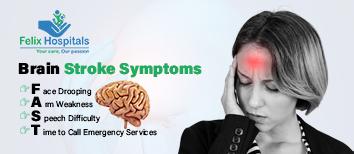
  • Suspected stroke — sudden weakness on one side, slurred speech, facial drooping, or difficulty walking

  • First-time seizure — to rule out structural brain abnormalities

  • Loss of consciousness or unexplained blackout

  • Persistent dizziness or balance problems

  • Sudden vision changes or double vision

  • Memory loss or sudden behavioural change

  • Pre-surgical planning — before any neurosurgical procedure


What Does a CT Brain Scan Detect?

This is where the CT brain scan earns its reputation as the first responder of neurological imaging. A CT brain scan can offer meaningful insight into silent strokes, bleeding, tumours, and treatable conditions like hydrocephalus.


Specifically, a CT brain scan can detect:


Bleeding in the brain (Haemorrhage) A non-contrast head CT is the test of choice for detecting acute haemorrhage in the brain. It is an excellent test for patients with acute CNS symptoms such as severe headache, acute visual symptoms, or traumatic head injury.


Stroke CT brain plain scans are instrumental in identifying strokes in their early stages, where quick treatment can make a significant difference. In stroke care, every minute matters — and the CT scan delivers results in minutes, not hours.


Traumatic Brain Injury (TBI) Fractures of the skull, contusions (brain bruising), and intracranial bleeding following accidents or falls are clearly visible on a CT scan.


Brain Tumours CT scanning can detect larger tumours or masses that require further attention and guide the decision for biopsy or surgical intervention.


Hydrocephalus Hydrocephalus is a buildup of fluid in the brain that can cause memory problems, difficulty walking, and confusion — yet is often very treatable when detected early.


Infections Abscesses (pockets of infection) within the brain tissue are visible on a contrast-enhanced CT scan.
Sinus and skull abnormalities Non-contrast CT is also used to assess sinus conditions and complex fractures.


CT Brain Scan vs MRI Brain — Which One Do You Need?

This is one of the most common questions our patients ask — and it's a good one.


Both CT and MRI scans look at brain structure, but they work in different ways and at different speeds. A CT scan uses X-rays to create cross-sectional images of the brain. It's fast, widely available, and excellent at detecting bleeding, fractures, and major structural changes. In emergency settings, speed is critical — when a patient arrives with sudden confusion, head trauma, or a possible stroke, a CT scan is often the first step because it can be completed within minutes.


CT is much faster than MRI, making it the study of choice in cases of trauma and other acute neurological emergencies.


Here's a simple comparison to guide you:


Feature

CT Brain Scan

MRI Brain

Speed

Very fast (5–15 minutes)

Slower (30–60 minutes)

Best for

Bleeding, trauma, stroke, fractures

Tumours, MS, nerve conditions, soft tissue

Uses radiation

Yes (low dose)

No

Cost in India

₹1,799 – ₹5,000

₹5,000 – ₹25,000

Availability

Widely available

Less widely available

Emergency use

First choice

Rarely used in emergencies

Claustrophobia concern

Minimal

More common

If the concern is active bleeding or a skull injury, CT usually comes first. If the concern involves nerve pathways, small lesions, or complex tissue changes, MRI offers greater clarity.


Your neurologist at Felix Hospital will advise which scan is appropriate for your specific symptoms. In many cases, a CT scan is the right starting point — and it may be all you need.


CT Brain Scan Procedure — What to Expect

Many people feel anxious before their first CT scan. Here's the honest, straightforward version of what actually happens:


Step 1 — Arrival and registration Check in at the Felix Hospital radiology desk. If you have a doctor's referral, bring it along. If not, our neurologist can assess you first and issue the request.


Step 2 — Preparation You'll be asked to remove jewellery, glasses, hearing aids, and any metal objects. If you're having a contrast scan, an IV line will be placed in your arm.


Step 3 — Positioning You lie flat on a motorised table that slides into the CT scanner — a large, doughnut-shaped machine. The scanner will rotate around your head and capture images from different angles. During the scan, you need to remain still. A head CT scan usually takes 10–30 minutes.


Step 4 — The scan The machine is noisy but the procedure is completely painless. You may be asked to hold your breath briefly at certain moments. The table moves slowly through the scanner ring while images are captured.


Step 5 — Report and consultation At Felix Hospital, your report is prepared by an experienced MD radiologist and delivered the same day. You can then consult our neurologist to interpret the findings and plan next steps — all in one visit.


How to Prepare for a CT Brain Scan?

Preparation for a CT brain scan is minimal. Generally, to take a CT scan, you can continue with your regular activities — it does not require any special arrangements or diet before the scan.


However, if you are having a contrast CT scan, there are a few additional steps:


  • Do not eat solid foods for 4 hours prior to the intravenous contrast injection.

  • Inform your doctor if you have kidney disease, diabetes, or a known allergy to iodine or contrast dye

  • If you are over 50, a recent creatinine blood test result may be required before contrast is administered

  • Inform the technician if you are pregnant or suspect you may be pregnant

For a plain (non-contrast) CT brain scan — the most common type — you simply arrive, remove metal objects, and lie down. That's it.


CT Brain Scan with Contrast vs Without Contrast

Your doctor will specify which type of CT scan is needed based on your symptoms.


Non-Contrast CT Brain (NCCT) A CT brain plain scan is performed without any contrast dye. It's ideal for quickly assessing acute conditions like trauma, strokes, or bleeding, where time is of the essence. This type is preferred in emergency settings because it's fast, non-invasive, and doesn't carry the risk of allergic reactions associated with contrast agents.


Contrast-Enhanced CT Brain (CECT) A CT brain contrast scan involves injecting a special dye into the bloodstream before the scan begins. This dye increases the visibility of blood vessels and certain tissues, making it easier to detect tumours, infections, or vascular malformations. It provides better delineation of the brain's soft tissue structures, which can be crucial for diagnosis.


Your provider may order a scan with contrast if your symptoms suggest a possible tumour, abscess, or growth in the brain, or to help understand more about blood vessel health and conditions such as aneurysms or blockages.


In simple terms — non-contrast for emergencies and bleeding; contrast for tumours, infections, and vascular conditions. Your Felix Hospital neurologist will determine which is right for you.


CT Brain Scan Cost in Greater Noida — Market Comparison

Let's be straightforward about what CT brain scans cost across Noida and Greater Noida.
CT scan cost in Greater Noida ranges from ₹1,800 to ₹10,200. The actual cost depends on the body part, scan type (NCCT, CECT, or CT Angiography), and the CT scan centre.


Here's how Felix Hospital compares:


Scan Type

Market Range (Greater Noida)

Felix Hospital

NCCT Brain (Plain)

₹1,800 – ₹3,500

₹1,799

CECT Brain (with contrast)

₹3,500 – ₹6,000

Competitively priced

CT Brain Angiography

₹5,000 – ₹10,200

Available — speak to our team

Neurologist consultation

₹500 – ₹1,500 (separate)

Included in the ₹1,799 offer

The key difference at Felix Hospital is not just the price — it's what's bundled into it. A same-day report and a neurologist consultation included in a single visit at ₹1,799 is genuinely uncommon in the Greater Noida and Noida market, where most centres charge separately for the scan, the radiologist report, and the specialist consultation.


Why Same-Day Reports Matter

When someone has had a sudden headache, a blackout, or a head injury, waiting 24–48 hours for a scan report is not just inconvenient — it can be genuinely dangerous.


When someone arrives at the emergency department after head trauma, doctors need to know immediately if there's bleeding in the brain. A non-contrast head CT reveals fresh blood within minutes. Delayed reporting delays treatment — and in neurological emergencies, the window for effective intervention can be very short.


At Felix Hospital, our in-house radiology team processes CT brain scans on the same day. Your MD radiologist-verified report is ready before you leave the hospital — not couriered to you the following morning. And because our neurology department is in the same building, the neurologist can review your images immediately, explain the findings in plain language, and prescribe a treatment plan — all in the same appointment.


This integrated approach is what makes the difference between a scan centre and a hospital.


Why Choose Felix Hospital for Your CT Brain Scan?

There are many places in Greater Noida and Noida where you can get a CT scan done. Here's why patients keep coming back to Felix Hospital:


Advanced CT Scanner Our radiology department is equipped with a multi-slice CT scanner that produces high-resolution images of the brain quickly and with a low radiation dose. Image quality matters — a blurry or low-resolution scan can miss subtle findings that change a diagnosis.


On-Site Neurology Department This is the single biggest advantage of getting your CT brain scan at Felix Hospital over a standalone diagnostic centre. Our neurologists are based in the hospital — they can review your images in real time, correlate them with your symptoms, and advise on the same day.


Same-Day Reports, Every Day Whether you come in on a Monday morning or a Saturday afternoon, your CT brain report is delivered the same day. No waiting, no uncertainty overnight.


Emergency Availability Brain emergencies don't follow a 9-to-5 schedule. Our radiology and neurology teams are available around the clock for emergency CT scans — stroke, trauma, sudden neurological collapse. If you or a family member needs emergency neurological imaging, call +91 9667064100 immediately.


Transparent Pricing ₹1,799 for the CT brain scan and neurologist consultation, clearly stated before you begin. No hidden charges, no surprise bills at the end.


Our Neurology & Radiology Facilities

Felix Hospital's neurology and radiology departments work in close integration, giving patients a seamless diagnostic experience:


Neurology


  • Stroke diagnosis and management (acute and chronic)

  • Seizure and epilepsy evaluation

  • Headache clinic

  • Memory and cognitive disorder assessment

  • Parkinson's disease and movement disorders

  • Peripheral neuropathy

  • Neuroinfections (meningitis, encephalitis)

  • Neuromuscular disease management


Radiology & Imaging


  • Multi-slice CT scanner (brain, spine, chest, abdomen, pelvis)

  • MRI (brain, spine, joints)

  • Digital X-ray

  • Ultrasound and Doppler studies

  • Interventional radiology


Neurophysiology (where indicated)


  • EEG (Electroencephalography) for seizure evaluation

  • Nerve Conduction Studies (NCS)

  • Electromyography (EMG)


When Should You See a Neurologist?

A CT brain scan is a tool — but the neurologist is the one who interprets what it means for you, based on your symptoms, history, and examination findings.


Come to Felix Hospital's neurology department — with or without a prior CT scan — if you are experiencing:


  • A headache that is sudden, severe, or different from any you've had before

  • Weakness or numbness in the face, arm, or leg — especially on one side

  • Sudden difficulty speaking, understanding speech, or swallowing

  • Vision changes — double vision, loss of vision, or visual disturbances

  • A seizure or convulsion — for the first time or a change in pattern

  • Unexplained memory loss or sudden confusion

  • Dizziness, loss of balance, or difficulty walking without a clear cause

  • Tremors or involuntary movements

  • Loss of consciousness or a blackout episode

These are not symptoms to manage with a painkiller and a good night's sleep. They deserve a proper evaluation — and often, a CT brain scan is the first step.


Conclusion

A CT brain scan is not something most people plan for. It's ordered when something happens — a fall, a severe headache, a concerning symptom that won't go away. In those moments, what you need is speed, clarity, and expert guidance in one place.


At Felix Hospital, that's exactly what the ₹1,799 CT Brain Scan + Neurologist Consult offer delivers. Same-day report. Same-day specialist review. Same-day answers.


Don't let concern become a crisis because of delayed diagnosis. If you or someone in your family needs a CT brain scan in Greater Noida or Noida, call us at +91 9667064100 or walk into Felix Hospital, Sector 137, Noida. Our team is ready.

Written and verified by:
Dr. Hari Om Prakash

Dr. Hari Om Prakash

MBBS, MD | Exp: 14 Yr
Radiology

Dr. Hari Om Prakash is a highly experienced radiodiagnostic specialist, renowned for his accurate diagnoses across various advanced imaging modalities including MRI, MDCT, angiography, ultrasound, and mammography, significantly aiding in precise treatment planning.

Your Health, Our Priority

Request Call Back

Request an Appointment

CAPTCHA
Solve this simple math problem and enter the result. E.g. for 1+3, enter 4.
* By clicking on the above button you agree to receive updates on WhatsApp

NIPT in Pregnancy: Why Early Screening Can Make a Difference

The moment you see those two pink lines on a pregnancy test, a whirlwind of emotions takes over. There is the obvious joy, the excitement of choosing names, and the inevitable "nursery planning" that starts in your head. But let’s be honest, sitting right alongside that joy is a quiet, persistent hum of anxiety.


Is my baby okay? Are they developing normally?


At Felix Hospital, Noida, we hear these questions every single day. Walking through our maternity wing in Sector 137, we see mothers from across the Noida-Greater Noida Expressway who are looking for more than just a routine check-up; they are looking for peace of mind.


In the past, getting answers about a baby’s genetic health meant waiting until the second trimester or undergoing invasive procedures that carried a small but real risk of miscarriage. That has changed. Today, NIPT (Non-Invasive Prenatal Testing) has become the gold standard for early, safe, and highly accurate screening.


If you are currently navigating the first trimester, here is everything you need to know about why this test is a game-changer for modern parenting.


What Is NIPT?

So, What Is NIPT? Beyond the medical jargon, it’s actually a bit of biological magic.

While your baby is growing inside you, the placenta sheds tiny fragments of DNA into your bloodstream. We call this cell-free DNA (cfDNA). Think of it as the baby "whispering" their genetic code into your blood. By taking a simple sample from your arm, just like a regular blood test, we can "listen" to those whispers.


Unlike older screening tests that guess based on your hormone levels, NIPT looks at the actual DNA fragments. This allows us to check for chromosomal conditions with a level of precision that was science fiction just a decade ago.


How NIPT Works During Pregnancy

Understanding How NIPT Works During Pregnancy helps remove the "fear of the unknown." When you visit us at 


Felix Hospital, your journey follows a highly controlled, high-tech path:
 

  • The Collection: A small vial of blood is drawn. No fasting is required, and the procedure takes less than five minutes.
     

  • The Extraction: In the lab, the plasma is separated, and the tiny fragments of fetal DNA are isolated from the mother's DNA.
     

  • Next-Generation Sequencing (NGS): This is the core technology. Imagine a super-computer that counts millions of DNA fragments. By analyzing the "fetal fraction" (the percentage of baby’s DNA in your blood), the technology can identify if there is an imbalance.
     

  • Chromosomal Analysis: If the computer finds "extra" pieces of Chromosome 21, for example, it is a high-confidence indicator of Down Syndrome.
     

At our NABL-accredited facility, we primarily screen for the "Big Three":
 

  • Trisomy 21 (Down Syndrome): The most common chromosomal condition affecting physical and cognitive development.
     

  • Trisomy 18 (Edwards Syndrome): A condition that often involves severe developmental delays and structural heart issues.
     

  • Trisomy 13 (Patau Syndrome): Linked to complex brain and heart abnormalities.
     

Benefits of Early NIPT Screening: Peace of Mind Sooner

Why is NIPT becoming the go-to for women across the Noida-Greater Noida Expressway? The Benefits of Early NIPT Screening are about time and truth.
 

  • The 10-Week Window: Traditional tests often force you to wait. NIPT can be done at 10 weeks. That means having answers before you’ve even made your first "official" announcement to the extended family.
     

  • Accuracy You Can Trust: For Down Syndrome, NIPT is 99% accurate. Older tests often fall in the 80% range, leading to unnecessary panic.
     

  • Fewer "False Alarms": There is nothing more heartbreaking than seeing a mother in our clinic crying because a traditional test gave a "False Positive." NIPT is incredibly specific, meaning we rarely have to move to invasive, risky procedures unless absolutely necessary.
     

  • Zero Procedural Risk: No needles near the baby. No risk of miscarriage. Just a 5-minute blood draw.


NIPT vs. Other Prenatal Screening Tests: A Comparison

Parents often ask us: "Why should I do NIPT if I’m already getting a Double Marker?" Here is how the math breaks down:
 

Feature

Double Marker Test

NT Ultrasound Scan

NIPT (Felix Choice)

Optimal Timing

10–13 Weeks

11–13 Weeks

10 Weeks+

Detection Rate

~82%

~75%

>99%

False Positives

5 in 100 women

5 in 100 women

<1 in 1000 women

What it measures

Blood Proteins

Fluid at baby's neck

Baby's actual DNA

Reliability

Moderate

Moderate (User-dependent)

Extremely High

At Felix Hospital, we believe in "Integrated Screening." We often use the NIPT for genetic clarity and the NT Scan to check the baby’s physical structure. Together, they provide a 360-degree view of your pregnancy health.


Who Should Consider NIPT?

While NIPT was once reserved for "high-risk" cases, modern medicine suggests that Who Should Consider NIPT? is essentially every expectant mother.
 

At Felix, we specifically recommend it if:


  • You are 30 or older: As we age, the chance of chromosomal differences naturally increases.
     

  • Family History: If there’s a history of genetic conditions in your family.
     

  • Anxious Results: If your initial ultrasound showed something that the doctor wants to double-check.
     

  • IVF Journey: After the emotional and financial investment of IVF, NIPT offers a much-needed layer of reassurance.
     

Timing and Procedure of NIPT

The Timing and Procedure of NIPT is designed to be stress-free.
 

  • No Fasting: You don’t need to come on an empty stomach.
     

  • The Visit: Most women drop by our Sector 137 facility during their lunch break or after a morning walk.
     

  • The Wait: We typically deliver your results within 7 to 10 working days. We call you the moment the report is ready because we know every hour counts.
     

Understanding NIPT Results

When your report arrives, it won’t say "Yes" or "No." Instead, you will see terms that define Understanding NIPT Results.
 

  • Low Risk / Negative: This is the result most parents hope for. It means the chance of your baby having the screened conditions is extremely low. While no screening test can be a 100% guarantee, this is as close as you can get without an invasive procedure.
     

  • High Risk / Positive: This means there is a high probability of a chromosomal issue. Do not panic. Remember, NIPT is a screening test, not a diagnostic one. If you receive a high-risk result, our team of gynecologists and genetic counselors at Felix Hospital will walk you through the next steps, which usually involve a confirmatory test like Amniocentesis or CVS.
     

  • Inconclusive / No Call: Occasionally, there isn't enough fetal DNA in the mother’s blood to get a result. This is more common in women with a high BMI or if the test was taken too early. Usually, a simple re-draw a week later fixes this.
     

Risks and Limitations of NIPT

While we advocate for this test, we believe in being 100% transparent about the Risks and Limitations of NIPT.


  • It’s Not a Diagnostic Test: It cannot tell you with 100% certainty that a condition exists; it only tells you the probability.
     

  • Limited Scope: NIPT looks for specific chromosomal issues. It does not screen for structural defects (like heart holes or cleft lips) or all genetic disorders (like cystic fibrosis). This is why your 18-week Anomaly Scan is still vital.
     

  • Placental Mosaicism: In rare cases, the placenta has different DNA than the baby. This can lead to a "false positive" result.
     

PC-PNDT Act India

In many countries, NIPT is used to find out the baby's gender. In India, this is strictly prohibited. Under the PC-PNDT Act, it is illegal to determine or disclose the sex of the fetus. At Felix Hospital, we follow these regulations to the letter. Our NIPT screens purely for medical and genetic health to ensure a safe pregnancy.


Why Felix Hospital is the Best Gynecology Hospital in Noida for Your Pregnancy

If you live in Noida or Greater Noida, you have many choices. But here is why our maternity wing is always full:
 

  • Sector 137 Accessibility: Located right near the Noida-Greater Noida Expressway, we are a 5-minute drive for residents of Advant, Paras Tierea, and Gulshan Vivante.
     

  • Expert Human Touch: Our gynecologists don't just hand you a report; they sit with you. We know the anxiety of first-time parents.
     

  • Advanced Lab: Our NABL-accredited diagnostics mean your blood sample doesn't travel halfway across the country. It’s handled with care, right here.
     

  • Complete Cycle of Care: From NIPT to NICU, we are prepared for every scenario. You aren't just a "case"; you are a Felix family member.
     

Conclusion: Empowering Your Pregnancy Journey

Early screening isn't about looking for "perfection"; it’s about having the information you need to plan your baby’s future. Whether that means the "all-clear" that lets you breathe a sigh of relief, or early information that allows you to connect with the right specialists, knowledge is power.
 

NIPT in pregnancy is a window into your baby’s health that was once unimaginable. If you are 10 weeks or further along, don’t let the "what-ifs" keep you up at night.
 

Ready to take the next step?
 

Book a prenatal consultation at Felix Hospital, Noida. Let our experts guide you through the NIPT process with the care, privacy, and clinical excellence you deserve. Call us at  +91 9667064100
 

Written and verified by:
Dr. Charu Yadav

Dr. Charu Yadav

MBBS, MS OBG, FMAS, DMAS | Exp: 12 Yr
Obstetrics & Gynecology

Dr. Charu Yadav is an obstetrician and gynecologist with 12+ years of experience, specializing in high-risk and twin pregnancies, ectopic pregnancy, and menstrual disorders. Trained in laparoscopic surgery, she provides care for pregnancy, infertility, menopause, and gynae procedures. She is also recognized among the Best Gynecologists in Noida for her patient-focused treatment.

Your Health, Our Priority

Request Call Back

Request an Appointment

CAPTCHA
Solve this simple math problem and enter the result. E.g. for 1+3, enter 4.
* By clicking on the above button you agree to receive updates on WhatsApp
What is an HBsAg Test? A Complete Guide to Hepatitis B Screening

When a doctor hands you a slip that says "HBsAg Reactive", most people don't calmly Google the clinical definition. They panic. Their mind goes straight to the worst place. They wonder if they've infected their spouse, their child, their ageing parent who shared a meal with them last Sunday.


That fear is real. And it deserves more than a Wikipedia-style table.


This is the guide we wish existed when our patients at Felix Hospital come to us , confused, scared, sometimes carrying a positive result they got months ago and still haven't told anyone about. We're going to walk through exactly what the HBsAg test is, what your result means, and, perhaps most importantly, why a positive result is not a life sentence.


What Even Is HBsAg?

HBsAg = Hepatitis B surface antigen.


Three words: Hepatitis B (the virus), surface (a protein sitting on the outer wall of the virus), antigen (any molecule the immune system can detect).


When hepatitis B infects your liver cells and starts replicating, it floods the bloodstream with this surface protein , not just a little of it, an enormous amount, far more than the actual virus particles themselves. That flooding is what makes HBsAg detectable so early and so reliably. The test checks whether that protein is currently circulating in your blood.


What the HBsAg Test Actually Does

The HBsAg test is a blood test. A few millilitres from a vein in your arm. That sample goes to a certified lab where it's mixed with engineered antibodies that bind specifically to HBsAg , and only to HBsAg. If the antigen is there, it shows up. If it isn't, it doesn't.

The result is binary: Reactive (positive) or Non-Reactive (negative).

What makes this test powerful is timing. HBsAg shows up in your blood 1–9 weeks after exposure , often weeks before any symptoms appear, if symptoms appear at all. That early window is exactly why it's used for routine screening, not just when someone is already sick.


Who Should Get Tested

Over 40 million Indians are estimated to be living with chronic hepatitis B, and the majority don't know it. Not because they haven't been tested , but because no one ever told them they should be.


You should get an HBsAg test if:


  • You've never been tested and you weren't vaccinated as a child 

  • You're pregnant , this is a mandatory prenatal test for good reason

  • A family member has been diagnosed with hepatitis B

  • You work in healthcare, emergency services, or anywhere with blood exposure

  • You've had unprotected sex with multiple partners

  • You've ever shared personal items like razors or nail cutters with someone (yes, it transmits that way)

  • You have unexplained fatigue, yellowish skin, or your liver enzymes came back elevated


How the Test Is Done

No fasting. No special preparation. No lifestyle changes needed before you go.


You show up. A small sample of blood is drawn, typically from the inner elbow. The whole process takes under five minutes. You might feel a brief sting and possibly minor bruising afterward; that's the worst of it.


The sample goes to the lab. Using a method called immunoassay (ELISA or ECLIA), the lab detects whether HBsAg is present. If the initial result is reactive, a confirmatory neutralisation test is automatically run, this is a safeguard against false positives, which can occasionally occur due to certain autoimmune conditions or lab variables.


Results arrive in 8 to 72 hours depending on the lab. At Felix Hospital's NABL-accredited lab in Noida, most patients receive results the same day.


Your Result and What It Actually Means

Non-Reactive (Negative)

No HBsAg detected. You don't have an active hepatitis B infection right now.


But, and this is important , a negative result doesn't automatically mean you're immune. It could mean:


  • You were never exposed (great!)

  • You were exposed and your body cleared it

  • You're in the window period (more on this below)


To know whether you actually have protection, you need a separate test: the anti-HBs antibody test. That's what confirms immunity from vaccination or past resolved infection.


Reactive (Positive)

HBsAg is present. This confirms you have an active hepatitis B infection.


A lot of people shut down at this point, stop reading, stop thinking, sometimes stop going back to the doctor. That's understandable. It's also the exact wrong response.


A positive HBsAg tells you one thing: the virus is currently in your system. What it doesn't tell you is whether this is a recent (acute) infection your body may clear on its own, or a long-standing (chronic) infection that needs management. For that, you need additional tests, which your doctor will order.


Borderline / Indeterminate

The signal falls in a grey zone. This isn't common, but when it happens, the test is simply repeated 2–4 weeks later. One ambiguous result doesn't mean anything on its own.


The HBsAg Normal Range

Labs report results as a ratio compared to the detection threshold (S/CO), or in IU/mL for quantitative tests.
 

Result

S/CO Ratio

Meaning

Non-Reactive

< 0.90

No HBsAg detected

Borderline

0.90 – 1.00

Repeat testing advised

Reactive

> 1.00

HBsAg confirmed present

For quantitative HBsAg (used in treatment monitoring, not routine screening), values are measured in IU/mL. Levels above 1,000 IU/mL are associated with higher viral activity, sustained decline in quantitative HBsAg during treatment is actually one of the best signs that therapy is working.


Acute vs. Chronic: The Question a Single Test Can't Answer

A positive HBsAg could mean two very different things:


Acute hepatitis B is a fresh infection, usually acquired within the past 6 months. Most healthy adults (about 95%) will clear it naturally. The immune system fights back, HBsAg disappears, and protective antibodies develop. You may feel genuinely unwell for a few weeks , fatigue, nausea, sometimes jaundice , or you may feel nothing at all.


Chronic hepatitis B is when HBsAg remains positive beyond 6 months. The immune system hasn't cleared it. This is where long-term risk accumulates , not immediately, but over years and decades. Untreated chronic hepatitis B can slowly damage the liver, leading to cirrhosis or, in some cases, liver cancer.


Here's what no one tells you about chronic hepatitis B: most people feel completely fine for years. That's precisely what makes it dangerous. The damage is silent. You feel healthy. Life continues normally. And then a scan reveals something that's been building for a decade.


The difference between acute and chronic is determined by:

  • How long you've had a positive HBsAg (6-month threshold)

  • The anti-HBc IgM blood test , positive in fresh infections

  • Your HBV DNA levels (viral load)

  • Liver enzyme levels (ALT/AST)

What Happens Next If You Test Positive

A reactive result is the beginning of a process, not a verdict.


Step 1, Confirm it's real. The neutralisation confirmatory test rules out false positives.

Step 2, Understand the infection. Additional tests your doctor will order:

Step 3, Decide on treatment. Not everyone with chronic hepatitis B needs antiviral medication immediately. Treatment decisions depend on viral load, liver enzyme levels, degree of fibrosis, and age. The two main antivirals used today , tenofovir and entecavir, are highly effective, well-tolerated, and available in India at reasonable cost.

Step 4, Tell the people who need to know. This part is hard. But your sexual partner and close household members need to be tested. If they're not immune, they need the vaccine. This is one of the most important things you can do.


The Window Period: When the Test Can Be Fooled


This is the gap most people don't know about.


After exposure to hepatitis B, HBsAg doesn't appear immediately. It takes 1 to 9 weeks to become detectable. During that window, the test will return negative , but the person is infected and potentially contagious.


If you've had a high-risk exposure recently:


  • Don't rely on a single negative test taken too soon

  • Repeat the test 12 weeks after the exposure

  • If the exposure was within 24 hours, ask a doctor about post-exposure prophylaxis, a combination of hepatitis B immunoglobulin (HBIG) and vaccine that can prevent infection from taking hold.


If You're Pregnant, This Test Is Non-Negotiable

Hepatitis B transmission from mother to child during childbirth is one of the most common routes of chronic infection globally , and almost entirely preventable.


If you test positive during pregnancy:


  • Your newborn must receive hepatitis B immunoglobulin (HBIG) + the first vaccine dose within 12 hours of birth

  • This combination reduces transmission risk by over 95%

  • If your viral load is very high (HBV DNA > 200,000 IU/mL), your obstetrician may recommend antiviral therapy in your third trimester to reduce transmission risk further

At Felix Hospital, our obstetrics team screens every expectant mother for HBsAg as part of standard antenatal care. It's not optional. It's just care.


The Stigma Problem

Hepatitis B carries a stigma that is wildly disproportionate to its actual modes of transmission. People lose relationships over a diagnosis. They hide results from spouses for months. They delay treatment because they're too ashamed to tell their doctor they tested positive years ago and did nothing.


Here's the medical reality: hepatitis B is transmitted through blood contact, sexual contact, and from mother to child. It is not spread through sharing food, hugging, shaking hands, coughing, or using the same toilet. Chronic hepatitis B is a managed condition, like diabetes or hypertension. Millions of people live full, healthy lives with it, with appropriate monitoring and, when needed, medication.


The biggest risk factor for serious liver disease isn't having hepatitis B. It's having hepatitis B and not knowing about it , or knowing and not doing anything.


Getting tested takes twenty minutes. Not getting tested can cost you years.


One patient we saw last year, a 34-year-old software engineer from Sector 62 , had been sitting on a positive result for eight months, too scared to tell his wife. His liver was fine. His wife got vaccinated. He's on a monitoring plan and doing well. The eight months of silence did more damage to him psychologically than the virus had done physically.


The Full Hepatitis B Picture: How the Markers Work Together

When doctors run a complete hepatitis B panel, here's how to read the combinations:


HBsAg

Anti-HBs

Anti-HBc

What it means

Negative

Negative

Negative

Never exposed , get vaccinated

Negative

Positive

Negative

Immune from vaccination

Negative

Positive

Positive

Past infection, now immune

Positive

Negative

Positive (IgM+)

Acute hepatitis B

Positive

Negative

Positive (IgG+)

Chronic hepatitis B

Negative

Negative

Positive

Past exposure, unclear status, repeat testing needed

Hepatitis B Vaccine: The Easiest Way to Never Worry About This Again

If your HBsAg comes back negative and you're not immune, this is your moment.


The hepatitis B vaccine is one of the safest and most effective vaccines ever made. Three doses over six months , that's it. More than 95% protection, lasting decades, possibly lifelong.


Standard adult schedule:


  • Dose 1: Day 0

  • Dose 2: 1 month later

  • Dose 3: 6 months after Dose 1

For people who need rapid protection (healthcare workers, travellers), an accelerated schedule is available.


At Felix Hospital, hepatitis B vaccination is available for adults and children without a prior appointment. Call +91 9667064100 and our team will sort out everything from test to vaccination to follow-up.


HBsAg Test Cost in Noida and Across India

The HBsAg test is one of the most affordable diagnostic tests available:


Setting

Approximate Cost

Government hospital / CGHS

₹50 – ₹150

Diagnostic labs (NABL-accredited)

₹200 – ₹500

Private multispecialty hospital

₹300 – ₹700

Home collection (with pickup)

₹350 – ₹600

Quantitative HBsAg (treatment monitoring)

₹700 – ₹2,000

At Felix Hospital's NABL-certified laboratory in Sector 137, Noida, the HBsAg test is available at transparent, published pricing, no hidden charges, no upselling. Results the same day for most patients.


Before You Leave This Page

If you've been putting off this test, maybe because you're a little scared of what the result might be, or because it feels unnecessary since you feel fine, we understand.


But the HBsAg test is not something to fear. It's something to do. It takes less time than scrolling through this article. And the information it gives you, one way or the other, is genuinely useful. Either you confirm you're protected, or you find out something that's completely treatable when caught early.


If you're in Noida or the NCR region and want to get tested, get a follow-up consultation, or start a hepatitis B vaccination series, our team at Felix Hospital is available 24/7 at +91 9667064100. We're at Paras Tierea, Sector 137, two minutes off the Noida Expressway, right next to the Sector 137 metro exit. 

Written and verified by:
Dr. Ravi Sharma

Dr. Ravi Sharma

MBBS, MS | Exp: 42 Yr
General Medicine

Dr. Ravi Sharma is a senior physician with 42+ years of experience, known for compassionate and comprehensive patient care in Noida.

Subscribe to