Your Health, Our Priority

Request Call Back

Request an Appointment

CAPTCHA
Solve this simple math problem and enter the result. E.g. for 1+3, enter 4.
* By clicking on the above button you agree to receive updates on WhatsApp

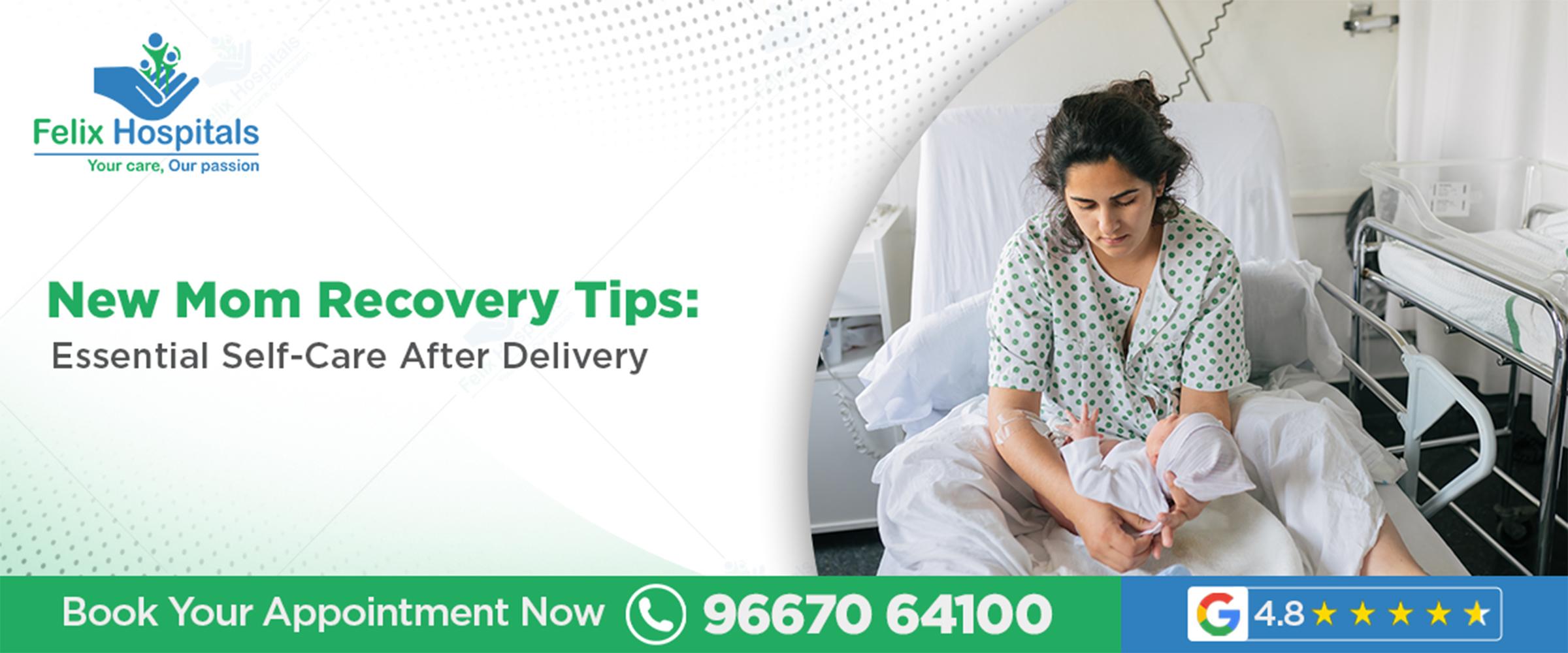
New Mom Recovery Tips: Essential Self-Care After Delivery

The postpartum period is a woman's life stage during which the body is recovering and readjusting after childbirth. postnatal care for mothers aims at physical reconditioning, emotional stabilization and adaptation to the new duties of infant home care. It’s a time that can be very disorienting, particularly for new moms as they are still recovering and learning how to care for their little one.


The body is pushed to its limits and transformed during pregnancy and childbirth. Recovery after birth, whether vaginal or cesarean, is a process that demands time, patience, and attention. self-care after childbirth is important to heal properly and to avoid complications that may affect your health in the long-run.


Professional assistance, like post-delivery health checkup for moms in Noida, can be availed for ensuring that recuperation is adequately tracked. Scheduled visits enable early detection of symptoms, help mothers cope with the physical and emotional aspects of changes, and offer comfort in such a time of transition. A better-treated recovery need not be perfect, but must be smoother, safer and easier.


Feeling exhausted, overwhelmed, or unsure about your recovery after delivery? Get expert guidance tailored for new mothers. Call +91 9667064100 to consult a postnatal care doctor near me today.


Understanding Postpartum Recovery

Postpartum recovery is a slow process and unique to each woman. self-care after childbirth is important to restoration of body strength and balance. While some women bounce back rapidly, others need more time depending on their health, type of delivery, and support networks.


Recovery from childbirth has many facets to it:


  • Restoration of reproductive organs

  • Normalization of hormones

  • Adaptation to breastfeeding

  • Sleep deprivation

  • Adapting emotionally to motherhood

Research demonstrates that up to 70–80% of women report discomfort including fatigue, pain or emotional altermaitons following childbirth. This underscores the need for organisation of postnatal care for mothers to enhance both short and long term maternal health.


Physical Recovery After Delivery

As the body goes through several physical changes after delivery, recovery tips for new mothers are essential to help them regain their vitality and well-being.


Important parts of recovery are:


  • Uterine contraction back to normal size

  • Repair of vaginal tissue or surgical wounds

  • Postpartum bleeding

  • Breast engorgement, changes in lactation

  • Sore and tired muscles

  • Good rest & hygiene to promote healing

Ignore these and complications ensue which is why the mother needs her postnatal care.


Emotional and Mental Well-being

Learning how to take care of yourself as a new mom? is balancing recovery from childbirth and prioritizing your emotional well-being with your physical health.


Some common emotional struggles are:


  • Mood swings caused by hormonal changes

  • Newborn care anxiety

  • Stress and irritability

  • Sleep deprivation leading to mental fogginess

  • Overwhelmed or isolated feelings

While postpartum blues are normal and short-lived sometimes anxiety can be a sign of depression. Timely support seeking is an essential component of self-care after childbirth and has positive maternal and infant bonding outcomes.


Importance of Post-Delivery Health Monitoring

Regular medical follow-ups are an essential component of postnatal care for mothers. These visits ensure that recovery is progressing normally and help detect potential issues early.


The benefits of monitoring are:


  • Healing of surgical wound as it is monitored.

  • Identifying complications at early stage

  • Monitoring blood pressure and vital signs.

  • Assisting with breast-feeding problems.

A quick post-delivery maternal check up in Noida offers reassurance and a helps safe recovery journey.


When to See a Doctor After Delivery

It is important to know when to go to a postnatal care doctor near me to help avoid complications.


Go to the hospital if you got:


  • Heavy bleeding and/or clots the size of a golf ball or bigger

  • Intense abdominal or pelvic pain

  • Fever or signs of infection

  • Breast pain or problems with breastfeeding

  • Ongoing emotional distress

Because early treatment leads to better outcomes and is an important element of care after birth." "And it is something that every mother can benefit from."


Diagnosis and Postpartum Assessment

During a post-delivery health checkup for moms in Noida, healthcare providers conduct various assessments to evaluate recovery.


Common assessments include:


  • Physical Examination – Evaluates healing progress

  • Blood Tests – Detects anemia or infection

  • Blood Pressure Monitoring – Identifies hypertension risks

  • Breast Examination – Assesses lactation issues

  • Mental Health Screening – Detects emotional concerns

These evaluations help create personalized care plans and ensure comprehensive recovery.


Diet and Nutrition Tips After Delivery

Your diet after delivery will help restore your energy, promote healing and support your breast milk supply.Necessary elements in your diet.


Following are some important elements in your diet:


  • Eating more protein to promote tissue repair

  • Adding iron-rich food to your diet to fight anemia

  • Adding calcium for your bones

  • Hydrating to produce milk

  • Eating fiber to prevent constipation

A well-rounded diet is a vital part of diet and nutrition tips after delivery and recovery tips for new mothers and helps with overall well-being.


Self-Care Practices for New Mothers

Consistent practices of self-care after childbirth can greatly enhance recovery.


Good habits include:


  • Rest as much as you can

  • Getting help from the family

  • Practicing good hygiene

  • Tracing/Tracing Relaxation techniquesRelaxation techniques

  • Have realistic expectations

Even small efforts consistently applied to postnatal care for mothers may result in improvements in physical and emotional health.


Managing Sleep and Fatigue

Sleep deprivation is a prevalent issue in the postpartum period. The new mothers' recovery tips for new mothers rest is important.


Dealing with the exhaustion:


  • Sleep when your baby sleeps

  • Delegate your duties to other caregivers

  • Don’t stress yourself out unnecessarily

  • Make the sleep environment inviting

  • Don’t use screens too close to bedtime

Getting enough sleep is important to allow you to take care of yourself after your baby is born and helps you get on the path to healing more quickly. –sleeping two hours and then hurrying to catch up on a nap to balance yourself out.


Newborn Care and Mother’s Health Tips

It is important to find belance between caring for the infant and recovering yourself. newborn care and mother’s health tips maintain this balance.


Useful Tips are:


  • Setting up a feeding routine

  • Upkeep of hygiene mother and baby

  • Keep an eye on baby’s growth and development

  • Taking records of vaccination

  • Asking for help when required

Looking after the mother is just as vital in aftercare of postnatal mums.


Physical Activity and Gradual Recovery

Gentle movement plays a vital role in recovery. how to take care of yourself as a new mom? includes safe physical activity.


Recommended activities include:


  • Light walking

  • Postnatal yoga under guidance

  • Pelvic floor exercises

  • Gentle stretching

  • Avoiding heavy lifting initially

Gradual activity improves circulation and supports recovery tips for new mothers.


Common Postpartum Complications

Awareness of risks is essential in postnatal care for mothers.


Possible complications include:


  • Postpartum hemorrhage

  • Infections

  • Blood clots

  • Mastitis

  • Postpartum depression

Early recognition and timely treatment are critical for safe recovery.


Experiencing discomfort, emotional stress, or slow recovery after delivery? Get personalized care and expert support for a healthy recovery. Call +91 9667064100 to book your post-delivery health checkup for moms in Noida today.


Conclusion

The postpartum period is one of recovery, adaptation, and change. Mothers will recover better and more safely with the right amount of postnatal care for mothers, adequate nutrition, emotional support, and early medical intervention.
After childbirth, focusing on self-care after childbirth allows mothers to rebuild their energy and confidence. Mother and infant are provided with long-term health benefits through routine visits, good lifestyle choices, and social support.

Written and verified by:
Dr. Charu Yadav

Dr. Charu Yadav

MBBS, MS OBG, FMAS, DMAS | Exp: 12 Yr
Obstetrics & Gynecology

Dr. Charu Yadav is an obstetrician and gynecologist with 12+ years of experience, specializing in high-risk and twin pregnancies, ectopic pregnancy, and menstrual disorders. Trained in laparoscopic surgery, she provides care for pregnancy, infertility, menopause, and gynae procedures. She is also recognized among the Best Gynecologists in Noida for her patient-focused treatment.

Your Health, Our Priority

Request Call Back

Request an Appointment

CAPTCHA
Solve this simple math problem and enter the result. E.g. for 1+3, enter 4.
* By clicking on the above button you agree to receive updates on WhatsApp

How Screen Time Affects Hormones: Facts, Myths & Healthy Tips

Your body’s hormones were not designed for late-night scrolling. This is what the science really tells us — and what you can do about it.


You’ve just completed another session of late-night phone scrolling. You’re tired, but also a bit wired. You at last fall asleep only to wake up groggy. Sound familiar? What you might not be aware of is the fact that the screen you’re holding has been quietly communicating with your hormones— and it’s not always a friendly conversation.


We live in a reality in which the typical adult spends 6 to 7 hours a day looking at a screen. For kids and teens, the figures are going up every year. Hormones — those minute chemical messengers that control sleep, mood, stress, growth, metabolism, and fertility — are finely attuned to their surroundings, including the light we’re exposed to and the emotional stimulation we’re experiencing. Knowing what happens to your hormones when you look at a screen is no longer a luxury — it’s a necessity of health literacy. The Best Endocrinology Hospital in Noida, treats the ripple effects of hormonal imbalance, and lifestyle contributors such as screen time.


What Happens to Your Hormones During Screen Exposure?

Hormones are influenced by screens via two pathways: the light they produce (especially blue light) and the psychological stimulation that results (alerts, social comparison, level of content). Different hormones are influenced in different ways:


Melatonin


  • The sleep hormone.

  • The blue light of screens inhibits its nighttime production delaying sleep and diminishing sleep quality.


Cortisol


  • The stress hormone.

  • Exciting content — news, fights, social media — induces cortisol surges that keep your nervous system on high-alert when it should be powering down.


Dopamine


  • The reward hormone.

  • No wonder every notification, like, or new video triggers a tiny dopamine hit — creating scroll loops that are hard to break and leaving us increasingly mood-depleted.


Growth Hormone


  • Secreted mostly in deep sleep by children and adolescents.

  • Directly reducing screen-disturbed sleep in which the hormone is most active in the deep sleep phases.


The Link Between Screen Time and Melatonin Levels

Among the hormones influenced by screen time, melatonin has the most well-known link. When it gets dark, your brain's pineal gland produces melatonin – it’s the body’s natural indication that night has come. Blue light, which is widely emitted from screens, looks like daylight and inhibits the production of this hormone.


Blue light interfere sleep hormones? Yes — there is no doubt of the evidence. Just 1 to 2 hours of evening screen time can delay melatonin secretion by 90 minutes or more, shifting your sleep window later and shortening the duration of your sleep.


Research Fact


  • A study published in the Proceedings of the National Academy of Sciences (PNAS) found that reading on a light-emitting device before bed suppressed melatonin by over 50% compared to reading a printed book.

  • Participants took significantly longer to feel alert the next morning.


Source: Chang AM et al., PNAS, 2014. "Evening use of light-emitting eReaders negatively affects sleep, circadian timing, and next-morning alertness."


Screen Time and Cortisol: The Stress Hormone Connection

Cortisol has a natural daily pattern of production high in the morning to help you wake up, declining throughout the day, being low at night. Screen time and cortisol are an issue when stimulating content — urgent news cycles, emotionally charged social media, intense gaming — keep this hormone elevated beyond its natural diminishing point.


  • Scrolling through unsettling news right before bed activates the brain’s threat-response system

  • Social media comparison activates cortisol responses akin to mild social stress

  • High-stimulation gaming increases heart rate and cortisol levels, which biologically makes it hard to relax

  • Persistent high levels of evening cortisol are associated with poor sleep, increased fat storage and suppressed immune function


Impact of Screens on Dopamine and Mood

Social media apps are dopamine delivery systems by design. Every notification, every like, every new post gives us a hit of dopamine — the same neurotransmitter that’s involved in reward, motivation, and pleasure. The problem is that receptor downregulation occurs with repeated stimulation over time. In layman’s terms: you need more to feel the same. This is why — and you can tell this by how you feel when you stop and take a breath — people are empty, flat and irritable after long stretches of scanning, not charged up.


The effect of screens on dopamine and mood is so worrisome because teenagers’ dopamine systems are still developing. Teens who are overstimulated on a regular basis during these years may be more prone to mood disorders, irritability, and trouble with delayed gratification.


Can Excessive Screen Time Affect Growth Hormones in Children?

That's a question parents ask us all the time, and the answer is: Yes, indirectly but significantly. So, can too much screen time affect the growth hormones of children? GH is secreted mainly during the first 2-4 cycles of deep (slow wave) sleep, usually in the first 90 min of sleep. When screen use postpones going to sleep or disrupts sleep quality, the proportion of deep sleep decreases — and so does the peak growth hormone release.


Research Fact


  • A large study published in JAMA Pediatrics found that children aged 8–11 who exceeded the recommended 2 hours of daily recreational screen time had significantly lower cognitive scores and measurably reduced sleep duration.

  • Poor sleep directly correlating with disrupted hormonal rhythms including lower growth hormone pulsatility.


Source: Cheng W et al., JAMA Pediatrics, 2020. "Screen time and cognitive development in children."

Beyond growth hormone, late-night screens in children also delay puberty onset in some studies and are associated with higher cortisol reactivity — a marker of chronic low-grade stress.


Concerned about your child's hormonal health or sleep patterns?

Our paediatric endocrinology team at the Best Endocrinology Hospital in Noida evaluates growth, puberty, and hormonal health holistically — including lifestyle factors like sleep and screen time.


Common Myths About Screen Time and Hormonal Imbalance


Myth
“Blue light glasses cancel out the hormonal impact of using screens."


Fact
Blue light glasses do block some blue light wavelengths, but they don’t help with the cognitive stimulation or effects on cortisol that screen content has. Staring at a screen dimmer and then walking away is more effective.


Myth
"They say only phone screens affect hormones — TV from across the room is fine at night."


Fact
Bright light from any light-emitting screen can also suppress melatonin. TV at close range or in a dark room can be disruptive, but a handheld screen may be a tad worse.


Myth
“Night mode is enough to make late-night scrolling hormonally harmless.”


Fact
Night mode does make a difference but it’s not enough to block all the blue light. The content-induced stimulation of our brains still triggers cortisol, no matter what colour the screen is.


Signs Your Hormones May Be Affected by Screen Overuse

Your body is designed to alert you when something is not right. Keep an eye on these:


  • Difficulty falling asleep despite feeling tired

  • Awakening tired regardless of length of sleep

  • Irritability, inos Mood dips or emotional blunting.

  • More cravings for sugar or junk food in the evening

  • Brain fog or difficulty focusing in the morning

  • Planning low or persistent low mood

  • Children: delayed sleep onset, active sleep, affective swings

  • Unexplained weight gain, especially around the abdomen

These symptoms alone do not mean your hormones are out of whack — but if they multiple symptoms cluster, coincide with high screen usage, then they really should be brought up with an endocrinologist.


Healthy Tips to Balance Screen Time and Hormonal Health

Small, consistent changes will do more good than dramatic one-week "cleanses." Here’s the real stuff that works:


  • Stop screen use 60–90 minutes before bedtime.

  • Get morning sunlight ≤30 minutes after waking up.

  • Charge your phone out of the bedroom.

  • Practice content intentionality. Opt for laid-back, low-stimulation fare in the evening. Stay off the news and social feeds past 8 p.m.

  • For kids: enforce regular screen curfews. No screen time at least one hour before bed — unconditionally.

Celebrate screen-free dinners. Eating distracted by screens elevates cortisol and dysregulates gut-brain signaling, the communication system between the brain and the gut that controls hunger hormones, such as ghrelin and leptin.


When to Seek Medical Advice for Hormonal Symptoms

Limiting screen time can help a lot — but some hormone imbalances require a doctor's assessment. Consult the Best Endocrinologist in Noida if you or your child have:


  • Ongoing sleep problems for more than 3-4 weeks after lifestyle modifications

  • Noticeable mood swings, anxiety or depression that cannot be attributed to other causes.

  • Unexplained weight gain, hair loss, or fatigue (that can be related to thyroid problems)

  • In children – concerns about growth, delayed or precocious puberty or enduring changes in behaviour

  • High screening use and poor sleep predict irregular periods in adolescent girls.

Hormonal health takes many factors — screen time is one important factor, but thyroid function, insulin sensitivity, adrenal health and reproductive hormones all must be evaluated collectively by a trained professional.


Whether it's sleep disruption, mood changes, weight shifts, or growth concerns in your child — our Best Endocrinologist in Noida will give you answers rooted in evidence, not guesswork. Call now to book an appointment.


Conclusion

Screens are not bad. They’re just a tool — an incredible one. But when we do ourselves the disservice of mindlessly using them, especially in the hours before we go to sleep, they quietly disrupt some of the most important chemical systems in our body. Melatonin is suppressed. Cortisol remains elevated. Dopamine loops keep us coming back. And in children, growth hormone loses its nightly opportunity.


The good news is that the hormonal system is highly responsive. Minor but consistent changes in screen habits — turning the lights off 90 minutes before bed, getting morning sunlight, making the evenings screen-calm — can have a significant impact on getting your hormones back in rhythm in a matter of weeks. Your biology wants to heal. Provide it with the environment it was meant for.


And if you do all that and the symptoms linger, don’t dismiss them. Book a consultation. Hormonal health is core to everything– your energy, your mood, your weight, your child’s growth. It’s really worth a decent chat.

Written and verified by:
Dr. Vimal Gupta

Dr. Vimal Gupta

MBBS, CCEBDM ( PHFI delhi ) | Exp: 15 Yr
Diabetes & Endocrinology

Dr. Vimal Gupta is an experienced endocrinologist and diabetologist with 15 years of expertise in treating diabetes, thyroid disorders, obesity, PCOD, and adrenal conditions. Currently practicing at Felix Hospital, he is known for his patient-focused care and personalized treatment approach in endocrine health.

Your Health, Our Priority

Request Call Back

Request an Appointment

CAPTCHA
Solve this simple math problem and enter the result. E.g. for 1+3, enter 4.
* By clicking on the above button you agree to receive updates on WhatsApp

ABG Test in Noida: Objective, Process and Outcomes

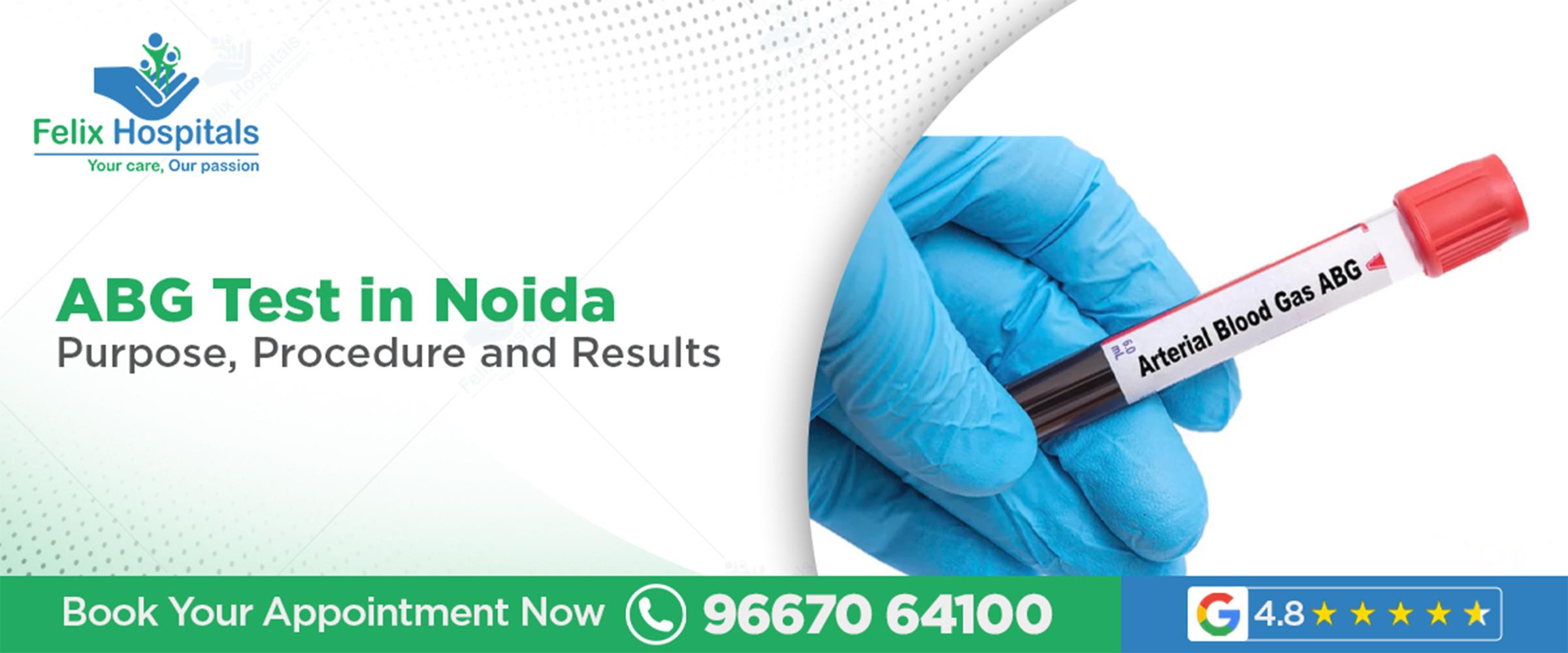
The Arterial Blood Gas (ABG) testing is one of the most significant diagnostic tools of emergency and critical care medicine. It gives quick and precise data on the functioning of the lungs, heart, and kidneys by checking the quantity of oxygen, carbon dioxide, and acid-base equilibrium in the blood. An ABG test can give life-saving information within few minutes in cases of emergency.


Oxygen levels and the pH of the blood can be disrupted due to respiratory diseases, severe infections, kidney disorders, and heart-related conditions. Clinical studies have shown that ABG testing plays a crucial role in managing conditions such as pneumonia, asthma, COPD, sepsis, and respiratory failure. Early testing and accurate interpretation help ensure timely treatment and better patient outcomes in a well-equipped pulmonology hospital in Noida.


Experiencing breathing difficulty, chest discomfort, or persistent fatigue? Early diagnosis can prevent complications. Call +91 9667064100 to book your ABG test today.


What is an ABG Test?

Understanding what is an ABG test? helps patients appreciate its importance in diagnosing serious medical conditions.


ABG test evaluates the concentrations of gases and pH in the arterial blood. As opposed to the normal blood samples collected around the veins, the samples of ABG are collected around the arteries due to the fact that the arterial blood depicts the efficiency with which oxygen is being transported in the body.


The test tests three important functions:


  • Oxygenation (lungs delivery of oxygen)

  • Ventilation (efficacy of carbon dioxide removal)

  • Acid-base equilibrium (regulation of pH in the body)

This test is widely applied in emergency departments, intensive care units and also major surgeries.


Purpose of the ABG Test

Understanding the purpose of the ABG test highlights its importance in diagnosing and monitoring severe illnesses.
Doctors use ABG testing to:


  • Assess lung function

  • Detect respiratory failure

  • Monitor critical patients

  • Evaluate kidney function

  • Guide oxygen therapy

  • Efficacy of ventilators checks.

The ABG testing assists the doctor in making fast treatment decisions, particularly in cases of emergency situations.


When is an ABG Test Recommended?

Knowing when is an ABG test recommended? helps patients understand why doctors order this test.


ABG testing may be prescribed by doctors when the patient has:


  • Penetrating difficulty in breathing.

  • Asthma or COPD flare-ups

  • Pneumonia

  • Heart failure

  • Kidney disease

  • Uncontrolled diabetes

  • Possible poisoning or overdose.

  • Injuries to head or neck which affect breathing.

It is mostly carried out in critical and emergency care settings.


Procedure of ABG Test in Noida

Understanding the procedure of ABG test in Noida can help reduce anxiety.


Steps include:


  • A medical worker identifies an artery (typically wrist).

  • The region is draped and anesthetised.

  • A tiny needle of the form used to gather blood.

  • Immediate analysis of sample.

  • It is completed in less than 10 minutes.


How to Prepare for an ABG Test

Knowing how to prepare for an ABG test ensures accurate results.


Preparation tips:


  • Report to physician about drugs.

  • Avoid smoking before test

  • Relax and breathe normally

  • Comply with oxygen therapy directions where needed.

  • Any fasting is not usually necessary.


Understanding ABG Test Results

Understanding ABG test results helps patients know what doctors look for.


The test measures:


  • Oxygen levels (PaO2)

  • Carbon dioxide levels (PaCO2)

  • Blood pH

  • Bicarbonate (HCO3)

The values assist physicians in detecting respiratory or metabolic diseases.


Risks and Side Effects of ABG Test

Understanding risks and side effects of ABG test reassures patients.


Possible minor risks:


  • Mild pain or discomfort

  • Slight bleeding

  • Bruising

  • Temporary dizziness

The serious complications are not common.


Normal Range of ABG Test Values


Parameter

Normal Range

pH

7.35 – 7.45

PaO2

75 – 100 mmHg

PaCO2

35 – 45 mmHg

HCO3

22 – 26 mEq/L

Oxygen Saturation

95 – 100%

Values outside this range indicate respiratory or metabolic imbalance.


Benefits of ABG Testing

Understanding benefits of ABG testing highlights its life-saving role.


Key benefits:


  • Rapid diagnosis

  • Proper oxygen level analysis.

  • Helps manage ventilators

  • Guides emergency treatment

  • Observes chronic lung diseases.

ABG testing enhances survival of serious diseases.


ABG Test Providers in Noida

The awareness of the whereabouts of an ABG test in Noida means that care is being taken on time.


Choose a hospital with:


  • Emergency services

  • Pulmonology specialists

  • Advanced diagnostic labs

  • ICU facilities

Timely testing enhances the treatment effects.

Need urgent ABG testing or respiratory evaluation? Do not delay medical care. Call +91 9667064100 to schedule your test now.


Conclusion

The ABG test is crucial in the diagnosis and treatment of respiratory and metabolic diseases. Knowledge of what is an ABG test, its reasons, method and outcome will enable patients to make constructive choices regarding their health.


The Best pulmonologist in Noida has been consulted earlier, and the results were effective in ensuring timely treatment and recovery.

Written and verified by:
Dr. Priyadarshi Jitendra Kumar

Dr. Priyadarshi Jitendra Kumar

Pulmonology | Exp: 20 Yr
MBBS/ DNB/ FSM/FCCP

Dr. Priyadarshi Jitendra Kumar is an experienced General Practitioner with 20+ years of expertise in diabetes, thyroid disorders, hypertension, and infectious diseases. Recognized as a Best Pulmonologist in Noida, he specializes in respiratory emergencies, sleep disorders, and advanced pulmonology care.

Your Health, Our Priority

Request Call Back

Request an Appointment

CAPTCHA
Solve this simple math problem and enter the result. E.g. for 1+3, enter 4.
* By clicking on the above button you agree to receive updates on WhatsApp

Breast Itching: Common Causes & When It Could Be Serious

Itchiness of the breast is a frequent issue that every woman encounters at least once in her life. In the majority of cases, it is non-dangerous and associated with slight skin irritation or drying, or hormonal disruptions. Nonetheless, chronic, or weird, itching may occasionally be a sign of a medical condition that needs to be addressed.


The breast skin, particularly the nipple area, is sensitive, and may respond to environmental factors, clothing, hygiene products, and internal hormonal changes. Hormones may cause temporary discomfort or itching during various stages of life; this includes puberty, pregnancy, and menopause.


Although the vast majority of cases occur in a mild form, persistent, severe symptoms, or related to other changes, including redness, swelling, discharge, or lumps, should not be overlooked. The low percentage of clinical observations suggest that some cases of breast itch can be associated with more severe and dangerous conditions, such as infections or uncommon types of breast disease.


Timely treatment in a Gynecology Hospital in Noida will provide the appropriate assessment, diagnosis, and confidence.


Experiencing persistent itching or discomfort in your breast? Don’t ignore it—early evaluation can prevent complications. Call +91 9667064100 to consult a gynecologist today.


Why Are My Breasts Itchy?

The first step towards identifying the cause is to understand why my breasts are itchy.


There are various common causes of breast itching which could include:


  • Dry skin

  • Sweating and friction

  • Allergic reactions

  • Hormonal changes

When hot, sweat may be deposited under the breasts causing irritation and itching. Friction can also be exacerbated with tight or tight clothing.


Menstrual periods or pregnancy can elevate the skin sensitivity, allowing itching to be more pronounced.


Is Breast Itching Normal?

Is it normal to have itching on the breast, many people wonder?


Yes, itchy sometimes is normal, it is usually temporary. It may occur due to:


  • Weather changes

  • Skin dryness

  • Minor irritation

Nevertheless, persistent long-term itching, as well as itching that is accompanied by other symptoms, cannot be overlooked.


According to medical professionals, although most cases are harmless, chronic itching needs to be checked to eliminate the possibility of underlying conditions.


What Causes Itching Around Nipples?

Knowledge about the causes of itching around the nipples leads to establishment of certain triggers.


Common causes include:


  • Eczema or dermatitis

  • Fungal infections

  • Soaps or detergents allergy

  • Hormonal changes

The nipple region is the most sensitive segment of the breast, and is therefore most likely to be irritated. Redness, flaking and discomfort may be a result of infections or skin conditions. Symptoms can be reduced with proper hygiene and avoidance of irritants.


What Are the Common Causes of Breast Itching?

Itchy breasts may be caused by a number of different things.


Common causes include:


The fungi can also be effectively prevalent in damp and cool climates. These infections are moist and may result in severe itching and reddening.


Is Breast Itching a Symptom of Breast Cancer?

It is important to know about understanding breast itching as a symptom of breast cancer? but it is a mistake. Breast itching in most instances is not associated with cancer. But, in some rare instances, some forms of breast cancer like inflammatory breast cancer or Paget disease can lead to itching.


Warning signs may include:


  • Chronic itching of a single location.

  • Redness or swelling

  • Alterations of the skin

  • Nipple discharge

It is worth mentioning that such cases are uncommon, but any strange or unusual persistent symptom must be assessed by a physician.


Can Itchy Breasts Be a Sign of Cancer?

Many patients ask, can itchy breasts be a sign of cancer?


Itching by itself is not a common symptom of cancer, but it must not be overlooked when it is accompanied by other symptoms.


Red flags include:


  • Lump in the breast

  • Changes in breast shape

  • Persistent redness

  • Unusual discharge

Treatment results are much better when breast cancer is diagnosed at an early age, which is why it is always good to see a doctor in case of suspicion.


When Should I Worry About Breast Itching?

Knowing when I should worry about breast itching helps in timely action.


You should consult a physician when:


  • Itching continues for several weeks.

  • There is redness or swelling

  • Skin changes are visible

  • Itching is confined to a single spot.

  • There is pain or discharge

Recurrent symptoms can present with a condition that needs to be treated.


Diagnosis and Tests

Proper diagnosis is essential to identify the cause of breast itching.


Test

Purpose

physical examination

identifies visible changes

skin tests

detect allergies or infections

imaging tests

rule out internal issues

biopsy (if needed)

detect abnormal cells

These tests help doctors determine the exact cause and provide appropriate treatment.


Treatment Options for Breast Itching

The method of treatment is determined by the cause.


Common treatments include:


  • Moisturizers for dry skin

  • Antifungal infections creams.

  • Allergy antihistamines

  • Creams to treat skin diseases with medication.

It is also important to avoid irritants and keep clean.


Early intervention is beneficial to avoid complications and offer relief.


Lifestyle and Prevention Tips

Breast itching can be averted with simple lifestyle changes.


Tips include:


  • Wearing breathable fabrics

  • Maintaining proper hygiene

  • Avoiding harsh soaps

  • keeping skin moisturized

These will prevent skin irritation and preserve skin health.


Role of Medical Care

Qualified medical attention leads to proper diagnosis and treatment.


Medical care provides:


  • Individualized treatment options.

  • Advanced diagnostic tools

  • Monitoring of symptoms

  • Mvoidance of complications.

Better results can be achieved with the help of specialists.


Not sure if your symptoms are normal or serious? Get expert evaluation for complete peace of mind. Call +91 9667064100 to consult a gynecologist now.


Conclusion

Breast itching is generally an innocuous process, although it may also be a sign of an underlying problem. Learning to identify an itchy spot on my breast, why my breasts itch, and when I need to be concerned about itching around my nipples are key to keeping my breast healthy.


Simple care will be sufficient to treat most cases, but a doctor should always consider persistent or unusual symptoms. The Best Gynecologists in Noida can help in proper diagnosis and treatment.

Written and verified by:
Dr. Sheetal Yadav

Dr. Sheetal Yadav

MBBS, MD (Dermatology), DNB (Dermatology), MRCP SCE (Dermatology) | Exp: 4 Yr
Dermatology

Dr. Sheetal Yadav is a board-certified dermatologist with 4+ years of experience in medical and cosmetic dermatology. She specializes in treatments like laser procedures, chemical peels, micro-needling, PRP, mesotherapy, and Botox/fillers. Recognized among the Best Dermatologists in Noida, she provides safe and personalized skincare solutions.

Your Health, Our Priority

Request Call Back

Request an Appointment

CAPTCHA
Solve this simple math problem and enter the result. E.g. for 1+3, enter 4.
* By clicking on the above button you agree to receive updates on WhatsApp

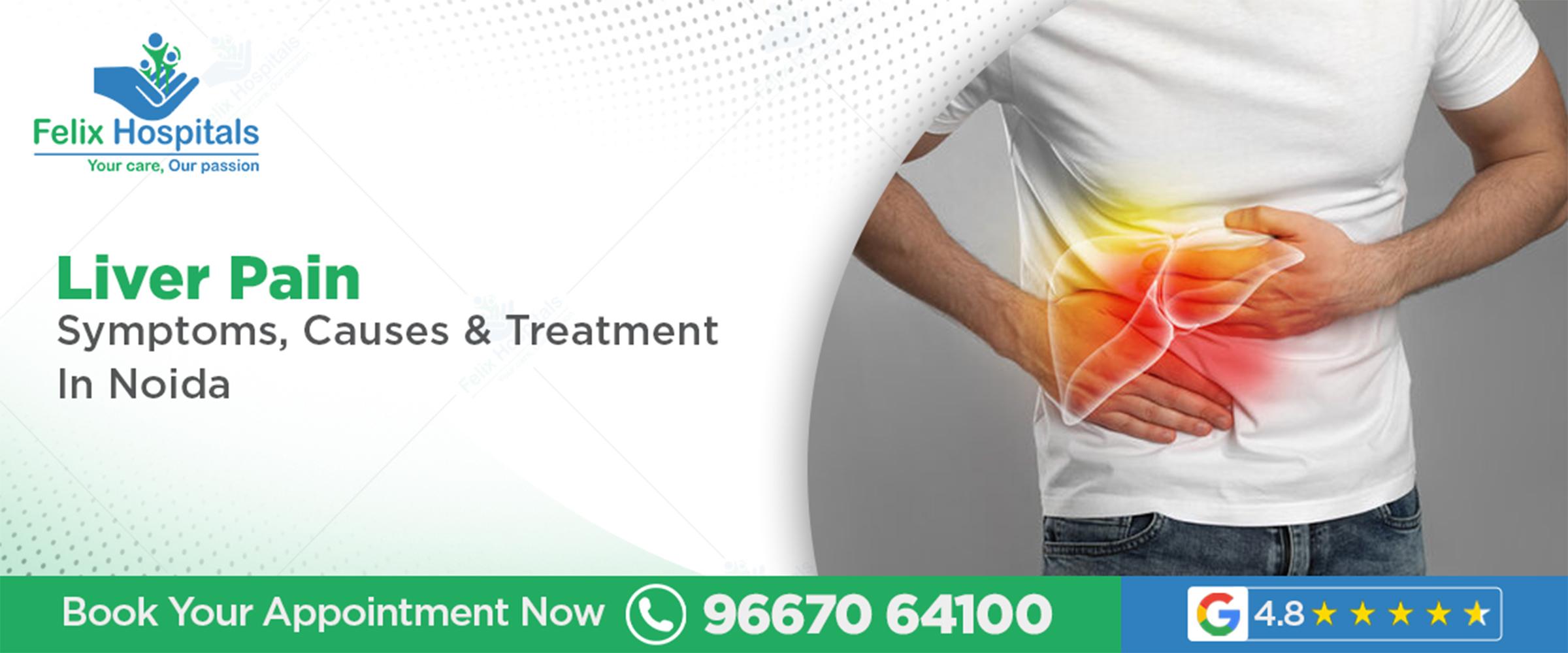
Liver Pain: Symptoms, Causes & Treatment In Noida

Liver-related discomfort is often misunderstood because the liver itself does not always produce clear pain signals. It is also possible that pain or discomfort in the upper right abdomen indicates something that requires medical attention. Knowing the signs of liver pain helps in early detection and timely care from a Liver Doctor in Noida.


In general, liver problems are silent and may not show noticeable symptoms until they become advanced. Early diagnosis, prevention of complications, and better long-term outcomes are possible when patients receive specialized care in Noida.


Experiencing discomfort in the upper abdomen or unusual digestive symptoms? Early evaluation can help prevent serious liver conditions. Call +91 9667064100 to consult the best liver specialist in Noida today.


Understanding Liver Pain

The liver is a very important organ in digestion, detoxification, and metabolism. Recognizing early signs of liver disease helps in detecting issues before they become severe. Pain is mostly a dull or sharp sensation in the upper right side of the abdominal area.


Medical research also indicates that most liver diseases do not show symptoms at their early stages and therefore, early intervention can be achieved through awareness and frequent health checkups for a better chance of good prognosis.


Causes of Liver Pain

Identifying the causes of liver pain is essential to understand the underlying condition and choose appropriate treatment. Liver pain may be caused by infection, lifestyle, and chronic illness.


Common causes include:


  • Dietary or obesity-induced fatty liver disease

  • Viral or non-viral hepatitis infections

  • Liver damage associated with alcohol

  • Hepatic inflammation or hepatic swelling

  • Liver abscess or infection

  • Cirrhosis (scarring of the liver)

  • Some drugs that have an impact on the liver

These causes require different modes of treatment, thus it is important to diagnose them correctly.


Symptoms of Liver Pain

Recognizing the symptoms of liver pain early can help prevent disease progression and complications. The symptoms can differ according to the severity and nature of the liver condition.


Common symptoms include:


  • Pain or discomfort in the upper right abdomen

  • Stomach fullness or bloating

  • Nausea or vomiting

  • Fatigue or weakness

  • Loss of appetite

  • Jaundice (yellowing of skin or eyes)

  • Dark urine or pale stools

These are symptoms that must not be overlooked, particularly when they do not improve over time.


Early Signs of Liver Disease

Understanding the early signs of liver disease helps in taking preventive steps before the condition advances.


Early warning signs include:


  • Mild abdominal discomfort

  • Unexplained fatigue

  • Slight weight loss

  • Digestive issues

  • Itchy skin

  • Mild swelling in legs

It is clinically established that liver conditions detected at early stages are often reversible when treated in time.


Risk Factors for Liver Problems

There are a few lifestyle and medical factors which put people at risk of liver conditions. Being aware of these risks helps in prevention.


Key risk factors include:


  • Alcohol addiction

  • Obesity and poor diet

  • Diabetes or metabolic diseases

  • Long-term medication use

Managing these factors contributes significantly to liver health.


When to See a Doctor

It is important to know when to seek medical attention to stay in control of liver-related problems. Any delay in care may result in severe complications.


Consult a doctor if:


  • The pain lasts a number of days

  • Symptoms worsen over time

  • Jaundice develops

  • Extreme fatigue impacts normal life

  • Leg and abdominal swelling occurs

  • Weight loss occurs without a reason

Timely consultation helps achieve better treatment outcomes.


Diagnosis and Tests

Proper diagnosis is essential for determining the cause and severity of liver conditions and guiding treatment decisions.


Test

Purpose

Liver Function Tests (LFT)

Measures liver enzymes and function

Ultrasound Abdomen

Detects structural abnormalities

CT Scan / MRI

Provides detailed imaging of liver

Blood Tests

Identifies infections or inflammation

Liver Biopsy

Confirms diagnosis in complex cases

These tests help doctors create personalized treatment plans for patients.


Treatment of Liver Pain

Liver pain has various causes and the severity of the problem requires effective treatment. Early intervention enhances results and avoids complications.


Treatment options include:


  • Anti-inflammatory or antibiotic drugs

  • Antiviral therapy for hepatitis

  • Lifestyle modifications including exercise and diet

  • Cessation of alcohol and substance misuse

  • Monitoring and controlling chronic diseases

  • Surgery in extreme cases

Medical guidance ensures safe and effective treatment.


Lifestyle Changes for Liver Health

Healthy habits are crucial in preserving liver health and recovery. Understanding how to keep the liver healthy can significantly reduce the risk of disease.


Healthy lifestyle practices include:


  • Maintaining a balanced diet

  • Regular physical activity

  • Avoiding excessive alcohol

  • Staying hydrated

  • Keeping weight under control

  • Consuming less processed and fatty food

Such practices promote liver health and wellbeing.


Diet and Nutrition for Liver Care

Diet is important in the maintenance of liver health and prevention of liver disease.


Suggested eating habits:


  • Fruits and vegetables

  • Eat more protein.

  • Don’t eat fried or processed foods.

  • Reduce sugar intake

  • Drink sufficient water

A proper diet helps with detoxification and improves liver function.


Complications of Untreated Liver Disease

Neglecting liver symptoms may result in severe health issues.


Potential complications include:


  • Liver failure

  • Cirrhosis

  • Portal hypertension

  • Ascites (abdominal fluid)

  • Higher risk of liver cancer

These severe consequences are prevented with early treatment.


Preventive Measures for Liver Health

Prevention is an important factor that can reduce the burden of liver diseases and support long-term health.


Preventive tips include:


  • Regular health checkups

  • Hepatitis vaccination

  • Safe medication use

  • Healthy lifestyle choices

  • Avoiding exposure to toxins

  • Practicing good hygiene

Preventive care helps achieve better health outcomes and minimize medical risks.


Role of Specialist Care

The liver disease need to be correctly diagnosed and treated by an expert.


Specialist care offers:


  • Full range of diagnostic procedures

  • Customized healthcare

  • Surveillance of chronic conditions

  • Qualified advice on lifestyle

  • Comprehensive patient management

  • Specialist care promotes health and quality of life.

Experiencing persistent abdominal discomfort or signs of liver problems? Get expert diagnosis and advanced care today. Call +91 9667064100 to book your consultation for liver treatment in Noida.


Conclusion

Liver pain may signal potential health problems – so don’t ignore it. Recognizing the signs of liver pain, knowing the causes of liver pain, and receiving treatment in a timely manner are crucial to avoiding severe complications.


The majority of liver diseases can be cured with adequate diagnosis, suitable treatment and maintaining healthy lifestyle. In order to get better health outcome and long lasting well being, it is advisable to consult the best liver specialist in Noida and opt for the best liver treatment in Noida.

Your Health, Our Priority

Request Call Back

Request an Appointment

CAPTCHA
Solve this simple math problem and enter the result. E.g. for 1+3, enter 4.
* By clicking on the above button you agree to receive updates on WhatsApp

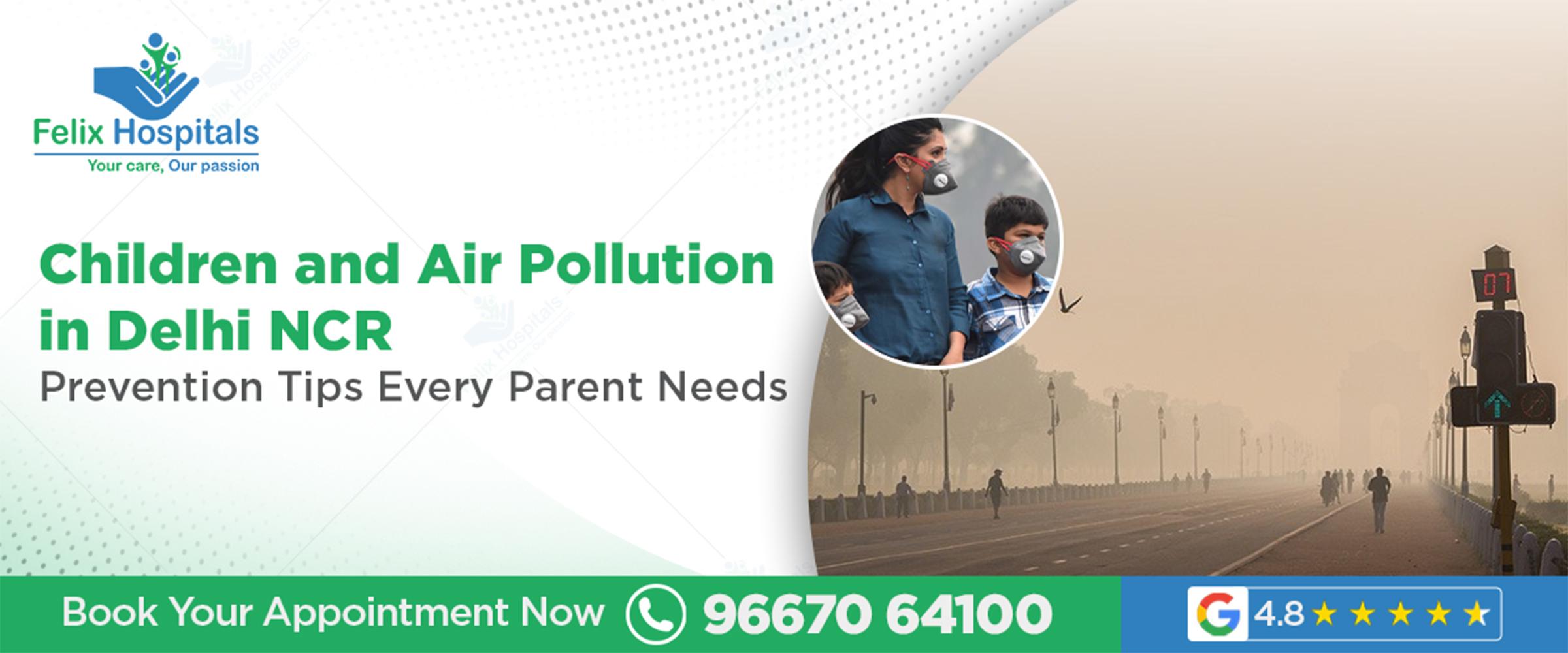
Children and Air Pollution in Delhi NCR: Prevention Tips Every Parent Needs

Air pollution has emerged as a major issue in big cities like Delhi NCR especially for children, who are naturally more vulnerable and get affected the most. Children still develop lungs & breathe faster than adults, so the volume of polluted air inhaled by children per unit of body weight is significantly higher than adults. Knowing that air pollution can impact children's health, it is important for the parents to protect their child's respiratory health and overall development.


Urban pollution is a product of many different sources, such as traffic and industries, and the dust from building sites. Prolonged exposure can cause respiratory issues, allergies and immunity suppression. Pollution-related health risks to the kids are well acknowledged, helping the parents to take anticipatory measures and also identify early symptoms requiring medical care.


Concerned about your child's breathing problems during high pollution days? Early evaluation can help prevent long-term respiratory complications. Call +91 9667064100 to consult a pediatric pulmonologist in Noida.


Understanding Air Pollution in Delhi NCR

Environmental and seasonal factors contribute to spikes in air pollution in Delhi NCR during certain months. Toxic gases and fine particles are suspended in the air and when children breathe them in, they can penetrate the lungs. Common sources of pollution are:


  • Emissions from vehicles and traffic jams

  • Smoke from industries and chimneys of factories

  • Dust from construction sites and roads

  • Crop burning in neighbouring states

  • Burning of waste and household waste

  • Seasonal weather conditions that trap pollutants

These sources contribute significantly to pollution health effects on kids, especially in densely populated urban regions.


How Air Pollution Affects Children's Health

Although parents frequently underestimate the impact of air pollution on their children's health, prolonged exposure can impair children's respiratory systems and decrease the volume of their lungs. Fine particulate matter (PM2.5) can get deep into the lungs and even pass into the bloodstream, causing inflammation and respiratory issues.


Possible health effects include:


  • Airway and throat irritation

  • Decreased lung growth in children

  • Greater risk of asthma

  • Poor immune response to infections

  • Higher allergic sensitivity

These effects on health may be compounded if exposure is prolonged over many years.


Air Pollution Effects on Children's Lungs

The impact of air pollution on children's health is usually visible from their lungs since pollutants have the respiratory tract under their immediate influence. When irritants get into the lungs, they can cause inflammation, irritation, and more mucus production.


Potential lung problems that could be the result include:


  • Asthma attacks

  • Bronchitis and infections of the lung

  • Chronic cough

  • Chest pressure

  • Shortness of breath during exercise

Regularly having breathing problems? Your child may need to be seen by a pediatric pulmonologist in Noida.


Pollution Health Effects on Kids Beyond the Lungs

The impact of pollution on children's health goes well beyond respiratory issues. Polluted air can also have an impact on other parts of the body, because some pollutants get into the blood.


Other effects on health are:


  • Burning and/or redness of the eyes

  • Headaches and tiredness

  • Less concentration in school

  • Higher allergy risk

  • Sleep disruption due to breathing difficulties

These problems can interfere with a child's day-to-day activities and general health.


Common Symptoms of Pollution Exposure in Children

Recognition of symptoms of the air pollution effect on children allows parents to act promptly and take their children to the pediatrician when necessary. Air pollution is linked to the following common symptoms:


  • Persistent cough

  • Wheezing or loud breathing

  • Frequent cold and infection

  • Breath shortage

  • Chest congestion

  • Headache

These symptoms can get worse if the pollution is really bad.


Children Who Are at Higher Risk

Some children are more susceptible to the impact of air pollution on children's health due to pre-existing health conditions or environmental exposures. Some of the children who are at a greater risk are:


  • Children with asthma

  • Kids with allergies or sinus issues

  • Kids exposed to indoor smoke

  • Children with compromised immune systems

Such children may require regular monitoring by a children's asthma doctor in Noida.


When to See a Doctor

Parents need to pay attention to the breathing issues of their children and get them treated as these can escalate if left unattended. Early medical consultation helps prevent serious complications. Consult your healthcare professional if:


  • Cough lasting more than 1 week

  • Recurrent wheezing

  • Respiratory distress 

  • Repeated respiratory infections

  • Breathlessness

A children's asthma doctor in Noida can evaluate these symptoms and recommend appropriate treatment.


Diagnosis and Tests for Pollution-Related Respiratory Problems

Doctors evaluate the air pollution effects on children using clinical examination and diagnostic tests that assess lung health and respiratory function.


Test

Purpose

Spirometry

Measures lung capacity and airflow

Chest X-ray

Detects lung infection or inflammation

Allergy Testing

Identifies environmental triggers

Blood Tests

Detects infection or immune response

Pulse Oximetry

Measures oxygen level in blood

These tests help a pediatric pulmonologist in Noida diagnose respiratory conditions accurately.


Treatment for Pollution-Related Respiratory Problems

Managing respiratory issues caused by pollution focuses on improving breathing and reducing airway inflammation. Early treatment helps prevent chronic lung diseases in children.


Treatment options may include:


  • Bronchodilator medications to improve breathing

  • Anti-allergy medicines

  • Asthma inhalers when required

  • Treatment for respiratory infections

  • Regular follow-up monitoring of lung function

Children with chronic respiratory symptoms should receive treatment from a children's asthma doctor in Noida.


Ways to Reduce Pollution Exposure for Kids

Parents can reduce associated health risks by applying simple rules for limiting children's exposure to pollution during their day-to-day lives.


These are the recommendations:


  • Don't exercise outside when air pollution levels are high

  • Keep an eye on the daily AQI

  • Promote mask usage during high pollution

  • Shut windows in heavy pollution

  • Run air purifiers inside

  • Clean hands and face after being outside

These steps play an important role in protecting children from air pollution.


Improving Indoor Air Quality for Children

Protecting children from air pollution is just as important indoors, as children spend a lot of time inside their homes.
What parents can do to improve indoor air quality:


  • Using HEPA air purifiers

  • Keeping a house dust-free

  • No smoking indoors

  • Limiting incense or candle smoke

  • Providing ventilation when pollution is low

Keeping the indoor air cleaner helps to reduce pollution exposure overall for children.

If your child experiences frequent coughing, wheezing, or breathing problems during pollution season, medical evaluation is important. Consult an experienced pediatric pulmonologist in Noida for proper diagnosis and treatment. Call +91 9667064100 to consult a children's asthma doctor in Noida.


Conclusion

Air pollution still poses a health hazard for children in the Delhi NCR, primarily because of the fact that their lungs are still actively growing and are thus more vulnerable to environmental irritants. The knowledge of the air pollution effects on children gives the parents the ability to identify the symptoms at an initial stage and take the necessary precautions.


With the help of some easy steps to lower a child's pollution exposure, better quality of indoor air, and timely medical advice from a top Paediatric Hospital in Noida, parents can make a positive difference in a child's risk of getting a respiratory disease. Awareness and early detection are critical in safeguarding the long-term lung health of children.

Written and verified by:
Dr. Prabhat Kumar

Dr. Prabhat Kumar

MBBS, DCH, DNB, FPICCU,FNNF | Exp: 9 Yr
Pediatrics & Neonatology

Dr. Prabhat Kumar is a pediatrician and neonatology specialist with over 9 years of experience, recognized among the Best Pediatricians in Noida. He specializes in infectious diseases, general pediatrics, and child growth and development, providing trusted care for childhood illnesses, immunizations, neonatal care, and teenage health concerns.

Your Health, Our Priority

Request Call Back

Request an Appointment

CAPTCHA
Solve this simple math problem and enter the result. E.g. for 1+3, enter 4.
* By clicking on the above button you agree to receive updates on WhatsApp

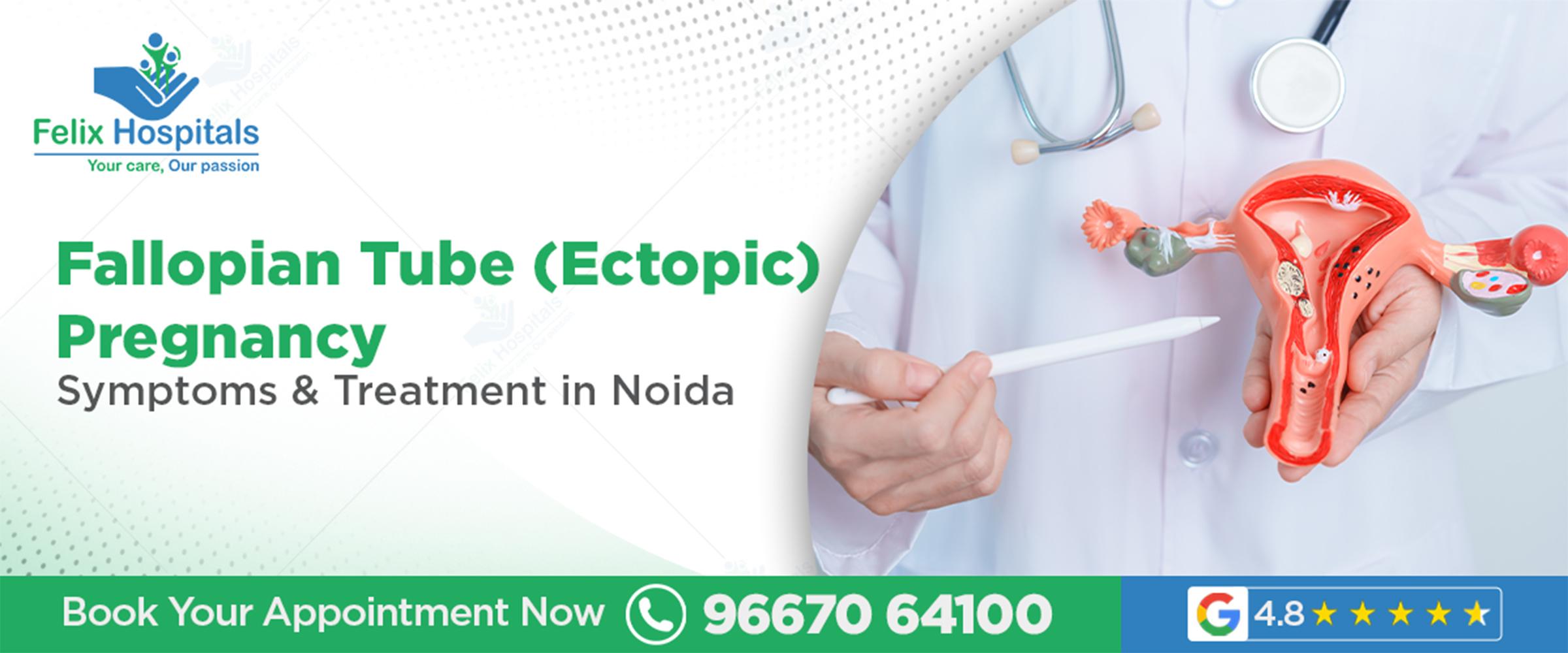
Fallopian Tube (Ectopic) Pregnancy: Symptoms & Treatment in Noida

Ectopic pregnancy, also referred to as a fallopian tube pregnancy is a severe medical condition where a fertilized egg implants outside the uterus, but in the majority of cases, the implantation location is the fallopian tube. The ectopic pregnancy can never grow safely in the womb as a normal one, and hence it can be very dangerous when left untreated.


Ectopic pregnancies are prevalent among around 1-2% pregnancies all over the world. Out of them, over 90% are found in the fallopian tubes. This renders it as the most prevalent form of ectopic pregnancy. The situation may be life threatening when the tube bursts and causes internal bleeding and emergency complications.


Among the greatest difficulties associated with the ectopic pregnancy is that the symptoms are usually similar to those of a normal pregnancy that can result in delayed diagnosis. That is why awareness is of great essence. With early diagnosis and early intervention, the complications can be avoided and future fertility can be preserved.


By visiting a Gynecology Hospital in Noida, it will be possible not only to be diagnosed but also to be treated timely and safely.


Experiencing abdominal pain or unusual bleeding in early pregnancy? Don’t ignore these warning signs—early diagnosis can prevent serious complications. Call +91 9667064100 to consult a gynecologist today.


What is Fallopian Tube Pregnancy?

Understanding what is fallopian tube pregnancy? is essential to recognize its seriousness.


Fallopian tube pregnancy happens when the fertilized egg implants into the fallopian tube and not the uterus. Fallopian tubes are small channels that are not made to accommodate a developing embryo. The tube in the process of pregnancy may become stretched, making it vulnerable to rupture.


Fallopian tube, contrary to the uterus, lacks sufficient space and ideal conditions in which the fetus can grow. Subsequently, this cannot sustain the pregnancy and it is something that needs to be medically done.


According to medical research, early diagnosis is very beneficial in preventing complications and also enhancing treatment.


What Are the Early Signs of Ectopic Pregnancy?

Recognizing what are the early signs of ectopic pregnancy is crucial for timely diagnosis.


Early symptoms may include:


  • Missed or delayed period

  • Abdominal or pelvic pain, mild.

  • Light vaginal bleeding

  • Nausea or fatigue

These symptoms are usually similar to early pregnancy and this may complicate diagnosis.


By the time of the condition, the symptoms can be more obvious:


  • Acute or stabbing pain in the abdomen.

  • Abdominal pain on one side.

  • Dizziness or weakness

The complications may be prevented with the early identification of these signs.


Is Ectopic Pregnancy Dangerous?

Understanding that ectopic pregnancy is dangerous highlights the urgency of medical care.


Ectopic pregnancy is a health emergency when not attended to early. The developing embryo has the capacity to tear the fallopian tube resulting in excessive internal hemorrhage.


Potential risks include:


  • Life-threatening hemorrhage

  • Shock

  • Destruction of reproductive organs.

  • Reduced fertility

As per clinical data, untreated ectopic pregnancy is the major cause of maternal complications during early pregnancy. The use of urgent medical care is essential.


What Causes Fallopian Tube Pregnancy?

Ectopic pregnancy is caused by a number of factors.


Common causes include:


  • Destruction or obstruction of the fallopian tubes.

  • Pelvic inflammatory disease (PID)

  • Previous ectopic pregnancy

  • History of tubal surgery

  • Infertility treatments

Such circumstances disrupt the process by which the fertilized egg is directed to the uterus meaning that it implants in the incorrect place.


"Women who had previous problems in reproductive health are more susceptible".


How Is Ectopic Pregnancy Diagnosed?

How is ectopic pregnancy diagnosed? is important in earlier diagnosis.


Diagnosis is usually characterized by:


  • Transvaginal ultrasound

  • Blood tests (hCG levels)

  • Pelvic examination

Ultrasound aids in the identification of the pregnancy location whereas blood tests are used to check the concentration of hormone levels. ECG levels may not increase as rapidly as usual in the case of ectopic pregnancy.


Early diagnosis enhances the success of treatment and decreases the complications.


Can Ectopic Pregnancy Be Saved?

Understanding can ectopic pregnancy be saved? is a common concern.


It is not possible to carry the ectopic pregnancy to term. Embryo cannot survive outside the womb and the baby poses a great danger to the mother.


The focus of treatment is:


  • Preserving the health of the mother.

  • Preventing complications

  • Saving fertility in the future.

Treatment in the early stages can result in less invasive and higher recovery.


How Is Ectopic Pregnancy Treated?

Understanding how is ectopic pregnancy treated? helps in managing the condition effectively.


Treatment options include:


  • Early cases (methotrexate) medication

  • Laparoscopic surgery

  • Urgent operation in case of rupture.

  • Treatment should be determined by:

  • Stage of pregnancy

  • Patient's condition

  • Risk of rupture

It is possible to avoid complications and save the fallopian tube by treatment at an early age.


When to See a Doctor for Ectopic Pregnancy?

Knowing when to see a doctor for ectopic pregnancy? is critical.


Seek medical help if:


  • You complain of abdominal pain in pregnancy.

  • There is vaginal bleeding which is unusual.

  • Symptoms worsen suddenly

  • You feel dizzy or faint

In case of severe pain or fainting, there is a need to take immediate medical attention.


Risk Factors for Ectopic Pregnancy

Some are more vulnerable.


Risk factors include:


  • Previous ectopic pregnancy

  • Pelvic infections

  • Smoking

  • Fertility treatments

  • Age above 35

The importance of identifying these factors is to be able to monitor them at an early stage.


Complications of Ectopic Pregnancy

Unattended complications might include:


  • Busting of the fallopian tube.

  • Severe internal bleeding

  • Shock

  • Infertility

Such complications may be life threatening and may need emergency treatment.


Tests and Medical Assessment

Proper diagnosis requires multiple tests.


Test

Purpose

ultrasound

locate pregnancy

hCG blood test

monitor hormone levels

pelvic exam

assess internal condition

These tests help confirm the diagnosis and guide treatment.


Recovery and Future Pregnancy

Through good care, a lot of women will be able to enjoy good pregnancy in future.


Recovery depends on:


  • Early diagnosis

  • Type of treatment

  • Overall health

  • Physicians can prescribe delaying conception.


Role of Medical Care


Professional care ensures:


  • Accurate diagnosis

  • Timely treatment

  • Monitoring recovery

  • Preventing complications

Expert care can be accessed and the results become much better.


Experiencing symptoms that could indicate ectopic pregnancy? Don’t delay—early treatment can save your life. Call +91 9667064100 to consult a gynecologist now.


Conclusion

Fallopian tube pregnancy is a severe condition that is to be worked upon immediately. Learning what constitutes the fallopian tube pregnancy, identifying what are the early signs of ectopic pregnancy and understanding the treatment of ectopic pregnancy is critical to featuring in the area of ensuring safety.


Seeking timely advice from the Best Gynecologists in Noida can help in managing health concerns effectively and preventing complications.

Written and verified by:
Dr. Anuradha

Dr. Anuradha

MBBS, DGO, OBG, USG, FRM | Exp: 11 Yr
Obstetrics & Gynecology

Dr. Anuradha is a dedicated Obstetrician and Gynecologist with 11+ years of experience in high-risk obstetrics, infertility treatment, cosmetic gynecology, and emergency care. Skilled in complex OBG cases, assisted reproductive techniques, and critical care, she is recognized among the Best Gynecologists in Noida and has leadership experience in hospital administration and NABH inspections.


Your Health, Our Priority

Request Call Back

Request an Appointment

CAPTCHA
Solve this simple math problem and enter the result. E.g. for 1+3, enter 4.
* By clicking on the above button you agree to receive updates on WhatsApp

10 Foods That Help Digestion and Boost Gut Health

The health of the digestive system is important to overall health. The gut does not only decompose food and absorb nutrients, but also contributes to immunity and metabolism, as well as mental health. Poor digestion may cause typical complications like bloating, constipation, acidity, and fatigue that can have a considerable impact on everyday life.


Over the past few years, there has been a scientific revival of the role of the gut microbiome-a complex population of trillions of bacteria that inhabit the digestive tract. These bacteria aid in digestion, synthesize necessary nutrients and guard against unwanted bacteria. It is necessary to have a healthy balance of gut bacteria to aid in long-term health and proper digestion.


Diet is one of the best options when it comes to improving the health of the digestive system. Our diet has a direct effect on gut activity, enzyme activity, and microbial balance. Adding the appropriate foods may be useful in aiding natural digestion, alleviating discomfort, and increasing nutrient absorption.


In case of continuing digestive problems, you can be diagnosed with underlying issues and receive proper treatment at a Best Gastroenterology Hospital in Noida.


Experiencing bloating, acidity, or irregular digestion? Don’t ignore gut health—your body depends on it. Call +91 9667064100 to consult a specialist today.


What Foods Help Digestion Fast

Understanding what foods help digestion fast can provide immediate relief from common digestive discomforts.


There are some foods that are known to increase gut motility and digestive enzymes. These include:


  • Ginger

  • Papaya

  • Yogurt

  • Bananas

  • Fennel seeds

Ginger, in particular, contains natural anti-inflammatory properties and accelerates stomach emptying. Papaya fruit is rich in an enzyme known as papain that helps in the digestion of proteins. Yogurt contains probiotics which contribute to replacing good bacteria in the gut.


Enzyme-rich and probiotic foods have been scientifically shown to increase the rate of digestion and curb symptoms such as bloating and indigestion.


Which Foods Improve Gut Health

Knowing which foods improve gut health helps maintain long-term digestive balance.


Foods to promote gut health are:


  • Fermented foods

  • Foods with fiber (whole grains, vegetables)

  • Apples and berries and so forth.

  • Legumes and nuts

These foods can increase the growth of good gut bacteria. Fiber is a prebiotic, which microfeeds good bacteria and contributes to a healthy gut microbiome.


Evidence shows that a high-fiber, high-probiotics diet may help enhance the variety of the gut, which is associated with enhanced digestion and immunity.


Top 10 Foods That Boost Digestion and Gut Health

These are 10 foods scientifically proven to help with digestion:


  • Yogurt - rich in probiotics

  • Bananas - fiber, easy to digest.

  • Ginger - decreases bloating and enhances digestion.

  • Papaya - is a source of digestive enzymes.

  • Oats - high in soluble fiber

  • Leafy greens - promote gut bacteria.

  • Apples - a good source of pectin (prebiotic fiber)

  • Fennel seeds - decrease gas and bloating.

  • Buttermilk - enhances digestion

  • Chia seeds - enhance the health of the gut.

These foods can balance the digestion process, enrich the gut flora and alleviate digestive discomfort.


How to Improve Digestion Naturally at Home

Understanding how to improve digestion naturally at home can help prevent digestive issues.


Effective methods include:


  • Slow eating and chewing of food.

  • Staying hydrated

  • Keeping a schedule of meals.

  • Avoiding overeating

  • Doing moderate exercise.

One of the key factors in digestion is lifestyle habits. E.g., when consumed too fast, it may result in inappropriate digestion and bloating.


Research indicates that mindful eating and hydration have a great impact on improving the efficiency of the digestive process.


What to Eat for Better Digestion

Knowing what to eat for better digestion ensures proper nutrient absorption.


Recommended foods include:


  • Whole grains

  • Fresh fruits and vegetables

  • Lean proteins

  • Probiotic-rich foods

It is also crucial to avoid processed and high-fat foods, which may slow down the digestion process and lead to discomfort.


"Basic diet is healthy and helps in digestion".


Which Foods Are Good for Gut Bacteria

Knowing what foods to eat to keep the gut bacteria healthy is part of maintaining a healthy microbiome.


Key foods include:


  • Fermented foods

  • Foods with prebiotics, such as onions and garlic.

  • Fiber-rich foods

These are foods that feed positive bacteria and keep the gut in balance.

"According to scientific studies, gut bacteria can not only affect the digestive system but also immunity and mood".


Common Digestive Problems Linked to Poor Diet

Unhealthy eating can cause a number of digestive disorders such as:


Low fiber intake, dehydration, and eating processed foods are often the cause of these problems.


Tests and Diagnosis for Digestive Issues

Proper diagnosis helps identify underlying digestive problems.


Test

Purpose

blood tests

detect deficiencies

stool tests

identify infections

endoscopy

examine digestive tract

ultrasound

detect abnormalities

These tests help doctors determine the cause and plan treatment.


When to See a Doctor

It is important to know when to seek assistance.


Consult a doctor if:


  • Digestive issues persist

  • There is severe pain

  • Excessive weight loss takes place.

  • Symptoms worsen

Complications are avoided by early medical intervention.


Role of Medical Care in Gut Health

Healthcare provides the correct diagnosis and treatment.


It provides:


  • Personalized diet plans

  • Medication if needed

  • Observations of digestive health.

  • Prevention of complications

  • Consultation every now and then enhances results.

Struggling with chronic digestive issues? Get expert care for long-term gut health. Call +91 9667064100 to consult a specialist now.


Conclusion

Good health of the digestive system is the key to overall well-being. Understanding what foods help digestion fast, knowing which foods improve gut health, and learning how to improve digestion naturally at home are essential steps toward better health.


Eating the right foods, along with maintaining a healthy lifestyle, can greatly enhance digestion and gut health. In case of any long-term problems, consulting a Best Gastrologist Doctor in Noida can help you receive the right care and treatment.

Written and verified by:
Dr. Shuchita Sharma

Dr. Shuchita Sharma

MBBS, MD | Exp: 11 Yr
Laboratory Medicine

Dr. Shuchita Sharma has over 11 years of experience in pathology, specializing in diagnostic pathology, cytopathology, and molecular pathology. She is skilled in analyzing tissue samples and laboratory reports to provide accurate and timely diagnoses, ensuring reliable support for patient treatment and medical investigations.

Your Health, Our Priority

Request Call Back

Request an Appointment

CAPTCHA
Solve this simple math problem and enter the result. E.g. for 1+3, enter 4.
* By clicking on the above button you agree to receive updates on WhatsApp

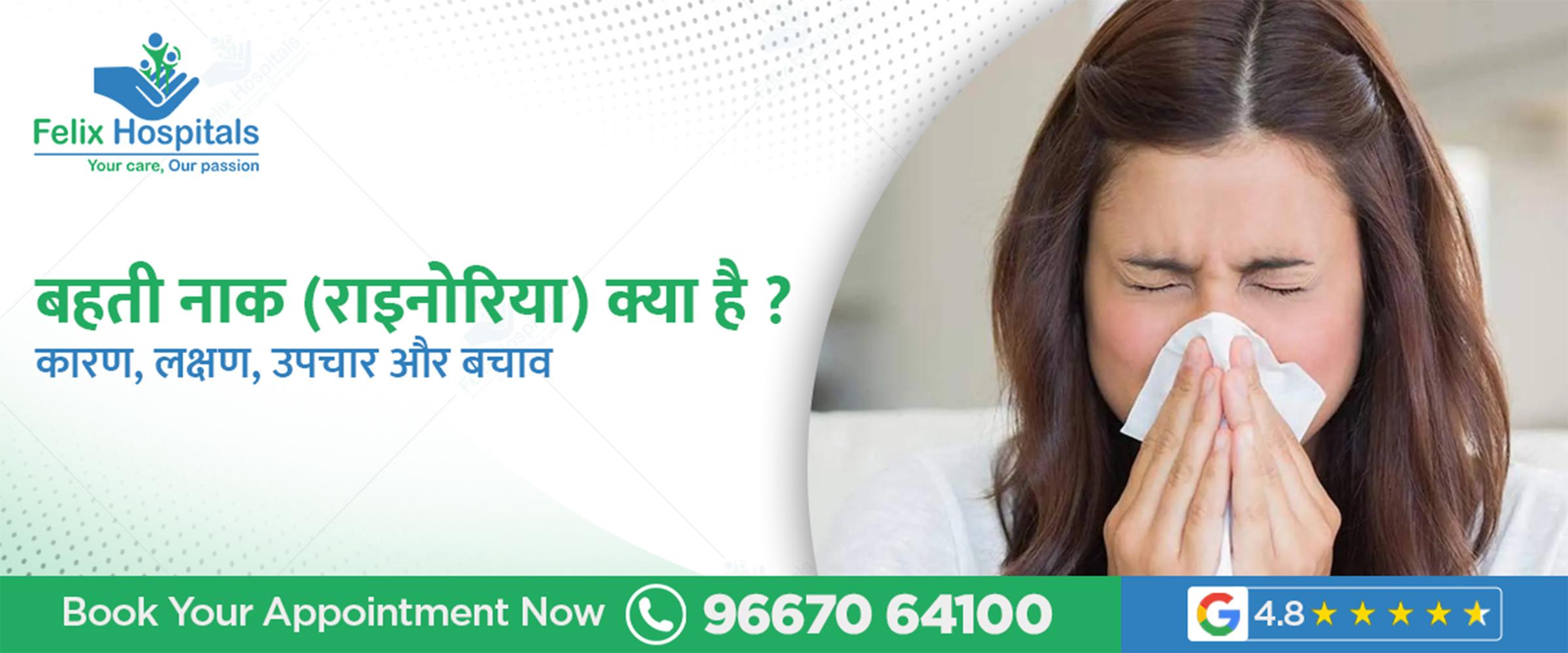
बहती नाक (राइनोरिया) क्या है ? कारण, लक्षण, उपचार और बचाव

बहती नाक (Rhinorrhea) एक सामान्य लेकिन परेशान करने वाली समस्या है। जिसमें नाक से लगातार पानी या म्यूकस निकलता रहता है। यह समस्या बच्चों और बड़ों दोनों में होती है। आमतौर पर यह सर्दी-जुकाम, एलर्जी या मौसम बदलने के कारण होती है। लेकिन कई बार यह किसी गंभीर बीमारी का संकेत भी होती है। Best ENT Hospital In Greater Noida में उपलब्ध है। अगर बहती नाक लंबे समय तक बनी रहे, रंग बदल जाए या बुखार, सिरदर्द के साथ हो, तो तुरंत किसी ईएनटी (कान-नाक-गला) विशेषज्ञ  से सलाह लेना जरूरी है।


अभी अपॉइंटमेंट शेड्यूल करें – कॉल करें: +91 9667064100


बहती नाक क्या है? (What is Rhinorrhea)

बहती नाक (राइनोरिया) वह स्थिति है, जिसमें नाक की अंदरूनी ग्रंथियां सामान्य से अधिक मात्रा में म्यूकस (श्लेष्मा) बनाने लगती हैं। यह म्यूकस नाक की सतह को नम बनाए रखने, धूल-मिट्टी, बैक्टीरिया और वायरस को पकड़कर बाहर निकालने का काम करता है। जब शरीर को किसी बाहरी तत्व जैसे धूल, ठंडी हवा, प्रदूषण, वायरस या एलर्जी का खतरा महसूस होता है, तो यह सुरक्षा तंत्र सक्रिय हो जाता है और म्यूकस का उत्पादन बढ़ जाता है। यह म्यूकस कई प्रकार का हो सकता है। कभी यह बिल्कुल साफ और पतला होता है, तो कभी गाढ़ा, चिपचिपा या पीले-हरे रंग का हो जाता है। रंग और गाढ़ापन इस बात का संकेत देते हैं कि समस्या सामान्य है या किसी संक्रमण से जुड़ी हुई है। उदाहरण के लिए, साफ और पानी जैसा म्यूकस अक्सर एलर्जी (Allergies) या मौसम बदलाव का संकेत होता है। जबकि पीला या हरा म्यूकस बैक्टीरियल संक्रमण की ओर इशारा करता है।


बहती नाक के मुख्य कारण (Causes of Runny Nose)


सर्दी-जुकाम-

यह सबसे सामान्य कारण है। वायरस के कारण नाक बहती है और साथ में गले में खराश, बुखार(Fever) भी हो सकता है।


एलर्जी-

धूल, पराग (pollen), धुआं या पालतू जानवरों के बाल से एलर्जी होने पर नाक बहती है।


साइनस इंफेक्शन-

साइनस में सूजन (Sinus inflammation) होने से नाक बंद और बहती दोनों हो सकती है।


ठंडी हवा या मौसम बदलाव-

मौसम बदलने पर नाक की संवेदनशीलता बढ़ जाती है।


नाक में इंफेक्शन-

बैक्टीरिया या वायरस के कारण नाक में संक्रमण हो सकता है।


ज्यादा मसालेदार खाना-

तीखा खाना खाने से भी कुछ लोगों की नाक बहने लगती है।


दवाइयों का प्रभाव-

कुछ दवाएं भी नाक बहने का कारण बन सकती हैं।


बहती नाक के सामान्य लक्षण (Symptoms of Rhinorrhea)


  • नाक से लगातार पानी या म्यूकस निकलना

  • नाक बंद होना

  • बार-बार छींक आना

  • गले में खराश

  • सिरदर्द या भारीपन

  • आंखों में पानी आना


बहती नाक कब गंभीर हो सकती है? (When is it Serious)

बहती नाक आमतौर पर एक सामान्य समस्या होती है और कुछ दिनों में ठीक होती है। लेकिन कुछ स्थितियों में यह किसी गंभीर संक्रमण या स्वास्थ्य समस्या का संकेत भी होती है। इसलिए इसके लक्षणों को नजरअंदाज करना सही नहीं है। नीचे दी गई परिस्थितियों में बहती नाक को गंभीर माना जाता है।


म्यूकस का रंग पीला या हरा हो जाना-

अगर नाक से निकलने वाला म्यूकस साफ की बजाय पीला, गाढ़ा या हरे रंग का हो जाए, तो यह बैक्टीरियल संक्रमण का संकेत हो सकता है। खासकर जब इसके साथ बदबू, सिरदर्द या चेहरे में भारीपन महसूस हो, तो यह साइनस इंफेक्शन की ओर इशारा करता है।


10 दिन से ज्यादा समस्या बनी रहना-

सामान्य सर्दी-जुकाम (Cold and cough) 5–7 दिनों में ठीक हो जाता है। लेकिन अगर बहती नाक 10 दिन या उससे अधिक समय तक बनी रहे, तो यह क्रॉनिक एलर्जी, साइनसाइटिस या किसी अन्य अंदरूनी समस्या का संकेत हो सकता है। ऐसी स्थिति में डॉक्टर की जांच जरूरी होती है।


तेज बुखार के साथ होना-

अगर बहती नाक के साथ 101°F (38.5°C) या उससे अधिक बुखार हो, तो यह सामान्य सर्दी नहीं बल्कि गंभीर संक्रमण जैसे फ्लू या बैक्टीरियल इंफेक्शन का संकेत हो सकता है। बच्चों और बुजुर्गों में यह स्थिति ज्यादा खतरनाक हो सकती है।


चेहरे में दर्द या सूजन होना-

नाक के आसपास, आंखों के नीचे या माथे में दर्द और सूजन महसूस होना साइनस में सूजन (Sinusitis) का लक्षण हो सकता है। यह दर्द झुकने या सिर हिलाने पर और बढ़ जाता है। ऐसी स्थिति में तुरंत उपचार जरूरी होता है।


सांस लेने में दिक्कत होना-

अगर बहती नाक के साथ नाक पूरी तरह बंद हो जाए या सांस लेने में परेशानी होने लगे, तो यह एलर्जी, अस्थमा या गंभीर संक्रमण का संकेत हो सकता है। छोटे बच्चों में यह स्थिति और भी ज्यादा ध्यान देने योग्य होती है।


डॉक्टर को कब दिखाना चाहिए? (When to See a Doctor?)


  • छोटे बच्चों में लगातार नाक बहना

  • खून के साथ म्यूकस आना

  • बार-बार साइनस इंफेक्शन होना

  • दवाइयों से राहत न मिलना


बहती नाक की जांच कैसे होती है? (Diagnosis)

बहती नाक की सही वजह जानने के लिए डॉक्टर मरीज के लक्षण, उनकी अवधि और गंभीरता के आधार पर अलग-अलग जांच करते हैं। सही डायग्नोसिस से यह तय होता है कि समस्या एलर्जी, वायरल संक्रमण, बैक्टीरियल इंफेक्शन या साइनस से जुड़ी है। नीचे प्रमुख जांच के तरीके दिए गए हैं।


क्लिनिकल एग्जामिनेशनः

सबसे पहले डॉक्टर मरीज की पूरी हिस्ट्री लेते हैं। जैसे नाक बहने की अवधि, म्यूकस का रंग, छींक, बुखार  या एलर्जी के लक्षण। इसके बाद नाक, गले और साइनस की जांच की जाती है। डॉक्टर टॉर्च या नेजल स्पेकुलम (Nasal Speculum) से नाक के अंदर देखते हैं कि सूजन, लालिमा, पॉलिप या ब्लॉकेज तो नहीं है। गले और टॉन्सिल की भी जांच की जाती है, क्योंकि कई बार संक्रमण गले से नाक तक फैलता है।


एलर्जी टेस्ट-

अगर डॉक्टर को एलर्जी का शक होता है, तो एलर्जी टेस्ट कराया जाता है। इसमें यह पता लगाया जाता है कि मरीज को धूल, पराग, पालतू जानवरों, फंगस या किसी खास खाद्य पदार्थ से एलर्जी है या नहीं। यह टेस्ट स्किन प्रिक टेस्ट या ब्लड टेस्ट के जरिए किया जाता है। इससे ट्रिगर की पहचान कर इलाज और बचाव आसान हो जाता है।


नाक का कल्चर टेस्ट-

अगर नाक से गाढ़ा, बदबूदार या पीले-हरे रंग का म्यूकस निकल रहा हो, तो डॉक्टर उसका सैंपल लेकर लैब में जांच करवाते हैं। इससे यह पता चलता है कि संक्रमण बैक्टीरिया, वायरस या फंगस के कारण है। सही कारण पता चलने पर डॉक्टर उसी के अनुसार एंटीबायोटिक या अन्य दवाएं देते हैं, जिससे इलाज ज्यादा प्रभावी होता है।


इमेजिंग-

लंबे समय से चली आ रही समस्या, बार-बार साइनस इंफेक्शन या चेहरे में दर्द और सूजन होने पर इमेजिंग जांच कराई जाती है। सीटी स्कैन से साइनस की हड्डियों, अंदर जमा म्यूकस और सूजन की स्थिति स्पष्ट दिखाई देती है। इससे यह भी पता चलता है कि कहीं पॉलिप, ब्लॉकेज या अन्य संरचनात्मक समस्या तो नहीं है।


बहती नाक के उपचार के तरीके (Treatment)

बहती नाक का इलाज उसके कारण पर निर्भर करता है। अगर यह एलर्जी, वायरल संक्रमण या साइनस से जुड़ी समस्या है, तो उसी के अनुसार उपचार किया जाता है। सही समय पर और सही तरीके से इलाज करने से समस्या जल्दी नियंत्रित हो जाती है और जटिलताओं से बचा जा सकता है।


दवाइयों द्वारा इलाज-

डॉक्टर लक्षण और कारण के अनुसार अलग-अलग दवाएं देते हैं—


एंटीहिस्टामिन-

यह दवाएं एलर्जी के कारण होने वाली बहती नाक, छींक और आंखों में पानी आने जैसे लक्षणों को कम करती हैं।


डिकंजेस्टेंट-

ये दवाएं नाक की सूजी हुई नसों को सिकोड़कर नाक खोलने में मदद करती हैं, जिससे सांस लेना आसान हो जाता है।


एंटीबायोटिक-

अगर बहती नाक बैक्टीरियल संक्रमण के कारण है, तो डॉक्टर एंटीबायोटिक दवाएं देते हैं। इन्हें बिना डॉक्टर की सलाह के नहीं लेना चाहिए, क्योंकि गलत इस्तेमाल से नुकसान हो सकता है।


दर्द और बुखार की दवाएं-

सिरदर्द या बुखार होने पर पैरासिटामोल जैसी दवाएं राहत देती हैं।


सलाइन नेजल स्प्रे-

सलाइन स्प्रे नाक को साफ करने और नमी बनाए रखने में बहुत प्रभावी होता है। यह नाक में जमा धूल, एलर्जन और अतिरिक्त म्यूकस को बाहर निकालने में मदद करता है। इसका नियमित उपयोग करने से नाक की जलन और सूखापन कम होता है और सांस लेना आसान हो जाता है।


भाप लेना-

गरम पानी की भाप लेना एक सरल और असरदार घरेलू उपाय है। भाप लेने से नाक की सूजन कम होती है, जमी हुई बलगम ढीली होती है और नाक के रास्ते खुल जाते हैं। दिन में 2–3 बार भाप लेने से जल्दी राहत मिलती है, खासकर सर्दी-जुकाम या साइनस के मामलों में।


पर्याप्त पानी पीना-

अधिक मात्रा में पानी, सूप, हर्बल चाय आदि पीने से शरीर हाइड्रेट रहता है। इससे म्यूकस पतला होता है और आसानी से बाहर निकल जाता है, जिससे नाक बंद होने और भारीपन की समस्या कम होती है।


घरेलू उपाय और देखभाल (Home Care Tips)

बहती नाक की समस्या में कुछ आसान घरेलू उपाय और सही देखभाल अपनाने से जल्दी राहत मिल सकती है। ये उपाय न केवल लक्षणों को कम करते हैं, बल्कि शरीर की प्राकृतिक रिकवरी प्रक्रिया को भी तेज करते हैं।


गरम पानी की भाप लें-

गरम पानी की भाप लेना बहती नाक में सबसे असरदार उपायों में से एक है। भाप लेने से नाक के अंदर जमी हुई बलगम ढीली होती है और नाक के रास्ते खुल जाते हैं। इससे सांस लेने में आसानी होती है और सूजन भी कम होती है। दिन में 2–3 बार 5–10 मिनट तक भाप लेना फायदेमंद रहता है। चाहें तो पानी में नीलगिरी (Eucalyptus) तेल की कुछ बूंदें भी डाल सकते हैं।


हल्का और गर्म भोजन करें-

बीमारी के दौरान पाचन तंत्र कमजोर हो जाता है, इसलिए हल्का, ताजा और गर्म भोजन करना चाहिए। गरम सूप, खिचड़ी, दाल और हर्बल चाय शरीर को ऊर्जा देते हैं और गले व नाक को आराम पहुंचाते हैं। ठंडी, तली-भुनी और ज्यादा मसालेदार चीजों से परहेज करना चाहिए, क्योंकि ये समस्या को बढ़ा सकती हैं।


ज्यादा पानी पिएं-

पर्याप्त मात्रा में पानी, नारियल पानी, सूप या हर्बल ड्रिंक लेने से शरीर हाइड्रेट रहता है। इससे म्यूकस पतला हो जाता है और आसानी से बाहर निकलता है, जिससे नाक बंद होने और भारीपन की समस्या कम हो जाती है।


आराम करें-

शरीर को संक्रमण से लड़ने के लिए पर्याप्त आराम की जरूरत होती है। पूरी नींद लेने और आराम करने से इम्यून सिस्टम मजबूत होता है और रिकवरी जल्दी होती है। ज्यादा थकान या तनाव से लक्षण लंबे समय तक बने रह सकते हैं।


नाक साफ रखें-

नाक को साफ रखना बेहद जरूरी है। समय-समय पर हल्के से नाक साफ करें ताकि जमा म्यूकस बाहर निकल सके। सलाइन वॉटर (नमक वाले पानी) से नाक की सफाई करना भी फायदेमंद होता है। इससे नाक के अंदर की गंदगी, धूल और एलर्जन हट जाते हैं और जलन कम होती है।


बचाव के उपाय और सावधानियां (Prevention Tips)

बहती नाक से बचाव के लिए कुछ आसान लेकिन प्रभावी सावधानियां अपनाना बेहद जरूरी है। सही आदतें न केवल इस समस्या को होने से रोकती हैं। Best ENT Doctor in Greater noida में उपलब्ध है।  बल्कि बार-बार होने वाले संक्रमण और एलर्जी से भी बचाती हैं।


धूल और प्रदूषण से बचें-

धूल, धुआं और प्रदूषण नाक की अंदरूनी परत को प्रभावित करते हैं और एलर्जी या संक्रमण का कारण बनते हैं। बाहर निकलते समय खासकर ट्रैफिक या निर्माण कार्य वाले क्षेत्रों में सावधानी रखें। घर में भी साफ-सफाई बनाए रखें और धूल जमने न दें।


मास्क का उपयोग करें-

मास्क पहनने से धूल, पराग, वायरस और बैक्टीरिया से बचाव होता है। यह खासकर उन लोगों के लिए जरूरी है जिन्हें एलर्जी या बार-बार सर्दी-जुकाम की समस्या होती है। भीड़भाड़ वाले स्थानों या मौसम बदलने के समय मास्क का उपयोग करना फायदेमंद होता है।


हाथों को साफ रखें-

संक्रमण से बचने के लिए हाथों की सफाई बहुत जरूरी है। बाहर से आने के बाद, खाने से पहले और नाक छूने के बाद साबुन से हाथ धोएं। गंदे हाथों से बार-बार नाक या चेहरे को छूने से वायरस शरीर में प्रवेश कर सकते हैं, जिससे सर्दी-जुकाम और बहती नाक की समस्या बढ़ जाती है।


ठंडी चीजों से बचें-

बहुत ठंडी चीजें जैसे ठंडा पानी, आइसक्रीम या ठंडी हवा के सीधे संपर्क में आने से नाक की संवेदनशीलता बढ़ जाती है। इससे सर्दी-जुकाम और नाक बहने की संभावना बढ़ जाती है। मौसम के अनुसार कपड़े पहनें और खासकर ठंड में नाक और सिर को ढककर रखें।


एलर्जी ट्रिगर्स से दूर रहें-

अगर आपको किसी खास चीज से एलर्जी है। जैसे धूल, पालतू जानवरों के बाल, पराग या कुछ खाद्य पदार्थ तो उनसे दूरी बनाकर रखें। घर में साफ-सफाई रखें, बिस्तर और पर्दों को नियमित धोएं और कमरे में वेंटिलेशन अच्छा रखें। इससे एलर्जी के कारण होने वाली बहती नाक से बचाव होता है।


अभी अपॉइंटमेंट शेड्यूल करें – कॉल करें: +91 9667064100


निष्कर्ष (Conclusion)

बहती नाक एक सामान्य समस्या है, लेकिन इसे नजरअंदाज करना सही नहीं है। सही समय पर पहचान और इलाज से यह जल्दी ठीक हो सकती है। अगर लक्षण लंबे समय तक बने रहें या गंभीर हो जाएं, तो तुरंत डॉक्टर से सलाह लेना जरूरी है। संतुलित आहार और नियमित व्यायाम से इम्यूनिटी मजबूत रखें। पर्याप्त नींद लें, क्योंकि कमजोर इम्यून सिस्टम संक्रमण का खतरा बढ़ाता है। मौसम बदलने पर विशेष सावधानी बरतें इन सावधानियों को अपनाकर आप बहती नाक की समस्या से काफी हद तक बच सकते हैं और स्वस्थ जीवन जीते हैं।

Written and verified by:
Dr. Maya Singh

Dr. Maya Singh

MBBS, MS | Exp: 11 Yr
ENT & Head and Neck Surgery

Dr. Maya Singh is an experienced ENT Specialist with 11+ years of expertise in otolaryngology, head and neck surgery, advanced ENT procedures, and emergency ENT care.

Your Health, Our Priority

Request Call Back

Request an Appointment

CAPTCHA
Solve this simple math problem and enter the result. E.g. for 1+3, enter 4.
* By clicking on the above button you agree to receive updates on WhatsApp

World Autism Awareness Day: Symptoms, Care & Awareness

The World Autism Awareness Day serves as a reminder that early support and acceptance and understanding can transform the lives of children and families diagnosed with Autism Spectrum Disorder (ASD). Autism is not a disease or illness- it is a neurodevelopmental disorder that affects the way a child communicates, learns and how he or she interacts with the world. Through proper treatment, care and understanding, children with autism can be able to lead normal, healthy lives. Early consultation with the Best Neurologist in noida can help in early diagnosis and proper therapy planning. This guide mentions symptoms, causes, diagnosis, treatment and the ways in which parents and caregivers can offer the optimum support.

Noticing speech delay, poor eye contact, or social difficulties in your child? Early diagnosis and therapy can improve development outcomes. Call +91 9667064100 to consult a neurology specialist today.


Understanding Autism Spectrum Disorder (ASD)

Autism Spectrum Disorder is a developmental disorder that impacts on behavior, communication, and social interaction, making Understanding Autism Spectrum Disorder (ASD) important for early care. The spectrum is the term that implies that autism has no consistency in all children. There are children who can require life-long assistance, and there are those who become self-reliant adults who require minimum support.


Autism most commonly manifests itself during early childhood, in most cases before the age of 3. Early identification is vital in the process of ensuring that children acquire vital skills in life.


Children with autism may:


  • Having a problem with social communication.

  • Show repetitive behaviors

  • Like routines.

  • Demonstrate special strengths and abilities.

Early intervention can be important as the outcomes can be greatly enhanced by awareness.


Common Signs and Symptoms of Autism

The symptoms of Autism are either mild or severe and can be altered with the growth of the child, highlighting the need to recognize Common Signs and Symptoms of Autism early. In most cases, early signs are identified by parents.


Problems with Social Interaction


  • Limited eye contact

  • Problem with responding to their name.

  • Shy or does not like to interact with others.

  • Difficulty in interpreting feelings or facial expression.


Communication Difficulties


  • Delayed speech or no speech

  • Echolalia (repetition of words or phrases).

  • Having problems with saying needs or feelings.

  • Difficulty with instructions of simple type.


Behavioral Patterns


  • Monotonous actions (flapping hands, rocking)

  • High level of routine preference.

  • Distress change of routine.

  • Extreme interest in certain objects or subjects.


Sensory Sensitivities


  • Reacts emotionally in response to sounds, lights or textures.

  • Avoiding physical touch

  • Abnormal responses to smells or tastes.

In case several signs can be observed, it is best to have an early diagnosis.


Early Diagnosis and Screening Importance

One of the most crucial factors of autism care is early diagnosis, emphasizing Early Diagnosis and Screening Importance in improving outcomes. According to research studies, early therapy enhances language, behavior and learning skills.


  • Why Early Screening Matters

  • Helps start therapy sooner

  • Enhances communication abilities.

  • Increases social growth.

  • Minimizes behavioural difficulties.

  • Supports school readiness

Parents must take into consideration screening when the developmental milestones are delayed.


Milestones to Look at during Development


  • No babbling by 12 months

  • No words by 16 months

  • No two-word phrases by 24 months

  • Speech or social impairment at any age.

Early Intervention results in early Intervention and improved results.


Causes and Risk Factors of Autism

The precise cause of autism has not been clearly comprehended but studies indicate that a mix of genetic and environmental factors could have caused it, making it important to understand Causes and Risk Factors of Autism.


Possible Causes


  • Genetic influences

  • The differences in the development of the brain.

  • Family history of autism

  • Problems during pregnancy or childbirth.


Risk Factors


  • Premature birth

  • Low birth weight

  • Advanced parental age

  • Certain genetic conditions

It is necessary to mention that the vaccines do not cause autism. This is a myth that has not been proved scientifically.


Types of Autism Spectrum Disorders

Autism is a spectrum so every child has his/her strengths and challenges, which is why knowing the Types of Autism Spectrum Disorders is important.


Autism Disorder (Classic Autism)

Major language and behavioral issues.


Asperger's Syndrome

Mild autism of normal intelligence and good interests.


A pervasive developmental development disorder (PDD-NOS)

Symptoms that are not classified in other groups but still have an effect on development.


It is to know the type so that the doctors can develop individual treatment plans.


Behavioral and Communication Challenges

Autistic children usually have difficulty communicating and behaving, reflecting Behavioral and Communication Challenges faced daily.


Behavioral Challenges


  • Problem with adjusting to new surroundings.

  • Repetitive routines

  • Sensory overload meltdowns.

  • Limited flexibility


Communication Challenges


  • Trouble forming sentences

  • Problem with initiating conversation.

  • Difficult in social cues.

  • Face value interpretation of a language.

Therapy aids children to develop these necessary skills.


Treatment and Therapy Options for Autism

There is no single cure for autism, but therapy can greatly improve a child’s abilities and quality of life.


Common Autism Therapies


Therapy Type

Purpose

Benefits

Behavioral Therapy (ABA)

Improves behavior and social skills

Enhances learning and independence

Speech Therapy

Develops communication skills

Helps children express needs

Occupational Therapy

Improves motor and daily skills

Supports independence

Sensory Integration Therapy

Manages sensory sensitivities

Reduces anxiety and meltdowns

Social Skills Training

Teaches interaction skills

Improves relationships

Early therapy provides the best long-term results.


Role of Parents and Caregivers in Autism Care

Parents are the most significant participants in the autism of a child, emphasizing the Role of Parents and Caregivers in Autism Care.


  • How Parents Can Help

  • Perform home-based therapy.

  • Foster daily communication.

  • Offer an organized environment.

  • Appreciate minor successes.

  • Be patient and understanding.

Coherence between treatment and home facilitates greater progress.


Importance of Early Intervention Programs

Early intervention programs are based on the development of the basic developmental skills in the early years, showing the Importance of Early Intervention Programs.


  • The advantages of Early Intervention

  • Better communication abilities.

  • Increased emotional control.

  • Increased independence

  • Close social interaction.

Children that undergo early intervention tend to excel in academics and sociality.


Tips to Support Children with Autism at Home

It adds up to little things every day, and following Tips to Support Children with Autism at Home can make a big difference.


  • Home Support Tips

  • Keep regular schedules.

  • Take visual schedules and charts.

  • Divide tasks into small jobs.

  • Provide easy to understand and straightforward directions.

  • Inspire play and interpersonal interaction.

  • Provide a sensory-friendly environment.

Each child has his/her way of learning: patience and consistency are important.


Awareness and Acceptance in Society

Awareness of autism is not limited to medical care, and promoting Awareness and Acceptance in Society is essential. Society should adopt acceptance and inclusion.


Why Awareness Matters


  • Minimizes stigma and misperception.

  • Encourages early diagnosis

  • Encourages non-discrimination education.

  • Helps the families emotionally.

  • Develops a more appreciative society.

  • Autistic children should be given an equal opportunity and acceptance.


Concerned about your child’s development?Early evaluation can make a life-changing difference. Call Now: +91 9667064100 to book a consultation with a neurology specialist.


Final Thoughts

World Autism Awareness Day is a wakeup call to us that awareness will result in acceptance, and acceptance will result in opportunity. Autism is not a disability, it is an alternate experience of the world. Early diagnosis, treatment, and support of the parents offer children with autism an opportunity to succeed and live a normal life.

Written and verified by:
Dr. P. S. Naga Srinivas

Dr. P. S. Naga Srinivas

MBBS, DNB, DM
Neurology & Neurosurgery

Dr. P. S. Naga Srinivas is a skilled Consultant Neurologist with strong experience in managing various neurological disorders. He follows a patient-focused and evidence-based approach for accurate diagnosis and treatment of both acute and chronic neurological conditions, and is recognized among the Best Neurologists in Noida.

Subscribe to