 WhatsApp
 Emergency:
  WhatsApp



Subscribe to our
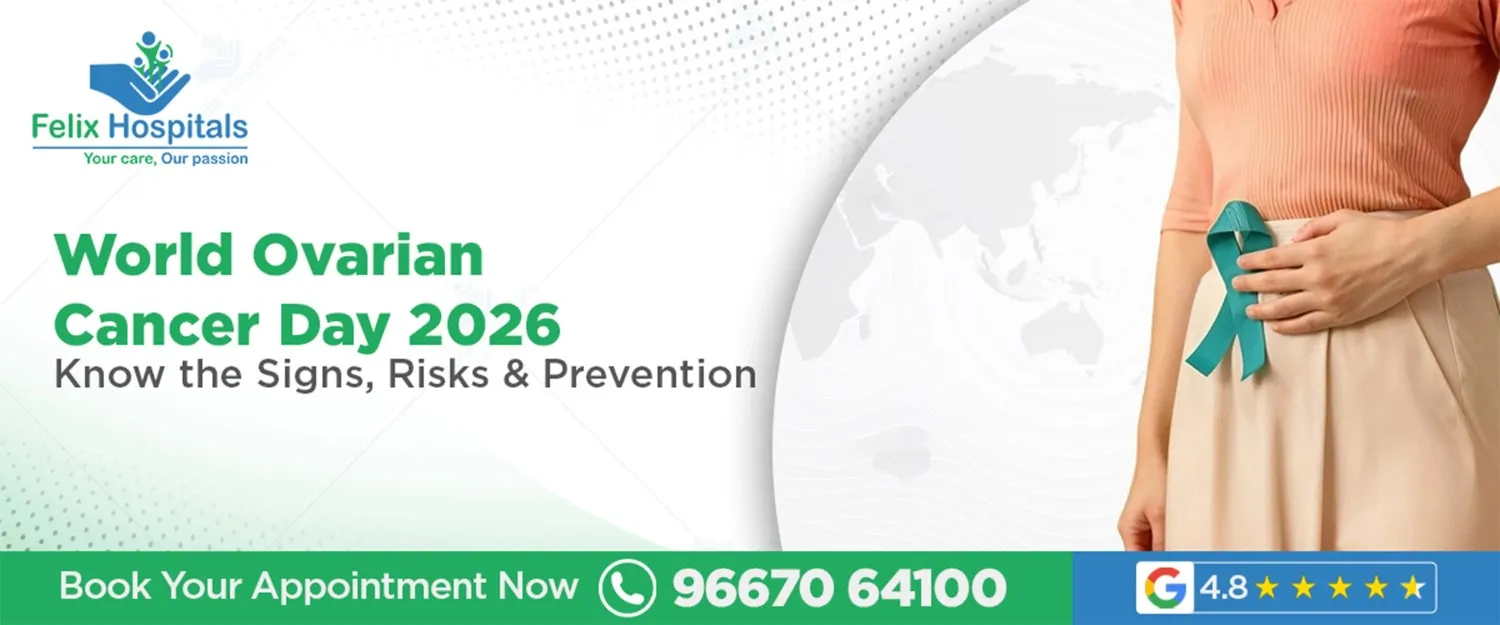
May 8th is World Ovarian Cancer Day. It is the one day every year the world stops to focus on a disease that is far too often overlooked until it is too late. It is not a rare cancer, yet it is routinely missed, misdiagnosed, and caught in its final stages.
World Ovarian Cancer Day 2026 is more than just a date on a calendar. It is a vital reminder that symptoms do exist, risk factors can be identified, and early detection truly saves lives. In this guide, we will look at the signs that often get ignored, the women most at risk, and the strategies that work for prevention. We will also explain why Felix Hospital is fully equipped to provide care at every stage of this journey.
World Ovarian Cancer Day is observed every year on May 8th. It was established in 2013 by a coalition of ovarian cancer organisations from around the world united by a single mission: no woman should die from ovarian cancer because she did not know the symptoms.
The day exists because ovarian cancer has one of the lowest early-detection rates among all cancers. Over 70% of cases are diagnosed at Stage III or Stage IV when the cancer has already spread beyond the ovaries. At that stage, survival rates drop sharply. Caught at Stage I, the five-year survival rate is above 90%. That gap is the entire reason World Ovarian Cancer Day matters.
In India, ovarian cancer is the third most common cancer in women after breast and cervical cancer. Thousands of new cases are diagnosed every year and thousands more go undetected until it is much harder to treat.
This is a label that, unfortunately, is well-earned. Ovarian cancer does not announce itself loudly. There is no national screening program, and unlike breast cancer with mammograms or cervical cancer with Pap smears, there is no single, definitive early detection test.
What makes it particularly dangerous is that the early symptoms are incredibly easy to dismiss. Bloating, slight pelvic discomfort, feeling full quickly, or needing to urinate more often are all signs women often attribute to stress, diet, or age. By the time these symptoms feel "serious" enough to see a doctor, the cancer has often moved beyond the ovaries.
This is not a reason to panic, but it is a reason to be vigilant. You need to know your body and act when something feels persistently wrong.
The signs of ovarian cancer are real; they are just subtle. The most important word to remember is persistence. A bloated day here or there is normal. Bloating that lasts for weeks without a clear cause is a warning.
The core symptoms to watch for include:
Bloating: A persistent feeling of fullness or visible swelling in the abdomen that is new and not related to your diet.
Pelvic or Abdominal Pain: Constant pressure or discomfort in the lower belly that is not linked to your period.
Difficulty Eating: Feeling stuffed almost immediately after starting a meal, even if you have eaten very little.
Urgent Urination: A new, unexplained need to urinate more frequently or with more urgency.
Bowel Changes: Persistent constipation or other changes in bowel habits.
Fatigue: A level of tiredness that rest does not fix.
Unexplained Weight Changes: Particularly visible distension in the abdominal area.
Pain During Intercourse: Any new or worsening discomfort during sex.
Abnormal Bleeding: Irregular periods or any bleeding after menopause must be checked immediately.
If you experience four or more of these symptoms persistently for more than two to three weeks, please see a gynecologist. Do not wait for things to get worse. Call us at +91 9667064100
While any woman can develop this cancer, certain factors increase the likelihood. Knowing these helps you stay proactive.
Age: It is most common in women over 50, but it can and does affect younger women.
Family History: Having a mother, sister, or daughter with the disease triples your risk. A family history of breast cancer is also a significant link.
Genetic Mutations: Women with BRCA1 or BRCA2 gene mutations have a much higher lifetime risk. Genetic counseling is highly recommended if your family history is strong.
Endometriosis: This condition is linked to a higher risk of specific types of ovarian cancer.
Pregnancy History: Women who have never carried a pregnancy to term may face a slightly higher risk.
Hormone Replacement Therapy (HRT): Long-term use of estrogen-only HRT after menopause has been linked to increased risk.
Obesity: Excess weight, especially around the midsection, is linked to higher risk and poorer outcomes.
Ovarian cancer is staged from I to IV based on how far the cancer has spread at the time of diagnosis.
Stage | Description | Approximate 5-Year Survival Rate |
Stage I | Cancer confined to one or both ovaries | 85–93% |
Stage II | Cancer has spread to pelvic organs | 70–80% |
Stage III | Cancer has spread to the abdomen or lymph nodes | 30–55% |
Stage IV | Cancer has spread to distant organs (liver, lungs) | 15–25% |
The numbers make the case plainly. Stage I survival is above 85%. Stage IV survival is around 15–25%. The difference is detection and detection comes from knowing the symptoms and acting on them.
Over 75% of Indian women with ovarian cancer are diagnosed at Stage III or IV. That is not because the symptoms were not there, it is because they were not recognised or acted upon in time.
Not all ovarian cancers are the same. Understanding the type matters for treatment planning.
Epithelial ovarian cancer accounts for approximately 85–90% of all ovarian cancers. Begins in the cells on the outer surface of the ovary. Includes serous, mucinous, endometrioid, and clear cell subtypes.
Germ cell tumours arise from the egg-producing cells. More common in younger women and girls. Generally more treatable than epithelial cancers.
Sex cord-stromal tumours develop from the structural cells of the ovary. Often produce hormones and may cause abnormal bleeding. Less common but often caught earlier because of hormonal symptoms.
Borderline ovarian tumours Also called low malignant potential tumours. Less aggressive than invasive cancers and generally associated with better outcomes.
Treatment surgery, chemotherapy, targeted therapy is planned based on the specific type, stage, and grade of the tumour.
Since there is no "standard" screening, doctors use a combination of tools to find the truth:
Pelvic Exam: A physical check for masses or abnormalities.
Transvaginal Ultrasound (TVUS): Usually the first imaging step to look closely at the ovaries.
CA-125 Blood Test: This measures a protein often elevated in cancer cases. While not definitive on its own, it provides a crucial piece of the puzzle.
CT or MRI: These scans show the size and location of any suspected tumors.
Biopsy: This is the only way to confirm cancer, usually done during surgery.
At Felix Hospital, we provide all these diagnostic services on-site, ensuring you get answers without being referred elsewhere.
There is no absolute way to prevent it, but you can lower your risk:
Oral Contraceptives: Using birth control pills for five or more years can reduce risk by 30–50%.
Breastfeeding: Each full-term pregnancy and period of breastfeeding offers some protective benefit.
Surgical Options: For those at very high genetic risk, removing the fallopian tubes and ovaries can be a life-saving preventive measure.
Healthy Lifestyle: Maintaining a healthy weight and staying active reduces overall cancer risk.
Know Your History: If your family has a history of breast or ovarian cancer, get tested for the BRCA gene.
Our oncology department manages ovarian cancer with a comprehensive, patient-first approach:
Advanced Surgery: We specialize in cytoreductive surgery (debulking) to remove as much of the tumor as possible, which is the foundation of successful treatment.
Medical Oncology: We provide post-surgical chemotherapy and targeted therapies like PARP inhibitors in a dedicated, supportive environment.
Genetic Testing: On-site services help us characterize tumors accurately to choose the right medicine.
Holistic Support: From nutritional guidance to psychological counseling and palliative care, we support the patient and the family through the entire process.
Check your symptoms: If you’ve been bloated or in pain for three weeks, book an appointment today.
Check your history: If cancer runs in your family, ask your doctor about genetic testing.
Spread the word: Tell your mother, your sister, and your friends. Most women diagnosed with this disease wish they had known the symptoms earlier.
Ovarian cancer does not have to be a death sentence. The danger lies in catching it too late. World Ovarian Cancer Day 2026 is your reminder to pay attention to your body. If something feels wrong, it probably is. Persistent bloating and pain are not things to "just live with."
The oncology and gynecology teams at Felix Hospital are here to help you with diagnosis, second opinions, and state-of-the-art treatment.
Call us at +91 9667064100 Gynaecological Oncology Helpdesk, Felix Hospital, Gamma-1, Greater Noida
Dr. Charu Yadav is an Obstetrician and Gynecologist with 7+ years of expertise in managing normal and high-risk pregnancies, gynecological conditions, and women's healthcare.
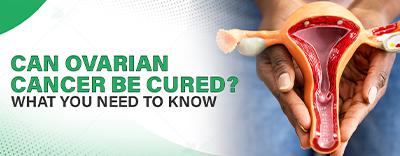
Can ovarian cancer be cured? Early detection plays a critical role. This article explores the chances of cure, available treatment options, survival rates, and the importance of regular screenings for timely diagnosis and improved outcomes.
If your family is in Meerut and someone needs serious medical care, the Ayushman card is your financial protection but it only works when you know which hospital to go to and what to expect when you arrive.
Meerut has its own PM-JAY empanelled hospitals. For routine procedures and primary care, they work. But for cardiac surgery, joint replacement, stroke management, cancer treatment, or any condition that needs specialist depth the nearest fully equipped private PM-JAY empanelled facility is Felix Hospital in Greater Noida, reachable from Meerut via the Delhi-Meerut Expressway or, increasingly, via the Namo Bharat RRTS corridor.
PM-JAY is nationally portable. Your Meerut card works at Felix Hospital without any inter-district formality.
If you live in Shastri Nagar, Modipuram, Partapur, or Pallavpuram, you already know that getting across Meerut city in traffic can take as long as the drive to Greater Noida on the expressway. Partapur residents, sitting at the eastern edge of Meerut near the Hapur Road corridor, can reach Felix Hospital in roughly 45 to 50 minutes faster than some inter-city trips within Meerut during peak hours.
That distance argument matters less and less as the Namo Bharat RRTS becomes the primary transit corridor between Meerut and the NCR. RRTS connects Meerut South, Modipuram, and Meerut city stations toward Ghaziabad and onward cutting travel time to the Greater Noida belt significantly for families who do not have their own vehicle.
And when you arrive, Felix Hospital's specialist coverage is what makes the distance worthwhile. Cardiology, orthopaedics, neurology, oncology, gynaecology, urology, paediatrics, general surgery, ENT, ophthalmology all under one roof. If your family is travelling from Meerut for a serious condition, the last thing you want is to be referred to a third facility mid-treatment. That does not happen at Felix Hospital.
Ayushman cardholders receive the same doctors, the same operation theatres, and the same post-operative care as every other patient. NABH accreditation means these standards are externally audited. The dedicated Ayushman helpdesk handles everything from verification to cashless discharge.
Feature | Govt Hospitals | Other Nursing Homes | Felix Hospital |
Specialist Availability | High (but busy) | Limited | 24/7 Multi-Specialty |
Wait Time | Long | Moderate | Immediate, Dedicated Desk |
NICU / Critical Care | Often Full | Rare | Level III NICU Available |
Cashless Smoothness | High | Variable | 100% Guaranteed |
NABH Accreditation | Varies | Rare | Yes |
Dedicated Ayushman Desk | No | No | Yes |
PM-JAY covers over 1,900 treatment packages across medical and surgical specialties.
Specialty | Procedures Covered |
Cardiology & Cardiac Surgery | Angiography, angioplasty, bypass grafting, valve replacement, pacemaker, heart failure management |
Orthopaedics & Joint Replacement | Knee replacement, hip replacement, spine surgery, fracture repair, bone infection treatment |
Neurology & Neurosurgery | Stroke management, brain surgery, spinal conditions, epilepsy treatment |
Oncology | Cancer diagnosis, chemotherapy, radiation, surgical oncology |
Gynaecology & Obstetrics | Normal delivery, C-section, hysterectomy, fibroid surgery, Level III NICU available |
Urology | Kidney stone laser, prostate surgery, urinary tract procedures, dialysis |
General Surgery | Laparoscopic gallbladder, hernia repair, appendectomy, abdominal surgery |
Paediatrics | Paediatric surgical and medical conditions |
ENT & Ophthalmology | Cataract, ear surgery, tonsillectomy, septoplasty |
Dialysis | Chronic kidney disease dialysis, 24/7 unit |
For local Meerut hospitals, go to pmjay.gov.in, click Find Hospital, select Uttar Pradesh and Meerut as the district. For Felix Hospital and Greater Noida facilities, select Gautam Buddha Nagar as the district. When results load, press Ctrl+P (Cmd+P on Mac), select Save as PDF.
The Ayushman Bharat mobile app on Android and iOS has a Find Hospital Near Me feature that shows empanelled hospitals based on your current location, useful if your family is already travelling toward Greater Noida.
Always download fresh from pmjay.gov.in. Older PDFs on WhatsApp are often outdated, the empanelled list changes regularly.
Step 1: Go to the Ayushman Helpdesk, not general billing
Walk directly to the dedicated Ayushman Bharat helpdesk at the Felix Hospital entrance. This desk handles only scheme patients and moves fast.
Step 2: Present your Ayushman card and Aadhaar
Hand over your card (physical or e-card) and the patient's Aadhaar. Live verification against the PM-JAY database takes three to five minutes.
Step 3: Eligibility confirmed
Name found, you are cleared. No income certificate. No BPL proof. Nothing else at this stage.
Step 4: Hospital handles pre-authorisation
For planned procedures, Felix Hospital submits pre-authorisation to the PM-JAY insurer. You do nothing. For emergencies, treatment starts immediately and authorisation follows.
Step 5: Treatment at zero cost
Room, surgery, anaesthesia, medicines, investigations, and meals, all covered for listed packages.
Step 6: Cashless discharge
Sign the papers and leave. The hospital bills PM-JAY directly. Your balance for covered treatments is zero.
Mandatory, without these, verification cannot proceed:
Ayushman card, physical card or e-card from the PM-JAY app or beneficiary.nha.gov.in
Aadhaar card of the patient, original plus one photocopy. For a child patient, Aadhaar of the parent or guardian
Strongly recommended:
Previous medical records or discharge summaries for ongoing conditions
Referral letter from a government primary health centre if available
Ration card or family ID as backup for any Aadhaar name or date of birth mismatch
You do not need an income certificate, BPL card, or any cash deposit for covered treatments.
No physical card? Bring your Aadhaar. The Felix helpdesk verifies PM-JAY eligibility using the Aadhaar number alone.
If your family is travelling from Meerut, the route matters as much as the destination.
Via Delhi-Meerut Expressway: The fastest road route. Partapur and eastern Meerut residents hit the expressway quickly, the drive to Felix Hospital in Greater Noida runs approximately 45 to 55 minutes from Partapur, 55 to 65 minutes from Shastri Nagar and central Meerut, and around 60 to 70 minutes from Modipuram and Pallavpuram in the north.
Via Namo Bharat RRTS: The RRTS corridor connects Meerut South, Meerut city centre, and Modipuram stations toward Ghaziabad. From Ghaziabad, connecting transport to hospital in Greater Noida is available. As the RRTS network expands and feeder connectivity improves, this route will become the most practical option for families without private vehicles, cutting effective travel time and removing the stress of driving during a medical situation.
Area | Route | Approx. Time from Felix |
Partapur, Meerut | Delhi-Meerut Expressway | 45 to 55 mins |
Shastri Nagar, central Meerut | Delhi-Meerut Expressway | 55 to 65 mins |
Modipuram, Pallavpuram | Expressway or RRTS to Ghaziabad | 60 to 70 mins |
Meerut-Hapur border, Pilkhuwa | NH-9 via Hapur | 45 to 55 mins |
Ghaziabad | Expressway | 30 to 40 mins |
Greater Noida Central | Nearest to Felix | 10 to 15 mins |
For emergencies from Meerut, call the Felix Hospital ambulance immediately. It dispatches 24 hours a day and can meet your family en route if the condition is critical.
Heart attacks, strokes, trauma, and respiratory failure need one thing. Get to the nearest capable hospital fast.
If your family is already in Greater Noida or en route, go straight to Felix Hospital's emergency department. Do not stop at the helpdesk. The clinical team begins treatment immediately. Ayushman verification runs in parallel, it does not delay care.
PM-JAY covers emergency packages for heart attack, stroke, multiple trauma, and critical care without requiring advance pre-authorisation. Retrospective authorisation is submitted by the hospital after stabilisation.
For Meerut families with an Ayushman card and a serious medical need Felix Hospital is the answer. Fully empanelled under PM-JAY, equipped across all major specialties, reachable via the Delhi-Meerut Expressway or Namo Bharat RRTS, and committed to zero-balance discharge for every covered treatment. Felix Hospital, Greater Noida. Empanelled under Ayushman Bharat PM-JAY serving Meerut, Partapur, Shastri Nagar, Modipuram, Pallavpuram, Ghaziabad, and the broader western UP belt.
Dr. Anshumala Sinha is an experienced Internal Medicine and Diabetology specialist with 20+ years of practice. She specializes in diabetes management, infectious diseases, fever treatment, hypertension, cholesterol control, weight management, and trauma care. Recognized among the Best General Physicians in Noida, she provides comprehensive and patient-focused medical care.
Complete list of Ayushman Bharat empanelled hospitals in Noida (Gautam Buddha Nagar). Download PDF, check coverage & get cashless treatment at Felix Hospital. Updated 2026.
Discover the updated list of Ayushman Bharat (PMJAY) hospitals in Dadri for 2026.
Looking for an Ayushman Bharat hospital in Delhi NCR? Discover how Felix Hospital provides quality healthcare services under the Ayushman Bharat Yojana in 2026.
Searching for Ayushman Card hospitals in Ghaziabad? Felix Hospital offers advanced medical care and cashless treatment facilities under the Ayushman Bharat Yojana in 2026.
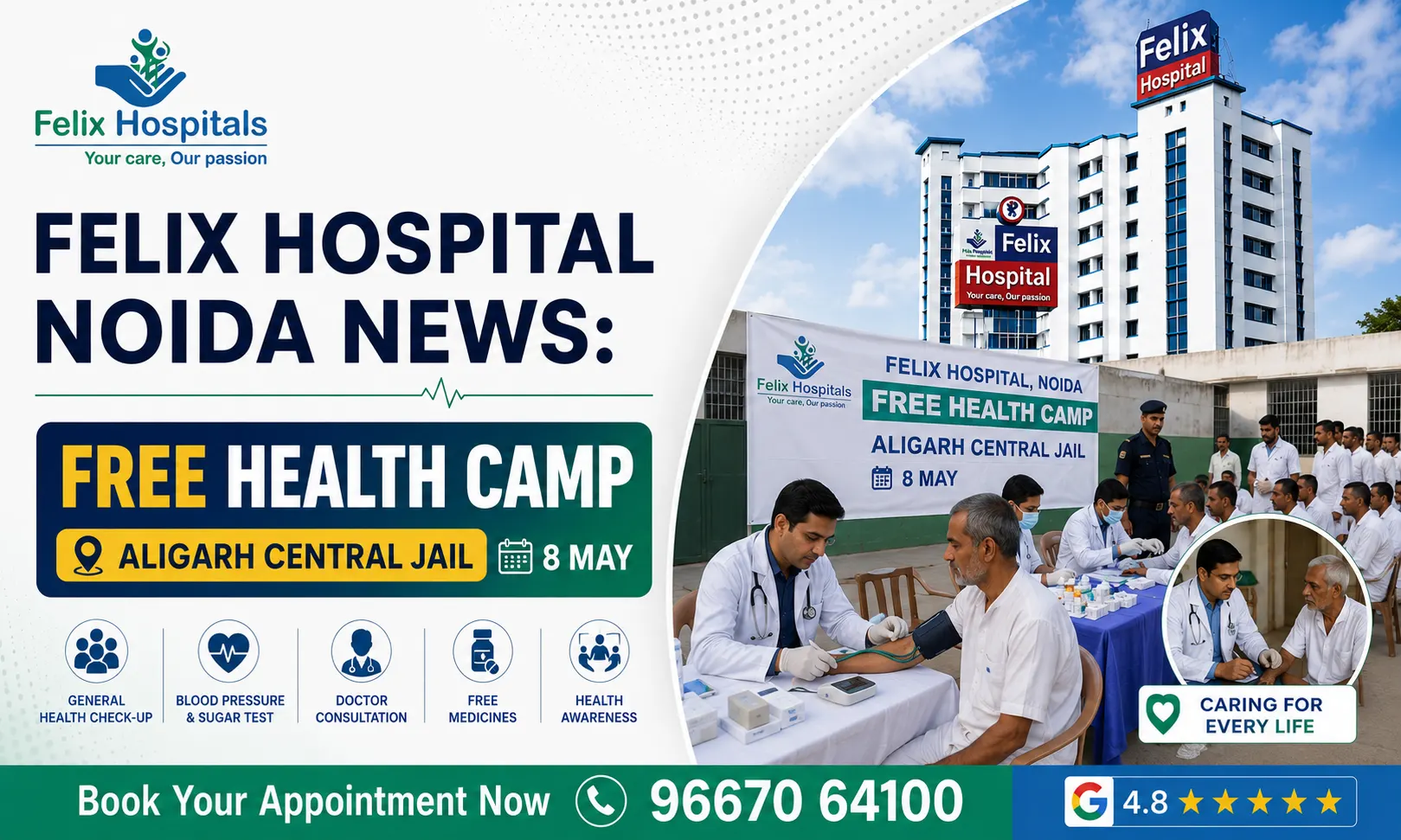
Felix Hospital Noida is conducting a free health camp at Aligarh Central Jail Polish Camp on 8 May 2026 from 10:00 AM to 3:00 PM. The camp is staffed by Felix Hospital's RMO. Departure from Felix Hospital Noida, Sector 137 at 7:00 AM. Free medical consultations and health screening for inmates.
Detail | Information |
Date | 8 May 2026 |
Location | Aligarh Central Jail Polish Camp |
Camp Type | Polish Camp |
Timing | 10:00 AM — 3:00 PM |
Departure | 7:00 AM from Felix Hospital Noida |
Doctor | RMO, Felix Hospital Noida |
Cost | Free |
Felix Hospital Noida is taking its medical team outside its walls — to Aligarh Central Jail — on 8 May 2026. This free health camp brings quality medical consultation directly to inmates who have no independent access to hospital care.
This is Felix Hospital breaking news today that follows a consistent 2026 pattern. Felix Hospital partnered with Noida Traffic Police for a road safety campaign. The hospital sent two doctors 300 kilometres to Farrukhabad to collect a 660 gram premature baby. Now Felix Hospital Noida news includes a free jail health camp — medical care reaching people where they are, regardless of ranking benefit.
Felix Hospital latest news in 2026 reflects one message consistently: this hospital measures responsibility beyond its premises.
Initiative | Detail |
Road Safety Campaign | With Noida Traffic Police, Noida intersections |
660g Baby Transport | 300km ambulance with 2 doctors, Farrukhabad |
Aligarh Jail Health Camp | 8 May 2026, free consultations |
Felix Hospital viral news spreads when people see a hospital doing what most hospitals do not. A free health camp inside a jail — no billing, no visibility benefit — is exactly the kind of Felix Hospital news 2026 that communities share because it is genuine.
Dr. Anshumala Sinha is an experienced Internal Medicine and Diabetology specialist with 20+ years of practice. She specializes in diabetes management, infectious diseases, fever treatment, hypertension, cholesterol control, weight management, and trauma care. Recognized among the Best General Physicians in Noida, she provides comprehensive and patient-focused medical care.
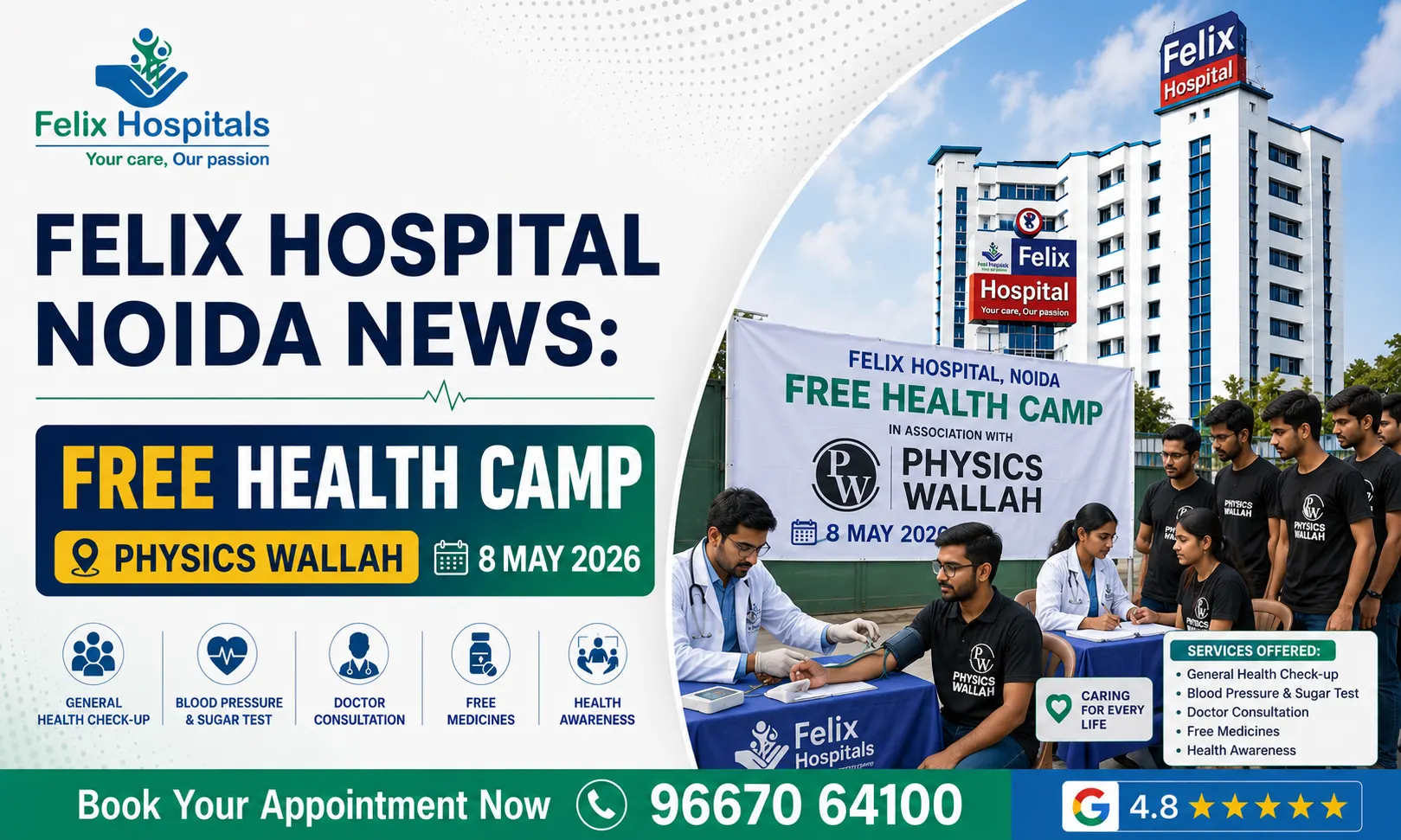
Felix Hospital Noida is conducting a free health camp at Physics Wallah on 8 May 2026 from 10:00 AM to 5:00 PM. Two RMOs from Felix Hospital Noida will conduct free medical consultations and health screenings. Departure from Felix Hospital Noida, Sector 137 at 9:00 AM.
Detail | Information |
Date | 8 May 2026 |
Location | Physics Wallah |
Timing | 10:00 AM — 5:00 PM |
Departure | 9:00 AM from Felix Hospital Noida |
Doctors | 2 RMOs, Felix Hospital Noida |
Cost | Free |
On 8 May 2026, Felix Hospital Noida is sending two RMOs to Physics Wallah for a full seven-hour free health camp — the longest scheduled outreach session in Felix Hospital's 2026 community programme.
Physics Wallah is one of India's largest ed-tech platforms with thousands of students and staff. This camp brings Felix Hospital Noida's medical expertise directly to a young, high-density working population that frequently neglects routine health screening due to study and work pressure.
This is Felix Hospital latest news that follows the same 2026 pattern — road safety campaign with Noida Traffic Police, 300km neonatal transport from Farrukhabad, free jail health camp at Aligarh Central Jail on the same day. Felix Hospital Noida news in 2026 is consistently about one thing: healthcare reaching people where they are.
Camp | Location | Timing | Staff |
Camp 1 | Aligarh Central Jail Polish Camp | 10am — 3pm | 1 RMO |
Camp 2 | Physics Wallah | 10am — 5pm | 2 RMOs |
Felix Hospital Noida is running two simultaneous outreach camps on 8 May 2026 — across two completely different populations. Jail inmates with no healthcare access. Students and staff at one of India's largest education platforms. Same date. Same commitment.
This is why Felix Hospital viral news spreads without promotion — because the work itself is the story.
Dr. Ravi Sharma is a senior physician with 42+ years of experience, known for compassionate and comprehensive patient care in Noida.
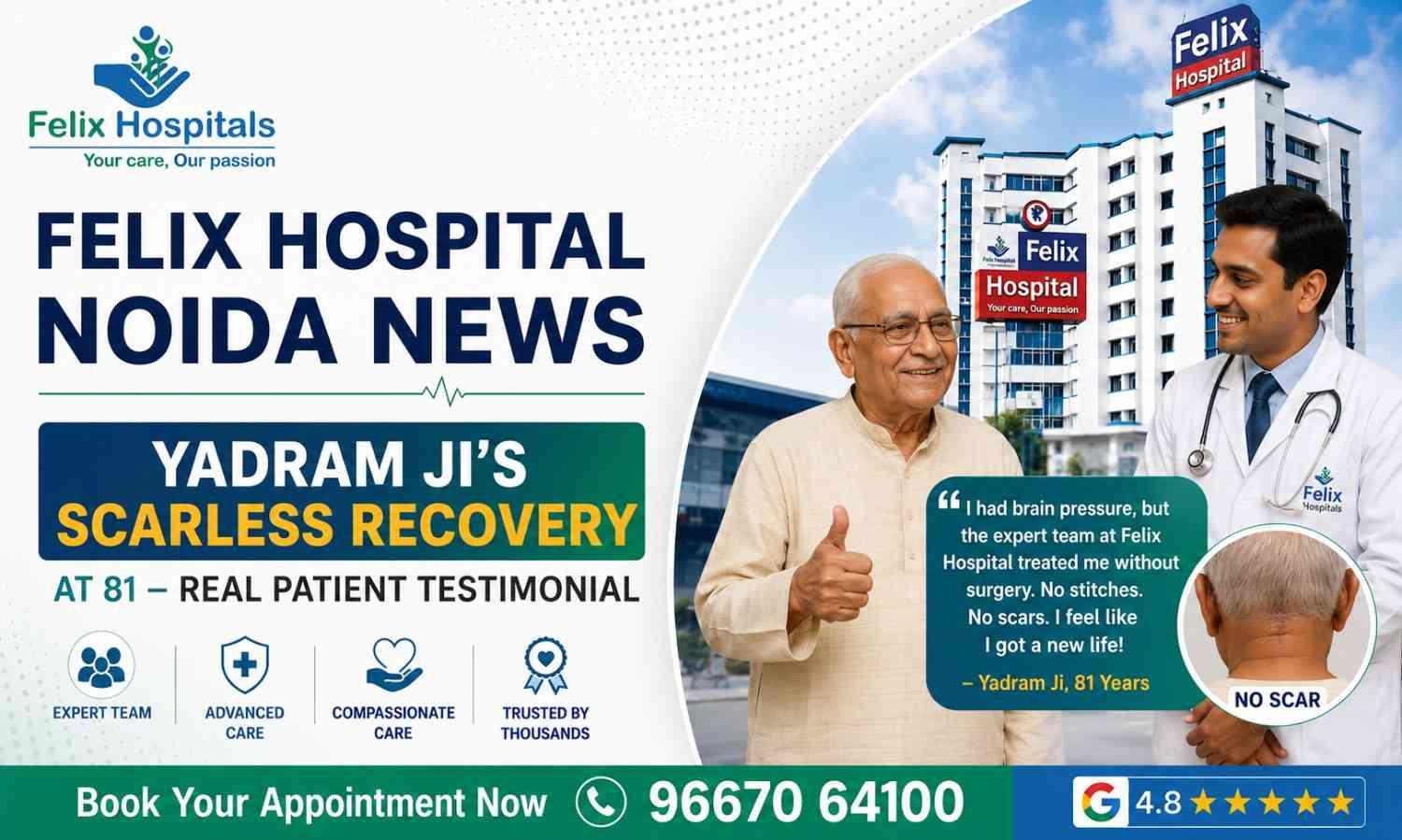
"I Could Not Walk, Eat, or Pass Stool for 6 Months" — How Felix Hospital Noida Gave Yadram Ji His Life Back at 81
In Yadram Ji's Own Words
For six months, Yadram Ji — 81 years old, resident of Noida — could not eat a full meal. He could not walk without support. His abdomen had swollen to a point where movement itself was painful. Every morning brought the same reality: no bowel movement, no relief, no answer.
"Main na kuch kha sakta tha, na chal sakta tha. Pet bilkul band ho gaya tha."
His family had tried home remedies. They had tried basic medicines. Nothing worked — because what Yadram Ji had was not ordinary constipation. It was a complete large intestinal obstruction, and it was getting worse every week.
What happened next has since been shared widely across patient communities in Noida and beyond — and it is the reason this case has become Felix Hospital viral news in 2026, not through promotion, but through one family's gratitude.
When Yadram Ji arrived at Felix Hospital Noida, Dr. Tabish — Consultant Gastroenterologist — ordered a full diagnostic workup. The results were unambiguous: a complete blockage in the large intestine. No passage for stool. No passage for gas. The bowel was effectively sealed.
In most patients, this diagnosis leads directly to surgery. Open surgical bypass — general anesthesia, abdominal incision, bowel resection, weeks of recovery — is the standard of care.
For Yadram Ji, that standard was also a death sentence.
At 81, with the physiological frailty that comes with age, general anesthesia alone carried a mortality risk that made conventional surgery unjustifiable. Two things were simultaneously true: he needed intervention urgently, and he could not survive the intervention that would normally be used.
This is the clinical gap — patients who need surgery but cannot have it — that defines geriatric emergency care. Most hospitals in Delhi-NCR stop here. Felix Hospital did not.
Dr. Tabish's team chose Endoscopic Ultrasound-Guided (EUS) bypass — a procedure that resolves the obstruction entirely from inside the body, through the body's natural openings, under monitored sedation rather than general anesthesia.
Here is what the procedure involves, in plain terms:
An endoscope is guided through the digestive tract to the site of blockage. Using real-time ultrasound imaging, the team identifies the intestine on the other side of the obstruction. A specialised stent is then deployed to connect the large intestine to the small intestine — creating an internal bypass that restores digestive flow completely.
No external incision. No abdominal cut. No external scar. No general anesthesia. The entire procedure takes approximately 90 minutes.
For context: a standard surgical bypass for the same condition requires 5 to 10 days in hospital and weeks of wound recovery. Yadram Ji was eating within 24 hours and discharged within 72.
Yadram Ji's son, Ajay Kumar, was present throughout. He describes the moment after the procedure as one he will not forget.
The abdominal swelling — six months of accumulated distension — began to subside within hours. Yadram Ji passed stool for the first time in months. He ate. He stood up. He walked.
"Dr. Tabish ne mere pita ko doosri zindagi di hai."
Ajay Kumar's statement is the reason this case spread the way it did — organically, through WhatsApp groups, senior citizen networks, and caregiver communities across Noida. That is what Felix Hospital viral news actually looks like: not a press release, but a son talking about his father.
This testimonial is published with written consent from the patient and family.
Dr. Tabish has a clear message for families managing chronic constipation in elderly relatives:
Chronic constipation that does not respond to home remedies or basic medicines within two to three weeks is not a minor problem. It is a warning sign. Left unaddressed, it can progress — as it did with Yadram Ji — into complete bowel obstruction, a life-threatening emergency.
Do not wait for the abdomen to swell. Do not wait until the patient cannot walk. A gastroenterology consultation at that early stage opens up a range of non-invasive options that become unavailable once the obstruction is complete.
This is the clinical update at the centre of Felix Hospital latest news from the gastroenterology department in 2026: intervention is safer and more effective when it is early. Felix Hospital Noida accepts direct consultations — no referral required.
Yadram Ji's case is not the only one. Felix Hospital breaking news in 2026 has consistently documented outcomes in cases referred elsewhere as unmanageable — a GCS 3 coma reversal, bilateral knee replacement in an HCV-positive patient, a 34-week premature infant resuscitated from respiratory arrest.
The pattern is deliberate. Felix Hospital Noida has invested in the infrastructure that makes these outcomes possible: a Level III endoscopy suite with real-time ultrasound integration, a gastroenterology team trained in therapeutic EUS, and an anesthesia unit experienced in high-risk geriatric sedation.
Each case that becomes Felix Hospital breaking news today is built on that infrastructure — and on a clinical culture that accepts difficult patients instead of declining them.
Dr. Ravi Sharma is a senior physician with 42+ years of experience, known for compassionate and comprehensive patient care in Noida.
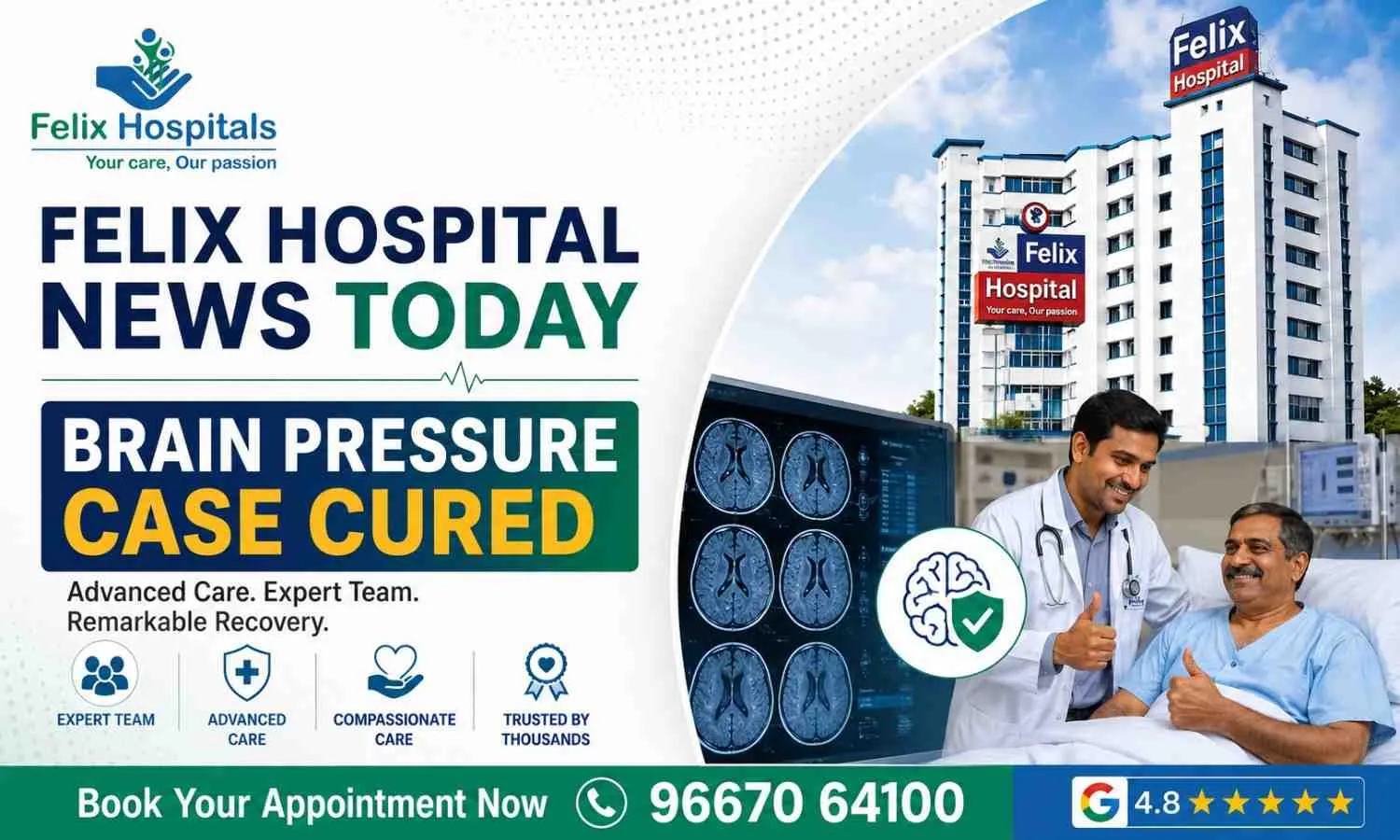
"Dimaag Mein Paani Bhar Gaya Tha" — How Dr. Shishir Panday and Felix Hospital Noida Gave a Patient Their Life Back"
The symptoms came gradually. Severe headaches that would not respond to standard painkillers. A progressive blurring of vision — first in one eye, then both. Nausea without a clear cause. A feeling, described by the patient's family, that something was deeply wrong but impossible to name.
This is how Idiopathic Intracranial Hypertension — called "dimaag mein paani bharna" in common understanding presents. The cerebrospinal fluid that surrounds and protects the brain builds up beyond normal pressure levels. The brain, enclosed inside the skull, has nowhere to accommodate that pressure. The optic nerves compress. Vision deteriorates. Headaches become constant.
Left undiagnosed, Idiopathic Intracranial Hypertension (IIH) causes permanent blindness. Left untreated, it becomes a neurological emergency.
The family was scared. They did not yet know the name of what they were facing. What they knew was that the person they loved was getting worse, and the hospitals they had visited had not given them a clear answer.
That is when they came to Felix Hospital Noida — and that decision became the Felix Hospital Noida news that their community has been sharing ever since.
Dr. Shishir Panday, Consultant Neurologist at Felix Hospital Noida, ordered a full diagnostic workup: MRI brain and MR Venogram (MRV) — the specific imaging combination required to accurately diagnose Idiopathic Intracranial Hypertension and rule out other causes of elevated intracranial pressure.
The MRV revealed what standard imaging at other facilities had missed: tortuous optic nerves — a direct consequence of sustained elevated cerebrospinal fluid pressure. The diagnosis was confirmed. The patient had IIH — dangerous, progressive, and requiring immediate intervention.
This is the diagnostic gap that makes IIH so dangerous in Delhi-NCR. Most hospitals do not routinely order MRV alongside MRI for headache presentations. Without MRV, the tortuous optic nerves — the signature finding in IIH — remain invisible. The patient continues to deteriorate while being told their headaches are stress-related or migraine.
Felix Hospital Noida has the MRI and MRV diagnostic capability in-house. Dr. Shishir Panday's team used both. That is why this case was caught — and caught in time.
This diagnostic precision is part of what has made Felix Hospital latest news in neurology worth following in 2026.
The treatment for IIH is as precise as its diagnosis. Dr. Shishir Panday performed a therapeutic lumbar puncture with manometry — a procedure that measures cerebrospinal fluid pressure in real time and safely drains the excess fluid causing the intracranial hypertension.
The procedure is not routine. Manometry requires specialist training and equipment. Without real-time pressure measurement, drainage can be incomplete — or excessive, causing its own complications. Dr. Shishir Panday's team performed the procedure with full manometric guidance.
The result was immediate.
Within hours of the procedure, the patient's headache — which had been constant for weeks — began to lift. Vision, which had been progressively deteriorating, stabilised and then improved. The family, who had arrived at Felix Hospital Noida frightened and without answers, left with a recovered patient and a clear understanding of what had happened and why.
"Sahi waqt par liya gaya faisla aur behtar chikitsa taknik ne unki jaan bachayi."
The right decision, taken at the right time, with the right medical expertise — saved their life.
Felix Hospital viral news spreads when outcomes challenge what families believe is possible. This case spread for a specific reason: IIH is widely misdiagnosed as migraine or stress headache. Families across Delhi-NCR have relatives who have been living with undiagnosed IIH — deteriorating vision, constant headaches, no answers — because the right diagnostic combination was never ordered.
When this patient's family shared their recovery story, they were not just expressing gratitude. They were telling every family in a similar situation: there is a name for what your relative has, there is a specialist who can diagnose it correctly, and there is a treatment that works.
That is why this testimonial became Felix Hospital breaking news in neurological patient communities — not through promotion, but because the information itself was genuinely useful to people who needed it.
IIH is a condition in which cerebrospinal fluid pressure inside the skull rises without an identifiable structural cause — no tumour, no blockage, no obvious explanation on standard imaging. "Idiopathic" means the cause is not yet fully understood.
Persistent severe headache that worsens when lying down or in the morning. Progressive blurring or graying of vision — especially in one eye initially. Pulsatile tinnitus — a whooshing sound in the ears that matches the heartbeat. Nausea without gastrointestinal cause. Transient visual obscurations — brief moments where vision goes dark, lasting seconds.
IIH disproportionately affects women between 20 and 50 years of age, particularly those with obesity or recent significant weight gain. However, it can occur in any patient — including men and children — and the absence of obesity does not rule out the diagnosis.
The optic nerve damage caused by sustained elevated IIH pressure is cumulative. Vision lost to IIH before treatment is often permanent. Early diagnosis — through MRI and MRV — and early treatment — through therapeutic lumbar puncture with manometry — prevents that permanent damage.
Dr. Shishir Panday's core message from this case: if you or a family member has been told their severe headaches are "just migraine" and standard treatment is not working, a neurological consultation with MRV imaging is not optional. It is necessary.
Felix Hospital breaking news today from the neurology department reflects a unit that does not accept "we don't know" as a final answer for headache and vision presentations.
The diagnostic protocol — MRI plus MRV for every patient presenting with suspected elevated intracranial pressure — is the reason IIH cases that go undiagnosed for months elsewhere are being identified and treated at Felix Hospital Noida within days of arrival.
Felix Hospital news 2026 from neurology includes this IIH testimonial alongside the broader pattern of complex case resolution that has defined the hospital's clinical year. Each case — whether gastroenterology, critical care, orthopaedics, or neurology — reflects the same institutional commitment: invest in the diagnostic capability to find what others miss, and the clinical capability to treat what others cannot.
Felix Hospital latest news from Dr. Shishir Panday's department carries a direct message for families across Delhi-NCR navigating unexplained neurological symptoms:
Severe persistent headache is not normal. Progressive vision changes are not stress. Symptoms that do not respond to standard treatment deserve specialist investigation — not more of the same treatment.
Felix Hospital Noida's neurology department accepts direct consultations without referral. MRI and MRV imaging is available in-house. Dr. Shishir Panday's team conducts full neurological assessment and provides a clear diagnosis — which is, for many families, the most important thing a hospital can offer.
Dr. Ravi Sharma is a senior physician with 42+ years of experience, known for compassionate and comprehensive patient care in Noida.
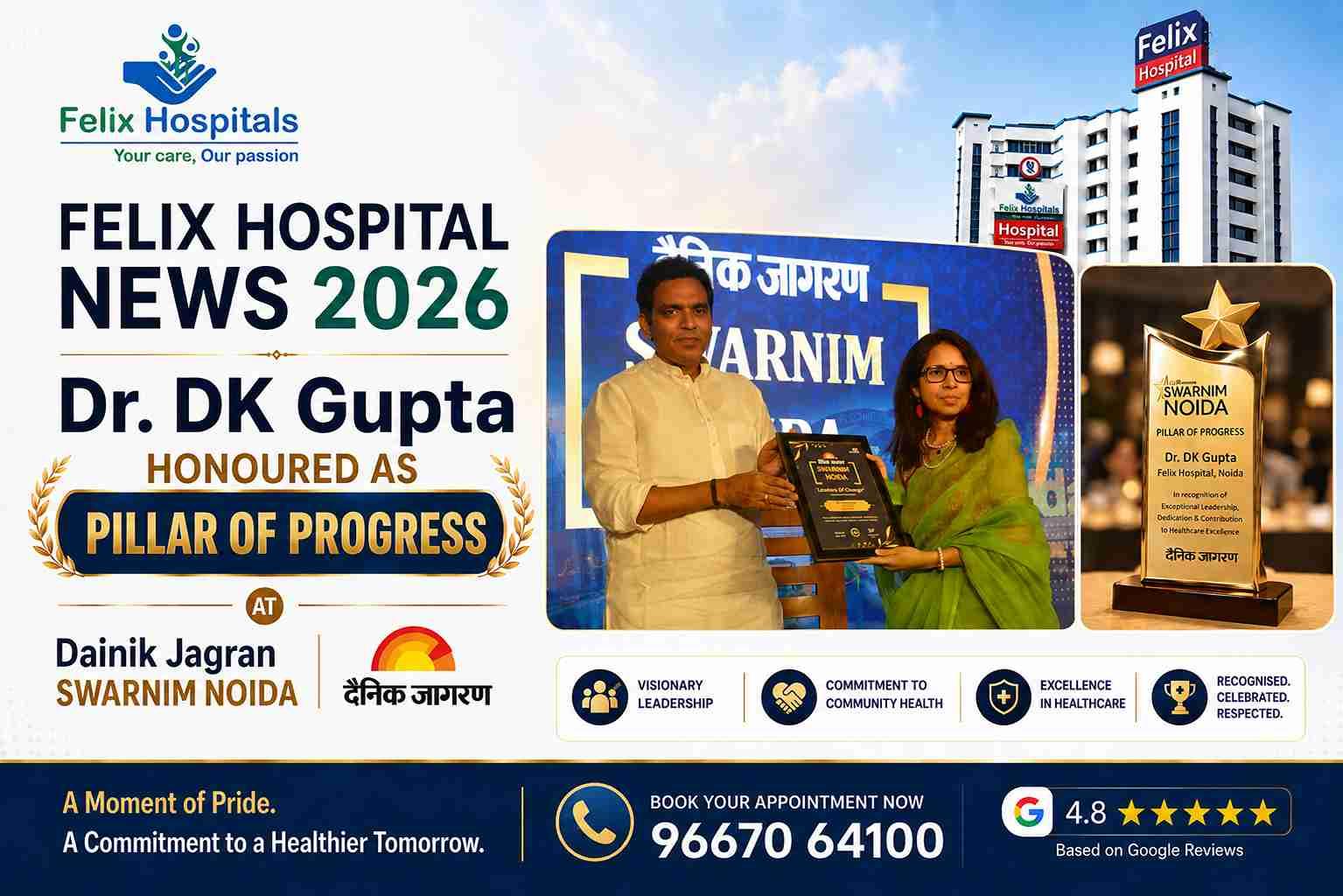
Before the award. Before Felix Hospital breaking news spread across Noida's civic and patient communities. Before the recognition at Radisson Green, Sector-55 — there were fifteen years of unglamorous, consistent work.
Dr. DK Gupta completed his MBBS in 2002 and MD in Paediatrics in 2007, both from LLRM Medical College, Meerut — one of Uttar Pradesh's most competitive medical institutions. Across those two degrees, he did not just pass. He earned six Gold Medals and nine Honours. In a class full of doctors, he was the standard everyone else was measured against.
That academic foundation is not a biographical footnote. It explains the clinical culture he brought to Felix Hospital Noida — a culture where outcomes are measured, cases are documented, and patients referred as unmanageable elsewhere are accepted rather than turned away.
At Radisson Green, Sector-55, Noida, the Dainik Jagran Swarnim Noida 2026 ceremony brought together the individuals and institutions that have shaped the city's growth. The Pillar of Progress recognition is among the most specific categories at the event — it does not go to visibility or scale, it goes to contribution.
Dr. DK Gupta was named a Pillar of Progress for his role in transforming Noida into a global hub of healthcare excellence. The award was received on his behalf at the ceremony.
This is Felix Hospital news 2026 that goes beyond a clinical case. It is the city of Noida formally acknowledging what patients and families have been saying organically throughout the year — that Felix Hospital, under Dr. Gupta's leadership, has changed what healthcare in this region can deliver.
Dr. DK Gupta has presented more than ten papers at national and state-level medical conferences. He has been a guest speaker at national and international institutions and summits — not as a representative of a large hospital group, but as an individual clinician whose ideas about healthcare delivery were worth hearing.
That body of work outside Felix Hospital's walls is directly relevant to what has happened inside them. The same thinking that produced conference papers produced the clinical protocols that made Felix Hospital Noida news in 2026 — EUS-guided bypass without general anesthesia in an 81-year-old, GCS 3 coma reversals, bilateral joint replacements in high-risk patients.
Dr. Gupta is the driving force behind Felix Hospital's emergence as a global brand in what the institution itself describes as record time. That phrase — record time — is not marketing language when you look at the 2026 case record. A hospital that can document outcomes across gastroenterology, critical care, orthopaedics, neonatology, neurology, and obstetrics in a single year has not grown slowly.
Felix Hospital viral news almost always starts the same way: a family shares something they were told was impossible. Yadram Ji's son said Dr. Tabish gave his father a second life after a scarless intestinal bypass at 81. Surajmal's nephew said Felix Hospital succeeded where others had failed after a full GCS 3 coma recovery. These stories spread because they are true, documented, and consented — and because the families felt compelled to share them.
Dr. DK Gupta's Pillar of Progress recognition spread the same way — not through a press release, but through the Felix Hospital family sharing a moment of genuine pride.
The difference between this and routine Felix Hospital breaking news is the source of the recognition. Clinical outcomes are validated by patients. This recognition is validated by Dainik Jagran — one of India's most widely read Hindi-language newspapers and one of Noida's most credible civic institutions. Both forms of validation point in the same direction.
Leadership in healthcare is not measured by titles. It is measured by what a hospital does with difficult cases — whether it turns them away or builds the capability to resolve them.
Felix Hospital breaking news today, across department after department, reflects a hospital that chooses the second option. That choice does not happen without a leadership culture that expects it.
Dr. DK Gupta's six Gold Medals and nine Honours from LLRM Medical College tell you something about how he approaches problems. His ten-plus national conference papers tell you he thinks about healthcare systemically, not just case by case. His track record of building Felix Hospital into a recognised brand in record time tells you he executes.
The Pillar of Progress recognition at Dainik Jagran Swarnim Noida 2026 is the civic expression of all three.
For anyone tracking Felix Hospital latest news this year, Dr. DK Gupta's award arrives in context. 2026 has been a year of documented firsts across Felix Hospital Noida:
A complete intestinal blockage resolved without surgery in an 81-year-old. A GCS 3 coma with multi-organ failure reversed in full. Bilateral knee replacement performed in a single sitting on an HCV-positive patient. A 34-week premature infant resuscitated from congenital pneumonia. Vision restored in an Idiopathic Intracranial Hypertension case via precision lumbar puncture. A high-risk first-time maternity delivery managed with zero complications.
Each of these cases became Felix Hospital Noida news because the outcome was real and the family shared it. Each reflects the clinical direction that Dr. DK Gupta has set for the institution. The Pillar of Progress award is Dainik Jagran's formal agreement with that direction.
Dr. Ravi Sharma is a senior physician with 42+ years of experience, known for compassionate and comprehensive patient care in Noida.
Complete list of Ayushman Bharat empanelled hospitals in Noida (Gautam Buddha Nagar). Download PDF, check coverage & get cashless treatment at Felix Hospital. Updated 2026.
Find the updated list of hospitals in Greater Noida that accept Ayushman Card (PM-JAY) in 2026.
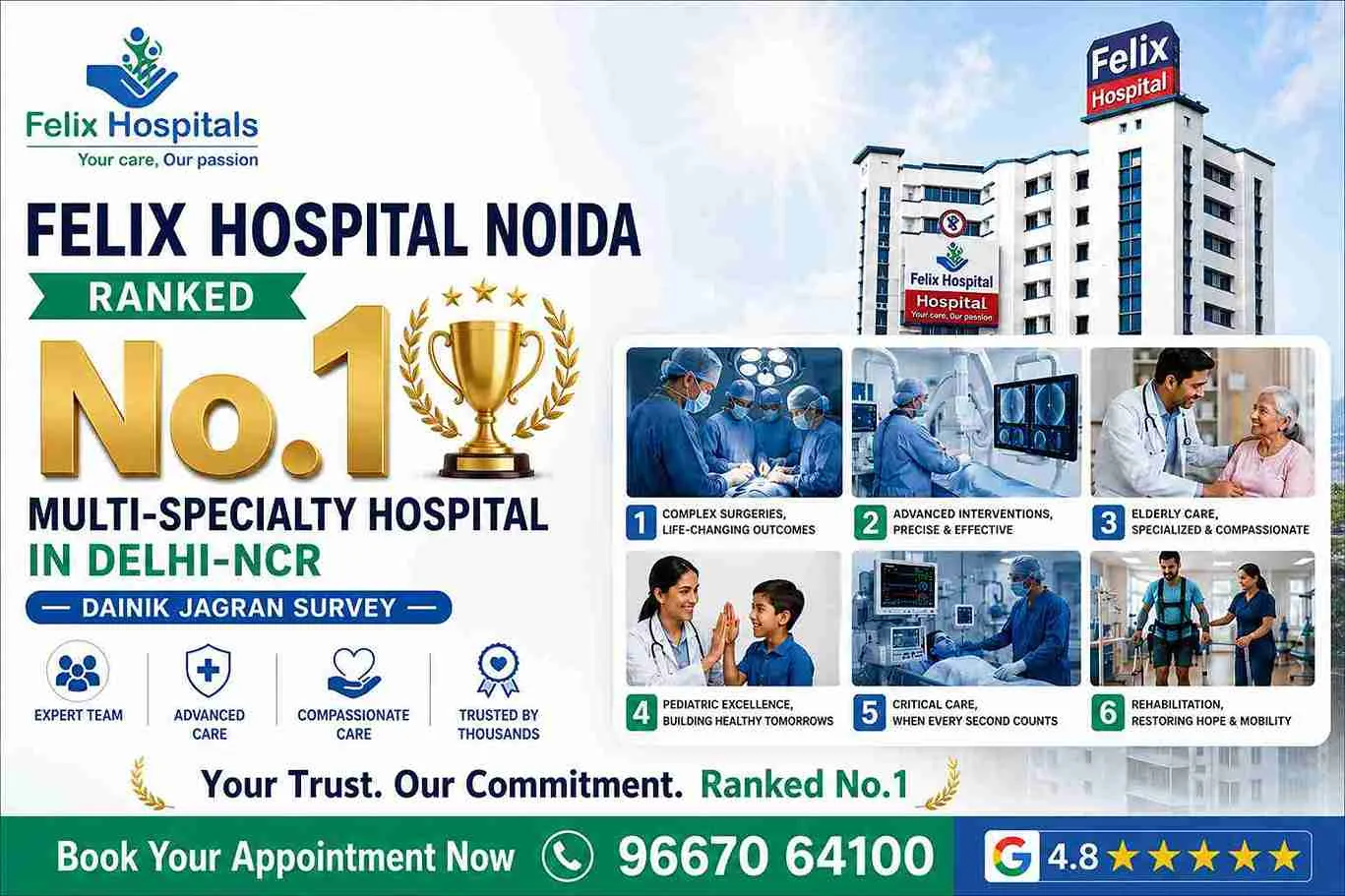
It Is Official. Not a Claim — a Verified Ranking.
Felix Hospital Noida stands as the No.1 Multi-Speciality Hospital in Delhi-NCR, as recognized by the prestigious Dainik Jagran Survey 2025-26. With a team of highly experienced doctors, cutting-edge medical technology, and a patient-first approach, Felix Hospital has transformed healthcare delivery in Noida and the wider Delhi-NCR region. From advanced diagnostics to complex surgeries, Felix Hospital continues to serve lakhs of patients with compassion, transparency, and clinical excellence — making it the most trusted name in healthcare across Delhi-NCR.
The Dainik Jagran Multi-Specialty Hospital Ranking Survey 2025-26 has officially ranked Felix Hospital, Noida as the No.1 Multi-Specialty Hospital in Delhi-NCR — for the second consecutive year. This is not a self-declared title. It is an independent survey conducted by one of India's most widely read and trusted Hindi-language newspapers, covering the entire Delhi-NCR region.
This is the Felix Hospital Noida news that patients, families, and referring physicians across the region have been sharing since the ranking was announced — and for good reason.
The Dainik Jagran Hospital Ranking Survey is not a popularity contest. It evaluates multi-specialty hospitals across Delhi-NCR on clinical outcomes, infrastructure, patient experience, specialist availability, and overall healthcare delivery.
For Felix Hospital Noida to rank No.1 in this survey — ahead of every other multi-specialty hospital in the entire Delhi-NCR region — means the independent evaluation confirmed what patients have been saying organically throughout 2025 and 2026.
This is exactly the kind of Felix Hospital breaking news that carries weight beyond the hospital's own channels. When Dainik Jagran — a publication with decades of credibility and a readership that spans every district of Delhi-NCR — publishes a No.1 ranking, it is not a press release. It is a third-party verdict.
A single-year ranking can reflect a good year. A consecutive No.1 ranking reflects a system.
Felix Hospital Noida has maintained the top position in the Dainik Jagran Multi-Specialty Hospital Ranking Survey across 2025-26 — which means the infrastructure, clinical capability, and patient outcomes that earned the first ranking were not a one-time performance. They were sustained.
For anyone following Felix Hospital viral news across patient communities in Noida, this consistency is recognisable. The cases that spread organically — the 81-year-old scarless intestinal bypass, the GCS 3 coma reversal, the premature infant respiratory rescue — are not isolated events. They are products of a hospital system that performs at this level consistently, which is precisely what a consecutive No.1 ranking confirms.
Felix Hospital breaking news today is not just about rankings and awards. It is about what those rankings mean for real families making real decisions about where to seek care.
When a patient in Saharanpur is transferred to Felix Hospital Noida in a GCS 3 coma — the lowest measurable consciousness score — and walks out with full neurological recovery, that family does not need a ranking to know where they went. But for the next family facing a similarly impossible-sounding diagnosis, the Dainik Jagran No.1 ranking is a credible, independent signal that Felix Hospital is the right place to go.
That is the practical value of this recognition. It converts what patient communities have been sharing as Felix Hospital viral news into a verified, citable fact: independently ranked No.1 in Delhi-NCR, 2025-26.
Rankings like this do not happen by accident. The Dainik Jagran No.1 position reflects the same infrastructure that has made Felix Hospital Noida news in 2026 across every major department:
A Level III endoscopy suite with real-time ultrasound integration — enabling scarless procedures in patients too frail for surgery. A Level III NICU capable of resuscitating premature infants from complete respiratory failure. A critical care unit that accepts GCS 3 admissions and multi-organ failure cases declined elsewhere. An orthopaedic theatre equipped for bio-hazard protocols, performing bilateral joint replacements in high-risk patients. Neurology diagnostics with MRI and MR Venogram capability for conditions like Idiopathic Intracranial Hypertension. An obstetrics department running individualized delivery protocols for high-anxiety and high-risk pregnancies.
No single department earned this ranking. Every department did — together.
Felix Hospital Noida acknowledges that this ranking belongs first to the patients and families who placed their trust in the hospital — often at the most difficult moments of their lives.
"Yeh samman aap sabhi ke atoot vishwas aur bharose ka praman hai."
This honour is proof of your unbreakable trust and faith.
It also belongs to every doctor, nurse, technician, and support staff member who showed up for difficult cases when it would have been easier to decline them. The Dainik Jagran No.1 ranking is their recognition as much as it is the institution's.
For patients across Delhi-NCR evaluating where to seek multi-specialty care, the answer has been independently verified.
Felix Hospital news today confirms what 2025 and 2026 have consistently demonstrated: Felix Hospital Noida is not just the largest option or the most convenient option. It is, by independent third-party evaluation, the best multi-specialty hospital in Delhi-NCR.
Under Dr. DK Gupta's leadership — recognised separately as a Pillar of Progress at Dainik Jagran Swarnim Noida 2026 — the hospital has built the clinical culture, specialist depth, and infrastructure that earns and sustains a No.1 ranking across consecutive years.
That is the story behind the ranking. And that is why this Felix Hospital breaking news today is worth sharing.
Dr. Anshumala Sinha is an experienced Internal Medicine and Diabetology specialist with 20+ years of practice. She specializes in diabetes management, infectious diseases, fever treatment, hypertension, cholesterol control, weight management, and trauma care. Recognized among the Best General Physicians in Noida, she provides comprehensive and patient-focused medical care.
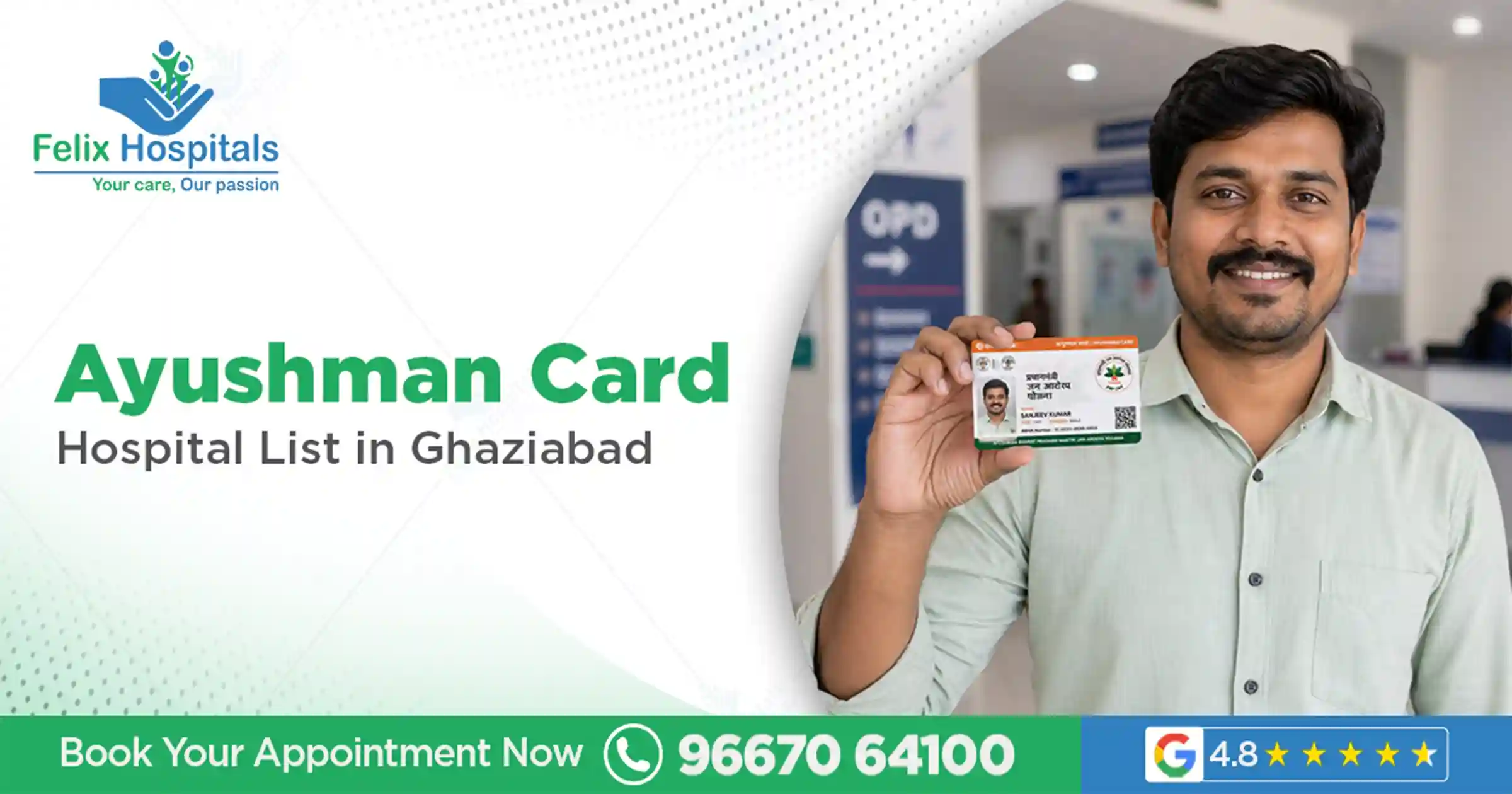
If you hold an Ayushman Bharat card and live in Ghaziabad, Delhi NCR, or the surrounding belt — Felix Hospital is your answer. Fully empanelled under PM-JAY (Pradhan Mantri Jan Arogya Yojana), Felix Hospital delivers cashless tertiary care across all major specialties. No upfront payment. No deposit. No compromise on quality.
This guide covers the Ayushman card hospital list in Delhi and Ghaziabad, how to use your Ayushman card at Felix Hospital, documents required, room entitlements, emergency rules, and everything a beneficiary needs before walking through the door.
Ayushman Helpdesk at Felix Hospital: +91 9667064100
The Ayushman card hospital list in Delhi NCR runs into hundreds of facilities — government hospitals, district hospitals, and select private empanelled centres. But not all empanelled hospitals are equal. Felix Hospital, located in Gamma-1, Greater Noida, is among the most comprehensively equipped private facilities on the Ayushman card hospital list in Delhi NCR — offering tertiary care, 24/7 emergency, robotic surgery, and a Level III NICU under one roof.
Most hospitals on the Ayushman card Delhi hospital list offer basic care. Felix Hospital offers something different — specialist depth, advanced technology, and a dedicated Ayushman administrative desk that handles everything from pre-authorisation to discharge documentation.
What sets Felix Hospital apart:
24/7 Digital Catheterisation Lab — cardiac emergencies treated at any hour, no morning-slot waiting
Robotic and Computer-Assisted Surgery — joint replacement with image-guided precision
Level III NICU — for newborns requiring intensive neonatal support
Zero-Cut Laser Kidney Stone Treatment — no incision, faster recovery
Laminar Airflow Operation Theatres — infection-controlled surgical environment
On-site MRI, CT Scan, Digital X-Ray, Ultrasound, Endoscopy — no outside referrals
NABH Accreditation — externally audited patient safety standards
Dedicated Ayushman desk — pre-authorisation, paperwork, claim filing handled by the hospital
For any beneficiary checking the Ayushman card hospital list near me, Felix Hospital covers the entire Noida-Ghaziabad-Greater Noida belt within 20–30 minutes from most sectors.
All procedures listed below are available cashless for eligible Ayushman Bharat beneficiaries at Felix Hospital, subject to PM-JAY approved package rates.
Specialty | Procedures Covered Under Ayushman Bharat |
Cardiology & Cardiac Surgery | Angiography, angioplasty, bypass surgery, valve replacement, pacemaker, heart failure |
Orthopaedics & Joint Replacement | Knee replacement, hip replacement, spine surgery, fracture fixation |
Neurology & Neurosurgery | Stroke management, brain surgery, spinal cord conditions, epilepsy |
Oncology | Cancer diagnosis, chemotherapy, radiation therapy, surgical oncology |
Gynaecology & Obstetrics | Normal delivery, C-section, hysterectomy, fibroid surgery — Level III NICU available |
Urology | Kidney stone laser treatment, prostate surgery, dialysis |
General & Laparoscopic Surgery | Gallbladder removal, hernia repair, appendectomy, bariatric surgery |
Paediatrics | Paediatric medical and surgical conditions |
ENT | Tonsillectomy, septoplasty, ear surgery, sinus procedures |
Ophthalmology | Cataract surgery, glaucoma, retinal procedures |
Pulmonology | Respiratory conditions, bronchoscopy, sleep disorders |
Nephrology & Dialysis | Chronic kidney disease, haemodialysis — 24/7 unit |
Gastroenterology | Endoscopy, colonoscopy, liver and digestive conditions |
Endocrinology | Diabetes, thyroid, hormonal disorders |
Psychiatry | Mental health consultation and management |
Rheumatology | Arthritis, autoimmune joint conditions |
Physical Medicine & Rehabilitation | Physiotherapy, occupational therapy, post-surgical rehabilitation |
Call +91 9667064100 to confirm whether your specific procedure qualifies under PM-JAY rates before travelling.
The official Ayushman card hospital list in Delhi PDF is maintained by the National Health Authority and is updated periodically as hospitals are added or removed from the network.
Visit pmjay.gov.in — the official PM-JAY portal
Click on "Find Hospital" in the top navigation
Select State as Delhi or Uttar Pradesh (for Noida/Ghaziabad)
Select District as per your location
Apply filters for Speciality if needed
Download or print the filtered list as PDF
Always download fresh. Older PDFs circulating on WhatsApp or third-party websites are frequently outdated and may list hospitals that have been de-empanelled or miss recently added ones.
Felix Hospital appears in the PM-JAY empanelled list for the Delhi NCR region. Call +91 9667064100 to confirm current empanelment status for your specific procedure.
Using your Ayushman card in the hospital is straightforward once you know the process. Here is exactly how it works at Felix Hospital.
Step 1 — Verify your eligibility Check your name on the PM-JAY beneficiary list at pmjay.gov.in or call 14555. If your family is listed, you are covered for up to ₹5 lakh per year in cashless treatment at empanelled hospitals.
Step 2 — Arrive at Felix Hospital with your documents Walk into the Felix Hospital Ayushman desk — located at the main reception. No prior appointment is needed for emergency cases. For planned procedures, calling ahead at +91 9667064100 allows the desk to prepare your pre-authorisation in advance.
Step 3 — Eligibility verification at the hospital The Felix Hospital Ayushman desk uses the PM-JAY beneficiary portal to verify your identity and confirm eligibility in real time. This takes a few minutes.
Step 4 — Pre-authorisation submission For planned surgeries and high-cost procedures, Felix Hospital submits a pre-authorisation request to the PM-JAY portal. This is handled entirely by the hospital team. You are not required to follow up separately.
Step 5 — Treatment begins Once pre-authorisation is approved, all covered treatment proceeds at zero cost to you. Investigations, surgery, medicines, ICU — covered under PM-JAY package rates, settled directly between Felix Hospital and the government.
Step 6 — Discharge At discharge, you receive your treatment summary and records. Felix Hospital submits the claim. Your bill for covered procedures is zero. You sign and leave.
Carrying the right documents eliminates delays at the Ayushman desk. Bring all of the following.
Primary identification (any one):
Ayushman Bharat card (physical or e-card from pmjay.gov.in)
Aadhaar card of the patient
Ration card (if linked to PM-JAY)
Supporting documents:
Any government-issued photo ID of the patient
Mobile number registered with Aadhaar (for OTP verification)
Previous medical records relevant to the current condition (discharge summaries, prescriptions, test reports)
If the physical Ayushman card is not available: The e-card downloaded from pmjay.gov.in is fully valid. Alternatively, the Felix Hospital desk can verify eligibility using Aadhaar and the registered mobile number directly from the beneficiary database — no physical card required in most cases.
Bring originals, not photocopies. For minors, bring the parent's or guardian's ID along with the child's documents.
For any beneficiary searching Ayushman card hospital list near me across Ghaziabad, Noida, or Greater Noida — Felix Hospital covers the full belt.
Area | Key Landmarks | Approx. Time from Felix |
Greater Noida Central — Alpha, Beta, Gamma | Pari Chowk, Alpha Commercial Belt | 10–15 mins |
Knowledge Park | Knowledge Park Metro, Sharda Hospital Road | 10–15 mins |
Omicron & Pi Sectors | Omicron 1 Market, Pi commercial belt | 15–20 mins |
Noida Expressway — Sector 100–137 | Advant Navis Business Park, Sector 137 Metro | 20–25 mins |
Noida Extension — Gaur City | Gaur City Mall, Crossings Republik | 20–25 mins |
Central Noida — Sector 18, 50–76 | Noida City Centre, Atta Market | 20–25 mins |
Ghaziabad — Indirapuram, Vaishali | Shipra Mall, Vaishali Metro | 25–35 mins |
Dadri & Surajpur | Dadri Bus Stand, Surajpur Chowk | 25–30 mins |
For emergencies, the Felix Hospital ambulance operates 24 hours. Call +91 9667064100 for immediate dispatch.
Heart attack. Stroke. Major trauma. Respiratory failure. Serious accident.
No pre-authorisation is needed. No paperwork before treatment. Walk — or be brought — directly to the Felix Hospital Emergency Department.
PM-JAY guidelines permit immediate emergency treatment at any empanelled hospital without prior approval. Treatment begins the moment you arrive. The Felix Hospital Ayushman desk handles retrospective documentation and claim submission after the patient is stabilised.
Tell the emergency team you are an Ayushman Bharat beneficiary on arrival. That is the only step required from your side.
For CAPF Ayushman card holders: The CAPF Ayushman hospital list is a separate empanelled network maintained for Central Armed Police Forces personnel and their dependents. Felix Hospital's empanelment status under the CAPF Ayushman hospital list should be confirmed directly at +91 9667064100, as the CAPF network is updated independently of the general PM-JAY list.
Emergency & Ambulance: +91 9667064100 — 24 hours
The Ayushman card exists to ensure that serious illness does not mean financial ruin. Felix Hospital exists to make sure it does not mean compromised care either.
Central and state government scheme beneficiaries in Ghaziabad, Noida, and Greater Noida receive the same doctors, the same operation theatres, and the same post-operative care as any private patient — with the Ayushman Bharat scheme covering the cost directly.
The Felix Hospital Ayushman desk processes pre-authorisations and discharge claims daily. Families are not left managing paperwork during hospitalisation.
Do not wait until you need it to find out how it works.
+91 9667064100 — Ayushman Helpdesk, Pre-Authorisation, and 24-hour Emergency Felix Hospital, Gamma-1, Greater Noida. PM-JAY Empanelled — Delhi NCR, Noida, Ghaziabad.
Dr. Ravi Sharma is a senior physician with 42+ years of experience, known for compassionate and comprehensive patient care in Noida.
Complete list of Ayushman Bharat empanelled hospitals in Noida (Gautam Buddha Nagar). Download PDF, check coverage & get cashless treatment at Felix Hospital. Updated 2026.
Find the updated list of hospitals in Greater Noida that accept Ayushman Card (PM-JAY) in 2026.
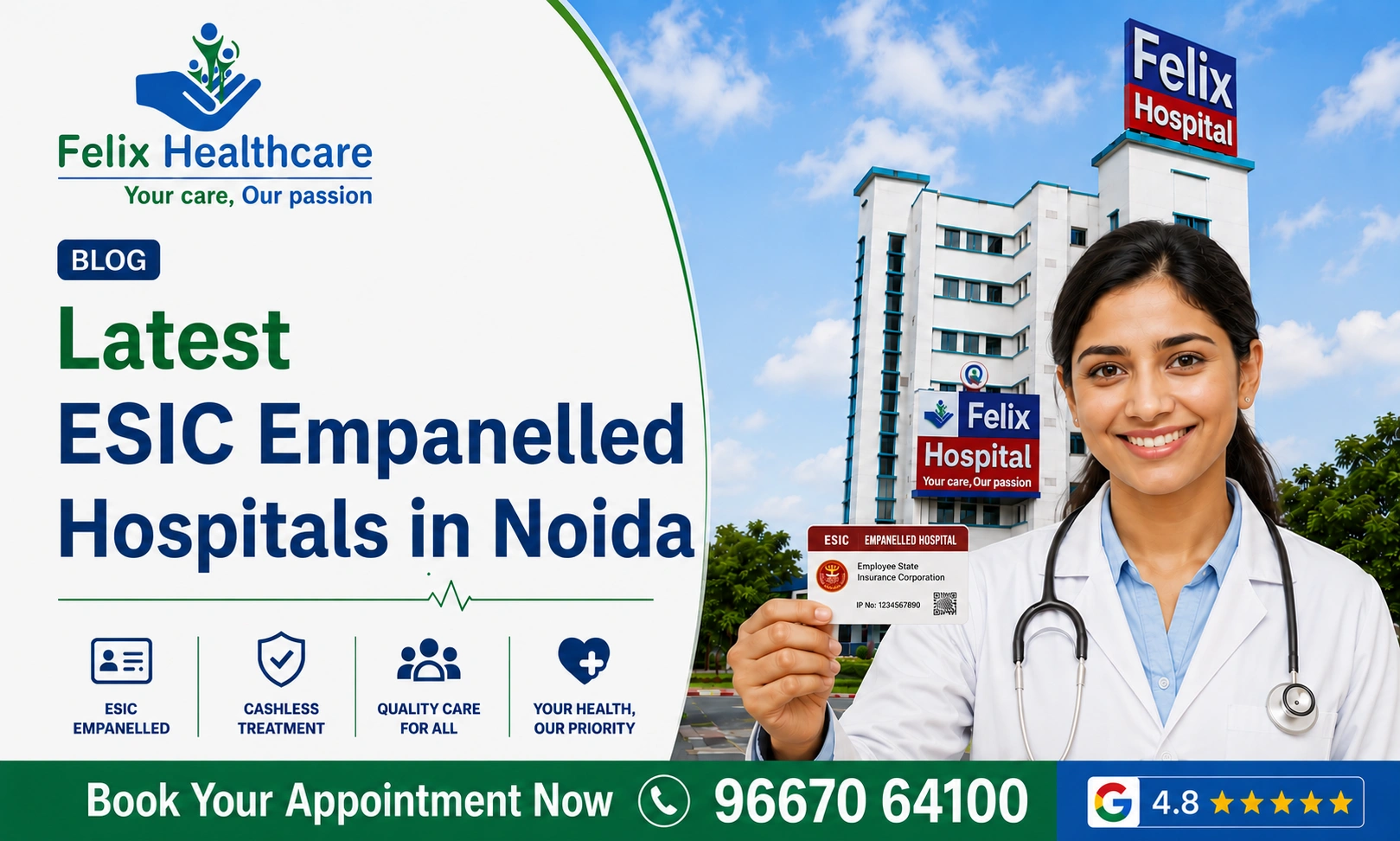
For factory workers, private company employees, and their families covered under the Employees' State Insurance scheme , your ESI card is your right to free medical care. The challenge is knowing which hospitals in Noida actually accept it, what is covered, and how to walk in without getting turned away at the billing counter.
Felix Hospital is empanelled under ESIC for cashless treatment across a wide range of medical and surgical specialties. Covered procedures cost you nothing. The hospital handles the paperwork. You focus on getting better.
ESIC Helpdesk at Felix Hospital: +91 9667064100
Felix Hospital provides ESIC-covered treatment across the following departments. All procedures within ESIC approved package rates are cashless for entitled beneficiaries and their dependants.
Specialty | Procedures Covered Under ESIC |
Cardiology & Cardiac Surgery | Angiography, angioplasty, bypass surgery, valve replacement, pacemaker, heart failure management |
Orthopaedics & Joint Replacement | Knee replacement, hip replacement, spine surgery, fracture fixation, bone infection treatment |
Neurology & Neurosurgery | Stroke management, brain surgery, spinal conditions, epilepsy treatment |
Oncology | Cancer diagnosis, chemotherapy, radiation therapy, surgical oncology |
Gynaecology & Obstetrics | Normal delivery, C-section, hysterectomy, fibroid surgery. Level III NICU available |
Urology | Kidney stone laser, prostate surgery, urinary tract procedures, dialysis |
General & Laparoscopic Surgery | Gallbladder removal, hernia repair, appendectomy, abdominal surgery |
Paediatrics | Paediatric surgical and medical conditions |
ENT | Tonsillectomy, septoplasty, ear surgery, sinus procedures |
Ophthalmology | Cataract surgery, glaucoma, retinal procedures |
Pulmonology | Respiratory conditions, bronchoscopy, sleep disorders |
Nephrology & Dialysis | Chronic kidney disease management, haemodialysis , 24/7 unit |
Physical Medicine & Rehabilitation | Physiotherapy, occupational therapy, post-surgical rehabilitation |
Call +91 9667064100 to confirm whether your specific procedure is covered before travelling.
The official ESIC empanelled hospital list for Noida is available on the ESIC portal.
Go to esic.gov.in and navigate to the empanelled hospitals section. Select Uttar Pradesh as the state and Noida or Gautam Buddha Nagar as the region. The results page lists all currently empanelled hospitals ,press Ctrl+P (Cmd+P on Mac), select Save as PDF, and save to your phone or computer.Always download fresh from esic.gov.in. Older PDFs shared in WhatsApp groups are often outdated , hospitals are added and removed from the empanelled network regularly.
Step 1: Get a referral from your ESIC dispensary or IMO For planned treatment, begin at your assigned ESIC dispensary or the Insurance Medical Officer (IMO) at your employer's registered dispensary. They assess your condition and issue a referral letter to Felix Hospital for specialist care or hospitalization.
Step 2: Arrive at the Felix Hospital ESIC desk Walk directly to the dedicated ESIC helpdesk at Felix Hospital. Do not go to general billing. Bring your ESI card, referral letter, and Aadhaar card. The desk handles registration and admission coordination.
Step 3: Live verification The ESIC desk verifies your card and referral against the ESIC system. This takes a few minutes. Once confirmed, admission proceeds.
Step 4: Pre-authorization submitted by the hospital For planned surgeries and high-cost procedures, Felix Hospital submits pre-authorization to ESIC. You do not follow up with any ESIC office separately, the hospital team manages it entirely.
Step 5: Treatment at zero cost Room, surgery, anesthesia, medicines during admission, investigations, and meals are covered for listed procedures. Nothing is charged to you for covered treatments.
Step 6: Cashless discharge Sign your discharge papers and leave. Felix Hospital settles directly with ESIC. Your balance for covered treatments is zero.
Arriving with the right documents means no delays at admission.
Mandatory ,without these, verification cannot proceed:
ESI card of the patient (physical card or digital copy)
Aadhaar card of the patient : original plus one photocopy
Referral letter from ESIC dispensary or IMO for planned treatment
For a dependent family member :proof of dependency and the insured person's ESI card
Previous medical records, prescriptions, or discharge summaries for ongoing conditions
Employer registration details if there is any query on card validity
Ration card or family ID as backup for any Aadhaar mismatch
You do not need to pay any deposit or advance for covered treatments.
No referral for emergencies , walk straight to the emergency department. ESIC rules permit direct emergency admission at any empanelled hospital without prior referral.
Heart attack, Stroke, Major trauma, Respiratory failure, Serious accident at the workplace.
No referral letter is needed. No prior authorization is required.
Walk straight into the Felix Hospital emergency department. Treatment begins immediately. ESIC rules explicitly permit emergency admission at any empanelled hospital without referral ,the clinical team does not wait for paperwork when someone's life is at risk.
The Felix Hospital ESIC desk handles all documentation and retrospective authorization after the patient is stabilized. The family's only job is to get the patient to the hospital. Tell the emergency team you are an ESIC beneficiary when you arrive. That is all.
Felix Hospital stands apart from other options on the ESIC empanelled hospitals list in Noida for reasons that matter when your family needs serious medical care.
Felix Hospital is not a basic referral facility. It is a tertiary care centre with a 24/7 digital cath lab for cardiac emergencies, a robotic-assisted surgery wing for joint replacement, a Level III NICU for high-risk deliveries, zero-cut laser technology for kidney stone treatment, and laminar airflow operation theatres for infection-controlled surgery. NABH accredited , externally audited, not self-certified.
ESIC beneficiaries at Felix Hospital receive the same doctors, the same operation theatres, and the same post-operative care as every other patient. No separate ward. No lower-priority queue. No difference in treatment quality based on how the bill is being paid.
Feature | Govt ESIC Hospitals | Other Empanelled Clinics | Felix Hospital |
Specialist Availability | Available but often crowded | Limited | 24/7 Multi-Specialty |
Wait Time | Long | Moderate | Dedicated ESIC Desk |
Critical Care / NICU | Often at capacity | Rarely available | Level III NICU |
Surgical Technology | Basic | Limited | Robotic, Laparoscopic, Laser |
NABH Accreditation | Varies | Rare | Yes |
Cashless Guarantee | Yes | Variable | 100% for covered procedures |
Felix Hospital is located in Greater Noida and serves ESIC beneficiaries from across the Noida industrial and residential belt — including workers from industrial areas in Noida sectors, factories along the expressway, and residential areas throughout the district.
Area | Key Landmarks | Approx. Time from Felix |
Greater Noida Central — Alpha, Beta, Gamma | Pari Chowk, Alpha Commercial Belt | 10–15 mins |
Knowledge Park & Techzone | Knowledge Park Metro, Sharda Hospital Road | 10–15 mins |
Noida Expressway — Sector 100–137 | Advant Navis, Sector 137 Metro | 20–25 mins |
Noida Extension — Gaur City | Gaur City Mall, Crossings Republik | 20–25 mins |
Central Noida — Sector 18, 50–76 | Noida City Centre, Atta Market | 20–25 mins |
Dadri & Surajpur Industrial Areas | Dadri Bus Stand, Surajpur Chowk | 20–30 mins |
Jewar & Yamuna Expressway Belt | Jewar Chowk, Yamuna Expressway toll | 30–40 mins |
For emergencies, the Felix Hospital ambulance operates 24 hours. One call to +91 9667064100 dispatches it immediately.
Your ESI card is not just a card , it is your family's right to quality medical care without paying out of pocket. Felix Hospital's ESIC empanelment means that right is honoured , specialist doctors, advanced surgical technology, dedicated administrative support, and guaranteed cashless discharge for covered treatments.
For ESIC beneficiaries across Noida, Greater Noida, and the surrounding belt , Felix Hospital is equipped, empanelled, and ready.
Dr. Ravi Sharma is a senior physician with 42+ years of experience, known for compassionate and comprehensive patient care in Noida.
Complete list of Ayushman Bharat empanelled hospitals in Noida (Gautam Buddha Nagar). Download PDF, check coverage & get cashless treatment at Felix Hospital. Updated 2026.
Find the updated list of hospitals in Greater Noida that accept Ayushman Card (PM-JAY) in 2026.
Discover the updated list of Ayushman Bharat (PMJAY) hospitals in Dadri for 2026.
Looking for an Ayushman Bharat hospital in Delhi NCR? Discover how Felix Hospital provides quality healthcare services under the Ayushman Bharat Yojana in 2026.

Subscribe to our
© Copyright 2026. All Rights Reserved by Felix Healthcare Private Limited
Design and development by :


 +(91)9667064100
 Emergency : +(91)9667064100