 Emergency:
  WhatsApp

Subscribe to our
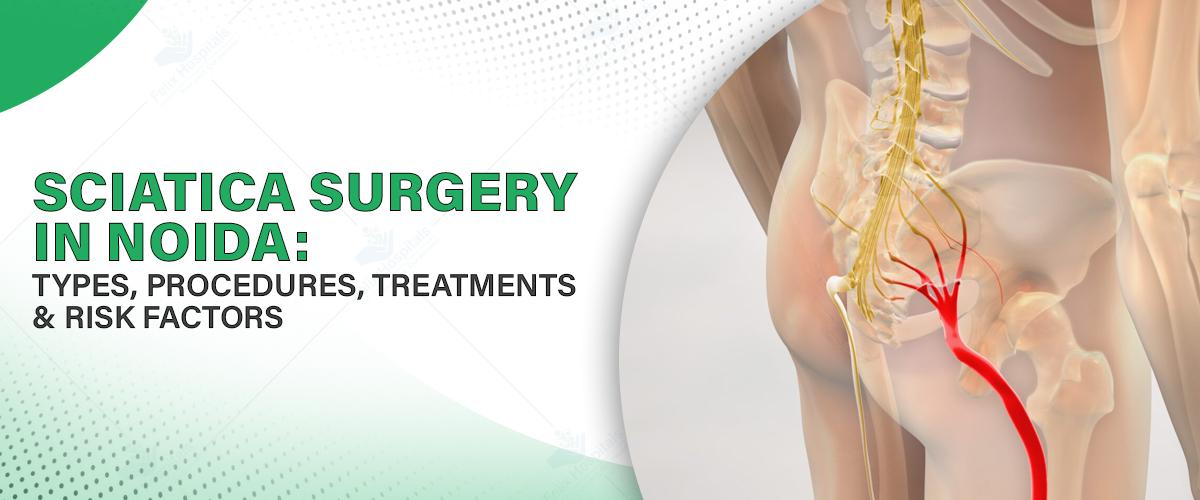
Sciatica is one of the most difficult neurological illnesses, which leaves patients with chronic pain extending from the lower back to the hips and into one or both legs. Physical therapy, medications, and lifestyle changes provide relief to most people, but others need surgery for function to be restored properly. This surgery provides patients with safe, effective, and less invasive interventions individualized to their disease.
If you want to get treated, choosing the best Neurology Hospital in Noida is the solution for your recovery. Choose the one, which offers holistic treatment, world-class facilities, and specialized neurosurgeons making it a trustworthy center for undergoing safe and successful Sciatica Surgery in Noida.
Sciatica is caused by compression or impingement of the longest nerve in the human body, the sciatic nerve. Most common causes include herniated discs, spinal stenosis, degenerative disc disease, bone spurs, or trauma. Symptoms typically:
Severe pain that spreads from the lower back to the legs.
Numbness or paresthesia of the foot or leg.
Weakness that prevents a person from walking or standing.
Incontinence of the bowel or bladder in extreme cases.
Even though the majority of patients recover with conservative management, surgery is indicated when:
Pain persists for more than 6–12 weeks in spite of conservative treatment.
There is extensive nerve compression.
Weakness, impairment of mobility, or neurological impairment worsens.
Emergency signs like bladder or bowel malfunction occur.
These procedures in these cases include the decompression of the nerves, stabilization of the spine, and restoration of function.
The recent technological development has also been followed by a series of effective sciatica surgeries, each of which is selected based on the cause and severity of the condition. The most popular sciatica surgeries in Noida are:
A less invasive procedure to remove the herniated portion of the disc compressing the sciatic nerve.
Requires a small incision (less than one inch).
Benefits include shorter recovery time, less scarring, and extremely high success rates.
Best for herniated disk sciatica with severe leg pain.
Done if spinal stenosis narrows the spinal canal, compressing nerves.
Removal of a little bit of vertebra (lamina) to provide space
Reduces pain and improves mobility by relaxing the tension in the nerves
Of greatest utility in the older patient with degenerative spine disease.
Widening the opening (foramen) through which nerve roots exit the spinal column.
Most suited in foraminal stenosis cases where the narrowing is compressing the sciatic nerve.
Eases pain in the affected area without removing much of the spinal structure.
Reserved only for those patients with spinal deformities, severe degeneration, or instability.
Two or more vertebrae are fused together to prevent painful movement.
Provides longer stability but is slower to recover and can limit spinal flexibility.
Fusion option, in which the injured disc is removed and replaced with an artificial disc.
Retains spinal mobility even after fusion.
Usually presented in young patients with one-level disc degeneration.
There is no single test for sciatica. A complete history and physical examination are usually required to make a diagnosis. Your doctor will enquire about when the pain began, where it travels, and whether you experience numbness or weakness. During the exam, you may be asked to walk, elevate your leg while lying down, or do basic strength tests. These assists determine which nerve roots may be implicated.
In some circumstances, your doctor may recommend imaging tests, such as:
X-rays to rule out fractures or bone changes
MRI scans for herniated discs or nerve compression
CT scans or nerve conduction tests if symptoms do not match physical results.
Though for each type of operation there are numerous ways, the entire process entails:
Preoperative testing: Imaging tests (MRI, CT scans, X-rays) determine the exact location of nerve compression.
Anesthesia: Regional or general anesthesia is used for the patient depending on the procedure.
Surgical technique: Open or minimally invasive surgery is chosen. Decompression of the procedure.
Nerve: The herniated disc, bone spur, or other reasons for compression of the nerve are excised.
Stabilization (if indicated): Disc replacement or fusion can be for long-term stabilization.
Closure: The wound is closed and post-operative care is begun.
State-of-the-Art Sciatica Surgery Hospital in Noida utilizes the most advanced imaging, micro-surgical equipment, and minimally invasive methods to obtain the best safety and recovery outcomes.
While the sciatica surgeries are safe and effective, the patients must be made aware of sciatica surgery risk factors.
Infection at the surgical site.
Bleeding or clotting in excess.
Numbness or weakness caused by nerve injury.
Age: Recovery is delayed in older patients.
Chronic illness: Diabetes, high blood pressure, or osteoporosis may slow healing.
Recurrence of herniated disc after microdiscectomy.
Spinal instability post-laminectomy.
Adjacent segment disease following spinal fusion.
Smoking and malnutrition take longer to recover.
Poor physical therapy or poor post-operative care decreases effectiveness.
Recovery varies with the nature of the procedure, patient's condition, and post-operative care:
Microdiscectomy: 2–6 weeks to heal.
Laminectomy: 6–12 weeks to recover.
Spinal Fusion: 1 year to recover.
Take physical therapy to recover strength and flexibility.
No weight lifting for few weeks.
Follow ergonomic sitting, standing, and sleeping practices.
Maintain a healthy weight to reduce spinal tension.
The patients who have undergone advanced Sciatica Surgery Hospitals in Noida are also given the personalized rehabilitation plans that markedly improve long-term outcomes.
The success of sciatica surgery is determined by a variety of factors. Some of them are listed below.
Highly skilled neurosurgeon specialists who specialise in advanced minimally invasive surgeries.
The newest instruments for diagnostic, imaging, and surgery
Care that prioritises the patient and involves personalised treatment plans
Don't let back pain run your life. Start your recovery today and lead towards a healthier, pain-free future.
Surgery for sciatica in Noida offers long-term and effective relief to patients who are not showing any response to conservative treatment. With advanced surgical methods such as microdiscectomy, laminectomy, foraminotomy, spinal fusion, and disc replacement, patients can restore mobility, reduce pain, and improve their overall quality of life.
While there are certain risks, these are minimized with the expertise of an experienced surgical team and proper post-surgery care. Best Sciatica Surgery Hospitals in Noida, like Felix Hospital, along with the Best Neurosurgeon In Noida, provide advanced facilities and specialized skills to ensure patients receive the safest and most effective treatment. If you are experiencing recurring sciatica and limited activity, consulting an expert neurologist or spine specialist marks the beginning of your journey to recovery. With timely and accurate surgery, you can regain mobility and lead a pain-free life.
Sciatica Nerve Pain can cause sharp, shooting pain that radiates from the lower back to the legs. It often results from a herniated disc or spinal issues pressing on the sciatic nerve.

Spinal cord injury is one of the most serious injuries one can have. The damages can be permanent if not treated on time.
Thoracic spine surgery is performed to treat conditions affecting the mid-back, such as herniated discs, spinal tumors, or fractures.
Advanced neurosurgery improves treatment for brain and spine disorders with better outcomes.


Subscribe to our
© Copyright 2026. All Rights Reserved by Felix Healthcare Private Limited
Design and development by :


 +(91)9667064100
 Emergency : +(91)9667064100