 Emergency:
  WhatsApp

Subscribe to our
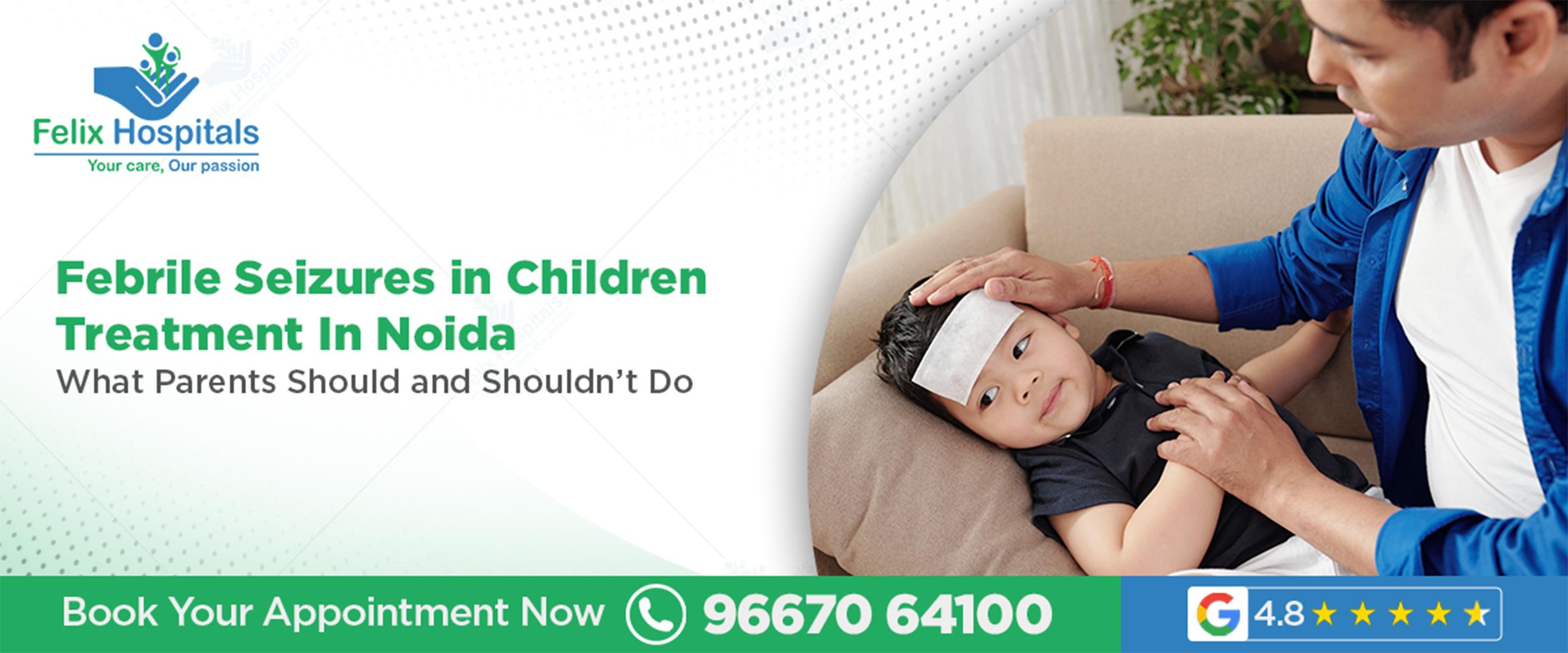
Seeing a child experience a febrile seizure can be frightening for any parent. Febrile seizures usually occur when a child's body temperature rises suddenly due to fever, most commonly between the ages of 6 months and 5 years. While most febrile seizures are harmless and resolve on their own, knowing what to do and what not to do can make a crucial difference.
For accurate diagnosis and expert guidance, consulting a Pediatric neurologist in Noida ensures that your child receives timely and specialized care. Early evaluation also helps rule out serious infections or neurological concerns.
In this blog, we break down the causes, symptoms, immediate steps, treatment options, and hospital care needed for febrile seizures—especially for parents seeking safe and reliable febrile seizure treatment in Noida.
Febrile seizures are convulsions triggered by fever. They occur due to a sudden spike in body temperature, usually from infections such as flu, throat infection, ear infection, or viral fever. These seizures occur in otherwise healthy children and are not related to epilepsy.
Last for less than 15 minutes
Do not repeat within 24 hours
Affect the whole body
Last longer than 15 minutes
Occur more than once in 24 hours
May affect one side of the body
If a child experiences repeated or prolonged seizures, immediate evaluation at the Best hospital for febrile seizures in children in Noida is essential.
Children develop febrile seizures mostly when fever rises rapidly. Common triggers include:
Viral infections (influenza, viral fever, roseola)
Ear infections
Throat and respiratory infections
Childhood vaccinations that may cause mild fever
Genetic susceptibility (family history)
A Pediatric neurologist in Noida can help determine the underlying cause through proper evaluation.
Identifying early signs helps parents act quickly during an episode. Symptoms include:
Sudden jerking movements or stiffening of body
Loss of consciousness
Eyes rolling upward
Foaming at the mouth (occasionally)
Brief breathing pauses
Confusion or drowsiness after the episode
The seizure usually lasts 30 seconds to 2 minutes, but even a few seconds can feel terrifying for parents.
Though panic is natural, staying calm helps you take the right steps.
Turn them gently to the left side to prevent choking.
Clear the surrounding area to avoid injury.
Especially around the neck, to help breathing.
Use your phone—duration helps doctors determine severity.
Light breathing irregularities are normal, but complete stoppage needs urgent medical attention.
Use a thermometer to track fever levels.
Paracetamol or ibuprofen may help—only after recovery and based on doctor’s advice.
These actions keep the child safe until the seizure ends, which it usually does within a few minutes.
What Parents SHOULD NOT Do During a Febrile Seizure
DO NOT put anything in the child’s mouth
They cannot swallow their tongue; objects may cause injury or choking.
DO NOT try to restrain the child
Holding them tightly may cause bone or muscle injury.
DO NOT attempt to feed water, medicines, or food
Risk of choking is extremely high.
DO NOT slap, shake, or sprinkle water
These actions do not stop seizures and only worsen panic.
DO NOT give a cold bath immediately
Sudden temperature changes can worsen shivering and distress.
Avoiding these mistakes is essential to ensuring safe first response for febrile seizures.
Seek medical care immediately if:
The seizure lasts more than 5 minutes
The child has difficulty breathing
The child has repeated seizures within 24 hours
The child is younger than 6 months
After the seizure, the child remains extremely drowsy or unresponsive
Fever is very high (above 103°F / 39.5°C)
Seizure occurs without fever
Signs of dehydration or infection appear
At this point, evaluation at the Best hospital for febrile seizures in children Noida is critical to rule out meningitis, brain infections, or underlying neurological issues.
A detailed check-up helps understand the cause of the seizure. Doctors may conduct:
Assessment of fever source and neurological signs.
To detect infection or inflammation.
Useful for diagnosing infections when source is unclear.
Performed only if meningitis is suspected.
Usually not required unless seizures are complex or frequent.
A Pediatric neurologist in Noida ensures correct testing and diagnosis.
Most febrile seizures stop on their own and do not require long-term medication. Treatment focuses on the cause of fever.
Paracetamol or ibuprofen as per pediatric dosage
Hydration
Treating the underlying infection
Midazolam (nasal spray)
Diazepam rectal gel
These are prescribed only for children with frequent or prolonged seizures.
Antibiotics or antivirals, depending on diagnosis.
In cases of:
First seizure
Prolonged seizure
Repeated episodes
High infection suspicion
Specialized pediatric care helps ensure the child stabilizes safely.
The good news: Most children recover completely and do not develop epilepsy.
Key points for parents to remember:
Febrile seizures do not cause brain damage
They do not affect learning or intelligence
Most children outgrow them by age 5
Recurrence may happen but is manageable
With proper instructions, parents can handle future episodes safely.
While seizures cannot always be prevented, parents can reduce triggers by:
Treating fever early
Keeping the child hydrated
Completing vaccinations on time
Managing infections promptly
Regular follow-ups with your pediatrician
For children with recurrent episodes, a Pediatric neurologist in Noida may offer precautionary measures.
A reputed pediatric facility ensures:
24×7 emergency pediatric support
Experienced child neurologists
Dedicated fever and infection management
Pediatric ICU availability
Accurate diagnosis and safe treatment plans
Parent counseling for home management
Choosing the Best hospital for febrile seizures in children Noida guarantees both safety and reassurance for worried parents.
Febrile seizures can be alarming, but with the right knowledge and timely hospital care, they are manageable and rarely harmful. Parents should focus on staying calm, ensuring safety during the episode, and knowing when to seek medical help.
If your child experiences a febrile seizure, or if you need expert guidance, consulting a Pediatric neurologist in Noida is the safest step. Specialized evaluation at trusted centers offering Febrile seizures treatment in Noida ensures your child receives immediate care, accurate diagnosis, and long-term reassurance.
Q. 1. Can febrile seizures cause brain damage?
Ans. No, Most febrile seizures are harmless and do not cause long-term brain problems.
Q. 2. Should I call an ambulance during a febrile seizure?
Ans. Yes, if the seizure lasts more than 5 minutes or the child is struggling to breathe.
Q. 3. Do febrile seizures mean my child has epilepsy?
Ans. No, Febrile seizures are not related to epilepsy and do not usually lead to it.
Q. 4. Can febrile seizures happen again?
Ans. Yes, especially if the child is very young or has high fevers. Recurrence is common but manageable.
Q. 5. When should I visit a hospital?
Ans. If the seizure is prolonged, repeats, occurs without fever, or the child is not recovering normally.
Pediatric rheumatology focuses on diagnosing and treating autoimmune and inflammatory disorders affecting children’s joints, muscles, and connective tissues.
During sleep, the body releases growth hormones, which are essential for a child's growth and development. Adequate sleep is vital for muscle development, tissue growth, and the overall physical health of a child.
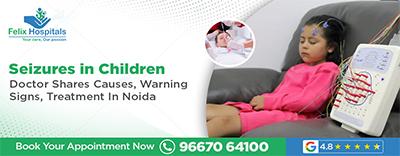
Know the causes, signs, and treatment options for seizures in children in Noida.


Subscribe to our
© Copyright 2026. All Rights Reserved by Felix Healthcare Private Limited
Design and development by :


 +(91)9667064100
 Emergency : +(91)9667064100