 Emergency:
  WhatsApp


Subscribe to our
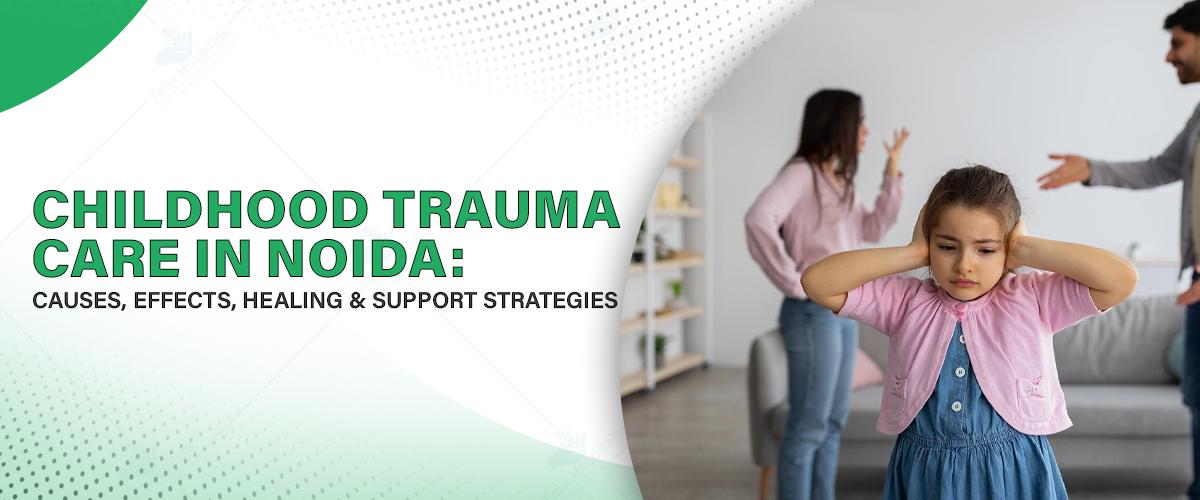
Let's be honest — childhood isn't necessarily the sunny, rosy time that it gets portrayed as. Some of those early childhood years arrive with invisible trauma. Trauma isn't necessarily a one-time, cataclysmic incident; it's more often the chronic, insidious stress of a dysfunctional home, abandonment or neglect, bullying, or loss of some dear individual. And the issue? Children often don't have the words for, "I'm not okay." They express it that way — by exhibiting behavioral outbursts, by internalizing, by a sudden behavioral shift, or a physical symptom.
This is not blame or shame. This is support, compassion, and education. If you are a teacher, parent, caregiver, or just a support-seeker, this blog guides through the fundamentals — the trauma origin, long-term repercussions it has for children, and recovery paths. We also address finding actual, effective care for childhood trauma in Noida because recovery truly does require a village — and the supportive assistance can alter a child's future for the better for a lifetime.
Call us today at +91 9667064100 and start the journey towards recovery.
Child trauma is not always the result of a one-time event. While we might think about accidents, abuse, or natural disasters, trauma also can come from chronic conditions — like emotional neglect, bullying at school, observing domestic violence, or having a parent fight addiction or mental illness.
In Noida, as it would be anywhere else, children might be quietly battling experiences that are more than their capacity for coping. And the difficult part is that trauma isn't necessarily apparent because it looks like sadness or because it looks like fear. Sometimes it looks like anger, attached-behavior, poor schoolwork, or even bodily symptoms like headaches and tummy aches.
Physical, emotional, or sexual abuse
Loss of a parent (death, divorce, abandonment)
Long-term family disruption or domestic violence
Neglect or abandonment
Peer rejection or bullying at school
Living alongside a mentally ill or addicted individual
Medrtraum (latente Krankheiten, Operation, Krankenha
Accidents or natural disasters
Recognizing these sources early on can help caregivers step in before long-term effects settle in too deep.
Trauma is also very differently processed by children than it is by grown-ups. Children's brains are developing, and when a child experiences chronic stress or fear, it actually has a literal effect of shaping how their own brain wires. This has also been described as "toxic stress" — and it can have a lasting effect if not tackled.
Short-term symptoms that you may feel:
Sleeping difficulties or nightmares regularly
Sudden shifts in mood or emotional outbursts
Withdrawal from family or friends
Difficulty concentrating at school
Fear or panic under certain conditions
Regressive behavior (bed wetting, sulk
Physical symptoms without a medical explanation
Difficulty forming healthy relationships
Issues in self-esteem or identity
Depression, anxiety disorders, Post-T
Risk behavior in teen-agers
Trouble with trust, authority, or emotional control
And the very best news is that children are incredibly resilient. With the proper support, children even severely traumatized routinely recover and enjoy healthy, positive lives.
There is no "cure-all" for recovery from trauma, but there are a few evidenced-based therapies and support networks that have proven highly effective.
Trauma therapists and child psychologists apply some of the following techniques:
Play therapy (especially for young children)
Trauma-focused Cognitive Behavioral Therapy (TF-CBT) tailored for trauma
EMDR (Eye Movement Desensitization and Reprocessing
Family therapy, either of the carers or parents
They assist kids in working through the experience, learning how to recover, and feeling protected.
Healing isn't limited to the therapist's office. The way family members at home react makes all the world of difference. Children need to feel safe, seen, and supported — not forced through too soon.
Small acts like not judging and listening, adopting routines, and giving consistent affection can be highly effective.
Child trauma counselling in Noida is also learning how to read the symptoms of trauma and provide support in class. If there's an issue, don't hesitate to speak with the school therapist or teacher. Pressures of academics in competitive schools often mask emotional issues.
The good news? Noida has also awakened to the widening demand for childhood trauma treatment by specialist clinics and children's mental health services.
Most of the best pediatric specialists in Noida and mental well-being sites also provide trauma-informed treatment, including:
Child psychologists and counselors
Child neurologists and behavior therapists
Family therapy sessions.
Crisis intervention services
Bullying or school-related stress counseling
When selecting a provider, seek a provider who has experience working with trauma, not behavioral problems in general. You need a provider who knows how trauma manifests in children and knows how to work it without further traumatizing.
Even prior to a pro stepping in, try this at home:
Hear more, judge less: Allow your kid to feel and express bad emotions.
Create routines: Structure provides a sense of safety and predictability.
Model calm: If you’re anxious or reactive, your child will mirror that.
Don't use punishment-oriented discipline: Be more interested in behavioral understanding rather than behavior termination.
Get support for yourself as well: It's hard work bringing up a traumatized child — a support group or therapy may be a blessing.
Call us at +91 9667064100 for consultation or more about pediatric trauma management in Noida.
Trauma is heavy – but secrecy makes it heavier. While we can't erase what's come before, we can influence what's next. Healing's journey has its beginning in observation, concern, and getting help not ashamedly or belatedly.
At the best child hospital in Noida, there is an increasing resource and spreading awareness. Whether it's getting a reliable pediatrician for the growth and development of children or getting in touch with mental health professionals educated in trauma, there is support available — for children and for their families.
Your kid doesn't require a flawless parent. They require a current one. And since you're reading this, it means that you're basically getting off to a good start.
Q1: How will I absolutely know whether or not my child is experiencing trauma or not having a very good day?
Ans: Everyone has bad days, but should you be experiencing weeks-worth of change in behavior, mood, or a pattern of slumber, it might very well be more than a bad streak.
Q2: Is it my fault that my child is emotionally troubled?
Ans: Absolutely not. Traumas are not always avoidable, and the most important thing is what you can do about it now. You are taking a huge step in the correct direction by seeking help.
Q3: Is trauma ever cured in children?
Ans: Most children recover very well, provided that trauma is treated in the early stages by a proper system of support and treatment.

Building healthy habits in the formative years of a child lays the foundation for the healthy living. By teaching them to enjoy healthy eating at a tender age helps for the overall development and growth for life.

Urinary tract infections (UTIs) in children are common but treatable. This guide for Greater Noida parents covers early signs, effective treatments, and easy preventive tips to protect your child’s health.
Understand the leading causes of birth trauma and explore advanced treatment options available in Noida for both mothers and newborns.

Subscribe to our
© Copyright 2026. All Rights Reserved by Felix Healthcare Private Limited
Design and development by :


 +(91)9667064100
 Emergency : +(91)9667064100