 Emergency:
  WhatsApp

Subscribe to our
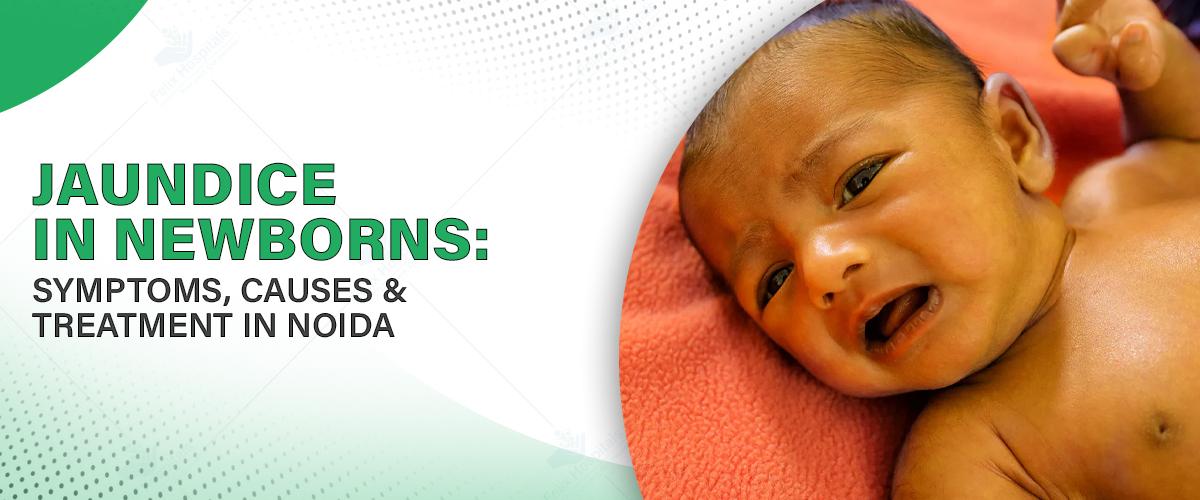
Ever noticed a yellowish color on their newborn's skin and eyes in the first few days of birth. It is called newborn jaundice, and it occurs very commonly. It is due to the buildup of bilirubin in the baby's blood because their liver at this stage will not be capable enough to get rid of it in a proper manner.
Whereas moderate jaundice resolves spontaneously, in a few cases, medical treatment is necessary to prevent complications. If you are looking for the best hospital for neonatal jaundice in Noida, you must be aware of the symptoms, causes, diagnosis, and treatment in noida of your newborn.
Early care is important. Call a child specialist now at +91 9667064100.
Jaundice is the yellow discoloration of the skin and eyes resulting from high bilirubin levels, a byproduct of the breakdown of red blood cells. The liver breaks down and helps eliminate bilirubin in normal circumstances. In infants, the liver is usually immature and not efficient in breaking down excess bilirubin, and it builds up.
This disease, also referred to as medically neonatal hyperbilirubinemia, affects about 60% of normal full-term infants and nearly 80% of premature infants within the first week of life. While usually harmless, if not treated, severe jaundice can result in serious medical complications, including cerebral damage.
It is important to detect jaundice early so parents may receive early medical advice. The signs of normal jaundice in infants include:
Yellowing of the skin, initially noticed on the face and subsequently on the chest, abdomen, arms, and legs.
Yellowing of the whites of the eyes.
Irregular feeding or poor latching.
Drowsiness and lack of energy.
High-pitched crying in severe cases.
Dark yellow-colored urine or pale-colored stools.
If signs do not improve or worsen, parents need to visit a pediatric jaundice specialist noida for further evaluation.
There are several causes of jaundice in newborn babies, ranging from normal liver immaturity to underlying illness.
The most common type, appearing on the second or third day of life.
Since the baby's liver is not yet mature enough to process bilirubin.
Usually resolves on its own within 1–2 weeks.
Happens within the first week because of poor consumption of breast milk, usually because of latching difficulties or poor milk supplies.
Leads to dehydration and reduced elimination of bilirubin.
Incompatibility of mother-fetus blood group (Rh or ABO incompatibility).
Birth trauma with bruising, resulting in excessive red blood cell breakdown.
Infectious diseases like sepsis.
Genetic or metabolic disease of the liver.
Prematurity, as preterm livers are even less mature in metabolizing and clearing bilirubin.
Having an idea of the precise cause is essential to its effective treatment.
Physicians usually screen for jaundice at the time of hospital discharge and again in the first week of life, because bilirubin will peak at day 3–5. Diagnosis may include:
Physical Examination – Where the skin and eyes are examined under natural light.
Transcutaneous Bilirubin Test (TcB) – A painless test on the baby's skin to quantify bilirubin levels.
Blood Test (Serum Bilirubin Test) – Heel-prick blood test is a test that determines the precise amount of bilirubin in the blood.
Additional Tests – For long-standing or severe jaundice, doctors might conduct liver, infection, or blood group incompatibility tests.
Early detection allows treatment in due time and reduces the risk of having complications.
The treatment varies with regard to bilirubin, infant's age, and etiology. Newborn jaundice treatment in noida is managed by the following options:
The most popular treatment in which the baby is put under a unique blue light.
The light is employed to break down bilirubin in the skin for it to be eliminated.
The baby is protected with eye shields throughout the procedure.
Typically done in hospitals but in less severe cases, home phototherapy may be feasible.
Stimulates bowel movements by providing the infant with 8–12 feedings a day to remove bilirubin.
Breast feeding and formula feeding can be recommended based on the situation.
Used in conditions of jaundice due to incompatibility of blood groups.
Helps to reduce the need for a blood transfusion.
If jaundice is caused by infection, liver disease, or other illnesses, then the underlying conditions are addressed along with management of bilirubin.
Parents must always consult a pediatric jaundice expert in Noida to determine the safest and optimal treatment method.
In most babies, jaundice is mild and goes away within 1–2 weeks without causing any damage. If not treated, however, severe jaundice may cause kernicterus, a very rare but severe brain disorder, which can result in permanent nervous system damage.
Early diagnosis and treatment ensure a good prognosis, with most of the babies recovering very well without complications.
While jaundice can never be prevented, its dangers can be minimized by parents:
Providing frequent breastfeeding during the first week of life.
Observation of the baby's urine and stool output.
Establishing regular follow-up visits with the pediatrician.
Having bilirubin levels tested prior to hospital discharge.
Emergency treatment when the symptoms increase.
When it comes to the health of your baby, the selection of the hospital becomes the most important decision to make. Among all the hospitals in Noida, Felix Hospital is renowned for its end-to-end neonatal and pediatric services. Advanced diagnostic equipment, state-of-the-art phototherapy units, and a team of very experienced pediatricians and neonatologists are present at the hospital.
Call +91 9667064100 to make an appointment for safe treatment of jaundice.
Jaundice is not a rare condition, but it should be watched out for carefully and, in some cases, treated with medical help. Recognizing the symptoms of jaundice, understanding why newborn babies get jaundice, and taking timely assistance from a pediatric jaundice specialist in Noida can be a turning point for your baby's health. With the right medical care available at trusted centers parents are able to provide their baby with the right treatment at the right time. If you notice symptoms of jaundice in your baby, don't wait—early consultation and treatment ensure your child's safe and healthy start in life.
Felix Hospital in Noida provides advanced neonatal care and early diagnosis through bilirubin testing.
Treatment depends on the severity:
1. Phototherapy
The most common treatment where the baby is placed under a special blue light that helps break down bilirubin in the skin.
2. Intravenous (IV) Fluids
Used if the baby is dehydrated or unable to feed properly.
3. Exchange Transfusion
For severe jaundice cases, blood exchange is performed to remove excess bilirubin.
4. Breastfeeding Support
Our neonatal staff guide mothers on proper feeding to help bilirubin pass naturally.
Q1. Does Felix Hospital have special care for babies who are born too early and have jaundice?
Ans: Yes. They are more likely to get sick, and Felix Hospital's Neonatal Intensive Care Unit (NICU) offers constant monitoring, advanced treatment, and expert supervision that is specifically designed for preemies.
Q2. How long does it take to find out if someone has jaundice at Felix Hospital?
Ans: In our neonatal department at Felix, we do bilirubin tests and paediatric assessments right away, so we can diagnose and treat the same day.
Q3. What kinds of care does Felix Hospital offer for severe jaundice?
Ans: Depending on the levels of bilirubin, treatments may include intensive phototherapy, IV fluids, and, in rare cases, exchange transfusion. All of these are available at Felix Hospital with the help of specialists.
Q4. Is it okay for me to stay with my baby while they are getting treatment for jaundice at Felix Hospital?
Ans: Yes. Felix Hospital promotes family-centered care, which lets parents be very involved and comfort their babies while they are getting care.

Jaundice Diet: Learn which foods support liver health and which to avoid for faster recovery.
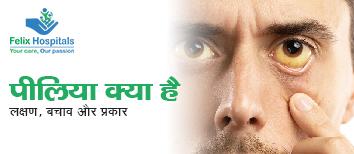
पीलिया एक ऐसी स्थिति है जिसमें शरीर और आंखों का रंग पीला पड़ जाता है। यह मुख्य रूप से लीवर की खराबी या रक्त में बिलीरुबिन के बढ़ने के कारण होता है।
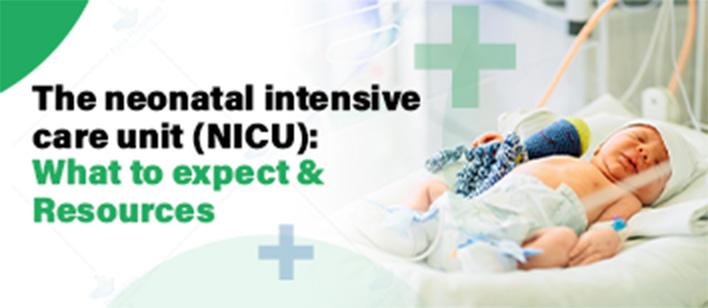
finding the best neonatologist doctor in Noida can be a crucial step. This blog provides an overview of the NICU experience and highlights essential resources for families.
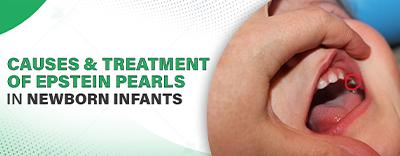
Epstein Pearls are small, white or yellowish cysts found on the gums or roof of the mouth in newborns. These harmless bumps form during fetal development and usually resolve on their own within a few weeks. No treatment is necessary unless symptoms persis

Subscribe to our
© Copyright 2026. All Rights Reserved by Felix Healthcare Private Limited
Design and development by :


 +(91)9667064100
 Emergency : +(91)9667064100