 Emergency:
  WhatsApp


Subscribe to our
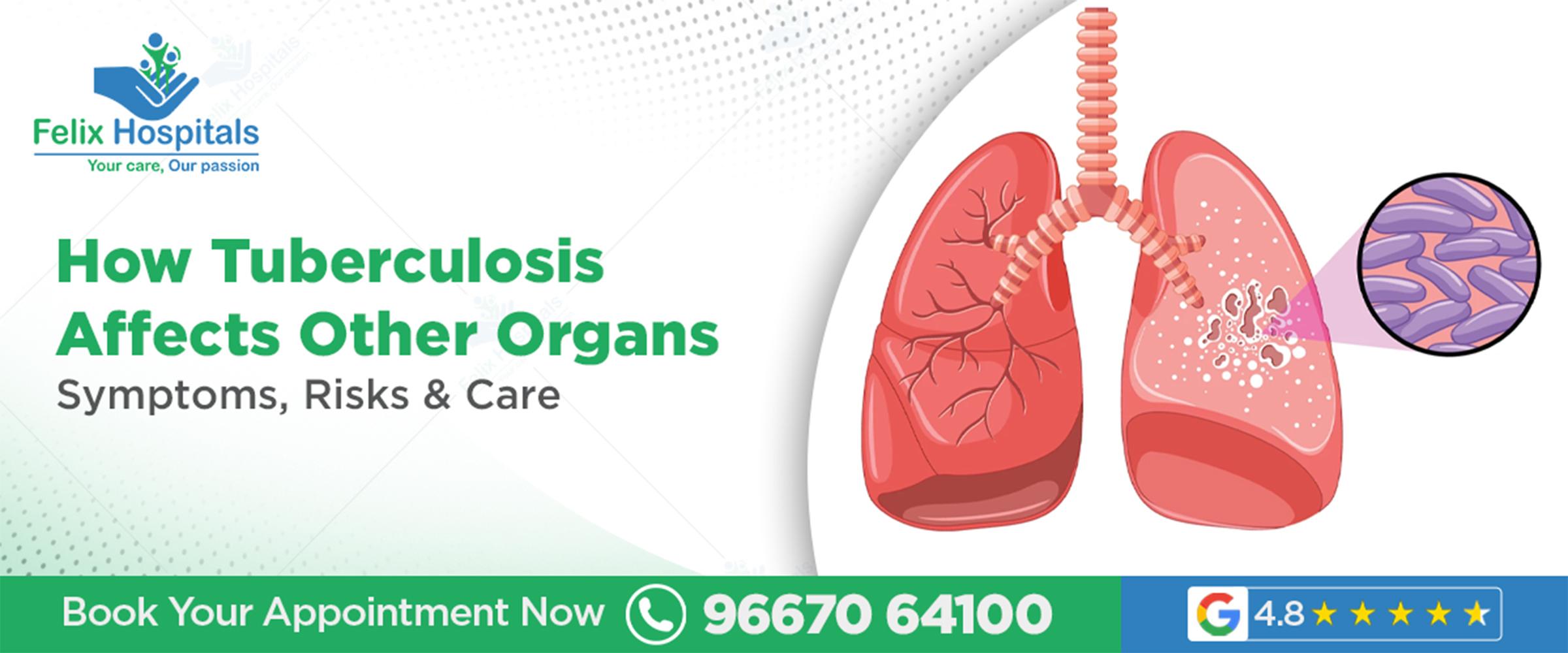
When most people hear the word tuberculosis, they picture a lung disease — persistent cough, breathlessness, and weight loss. The lungs are usually affected but TB is much more devious than that. The identical bacterium, Mycobacterium tuberculosis, can also travel silently through the blood stream and quietly make a home in your spine, brain, kidneys, intestines, lymph nodes and bones — sometimes without causing any chest symptoms at all.
This is known as extrapulmonary tuberculosis (EPTB) — TB outside the lungs — and it is mostly misdiagnosed, to this day. If your puzzling symptoms include fever that won’t subside, joint pain, enlarged lymph nodes, or neurological issues, and nothing has filled in the blanks, this is the how-to guide for you. Best Pulmonology Hospital in Noida, regularly treats such patients who had been misdirected for months before diagnosis is made that it was Tuberculosis of other organs. Timely detection can save lives.
TB disease that occurs outside of the lungs is known as extrapulmonary TB. It makes up a large proportion of all TB cases worldwide and is prevalent particularly among people with compromised immune systems, such as those with HIV.
When the immune system response activates against the inhaled bacteria it creates a granuloma- a type of containment structure. This is named latent TB. This can stay hidden for years in mostly everyone. But when the immune system is compromised — by HIV, diabetes, malnutrition, cancer treatment, or the wear and tear of old age — the bacteria can break out of that containment, get into the bloodstream, and travel to other organs. This is how Tuberculosis spreads to other organs, or disseminated TB. The old and young are more at risk. People taking drugs to suppress their immune system – such as steroids or biologics.
FACT- According to the WHO Global TB Report 2023, India accounts for approximately 27% of the world's TB burden, and extrapulmonary forms comprise nearly 15–20% of all TB cases reported in India — a number widely believed to be an undercount due to diagnostic challenges.
Source: World Health Organization (WHO) Global Tuberculosis Report, 2023.
Complications of TB differ greatly depending on the organ affected
This is one of the most lethal varieties. The bacterium infects the membranes of the brain (meninges), inducing inflammation.
Continued, worse headache — sometimes referred to as the worst headache of their life
Fever and neck stiffness – the neck becomes stiff and painful to bend forward
Confusion, altered consciousness, or seizures late in the course
Sensitivity to light (photophobia)
Stroke-like symptoms in some patients
TB meningitis is an emergency that necessitates urgent treatment. Late recognition of the disease may result in permanent neurological injury or death.
Bone tuberculosis and Spinal tuberculosis(also referred as Pott's disease) is the oldest known form of the disease. These bacteria invade the vertebral bodies and lead to their collapse.
Chronic back pain which is unresponsive to conservative management
Spine tenderness, especially over the lower thoracic or lumbar region
Apparent deformity — a hump in late stages
If the spinal cord is compress, weakness, numbness, or paralysis in the legs may occur
Cold abscess - a non-tender, fluctuant swelling adjacent to the spine
Several patients of bone tuberculosis consult Orthopaedic surgeons first. The advice from best ortho doctor in Noida having expertise in TB of bone is very essential for confirmatory TB diagnosis through MRI and bone biopsy
Tuberculous lymphadenitis is the most common form of extrapulmonary TB in India. Slowly developing, discrete, rubbery nodes typical of:
Painless swollen lymph nodes in the area of the neck (most common), armpits or groin
Nodes that are firm and rubbery and may gradually enlarge over a period of weeks
Low-grade evening fevers and weight loss of unknown cause
Nodes may discharge a cheese like or pus like material if they rupture
Since the swelling is painless, people generally confuse it with a harmless gland or even cancer. To confirm the TB diagnosis, FNAC (Fine Needle Aspiration Cytology) or biopsy is required.
Intestinal, peritoneal (abdominal lining), hepatic, or splenic involvement may be seen with abdominal tuberculosis. Symptoms are generally non-specific, which leads to delay in diagnosis:
Chronic abdominal pain — dull, crampy, or intermittent
Bloating, distension of the tummy (ascites – fluid in the abdomen)
Diarrhoea and constipation alternately.
Loss of appetite and weight loss without any known cause
In some cases they also present with a palpable lump in the abdomen
Abdominal TB can also be mistaken for Crohn's disease, irritable bowel syndrome, or, on occasion, cancer, which is why specialist opinion is vital.
The kidneys are well vascularized, and thus are a frequent site of haematogenous TB dissemination.
Sterile pyuria — presence of pus cells in urine with no evidence of bacterial infection on routine culture
Painless blood in urine (haematuria) without pain
Frequent urination, irritation – could be mistaken for a UTI
In male patients: painless testicular or epidydimal swelling
Organ / System | Common Symptoms | Key Diagnostic Test | Risk if Untreated |
Brain (TB Meningitis) | Severe headache, neck stiffness, confusion, seizures | Lumbar puncture + CSF analysis, MRI brain | Coma, permanent brain damage, death |
Spine (Spinal TB) | Chronic back pain, gibbus deformity, leg weakness/paralysis | MRI spine, bone biopsy | Irreversible paralysis, spinal collapse |
Lymph Nodes | Painless swollen neck nodes, fever, weight loss | FNAC, lymph node biopsy, GeneXpert | Dissemination to other organs |
Abdomen | Abdominal pain, ascites, weight loss, altered bowel habits | Ultrasound, ascitic fluid analysis, colonoscopy | Bowel obstruction, peritonitis |
Kidney / Urogenital | Sterile pyuria, haematuria, flank pain | Urine AFB culture, CT urogram | Renal failure, genital damage, infertility |
Bone (Non-spinal) | Joint pain, swelling, restricted movement | X-ray, MRI, biopsy | Joint destruction, permanent disability |
Pericardium (Heart) | Chest pain, breathlessness, muffled heart sounds | Echocardiogram, pericardial fluid analysis | Cardiac tamponade, constrictive pericarditis |
Extrapulmonary TB can affect anyone, but some factors greatly increase the likelihood of TB spreading to other organs. Knowing your TB Risk Factors is the first step in protecting yourself:
The single biggest risk factor is HIV infection
Diabetes mellitus
Malnutriti on
Immunosuppressive therapy — steroids, TNF-alpha inhibitors (used in arthritis), chemotherapy
Chronic kidney disease / dialysis recipients
Infants and the elderly
Prolonged exposure to untreated TB patient in the absence of adequate precautions
Living or working in crowded conditions — greater exposure to bacterial load
Diagnosing Multiorgan tuberculosis in extrapulmonary sites is more difficult compared to pulmonary TB as sputum tests are not useful in cases where lungs are not involved. Doctors employ several methods in combination to diagnose:
GeneXpert MTB/RIF
AFB smear and culture
Histopathology (biopsy)
ADA (Adenosine Deaminase) test
MRI and CT scans
IGRA / Mantoux test
Interferon Gamma Release Assay (IGRA)
The good news is that the treatment of extrapulmonary TB is based on the same core anti-TB drugs as pulmonary TB.
TB Meningitis — 9–12 months treatment
Spinal TB - 9 to 18 months of anti-TB therapy
Lymph Node TB - 6 months standard regimen is usually adequate
Abdominal TB — 6 to 9 months
Multiorgan tuberculosis — needs prolonged treatment
Drug resistance — in particular MDR-TB (Multi Drug Resistant TB) — is the cause of increasing concern. If the symptomatology does not improve or worsens in spite of adequate therapy, drug susceptibility testing must be performed without delay.
Getting a diagnosis of TB — and particularly if it turns up in an unusual place, like the brain or spine — is scary. The stigma that surrounds TB in India has kept several patients have been mutel in their suffering. Families are sometimes kept in the dark. Jobs are lost. Relationships strain. Treatment is long – six months at a minimum, a year or more in many cases.
You’re not weak for struggling with this. TB outside the lining of the lungs is complicated medicine, and recovery is slow.
Tuberculosis is more than just a lung disease. It's a whole-body disease that can insidiously affect your spine, brain, kidneys, lymph nodes, and bowels — and often does so while the chest X-ray looks completely normal. Extrapulmonary Tuberculosis, correct diagnosis of TB, early initiation of TB treatment and knowledge of symptoms of TB in organs save lives.
Yes TB can involve the spine(bone TB) in the absence of cough or pulmonary symptoms. It disseminates via the blood and requires protracted treatment for repose of the bone.
Lymph node TB in children is very common and is almost always completely curable with appropriate drugs. It may spread to other organs and so early treatment is very important.
Abdominal TB is a serious condition but most patients do well if they are given full treatment with nutritional support. Treatment is normally 6–9 months, but may be longer in severe cases.
It is common and treatable but should be regarded as a medical emergency. For headaches, seizures, confusion, vision problems, or weakness, call immediately.
Never stop TB medicines early — symptoms improve before infection fully clears. Stopping early can cause relapse and dangerous drug-resistant TB.
Dr. Priyadarshi Jitendra Kumar is an experienced General Practitioner with 20+ years of expertise in diabetes, thyroid disorders, hypertension, and infectious diseases. Recognized as a Best Pulmonologist in Noida, he specializes in respiratory emergencies, sleep disorders, and advanced pulmonology care.

Tuberculosis of the knee typically occurs when the TB bacteria spread from an existing infection in the lungs or another part of the body to the joint.

Breathing is Life," highlights the importance of lung health. Discover essential prevention tips to protect your lungs and improve quality of life.

Chronic snoring and breathing disorders are treated by pulmonology specialists in Noida with advanced care.
Tuberculosis (TB) is primarily known as a respiratory infection caused by Mycobacterium tuberculosis, but it can affect various body parts, including bones and joints.


Subscribe to our
© Copyright 2026. All Rights Reserved by Felix Healthcare Private Limited
Design and development by :


 +(91)9667064100
 Emergency : +(91)9667064100