 Emergency:
  WhatsApp

Subscribe to our
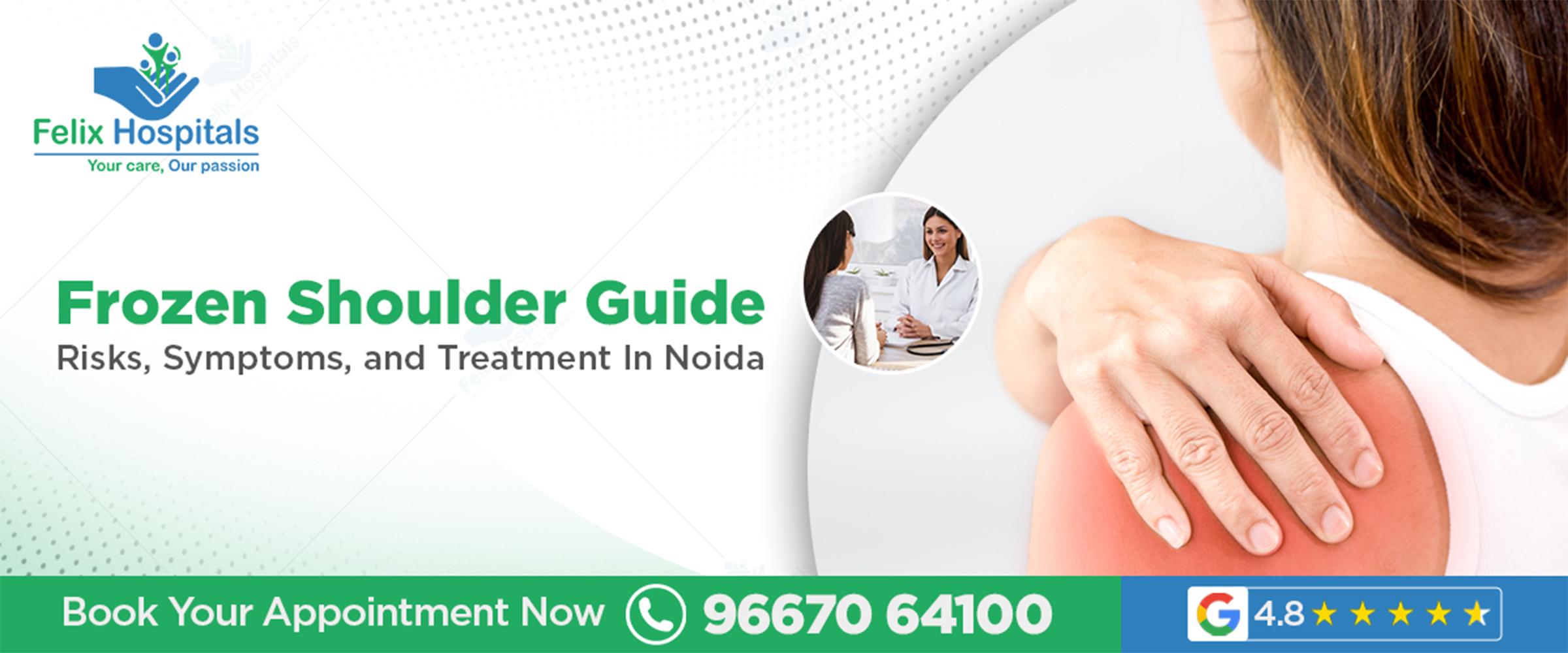
Frozen shoulder is a common yet painful condition that severely limits shoulder movement, causing discomfort and reduced quality of life. In the case of the patients who are subject to prolonged feeling of stiffness or pain at the shoulders, a Noida orthopedic doctor in Noida is necessary to have the opportunity to be diagnosed and treated properly. This detailed guide will delve into the causes of frozen shoulder, frozen shoulder symptoms, risk factors for frozen shoulder, and the best treatment options, including specialized frozen shoulder treatment in Noida.
Struggling with shoulder stiffness or pain? Book a specialist consultation for frozen shoulder treatment in Noida today at +91 9667064100.
Frozen shoulder, medically termed adhesive capsulitis, is characterized by stiffness, pain, and restricted motion in the shoulder joint. It is usually acquired slowly and exacerbated as the years go by. The joint capsule becomes thick and taut resulting into development of scar tissue which limits the normal movement of the shoulder. This holds the shoulder in a frozen position which may take months or years to cure. The decreased mobility and chronic pain would hamper the everyday life activity, including reaching as well as overhead exercises.
The exact causes of frozen shoulder are often unclear, but several factors contribute to its development:
Immobilization: Extended shoulder immobilization after an injury, surgery, or fracture can lead to frozen shoulder due to lack of movement.
Inflammation: Some diseases such as rotator cuff tendinitis or bursitis cause inflammation of the tissues around the joint, which leads to the thickening and contraction of the joint capsule.
Medical conditions: Medical conditions that are at the high risk include diabetes, thyroid disorders, cardiovascular disease, and Parkinson diseases.
Age and Gender: It is more prevalent in women and commonly in the ages of 40-60.
Post-surgery or trauma: Damage to the shoulder from trauma or surgery may provoke frozen shoulder onset.
The identification of such causes contributes to early prevention.
Recognizing frozen shoulder symptoms early can vastly improve treatment success. The condition occurs in three stages that overlap:
Freezing stage: Progressive pain during shoulder movements and the progressive loss of the range of motion; this may take 2-9 months.
Frozen stage: At this stage, the pain may be reduced and the stiffness is aggravated; the use of the shoulders is challenging at this stage (lasts 4-12 months).
Thawing period: Two Shoulder movement continues to increase at a slow pace, usually requiring 5-24 months before close to normal work should be achieved.
Persistent shoulder pain and stiffness
Problem with lifting the arm over the head or behind.
Poor capacity to complete everyday tasks.
Suffering which intensifies during the night or due to abrupt movements.
Diagnosis of early cases of physical examination and medical imaging assists in providing timely care.
Certain conditions and traits increase risk factors for frozen shoulder development:
Paralysis of the arm after injury or surgery.
Diabetes, which puts the connective tissue at risk of fibrosis.
Limbic disproportions, such as hyperthyroidism or hypothyroidism.
Age between 40 and 60 years
Past cardiovascular or autoimmune disease.
Previous episodes of frozen shoulder in either shoulder
Should you meet these requirements and experience stiffness in the shoulders, it is strongly recommendable to consult the healthcare providers.
Frozen shoulder treatment primarily focuses on relieving pain and restoring movement. At Felix Hospital, leaders in frozen shoulder treatment in Noida, treatment is tailored per patient needs through a multidisciplinary approach:
Physical therapy: This is the primary treatment method in the selection of which range-of-motion exercises, and stretching exercises, are performed to increase the shoulder range of motion and alleviate stiffness.
Medications: Anti-inflammatory medicine such as NSAIDs are involved in relieving pain and inflammation.
Corticosteroid injections: Decrease severe inflammation, which considerably decreases pain and restores the functionality.
Heat/cold therapy: This is used in order to reduce swelling and pain.
Surgical intervention: In some refractory cases, manipulation under anesthesia or arthroscopic release can be needed to rupture adhesions and regain motion.
Regular physiotherapy and expert advice is best to maximize results and accelerate healing.
The untimely treatment usually causes the persistence of the immobility as well as the ongoing chronic pain that complicates the process of restoring the complete functioning of the shoulder. It is important to consider having an experienced orthopedic doctor in Noida because early diagnosis of the condition will prevent poor lifestyle restriction. Individualized care across these centers such as Felix Hospital guarantees patients full services all the way back to recovery.
Recovery from frozen shoulders is gradual and requires patience. A great deal of patients have made substantial recoveries in 1-3 years. Adherence to therapy exercises and lifestyle changes including eschewing aggravating interventions and good posture is important. Follow-ups will guarantee surveillance of the progress, and adjust treatment.
Need physiotherapy or advanced care for frozen shoulder in Noida? Get started on your recovery plan now by calling +91 9667064100 .

Dr. Keshav Goel is an experienced Orthopedic and Joint Replacement Surgeon in Noida with over 10 years of clinical expertise. He has performed 2,000+ independent surgeries and specializes in computer-assisted joint replacement and arthroscopic surgeries of the knee, shoulder, and hip. Known for his skill in treating sports injuries, trauma, and joint disorders, he provides advanced and patient-focused orthopedic care.
In conclusion, frozen shoulder is a disabling condition that requires timely diagnosis and comprehensive management. With effective frozen shoulder treatment in Noida from experienced specialists, most patients regain function and reduce pain substantially. The pain may be avoided by consulting an orthopedic doctor early in Noida so that they avoid long-term disability and enhance quality of life.
Q1: What is frozen shoulder and is it serious?
A: Frozen shoulder causes stiffness and pain in the shoulder joint. While not life-threatening, it can severely affect daily activities if untreated.
Q2: Why does frozen shoulder take so long to heal?
A: The condition progresses through stages and healing depends on gradual capsule recovery, which can take months.
Q3: How long does frozen shoulder treatment take?
A: Recovery may take 6 months to 2 years, depending on severity and treatment approach.
Q4: What is the cost of frozen shoulder treatment in Noida?
A: Costs vary based on consultation, physiotherapy, injections, or surgery. Minimally invasive procedures may cost more initially but reduce long-term expenses.
Q5: What are the risks of frozen shoulder surgery?
A: Risks are minimal but may include infection, stiffness, or temporary pain. Advanced techniques reduce complications.
Q6: How successful is frozen shoulder treatment?
A: With early diagnosis, expert care, and modern treatment methods, success rates are high and most patients regain near-normal shoulder movement.

Frozen shoulder is a common condition in which the shoulder stiffens, reducing its mobility. It commonly affects people aged between 40 and 60 years, and it is more likely in women than in men.
Prevent shoulder pain while sleeping with the right posture, supportive pillows, and nighttime stretches for a restful, pain-free sleep.
Advanced surgeries like arthroscopy, rotator cuff repair, and shoulder replacement in Noida help relieve severe shoulder pain and restore mobility.


Subscribe to our
© Copyright 2026. All Rights Reserved by Felix Healthcare Private Limited
Design and development by :


 +(91)9667064100
 Emergency : +(91)9667064100