 Emergency:
  WhatsApp

Subscribe to our
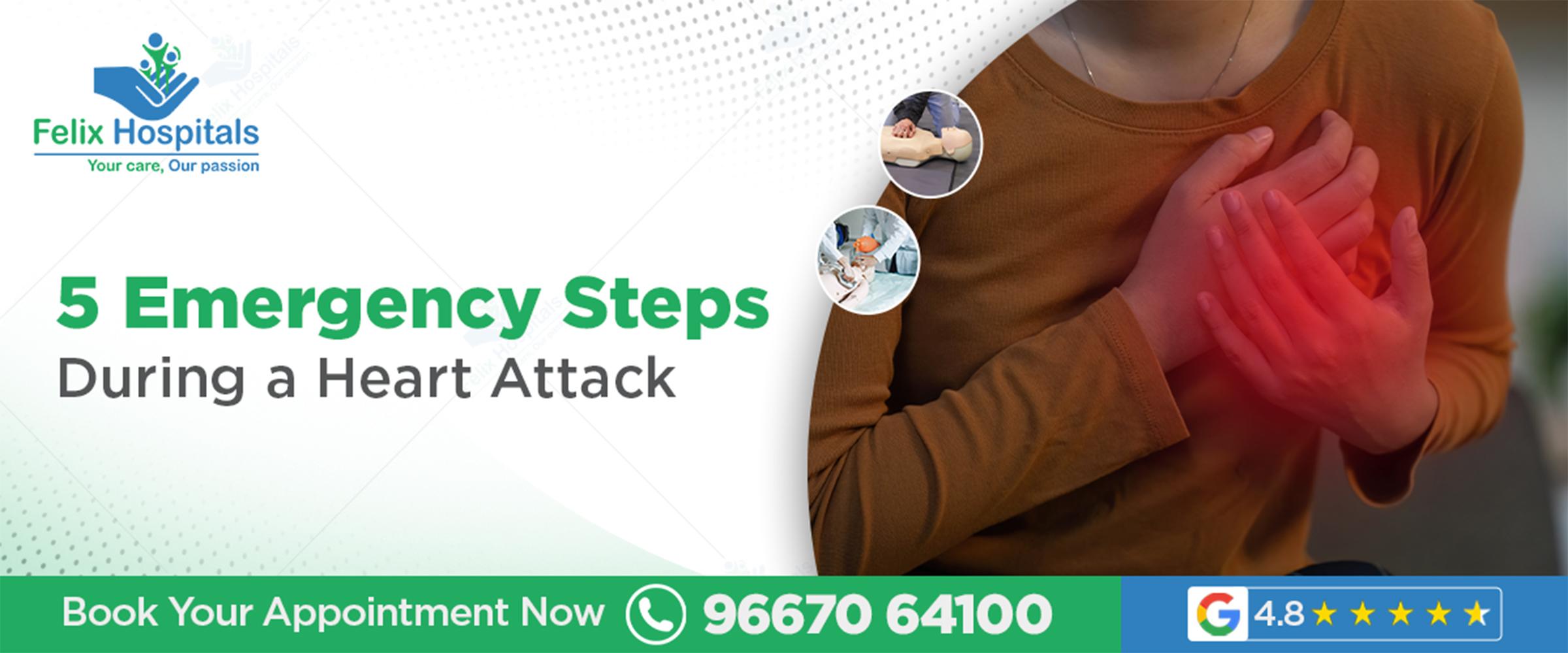
Heart attacks may occur suddenly and transform a normal day into a healthcare crisis. This initial few minutes upon the onset of the symptoms is critical and it can be life or death. Every second counts, and knowing how to act quickly can save a life, even your own.
It's important to know what to do if you have a heart attack. Taking action right away and getting medical help from the best cardiology hospital in Noida can help protect the heart and improve the chances of survival.
We'll go over the five emergency steps to take during a heart attack, the signs you shouldn't ignore, and why getting help quickly is so important.
Don't wait if you think you might be having a heart attack. For emergency heart care and expert advice, call +91 9667064100.
A heart attack, also called a myocardial infarction, happens when the flow of oxygen-rich blood to a part of the heart is suddenly cut off. This is usually because a clot forms in one of the coronary arteries. When this happens, the part of the heart muscle that is affected starts to die because it isn't getting enough oxygen.
The heart will be hurt more the longer the blockage is not treated. That's why it's important to notice the signs early and do something about them right away.
The signs of a heart attack can be different for each person. Some people feel sudden, severe pain, while others may feel mild pain that gets worse over time. These are the most common signs:
Chest pain: Chest pain or discomfort is often described as pressure, squeezing, fullness, or heaviness in the middle or left side of the chest.
Spreading Pain: Pain that spreads to the arms, neck, jaw, or back, usually on the left side but sometimes on both sides.
Shortness of breath: This can mean heart trouble even if you don't have chest pain.
Illness: Cold sweats, nausea, or dizziness are common in both men and women.
Weakness: Extreme tiredness or weakness, especially in older people and women.
Don't wait if you or someone you know has these symptoms. Do something right away.
The first and most important thing to do is to call for medical help right away. Do not reach out to the hospital and wait until the symptoms clear up.
Call your local emergency (108 or 102 is the emergency number in India) or take you to the nearest emergency room. Emerging, or seeking medical assistance immediately will ensure that trained specialists are able to initiate treatment even before you arrive at the hospital.
If you can, going to a hospital with an advanced cardiac unit, like the best cardiology treatment hospital in Noida, can make a big difference in how well you do.
When you panic, your heart rate and need for oxygen go up, which puts more stress on your heart. Stay as calm as you can.
Sit down in a way that is comfortable for you, like standing up, and don't lie down. While you wait for medical help, staying still can help keep your heart from getting more stressed.
If you are with someone who is having a heart attack, help them sit down comfortably.
Take off tight clothes.
Make sure they know everything will be okay.
Don't let them move around when they don't have to.
Even small things, like talking calmly or breathing more slowly, can help lower anxiety and keep things under control until help comes.
If the person isn't allergic to aspirin and hasn't had stomach bleeding before, giving them one standard 325 mg aspirin tablet to chew (not swallow whole) can help. Aspirin makes the blood thinner, which makes the clot smaller and lets more blood flow to the heart.
If the patient is taking certain heart medications or blood thinners, though, check first before giving them aspirin. If you're not sure what to do, wait for emergency workers to tell you what to do.
This easy step can make a big difference in stopping more damage before professional help arrives.
If your doctor has told you to take nitroglycerin for heart disease in the past, do so as directed. Nitroglycerin makes blood vessels relax and lets more blood flow to the heart.
Put the tablet under your tongue.
Take no more than the recommended amount, which is usually one tablet every five minutes, up to three tablets.
If your doctor didn't tell you to take nitroglycerin, don't. It can dangerously lower blood pressure.
This medicine is not meant to replace emergency medical care. It is only meant to help you feel better for a short time.
If the person loses consciousness and is not breathing, start cardiopulmonary resuscitation (CPR) immediately.
To do CPR, follow these steps:
Put the heel of one hand on the middle of the chest.
Put your other hand on top and link your fingers.
Push hard and fast, about 100 to 120 times a minute, which is about the same speed as the song "Stayin' Alive."
Let the chest fully relax between compressions.
If you know how, you can give rescue breaths every 30 compressions. Keep going until help arrives or the person starts breathing again.
A heart attack is a race against time. Heart tissue starts to die within minutes when it doesn't get enough oxygen. The sooner blood flow returns, the better the outcome.
Many doctors say that the first 60 minutes after symptoms start, known as the "golden hour," is the most important time for treatment. Acting quickly can:
Reduce damage to the heart muscle
Stop a heart attack
Lower the risk of problems in the long term
Raise the chances of survival
That's why you should never ignore warning signs or wait to call for help.
During a heart attack, you should and shouldn't do the following:
Stay calm and sit down in a comfortable position.
Take the medicines your doctor tells you to.
Have emergency contact numbers on hand.
Tell the people around you about your health problems (if you have any).
Don't try to drive yourself to the hospital by yourself.
Don't worry about mild or occasional symptoms.
You may eat or drink anything you please, waiting till somebody comes.
Take no painkillers other than aspirin unless advised to do so by your doctor.
In case you have experienced chest pain, unexplained fatigue, and difficulty in breathing frequently, then you should visit a cardiologist in Noida, even as the symptoms vanish.
The heart attack does not usually occur out of the blue. It occurs when there is a slow blockage or constriction of the arteries. Tests such as ECG, echocardiogram, or stress test can help a cardiologist to monitor the health of your heart and recommend preventive measures to prevent any problems before they develop.
It is not after a heart attack that you cease to take care of your heart; it is only the start of it. A change in your lifestyle, medications, and follow-up visits could be effective in keeping your health under control and prevent complications in the future.
Attend cardiac rehabilitation sessions when your physician directs you to do so.
Eat a healthy heart diet with reduced saturated fat content and high content of whole grains, fruits and vegetables.
Do not smoke and drink sparingly.
Get regular exercise under the watchful eye of a doctor.
Check your blood pressure, sugar, and cholesterol levels often.
Taking proactive steps makes sure your heart stays healthy for a long time and stops it from happening again.
It is important to know what to do in an emergency, but it is even more important to avoid a heart attack. Heart disease develops silently over time due to lifestyle factors such as:
Eating habits that are bad for you
Not getting enough exercise
A lot of stress
Smoking or drinking alcohol
Diabetes or high blood pressure that isn't under control
You can greatly lower your risk of having a heart attack by making changes to your daily life and going to the doctor regularly.
For heart health, call +91 9667064100 to talk to a top cardiologist in Noida.
Heart attacks are very serious medical emergencies, but they don't have to be deadly. The key is to recognize the problem, act quickly, and get expert care.
Consistent check-ups, a good lifestyle, and knowing about the state of your heart are equally essential towards the prevention of problems. Being prepared and fast in response can be significant when every second counts.
It is not time to wait until you have an emergency to begin caring about your heart Failure . It requires immediate attention, support and expertise.
Q.1. What defines chest pain as a heart attack?
Ans. In case of chest pain that is associated with a feeling of pressure, tightness or heaviness that lasts longer than a few minutes particularly when radiates to the arm or jaw, then it may be a heart attack. Search emergency assistance.
Q. 2. Is a heart attack possible without having chest pains?
Ans. Yes. There are also those individuals, particularly women and diabetics who undergo silent heart attacks and the symptoms are breathlessness, nausea or fatigue rather than chest pain.
Q. 3. So what happens when I am on my own when having a heart attack?
Ans. Dial the emergency services immediately, open your door and lie or sit close to an exit so that the assistance can quickly get to you. Waiting - Chew an aspirin, should you be able.
Q. 4. Did aspirin work in all people having a heart attack?
Ans. No. It should not be taken by people who are allergic, have stomach ulcers, or have a bleeding disorder without doctor consent. Always confirm before use.
Q. 5. When should I visit a physician after a heart attack?
Ans. See your cardiologist again within 1-2 weeks of the discharge to check on your recovery and change treatment as necessary.
The primary goal of the Treadmill Stress Test is to evaluate how well the heart responds to increased physical activity
A stent procedure can be life-saving for those with blocked arteries. This guide walks you through the stent experience—from the angioplasty process to post-procedure recovery and lifestyle changes.
A pulmonologist plays a crucial role in helping patients dealing with serious or chronic breathing difficulties.
MRI (Magnetic Resonance Imaging) is an advanced diagnostic test used to detect problems related to the brain, spine, joints, and internal organs.

Subscribe to our
© Copyright 2026. All Rights Reserved by Felix Healthcare Private Limited
Design and development by :


 +(91)9667064100
 Emergency : +(91)9667064100